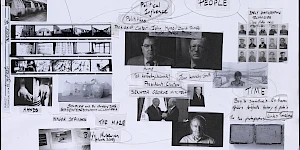
Dispatch: Excerpts from the six days and sixty one pages of the black sketchbook
In her dispatch from the summer school 'Landscape (post) Conflict' filmmaker Sabine El Chamaa is prompted by Ammar Bouras’ short film Traces and a lecture by Jill Jarvis to think through the ongoing reverberations of nuclear warfare.
Looking back at my notes in August 2025 around the 80-year anniversary of the Hiroshima bombing, I realised that nuclear politics and warfare accompanied me from Beirut to Dublin and back. I arrived in Dublin during the month of July to the soothing sound of sea gulls in the sky – a huge relief from the buzz of Israeli drones. A week earlier my flight from Beirut had been cancelled, then reinstated a few days later, following what is now referred to as the 12 day Iran-Israel war. The sudden Israeli attack on Iranian nuclear sites was given the operational name: ‘Rising Lion’, and the response by Iran was named: ‘True Promise 3’. Radio announcements in Lebanon informed citizens to ensure they had enough drinking water in homes to last three days in preparation for the worst, namely nuclear radiation.
Arriving at the green fields surrounding IMMA on the first morning, I saw empty deckchairs underneath a large outdoor screen playing Ammar Bouras’ short film 24°3′55″N 5°3′23″E (2012/2017/2022), or what we referred to as Traces. Still images of desert landscapes, close shots of twisted metal, and male voice overs speaking of sudden death, cancer and radiation transmitted nuclear radiation as the film's central theme. We only watched the film, stretched out on comfortable chairs, alongside the wonderful colleagues from the summer school, days later.
Jill Jarvis’ lecture talk at the National College of Art & Design was an elaboration on Bouras’ work. ‘Gerboise Bleue’ I wrote in my notebook. This was the code-name given by the French government to their secret nuclear tests done in the Algerian Sahara in the 1960s when the country was still under French occupation. The Gerboise (jerboa in English) is known as a tiny desert mouse that inhabits the Sahara Desert. Camouflaged, the term indicates locality due to the presence of that rodent in the Sahara desert as well as innocence, secrecy, speed and cuteness. How many ‘Gerboises’ ended up dying as a result of the testing, I wondered.
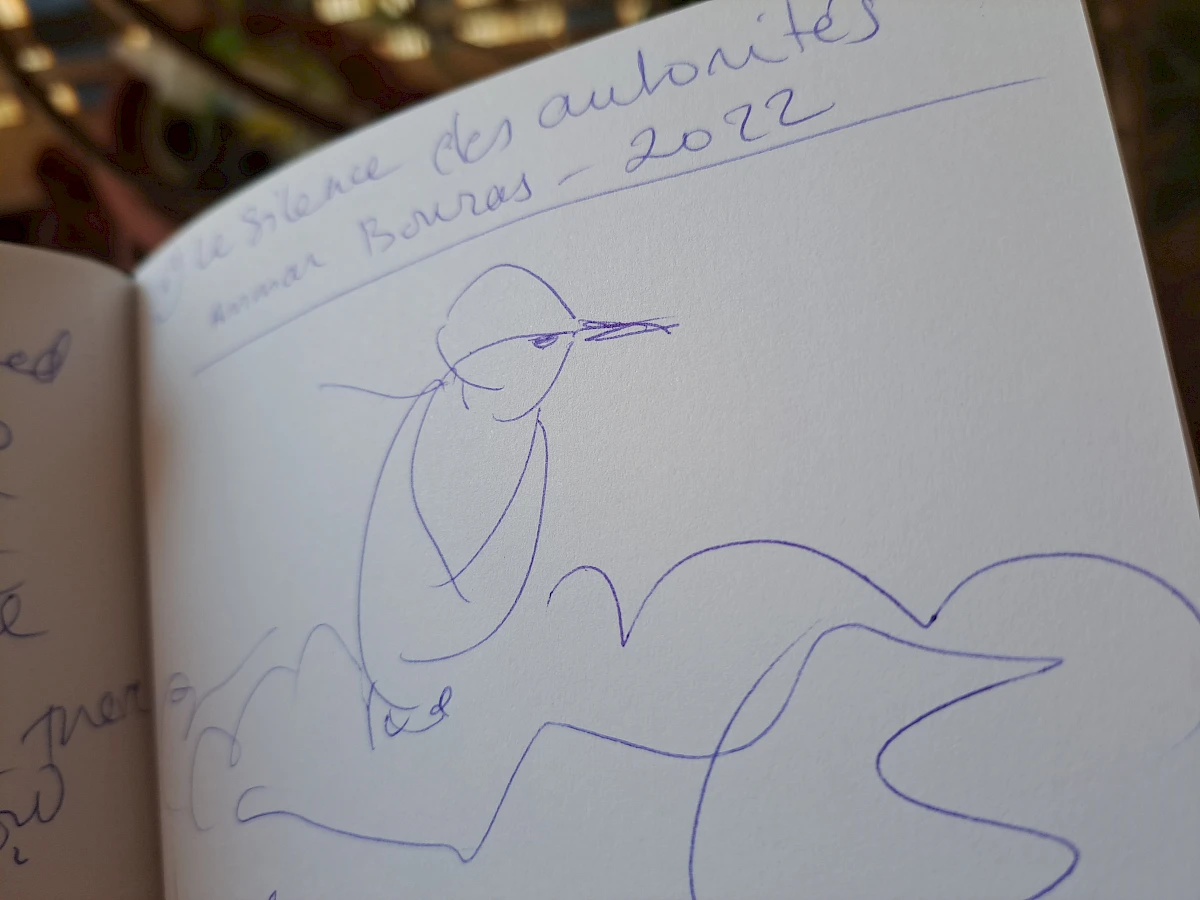
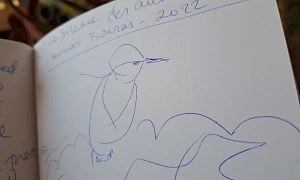
A bird on a cloud ponders, the silence of the officials
As I listened to Jarvis’ elaboration on other color-coded names, I wondered why nuclear tests are not called what they are and came up with UPLPLSHNHI which would stand for: Uncontrollable Potentially Lethal Poisoning of the Lands, Skies, and all Human and Non-human Inhabitants.
Official language masks the embodiment of pain and loss. According to Carol Cohn, the language used by nuclear scientists to describe their work helps them to cohabitate with their lethal creations. In her seminal feminist article ‘Sex and Death in the Rational World of Defense Intellectuals’ (1983), she describes how she was not heard if she spoke English and had to learn technostrategic ways of speaking in order to be ‘taken seriously’. ‘Little boy’ and ‘Fat man’, the two code names of the Hiroshima and Nagasaki bombs respectively may imply innocence, and lack of agility, yet brought forth indescribable tragedy and pain on the ground. Both names were coined by the physicist Serber who was a fan of the film Maltese Falcon (1941) directed by John Huston in which the villain is referred to as ‘fat man’.
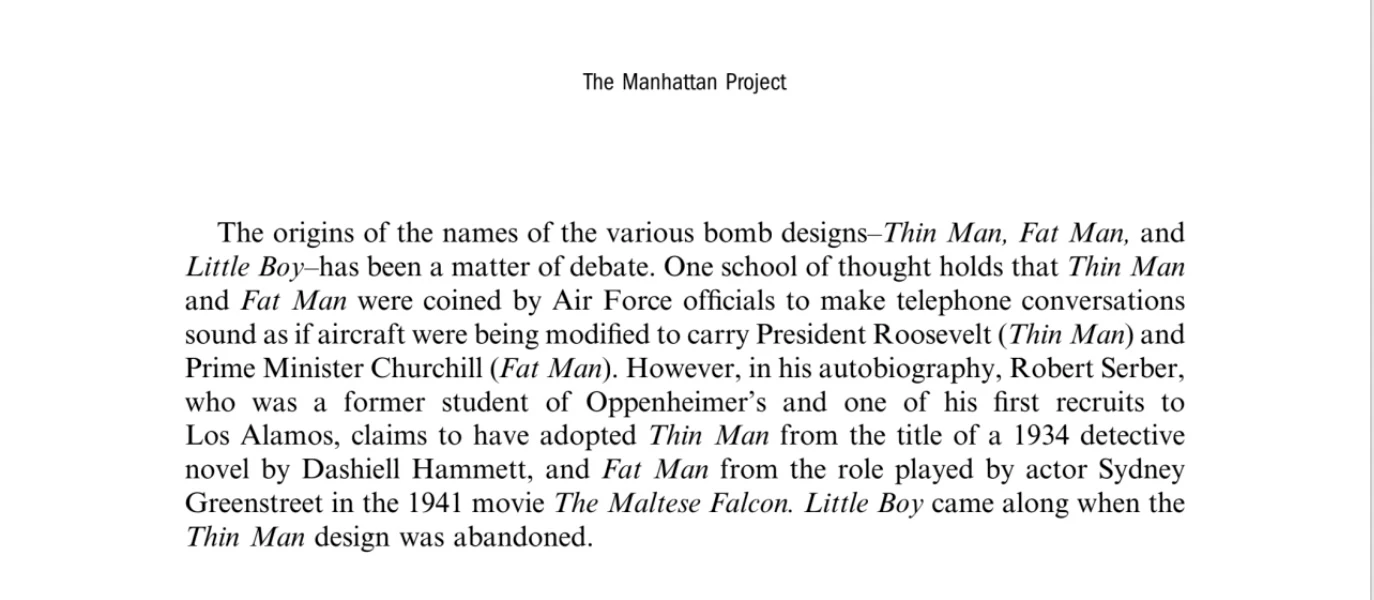
Reed, B. Cameron. ‘Los Alamos, Little Boy, Fat Man, Trinity, Hiroshima and Nagasaki’ in The Manhattan Project: A very brief introduction to the physics of nuclear weapons, 2017
Jarvis’ talk evoked the combined effects of the French nuclear tests’ destructive potential and the politics of silence embraced by the officials. ‘The Saharan dust brings back radiation from 60 years ago’, Jarvis added, revealing the time-travelling nature of radioactive dust.
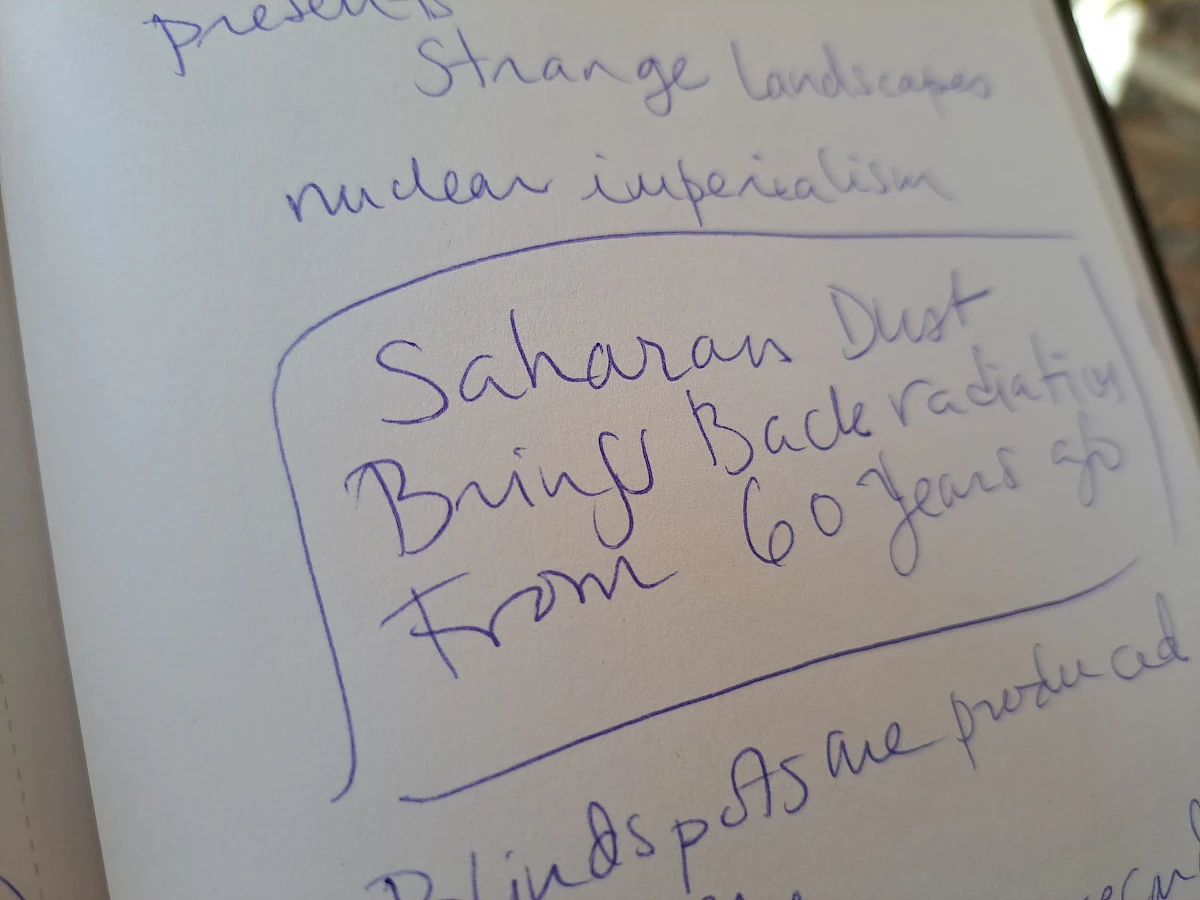
'Saharan dust brings back radiation from 60 years ago', Jill Jarvis
On #SaharanDust on x (formerly known as twitter) the topic of radioactive dust from the Sahara reaching France and other parts of Europe in 2021 is debated. A small search listed various articles about nuclear tests (all over the world) still blowing radioactive dust from years back. If the silence of officials is linked to their refusal to take responsibility and pay for damages, the passage of time reveals how forms of life are inextricably intertwined through space and time.
'Un nuage s’échappa'
One of the interviewees in Bourras’ film explained the Beryl incident at the Reggane nuclear testing site in the Algerian Sahara by saying that ‘a nuclear cloud had escaped’. The choice of words, and the very notion of lethal /clouds was striking. One often looks at the shape of clouds to dream and detect shapes that quickly transform and vanish. In this case, a cloud caused havoc for years to come.
Bourras’ film left us, in my small group, discussing feelings of responsibility and guilt as we sat on comfortable chairs on a sunny day in Dublin, listening to the voices of those impacted directly by the Beryl incident. What does one do with the image-witnessing which continuously reveals what we have missed in the past and continue to be blind to in the present? What does one do with the feeling of being incapacitated by military structures that use cute code names to describe such destructive processes with horrendous effects that incapacitate life? One falls silent. One is forced into silence, but it is not a peaceful silence, it is one that wonders how agency is being removed from people’s lives, and how we are all being turned into silent witnesses.
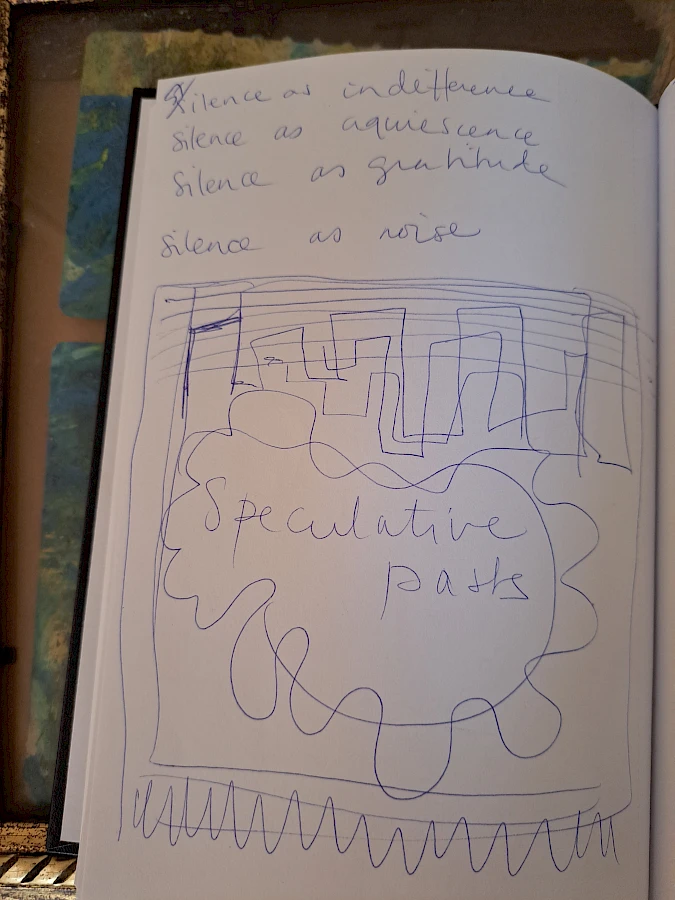
Speculative pasts
As long as a few countries can destroy parts of the earth through nuclear wars everybody is supposed to keep silent and feel grateful that they are in safe hands. But dust particles from the past say otherwise.
Related activities
-
HDK-Valand
Climate Forum I
The Climate Forum is a space of dialogue and exchange with respect to the concrete operational practices being implemented within the art field in response to climate change and ecological degradation. This is the first in a series of meetings hosted by HDK-Valand within L'Internationale's Museum of the Commons programme.
-
–Van Abbemuseum
The Soils Project
‘The Soils Project’ is part of an eponymous, long-term research initiative involving TarraWarra Museum of Art (Wurundjeri Country, Australia), the Van Abbemuseum (Eindhoven, Netherlands) and Struggles for Sovereignty, a collective based in Yogyakarta, Indonesia. It works through specific and situated practices that consider soil, as both metaphor and matter.
Seeking and facilitating opportunities to listen to diverse voices and perspectives around notions of caring for land, soil and sovereign territories, the project has been in development since 2018. An international collaboration between three organisations, and several artists, curators, writers and activists, it has manifested in various iterations over several years. The group exhibition ‘Soils’ at the Van Abbemuseum is part of Museum of the Commons. -
–MACBA
Where are the Oases?
PEI OBERT seminar
with Kader Attia, Elvira Dyangani Ose, Max Jorge Hinderer Cruz, Emily Jacir, Achille Mbembe, Sarah Nuttall and Françoise VergèsAn oasis is the potential for life in an adverse environment.
-
–Museo Reina Sofia
Team of Teams
This project researches citizen participation as a fundamental pillar in the creation of community.
-
–tranzit.ro
Non-Western Technologies for the Good Life
The experimental course ‘Non-Western Technologies for the Good Life’ (November 2023–May 2024) celebrates as its starting point the anniversary of 50 years since the publication of Tools for Conviviality, considering that Ivan Illich’s call is as relevant as ever.
-
–Moderna galerijaZRC SAZU
Summer School: Our Many Easts
Our Many Easts summer school is organised by Moderna galerija in Ljubljana in partnership with ZRC SAZU (the Research Centre of the Slovenian Academy of Sciences and Arts) as part of the L’Internationale project Museum of the Commons.
-
–MSU ZagrebVan AbbemuseumModerna galerijaZRC SAZU
Open Call – School of Common Knowledge 2024
MSU (Zagreb), Van Abbemuseum (Eindhoven), MG+MSUM (Ljubljana), ZRC SAZU (Ljubljana) and L'Internationale invite applications for the new School of Common Knowledge (SCK) to be held in Zagreb and Ljubljana 24–29 May 2024. The School of Common Knowledge draws on the network, knowledge and experience of the L’Internationale museum confederation. Its ambition is to be both nomadic and situated, looking at specific cultural and geopolitical situations while exploring their relations and interdependencies with the rest of the world. The SCK is built on the basis laid by the Glossary of Common Knowledge project initiated by Zdenka Badovinac and Moderna galerija (Ljubljana) and continues its co-learning methodology.
-
–Institute of Radical Imagination
Gathering into the Maelstrom
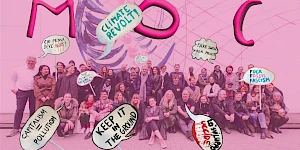
‘Gathering into the Maelstrom’ in Venice at Sale Docks is a four-day programme curated by Institute of Radical Imagination (IRI) and Sale Docks.
-
–MSU ZagrebModerna galerijaZRC SAZU
School of Common Knowledge 2024
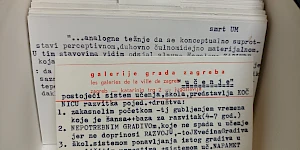
School of Common Knowledge draws on the network, knowledge and experience of the L’Internationale museum confederation. Built on the basis laid by the Glossary of Common Knowledge, a project initiated by Zdenka Badovinac and Moderna Galerija in Ljubljana, it continues its co-learning methodology. Its ambition is to be both nomadic and situated, looking at specific cultural and geopolitical situations while exploring their relations and interdependencies with the rest of the world.
-
–Institute of Radical Imagination
Gathering into the Maelstrom (exhibition)
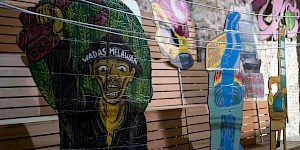
‘Gathering into the Maelstrom’ is curated by Institute of Radical Imagination and Sale Docks within the framework of Museum of the Commons.
-
HDK-Valand
Climate Forum II
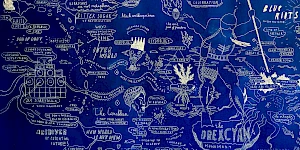
The Climate Forum is a series of online meetings hosted by HDK-Valand within L’Internationale’s Museum of the Commons programme. The series builds upon earlier research resulting in the (2022) book Climate: Our Right to Breathe and reaches toward emerging change practices.
-
HDK-Valand
Climate Forum III
The Climate Forum is a series of online meetings hosted by HDK-Valand within L’Internationale’s Museum of the Commons programme. The series builds upon earlier research resulting in the (2022) book Climate: Our Right to Breathe and reaches toward emerging change practices.
-
MACBA
The Open Kitchen. Food networks in an emergency situation
with Marina Monsonís, the Cabanyal cooking, Resistencia Migrante Disidente and Assemblea Catalana per la Transició Ecosocial
The MACBA Kitchen is a working group situated against the backdrop of ecosocial crisis. Participants in the group aim to highlight the importance of intuitively imagining an ecofeminist kitchen, and take a particular interest in the wisdom of individuals, projects and experiences that work with dislocated knowledge in relation to food sovereignty. -
NCAD
Book Launch: Collective Study in Times of Emergency, Dublin
with Nick Aikens (L'Internationale Online / HDK-Valand) and members of the L'Internationale Online editorial board: Maria Berríos, Sheena Barrett, Sara Buraya Boned, Charles Esche, Sofia Dati, Sabel Gavaldon, Jasna Jaksic, Cathryn Klasto, Magda Lipska, Declan Long, Francisco Mateo Martínez Cabeza de Vaca, Bojana Piškur, Tove Posselt, Anne-Claire Schmitz, Ezgi Yurteri, Martin Pogacar, and Ovidiu Tichindeleanu, 18h00, Harry Clark Lecture Theatre, NCAD
-
–Museo Reina SofiaMACBA
Open Call – School of Common Knowledge 2025
Museo Reina Sofía and MACBA Museu d’Art Contemporani de Barcelona (MACBA) invite applications for the 2025 iteration of the School of Common Knowledge, which will take place in Madrid and Barcelona 11-16 November 2025. The School of Common Knowledge (SCK) draws on the network, knowledge and experience of L’Internationale. Its ambition is to be both nomadic and situated, looking at specific cultural and geopolitical situations while exploring their relations and interdependencies with the rest of the world. This year, the SCK program focuses on the contested and dynamic notions of rooting and uprooting in the framework of present – colonial, migrant, situated, and ecological – complexities. Building on the legacy of the Glossary of Common Knowledge and the current European program Museum of the Commons, the SCK invites participants to reflect on the power of language to shape our understanding of art and society through a co-learning methodology.
-
–IMMANCAD
Summer School: Landscape (post) Conflict
The Irish Museum of Modern Art and the National College of Art and Design, as part of L’internationale Museum of the Commons, is hosting a Summer School in Dublin between 7-11 July 2025. This week-long programme of lectures, discussions, workshops and excursions will focus on the theme of Landscape (post) Conflict and will feature a number of national and international artists, theorists and educators including Jill Jarvis, Amanda Dunsmore, Yazan Kahlili, Zdenka Badovinac, Marielle MacLeman, Léann Herlihy, Slinko, Clodagh Emoe, Odessa Warren and Clare Bell.
-
HDK-Valand
Climate Forum IV
The Climate Forum is a series of online meetings hosted by HDK-Valand within L’Internationale’s Museum of the Commons programme. The series builds upon earlier research resulting in the (2022) book Climate: Our Right to Breathe and reaches toward emerging change practices.
-
–MSU Zagreb
October School: Moving Beyond Collapse: Reimagining Institutions
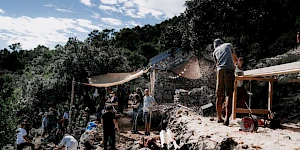
The October School at ISSA will offer space and time for a joint exploration and re-imagination of institutions combining both theoretical and practical work through actually building a school on Vis. It will take place on the island of Vis, off of the Croatian coast, organized under the L’Internationale project Museum of the Commons by the Museum of Contemporary Art in Zagreb and the Island School of Social Autonomy (ISSA). It will offer a rich program consisting of readings, lectures, collective work and workshops, with Adania Shibli, Kristin Ross, Robert Perišić, Saša Savanović, Srećko Horvat, Marko Pogačar, Zdenka Badovinac, Bojana Piškur, Theo Prodromidis, Ovidiu Ţichindeleanu, Progressive International, Naan-Aligned cooking, and others.
-
HDK-Valand
MA Forum in collaboration with LIO: Nour Shantout
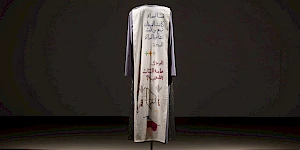
In this artist talk, Nour Shantout will present Searching for the New Dress, an ongoing artistic research project that looks at Palestinian embroidery in Shatila, a Palestinian refugee camp in Lebanon. Welcome!
-
MACBA
PEI Obert: Bodies of Evidence. A lecture by Ido Nahari and Adam Broomberg
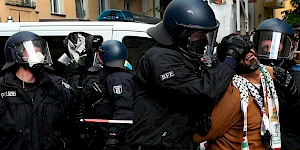
In the second day of Open PEI, writer and researcher Ido Nahari and artist, activist and educator Adam Broomberg bring us Bodies of Evidence, a lecture that analyses the circulation and functioning of violent images of past and present genocides. The debate revolves around the new fundamentalist grammar created for this documentation.
-
HDK-Valand
MA Forum in collaboration with LIO: Cathryn Klasto

In this MA Forum we welcome artist and researcher Cathryn Klasto. This talk will share some working insight into Klasto’s ongoing book project ‘Space Trekking’. The book is a collection of visual essays which tries to reveal the relationship between artistic research, ethics and interstellar spatial phenomena storied within the Star Trek universe.
-
HDK-Valand
MA Forum in collaboration with LIO: Adam Broomberg
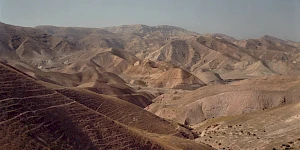
In this MA Forum we welcome artist Adam Broomberg. In his lecture he will focus on two photographic projects made in Israel/Palestine twenty years apart. Both projects use the medium of photography to communicate the weaponization of nature.
Related contributions and publications
-
Dispatch: Reenacting the loop. Notes on conflict and historiography
Giulia TerralavoroSchoolsLand RelationsIMMANCAD -
Dispatch: Landescape – bending words or what a new terminology on post-conflict could be
Amanda CarneiroSchoolsLand RelationsIMMANCAD -
Dispatch: Haunting, cataloging and the phenomena of disintegration
Coco GoranSchoolsLand RelationsIMMANCAD -
Decolonial aesthesis: weaving each other
Charles Esche, Rolando Vázquez, Teresa Cos RebolloLand RelationsClimate -
Climate Forum I – Readings
Nkule MabasoEN esLand RelationsClimateHDK-Valand -
…and the Earth along. Tales about the making, remaking and unmaking of the world.
Martin PogačarLand RelationsClimatePast in the Present -
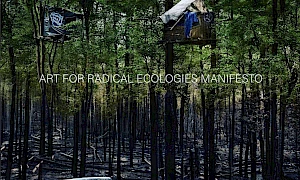
Art for Radical Ecologies Manifesto
Institute of Radical ImaginationLand RelationsClimateInstitute of Radical Imagination -
Ecologising Museums
Land Relations -
Climate: Our Right to Breathe
Land RelationsClimate -
A Letter Inside a Letter: How Labor Appears and Disappears
Marwa ArsaniosLand RelationsClimate -
Glossary of Common Knowledge, Vol. 2
Schools -
Glossary of Common Knowledge
Schools -
Seeds Shall Set Us Free II
Munem WasifLand RelationsClimate -
Discomfort at Dinner: The role of food work in challenging empire
Mary FawzyLand RelationsSituated Organizations -
Indra's Web
Vandana SinghLand RelationsPast in the PresentClimate -
Towards Collective Learning, or, Decompartmentalizing Education
María Berríos, Fran MM Cabeza de Vaca, Yolande Zola Zoli van der Heide, Nick AikensSchoolsSituated Organizations -
En dag kommer friheten att finnas
Françoise Vergès, Maddalena FragnitoEN svInternationalismsLand RelationsClimateInstitute of Radical Imagination -
Art and Materialisms: At the intersection of New Materialisms and Operaismo
Emanuele BragaLand RelationsClimateInstitute of Radical Imagination -
Dispatch: Harvesting Non-Western Epistemologies (ongoing)
Adelina LuftLand RelationsSchoolsClimatetranzit.ro -
Dispatch: From the Eleventh Session of Non-Western Technologies for the Good Life
Ana KunLand RelationsSchoolstranzit.ro -
Reading list: School of Common Knowledge 2024
School of Common KnowledgeSchoolsSituated OrganizationsMSU ZagrebModerna galerijaZRC SAZU -
Dispatch: Practicing Conviviality
Ana BarbuClimateSchoolsLand Relationstranzit.ro -
Dispatch: Notes on Separation and Conviviality
Raluca PopaLand RelationsSchoolsSituated OrganizationsClimatetranzit.ro -
To Build an Ecological Art Institution: The Experimental Station for Research on Art and Life
Ovidiu Ţichindeleanu, Raluca VoineaLand RelationsClimateSituated Organizationstranzit.ro -
Dispatch: A Shared Dialogue
Irina Botea Bucan, Jon DeanLand RelationsSchoolsClimatetranzit.ro -
Art, Radical Ecologies and Class Composition: On the possible alliance between historical and new materialisms
Marco BaravalleLand RelationsClimateInstitute of Radical Imagination -
‘Territorios en resistencia’, Artistic Perspectives from Latin America
Rosa Jijón & Francesco Martone (A4C), Sofía Acosta Varea, Boloh Miranda Izquierdo, Anamaría GarzónLand RelationsClimateInstitute of Radical Imagination -
Dispatch: In between the lessons. Staying together in uncertain times, laughing in the face of trouble, and disobeying; the future belongs to us
Antonela SoleničkiSchoolsSituated OrganizationsMSU ZagrebModerna galerijaZRC SAZU -
Dispatch: The Commonsverse and Situated Organisations – or why the era of big institutions will come to an end
Denise PolliniSchoolsSituated OrganizationsMSU ZagrebModerna galerijaZRC SAZU -
Dispatch: A Buriti Tree
Lucas PrettiSchoolsSituated OrganizationsMSU ZagrebModerna galerijaZRC SAZU -
Unhinging the Dual Machine: The Politics of Radical Kinship for a Different Art Ecology
Federica TimetoLand RelationsClimateInstitute of Radical Imagination -
Cultivating Abundance
Åsa SonjasdotterLand RelationsClimatePast in the Present -
Poner el nombre a una causa en tierra extraña
Dagmary Olívar Graterol, Paola de la Vega VelasteguiEN esSchoolsSituated OrganizationsMuseo Reina Sofia -
Dispatch: To whom it may concern – the voice of the censor and re-calibrating words as an act of survival
AnonymousSchoolsSituated OrganizationsMSU ZagrebModerna galerijaZRC SAZU -
Rethinking Comradeship from a Feminist Position
Leonida KovačSchoolsInternationalismsSituated OrganizationsMSU ZagrebModerna galerijaZRC SAZU -
Reading list - Summer School: Our Many Easts
Summer School - Our Many EastsSchoolsPast in the PresentModerna galerija -
Climate Forum II – Readings
Nick Aikens, Nkule MabasoLand RelationsClimateHDK-Valand -
Klei eten is geen eetstoornis
Zayaan KhanEN nl frLand RelationsClimatePast in the Present -
Dispatch: ‘I don't believe in revolution, but sometimes I get in the spirit.’
Megan HoetgerSchoolsPast in the Present -
Dispatch: Notes on (de)growth from the fragments of Yugoslavia's former alliances
Ava ZevopSchoolsPast in the Present -
Glöm ”aldrig mer”, det är alltid redan krig
Martin PogačarEN svLand RelationsPast in the Present -
Graduation
Koleka PutumaLand RelationsClimate -
Depression
Gargi BhattacharyyaLand RelationsClimate -

Climate Forum III – Readings
Yolande Zola Zoli van der HeideLand RelationsClimate -
Soils
Land RelationsClimateVan Abbemuseum -
Dispatch: There is grief, but there is also life
Cathryn KlastoLand RelationsClimate -
Dispatch: Care Work is Grief Work
Abril Cisneros RamírezLand RelationsClimate -
Dispatch: A Silent Conversation
Anela DumonjićSchoolsModerna galerija -
Taking Part. A Guide to Participatory Tools and Techniques
EN esSchoolsSituated OrganizationsMuseo Reina Sofia -
Atención: participar en el Museo de los Comunes
Fran MM Cabeza de VacaEN esSchoolsSituated Organizations -
Reading List: Lives of Animals
Joanna ZielińskaLand RelationsClimateM HKA -
Sonic Room: Translating Animals
Joanna ZielińskaLand RelationsClimate -
Encounters with Ecologies of the Savannah – Aadaajii laɗɗe
Katia GolovkoLand RelationsClimate -
Trans Species Solidarity in Dark Times
Fahim AmirEN trLand RelationsClimate -
Reading List: Summer School, Landscape (post) Conflict
Summer School - Landscape (post) ConflictSchoolsLand RelationsPast in the PresentIMMANCAD -
Solidarity is the Tenderness of the Species – Cohabitation its Lived Exploration
Fahim AmirEN trLand Relations -
Dispatch: Landscape (Post) Conflict – Mediating the In-Between
Janine DavidsonSchoolsLand RelationsIMMANCAD -
Dispatch: Excerpts from the six days and sixty one pages of the black sketchbook
Sabine El ChamaaSchoolsLand RelationsIMMANCAD -
Dispatch: Withstanding. Notes on the material resonance of the archive and its practice
Giulio GonellaSchoolsLand RelationsIMMANCAD -
Climate Forum IV – Readings
Merve BedirLand RelationsHDK-Valand -
Land Relations: Editorial
L'Internationale Online Editorial BoardLand Relations -
Schools: Editorial
L'Internationale Online Editorial BoardSchools -
Dispatch: Between Pages and Borders – (post) Reflection on Summer School ‘Landscape (post) Conflict’
Daria RiabovaSchoolsLand RelationsIMMANCAD -
Between Care and Violence: The Dogs of Istanbul
Mine YıldırımLand Relations -
Reading list: October School. Reimagining Institutions
October SchoolSchoolsSituated OrganizationsClimateMSU Zagreb -
The Debt of Settler Colonialism and Climate Catastrophe
Nataša Petrešin-Bachelez, Olivier Marbœuf, Samia Henni, Marie-Hélène Villierme and Mililani GanivetLand Relations -
We, the Heartbroken, Part II: A Conversation Between G and Yolande Zola Zoli van der Heide
G, Yolande Zola Zoli van der HeideLand Relations -
Poetics and Operations
Otobong Nkanga, Maya TountaLand Relations -
Breaths of Knowledges
Robel TemesgenClimateLand Relations -
Algumas coisas que aprendemos: trabalhando com cultura indígena em instituições culturais
Sandra Ara Benites, Rodrigo Duarte, Pablo LafuenteEN ptLand Relations -
Conversation avec Keywa Henri
Keywa Henri, Anaïs RoeschEN frLand Relations -
Dispatch: Notes On Generosity
Amanda Macedo MacedoSchoolsMuseo Reina SofiaMACBA -
Mgo Ngaran, Puwason (Manobo language) Sa Kada Ngalan, Lasang (Sugbuanon language) Sa Bawat Ngalan, Kagubatan (Filipino) For Every Name, a Forest (English)
Kulagu Tu BuvonganLand Relations -
Making Ground
Kasangati Godelive Kabena, Nkule MabasoLand Relations -
The Climate Reader: Propositions, poetics, operations
Land RelationsClimateHDK-Valand -
Can the artworld strike for climate? Three possible answers
Jakub DepczyńskiLand Relations -
Dispatch: The first and obvious separation is between
KroplyaSchoolsMuseo Reina SofiaMACBA -
The Object of Value
SlinkoInternationalismsLand Relations