Solidarity is the Tenderness of the Species – Cohabitation its Lived Exploration
Published to accompany ‘The Lives of Animals’, presented at M HKA (Antwerp, 2024) and Salt (Istanbul, 2025), this text by philosopher Fahim Amir explores solidarity as an interspecies practice and proposes a conception of cohabitation that challenges existing urban paradigms.
The universal human body as a model is more uncertain than ever before. On the shores of the future, architects stand amidst a proliferating crowd of cyborg bodies, prosthetic bodies, animal bodies, pornographic, mutated and tortuous bodies, disabled, migrated and colonized bodies, flying, scurrying, and crawling bodies. Instead of referring back to the questionable idyll of an imagined pre-modernity, cohabitation stands for the lived exploration of solidarity as the tenderness of the species.
The more we focus the optical apparatus of cognition on the political, the more blurred all other distinctions of modernity become. A cartoon illustration in a book by the scholar Donna Haraway depicts a shaggy dog in the place of Leonardo Da Vinci’s ideally proportioned Vitruvian Man as the measure of all things.1 Couldn’t a stray dog or cat be the measure, if not of all things, then at least of some? After all, no one is connected to everyone, but everyone is connected to someone.2 Elsewhere, Haraway shows us a cartoon depicting an ancient orchid species whose blossoms were formed in a way to attract a particular kind of bee.3 The bee species it mimics, however, has long been extinct, which is why the orchid has been self-pollinating ever since. It lives on as a kind of botanical negative of the vanished bee body. Perhaps humanism, which declared ‘man’ to be the measure of the world, resembles the orchid, embodying the image of a world that no longer exists.4
By spatially separating the production and consumption of animals, capitalist modernity created carceral architectures of industrial misery in masses.5 But urbanization also alienated part of the population from archaic interspecies violence. Such non-innocent and unfinished processes, resulting from the rapid urbanization of animals and humans, resound in contemporary debates. Yet we profoundly lack the concepts to be able to grasp and articulate the extent and nature of the presence of animals in the world. We need to find more imaginative languages, more apt images, and more inspiring models that help us to better perceive and understand this new world in which we have long been living. Artistic documentary strategies and exploratory design tactics have already begun working on this task.
To include the claims of others as part of the equation is to relativize our sovereignty. Participation also means sharing, and so we will have to give up something. For instance, the idea of a completely controllable and 'manageable' environment. All life forms inhabiting the planet influence each other in complex ways that are neither fully understood nor controllable. This also means welcoming 'unintended landscapes' as encounters with nature, landscapes that have not been created or designed with a purpose.6 Such enclaves of disorder are habitats for unexpected forms of sociality. The 'wild commons' of urban nature are, in a sense, 'the spatial equivalent of free time: a sphere of existence' that has not yet been leveled by the bulldozer of profit maximization and swallowed by extended reproduction.7 Cohabitation does not prove that another world is possible, but that a thousand other worlds exist.
Today, borders are again being fortified to keep people out around the world. But regulatory policies never have an effect on one species alone.8 The barbed wire also blocks the path of many animals who once were able to move freely.9 Perhaps this is calculated: with global warming, migration to the cooler north will be the only chance of survival for many animals of the Global South.
Cohabitation, on the other hand, means ‘living with’ – something that is not always pleasant, innocent, beautiful, or free of danger. ‘Living with’ fosters the development of neighborhoods, which are the opposite of gated communities, because neighbors are beings whose presence we did not choose. It includes complicity with plants, even those considered weeds, which grow on the side of the road and elsewhere. Plants are the pillars of the world; with their bodies and metabolism they hold the earth down and the sky up.10 Without them there would be no cities, no people or animals.
Cohabitation requires rethinking the political.11 The term polis originally referred to two things: the religious and administrative center of the ancient city-state, and the collective citizenry that gathered there. For as long as the term has existed, the political has been defined in Western thought traditions as a place to which neither plants, animals, slaves, nor women have access, ‘but in which only free anthropodes may hang around, in that know-it-all style of theirs, while the others toil away at the margins, or are eaten wholesale.’12 The promise of cohabitation is: The walls of the polis have fallen. Let us begin to build with its ruins a new city for all.13
Related contributions and publications
-
Trans Species Solidarity in Dark Times
Fahim AmirEN trLand RelationsClimate -
Decolonial aesthesis: weaving each other
Charles Esche, Rolando Vázquez, Teresa Cos RebolloLand RelationsClimate -
Climate Forum I – Readings
Nkule MabasoEN esLand RelationsClimateHDK-Valand -
…and the Earth along. Tales about the making, remaking and unmaking of the world.
Martin PogačarLand RelationsClimatePast in the Present -
Art for Radical Ecologies Manifesto
Institute of Radical ImaginationLand RelationsClimateInstitute of Radical Imagination -
Ecologising Museums
Land Relations -
Climate: Our Right to Breathe
Land RelationsClimate
Related activities
-
HDK-Valand
Climate Forum I
The Climate Forum is a space of dialogue and exchange with respect to the concrete operational practices being implemented within the art field in response to climate change and ecological degradation. This is the first in a series of meetings hosted by HDK-Valand within L'Internationale's Museum of the Commons programme.
-
–Van Abbemuseum
The Soils Project
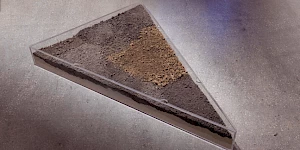
‘The Soils Project’ is part of an eponymous, long-term research initiative involving TarraWarra Museum of Art (Wurundjeri Country, Australia), the Van Abbemuseum (Eindhoven, Netherlands) and Struggles for Sovereignty, a collective based in Yogyakarta, Indonesia. It works through specific and situated practices that consider soil, as both metaphor and matter.
Seeking and facilitating opportunities to listen to diverse voices and perspectives around notions of caring for land, soil and sovereign territories, the project has been in development since 2018. An international collaboration between three organisations, and several artists, curators, writers and activists, it has manifested in various iterations over several years. The group exhibition ‘Soils’ at the Van Abbemuseum is part of Museum of the Commons. -
–tranzit.ro
Non-Western Technologies for the Good Life
The experimental course ‘Non-Western Technologies for the Good Life’ (November 2023–May 2024) celebrates as its starting point the anniversary of 50 years since the publication of Tools for Conviviality, considering that Ivan Illich’s call is as relevant as ever.
-
–Institute of Radical Imagination
Gathering into the Maelstrom
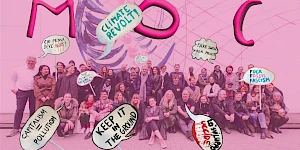
‘Gathering into the Maelstrom’ in Venice at Sale Docks is a four-day programme curated by Institute of Radical Imagination (IRI) and Sale Docks.
-
–Institute of Radical Imagination
Gathering into the Maelstrom (exhibition)
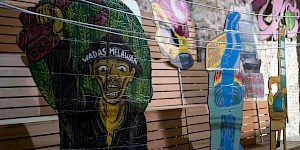
‘Gathering into the Maelstrom’ is curated by Institute of Radical Imagination and Sale Docks within the framework of Museum of the Commons.
-
HDK-Valand
Climate Forum II
The Climate Forum is a series of online meetings hosted by HDK-Valand within L’Internationale’s Museum of the Commons programme. The series builds upon earlier research resulting in the (2022) book Climate: Our Right to Breathe and reaches toward emerging change practices.