War, Peace and Image Politics: Part 1, Who Has a Right to These Images?
In this contribution curator and researcher art historian Jelena Vesić brings together extensive archival material with recent art practice, to ask how image making can trouble our relationship to the past and a contemporary political project of peace and solidarity. The contribution was adapted for L’Internationale Online following Vesić’s contribution to ‘Peace, unconditional. Politics. Histories. Memories. Futures’ held by ZRC SAZU, 22–23 November 2023.
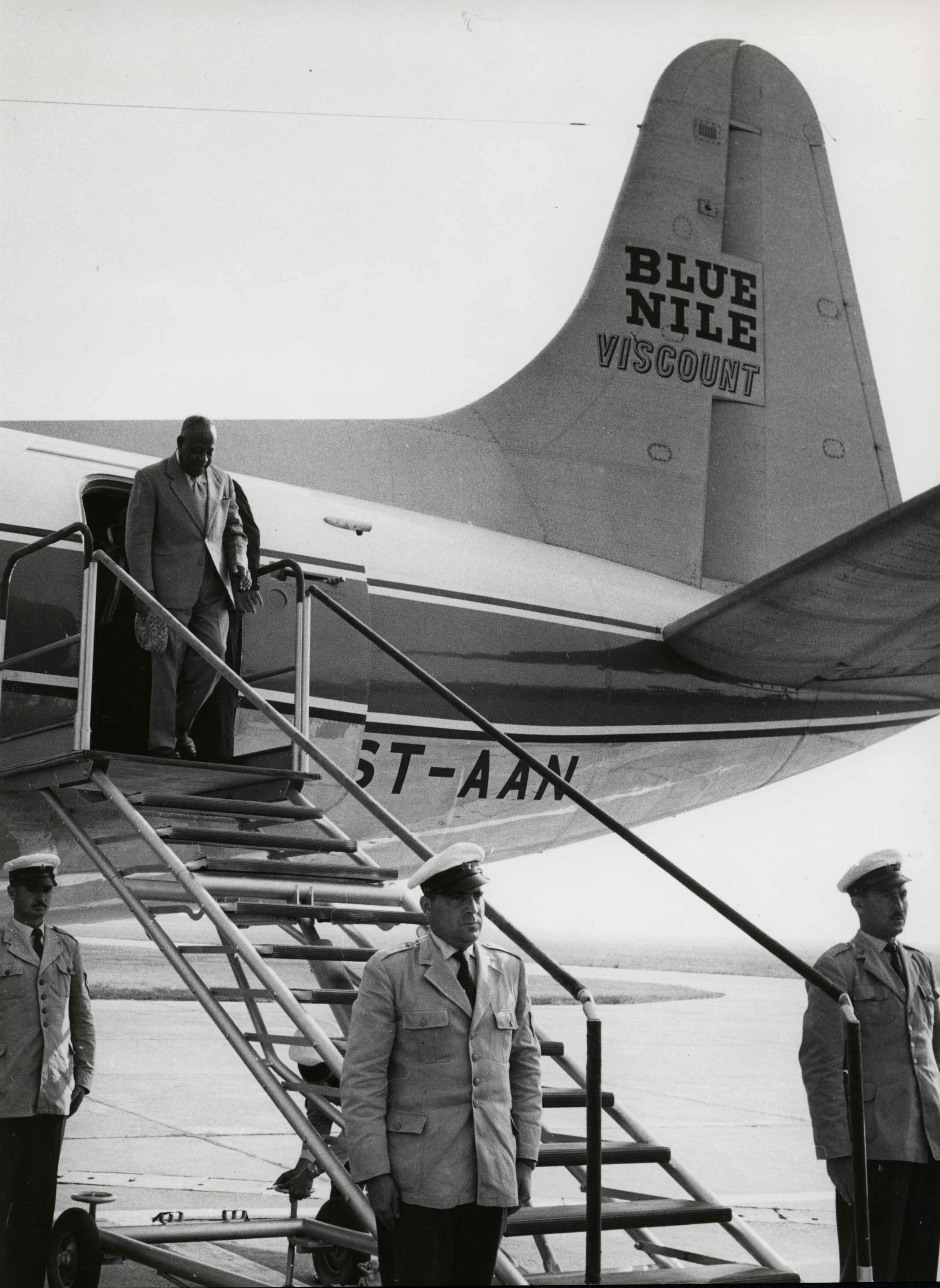
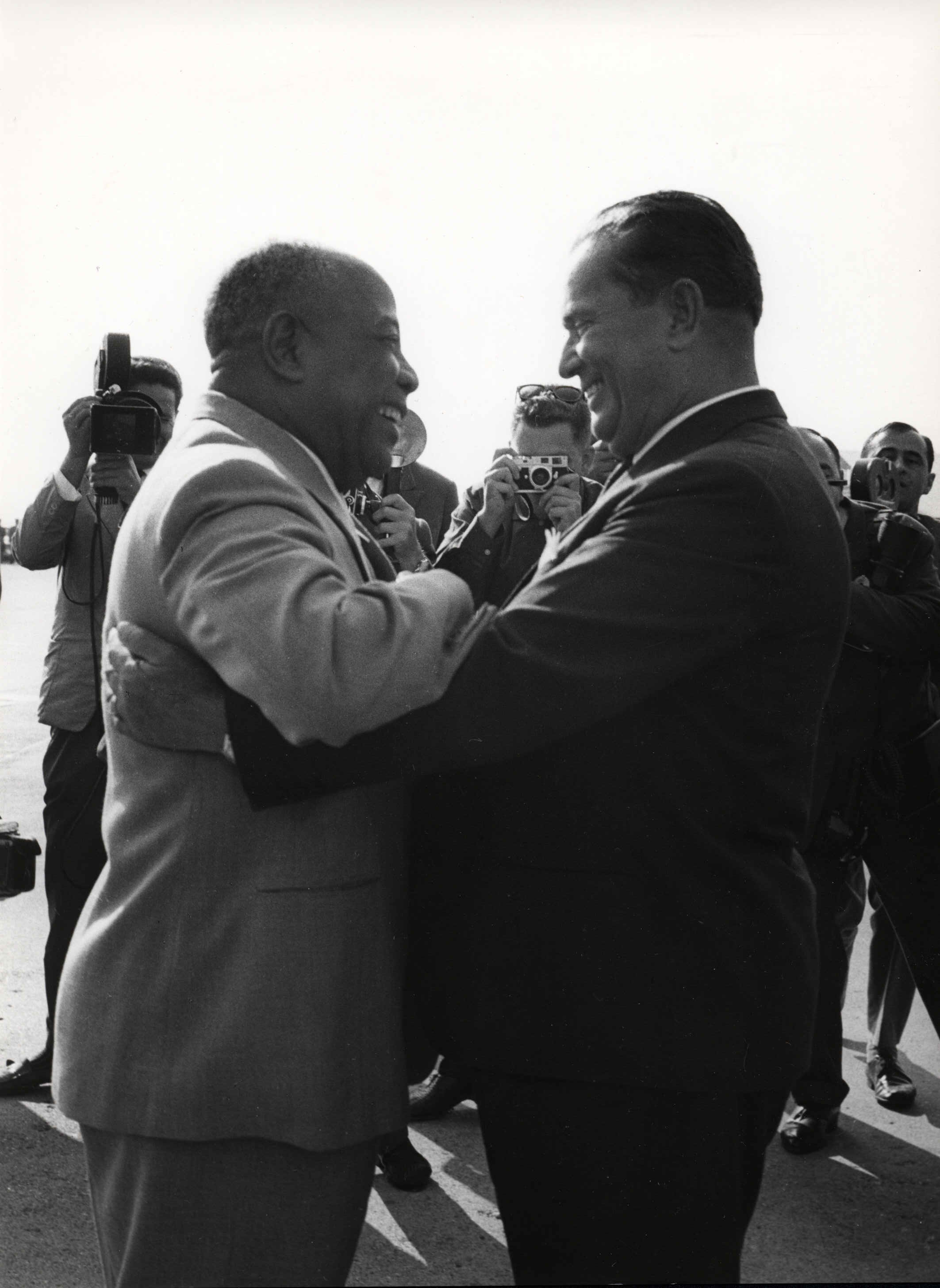
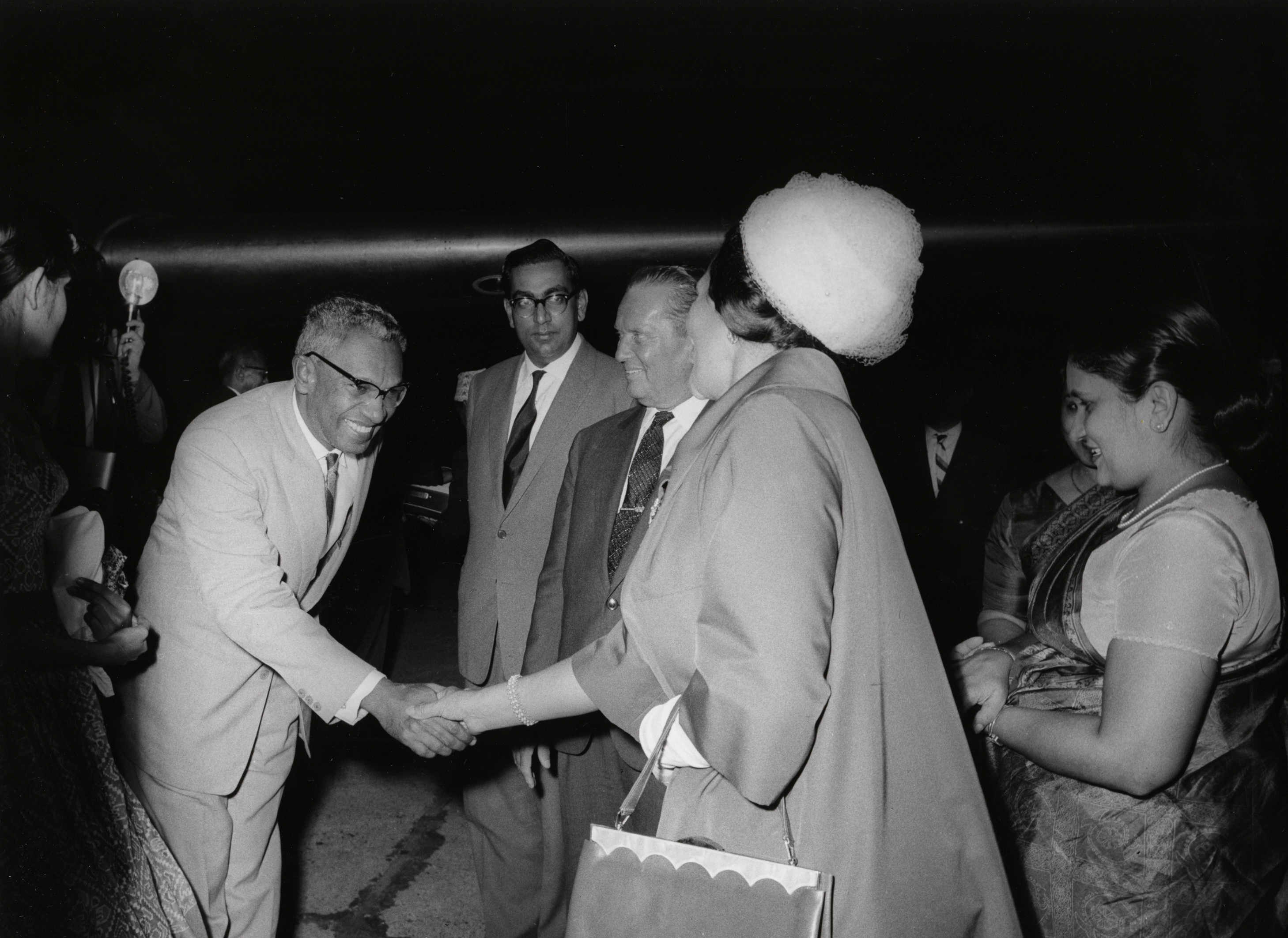
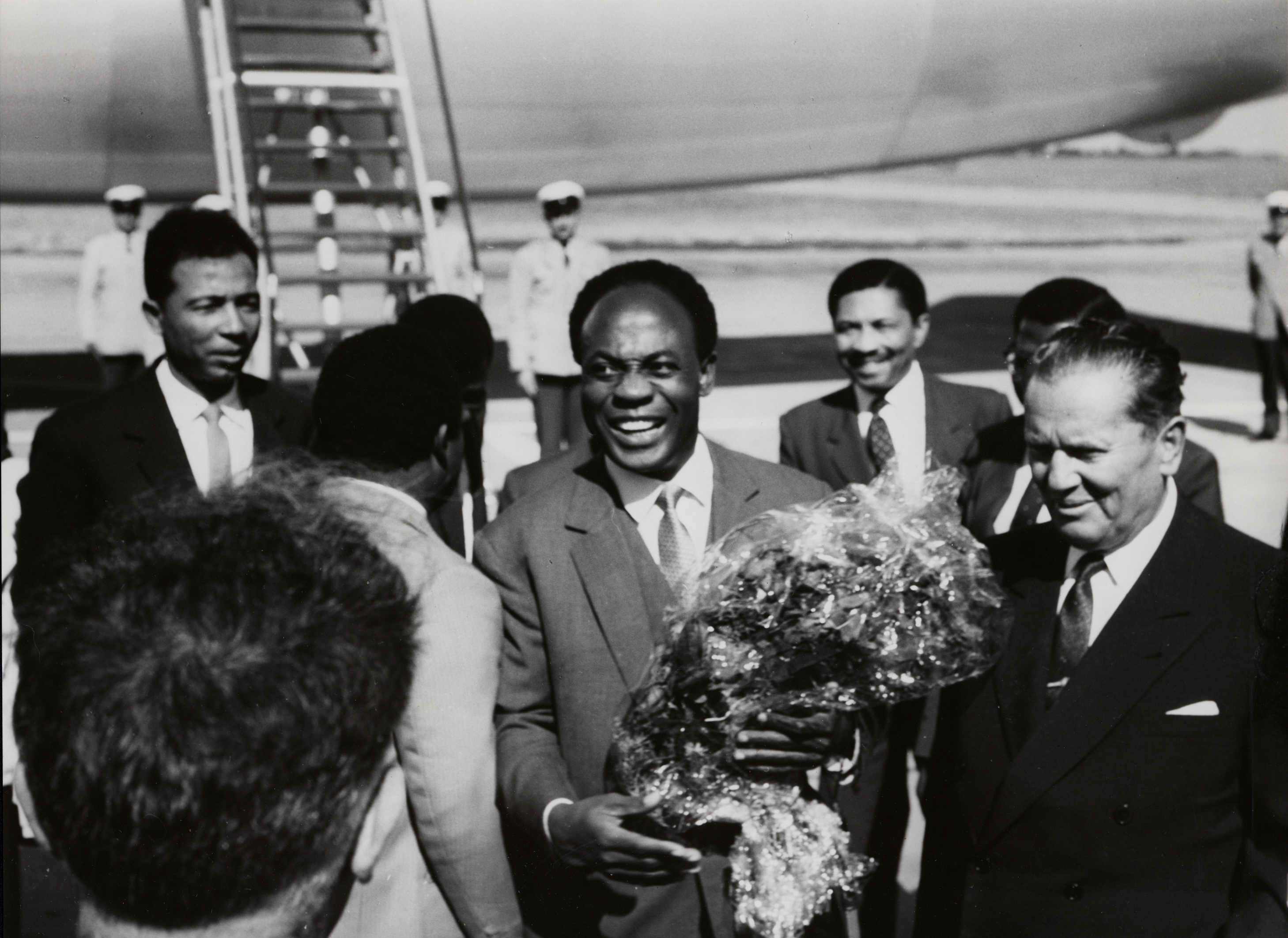
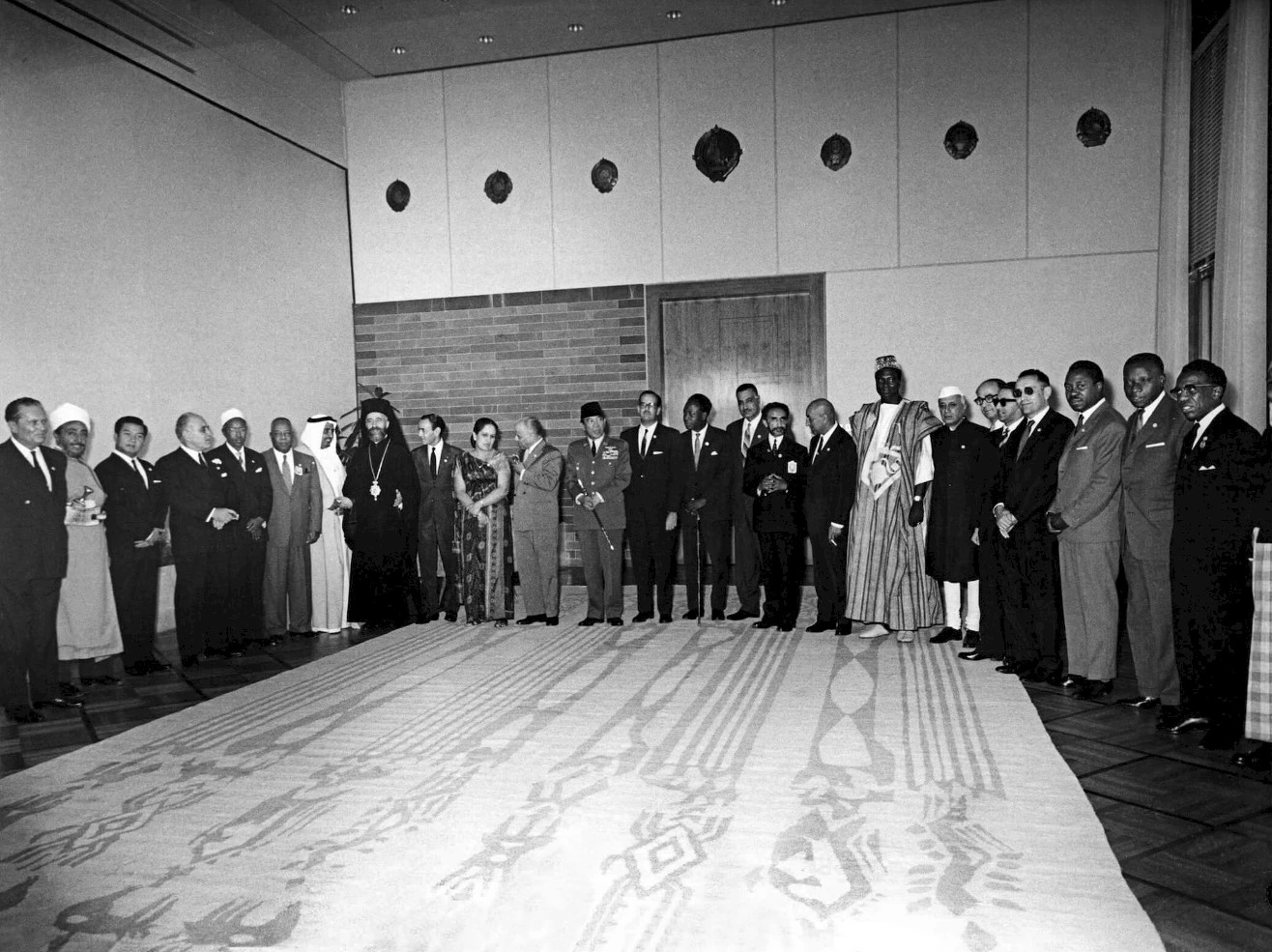
Non-Aligned Summit, Belgrade, 1961, Presidential photo archive, Museum of Yugoslavia
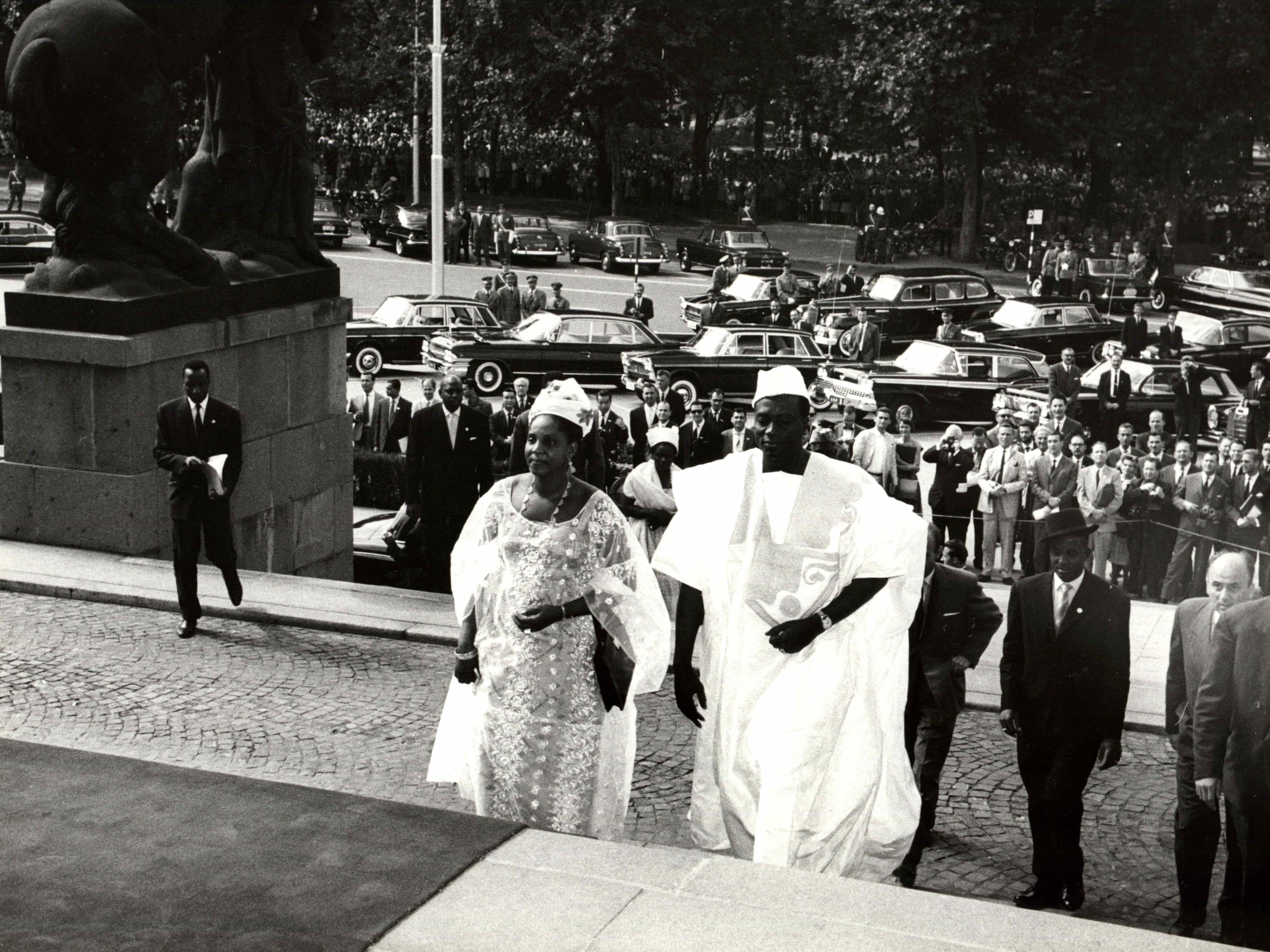
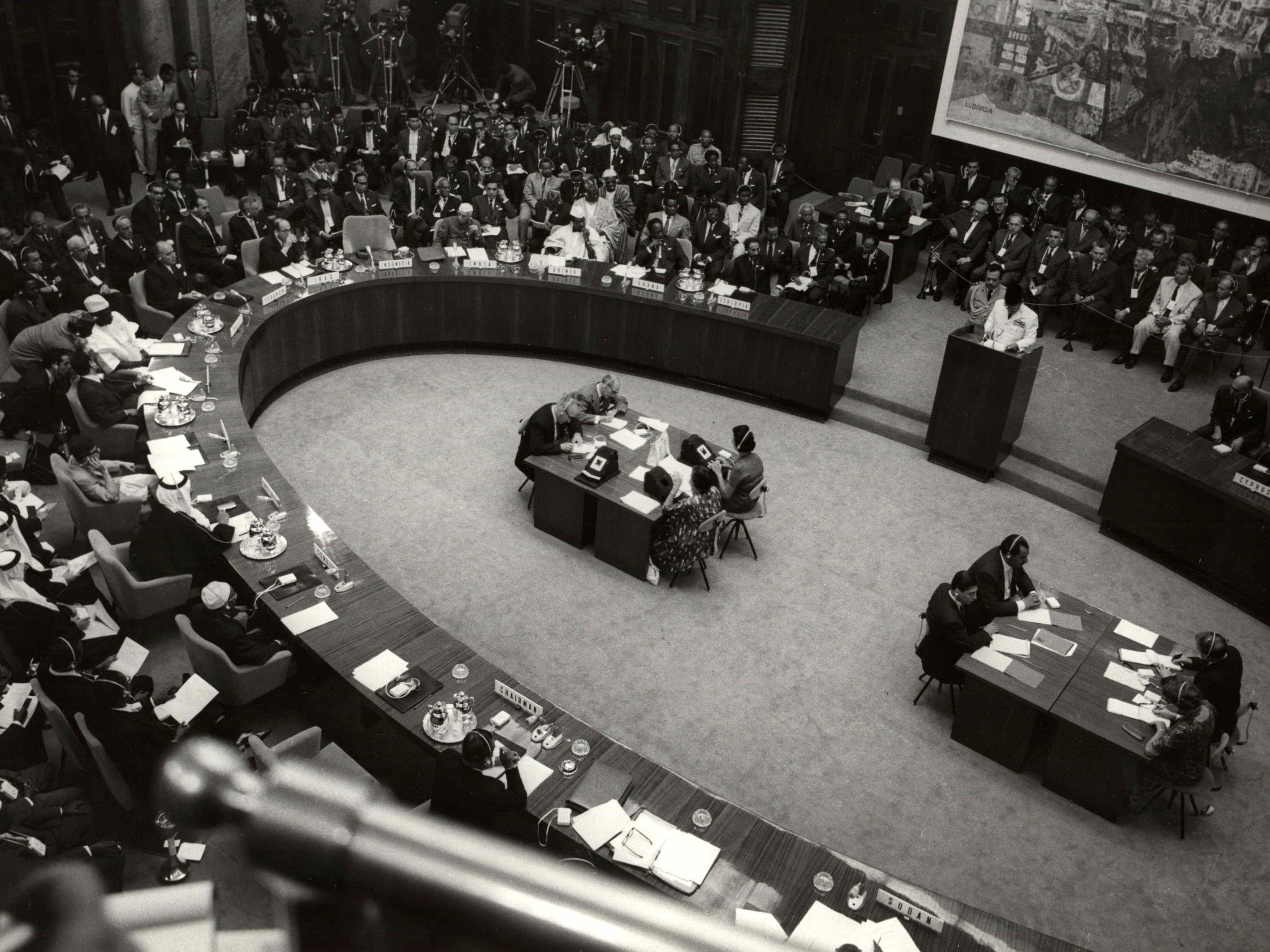
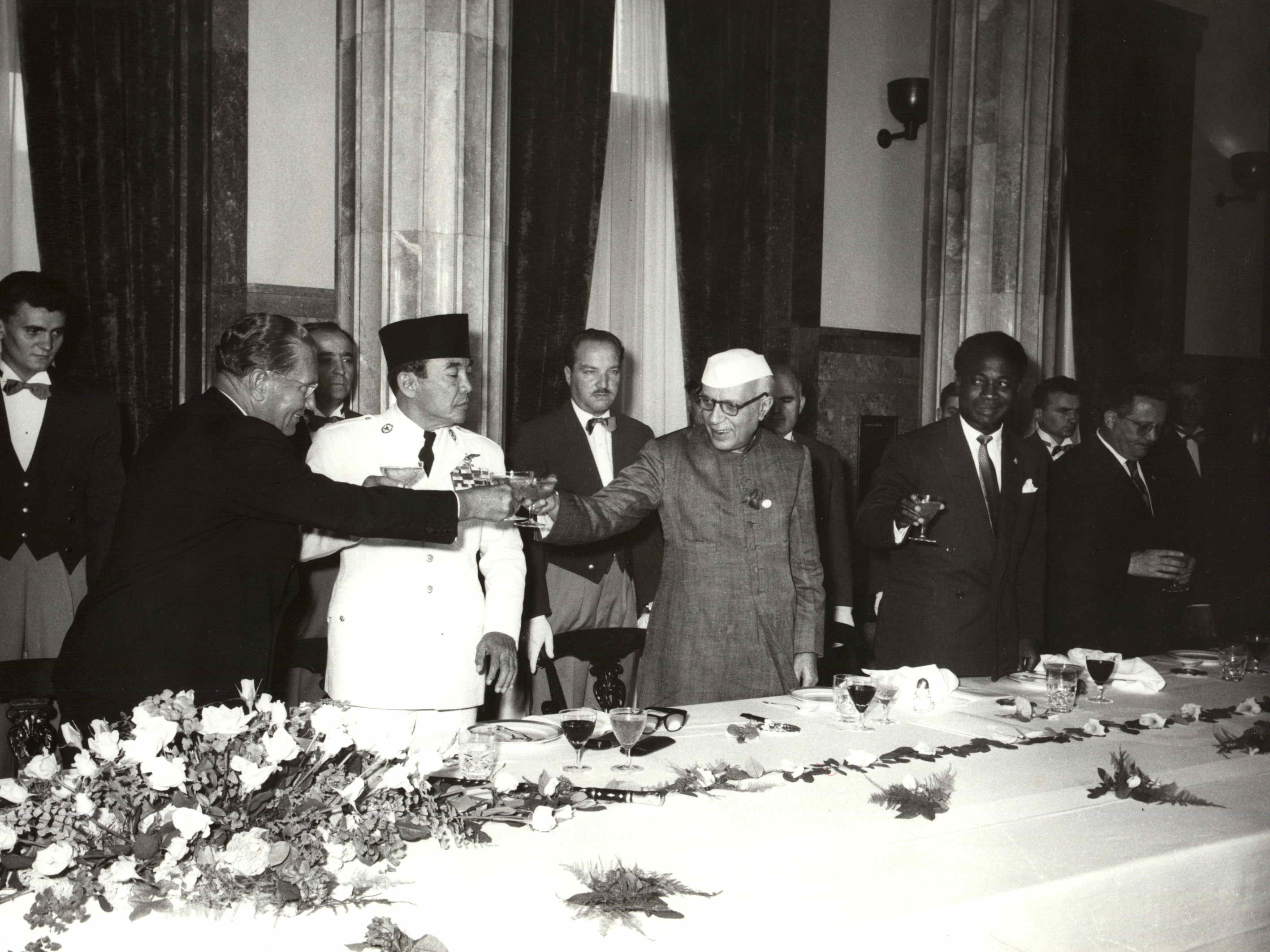
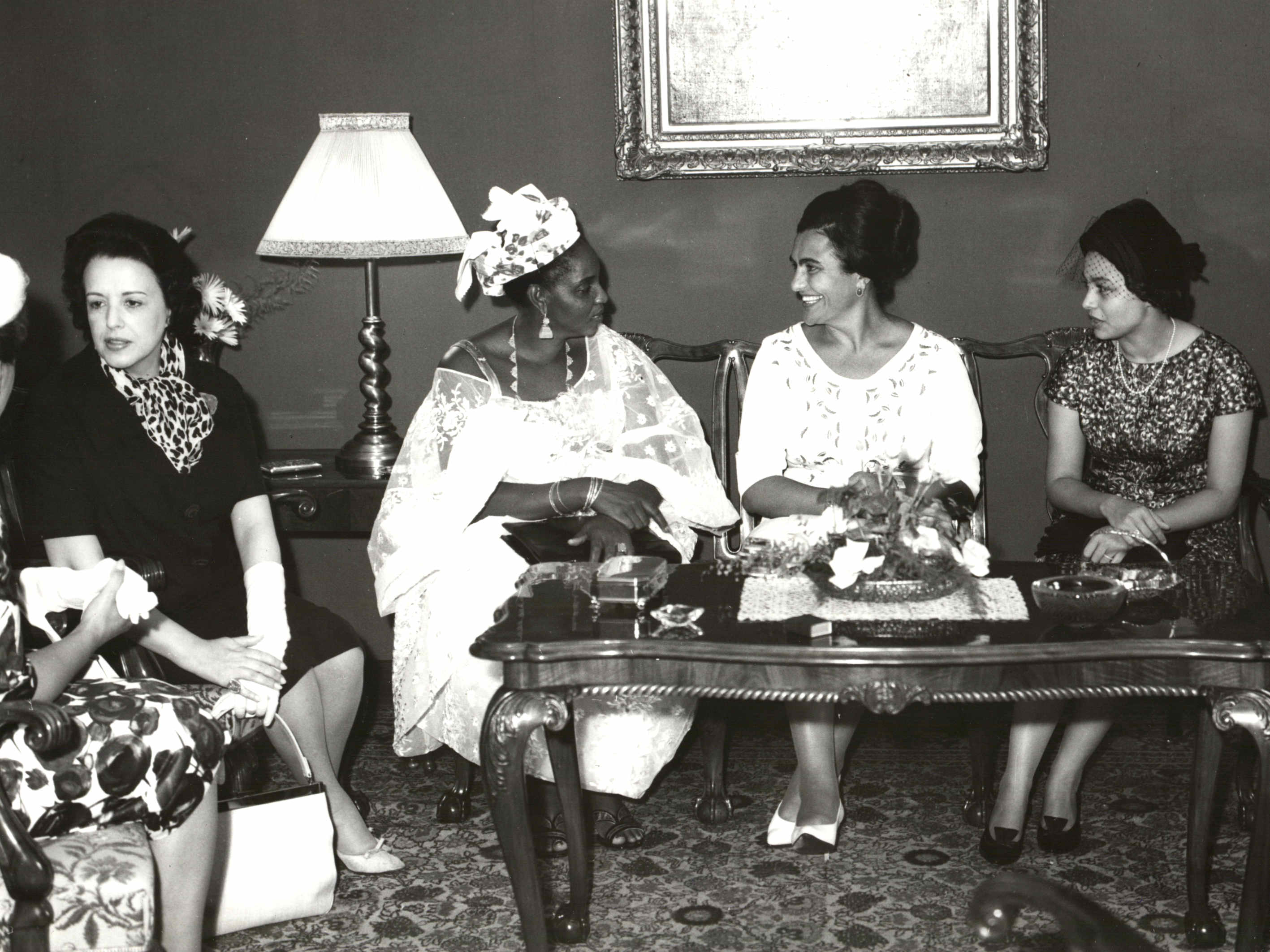
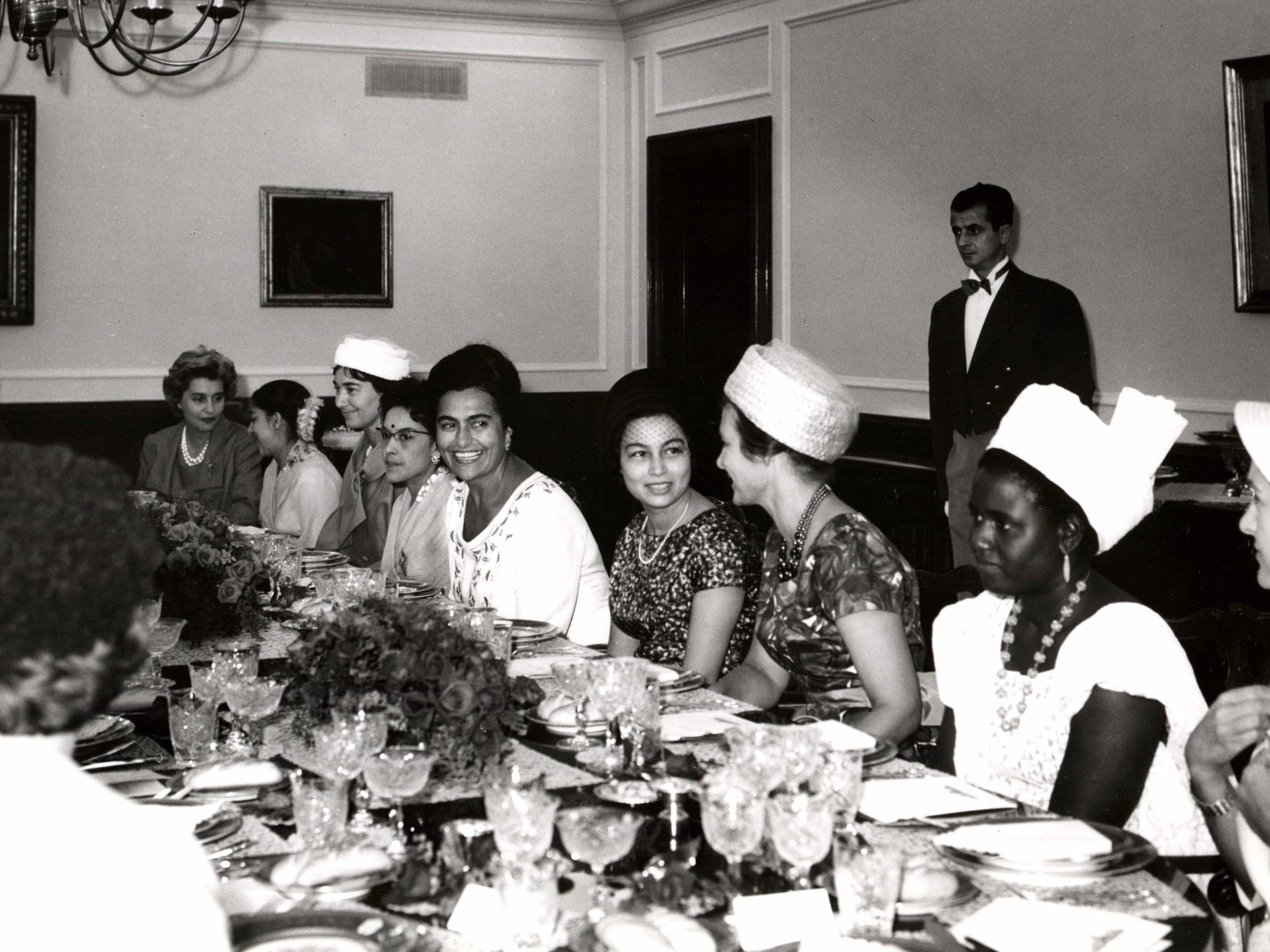
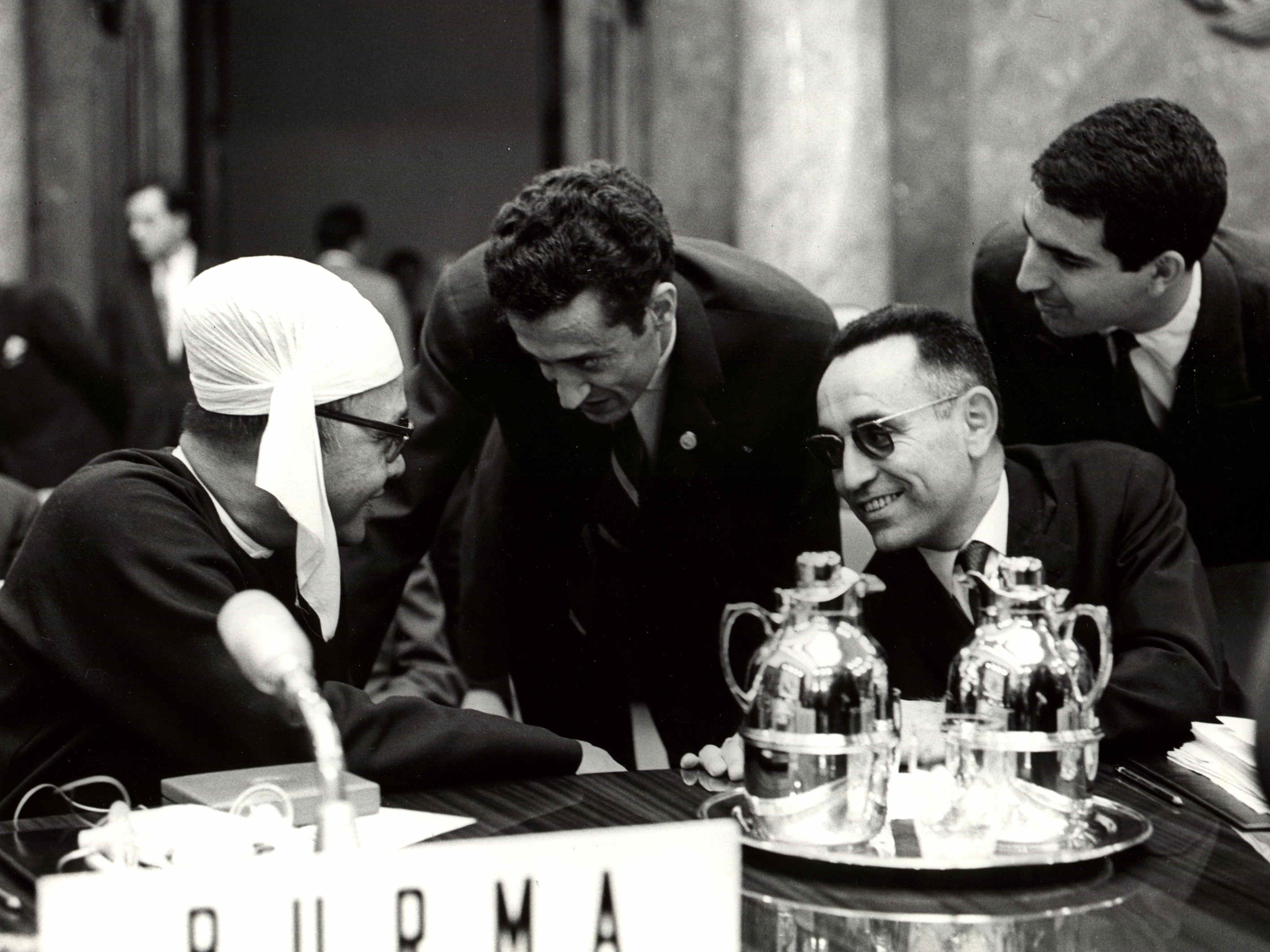
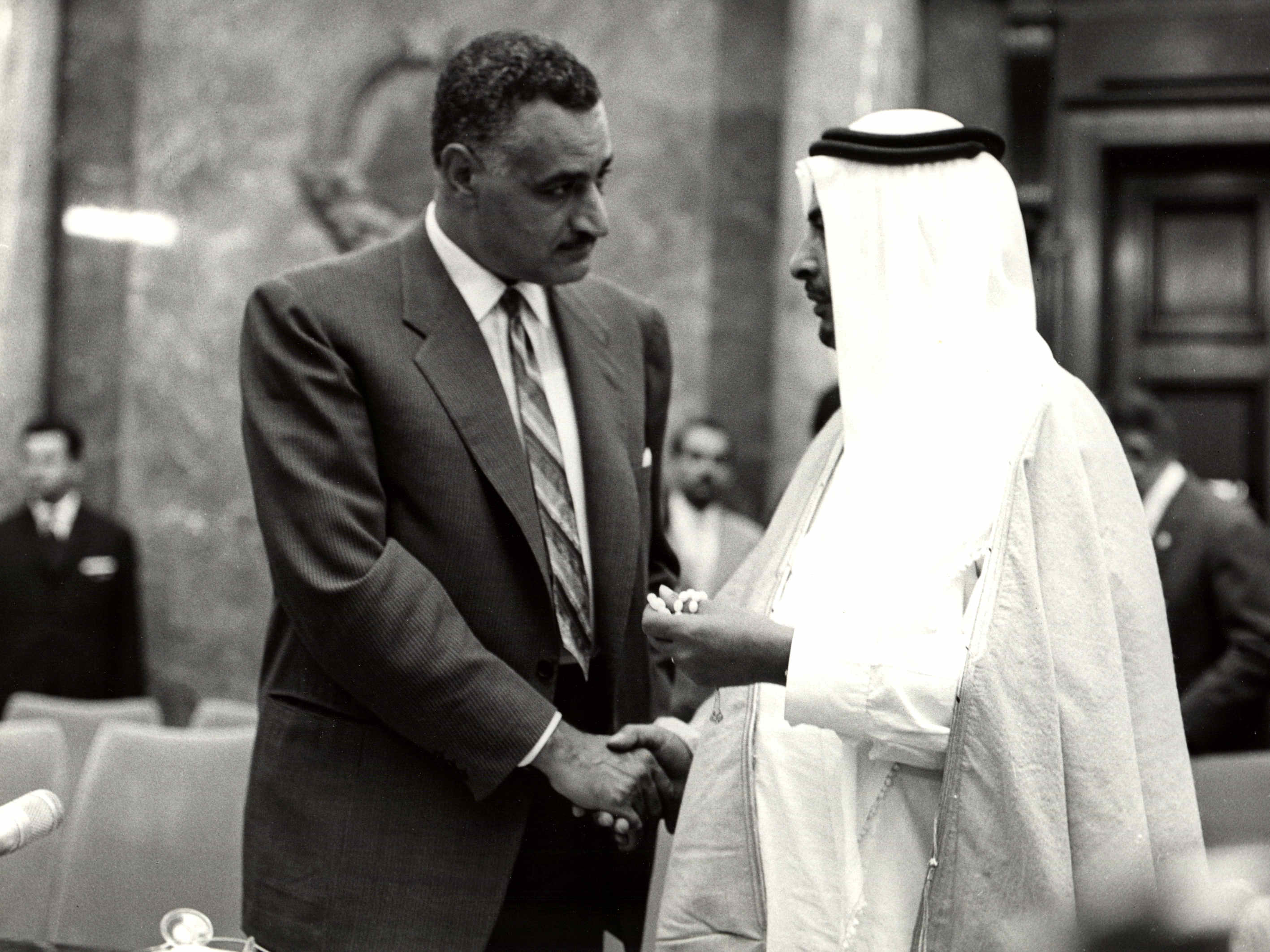
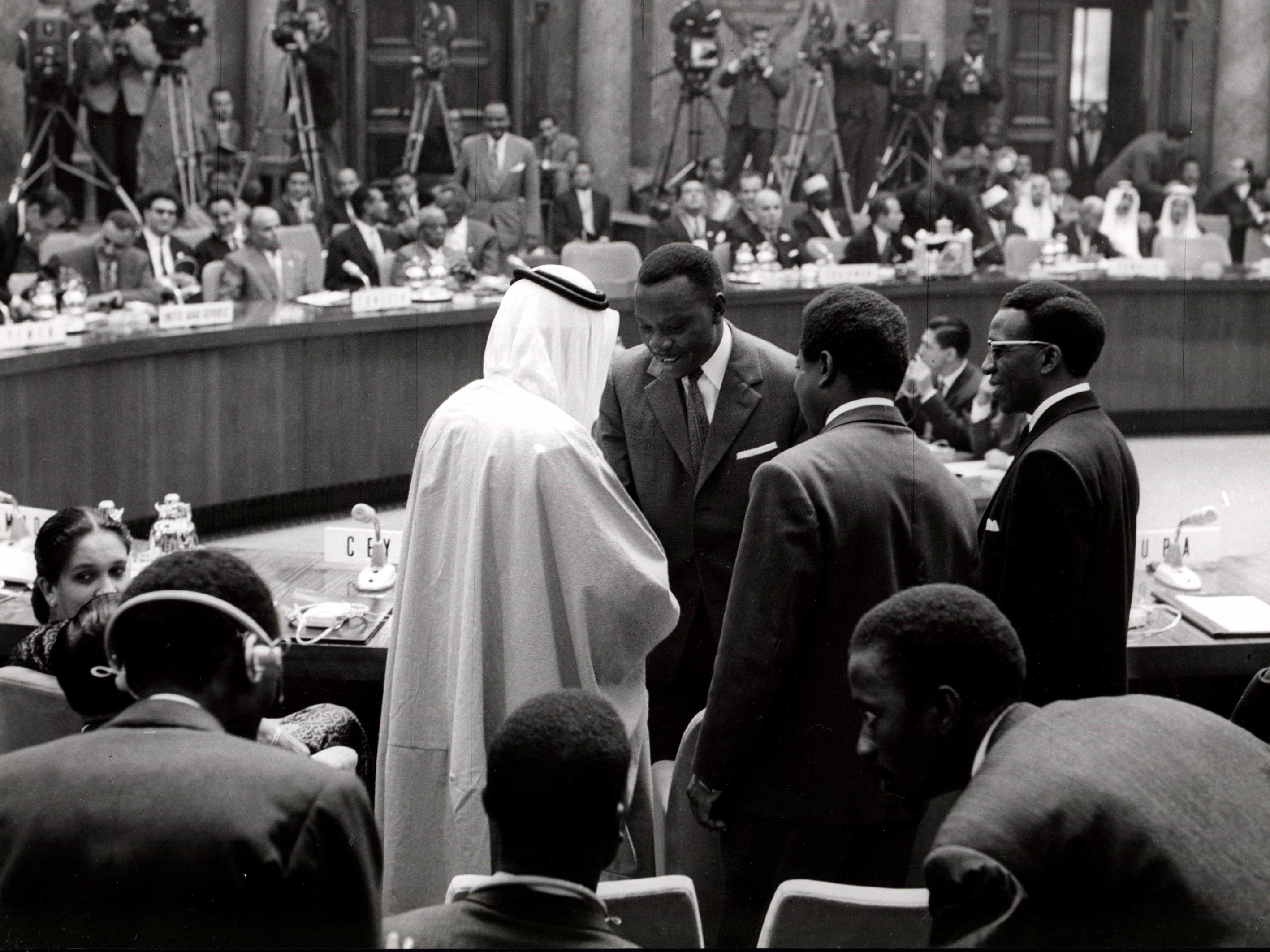
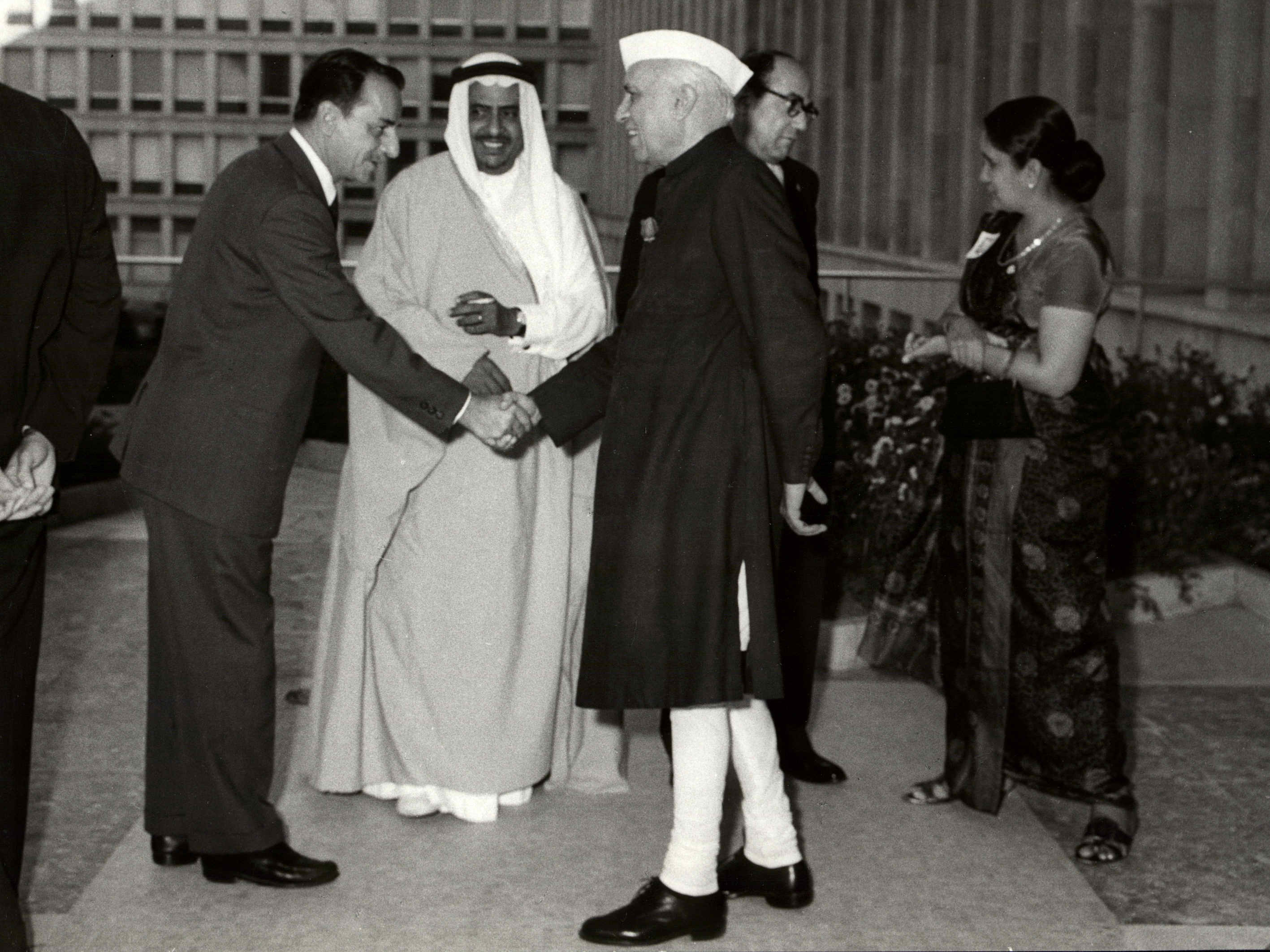
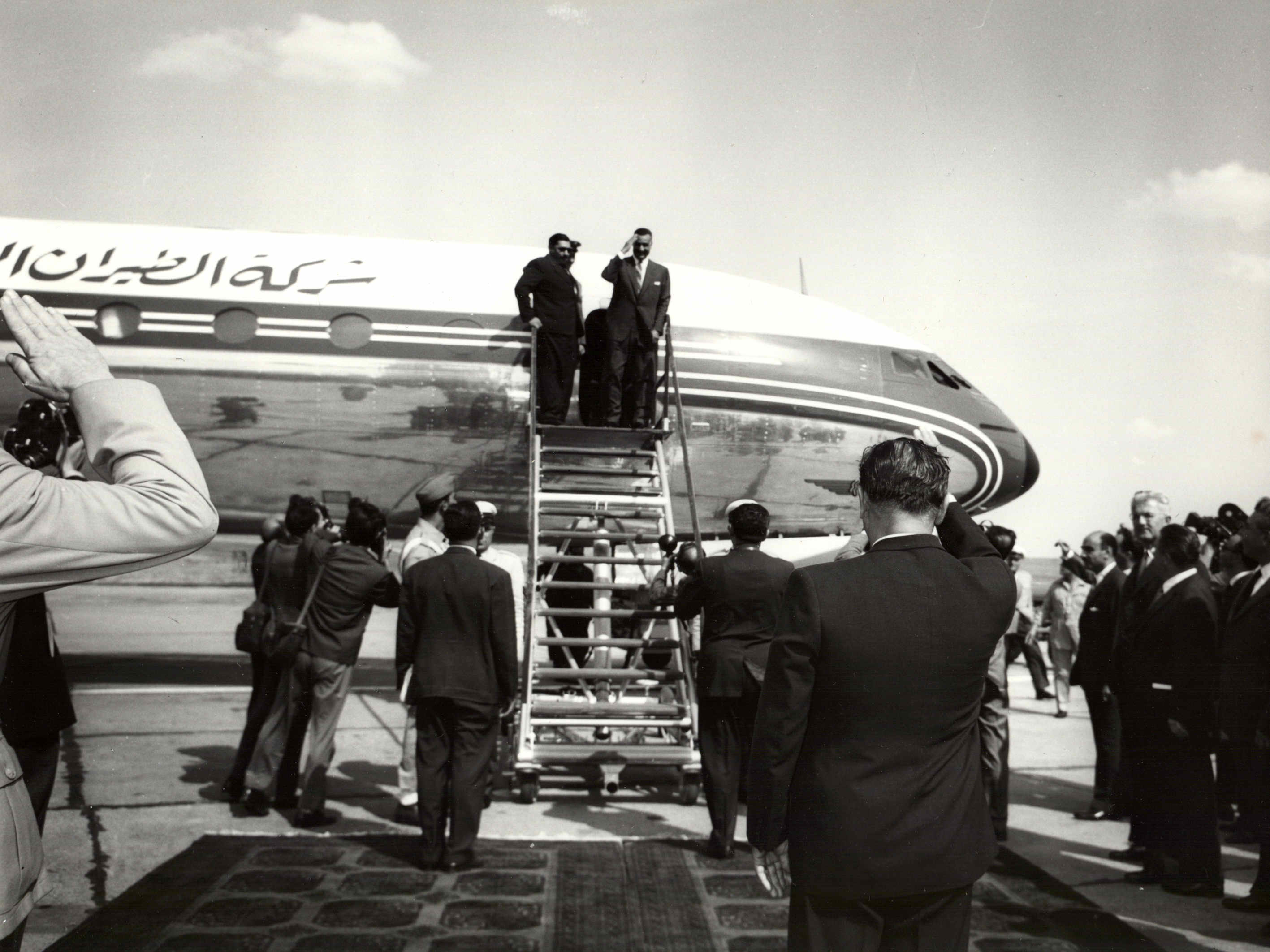
Today, it often feels like the struggle is not performed in the name of the present, but in the name of the past. And whenever we speak about the past, there can be a tendency towards nostalgia, to speak of the ‘good old times’ – the phenomenon that Svetlana Boym described as ‘the history without guilt.’1
Many contemporary projects dealing with the histories of non-alignment and socialism speak of these histories in apologetic and melancholic tones, evoking idealized images of a better past to challenge the present and its effects of reactionary historical revisionism, post-historical fictions (reconstructive spectacles), and amnesia induced by technological and informational acceleration. However, other projects reflect on the failures and unfulfilled promises of these emancipatory histories, opening up space for more differentiated, critical and less-nostalgic attitudes to the past.
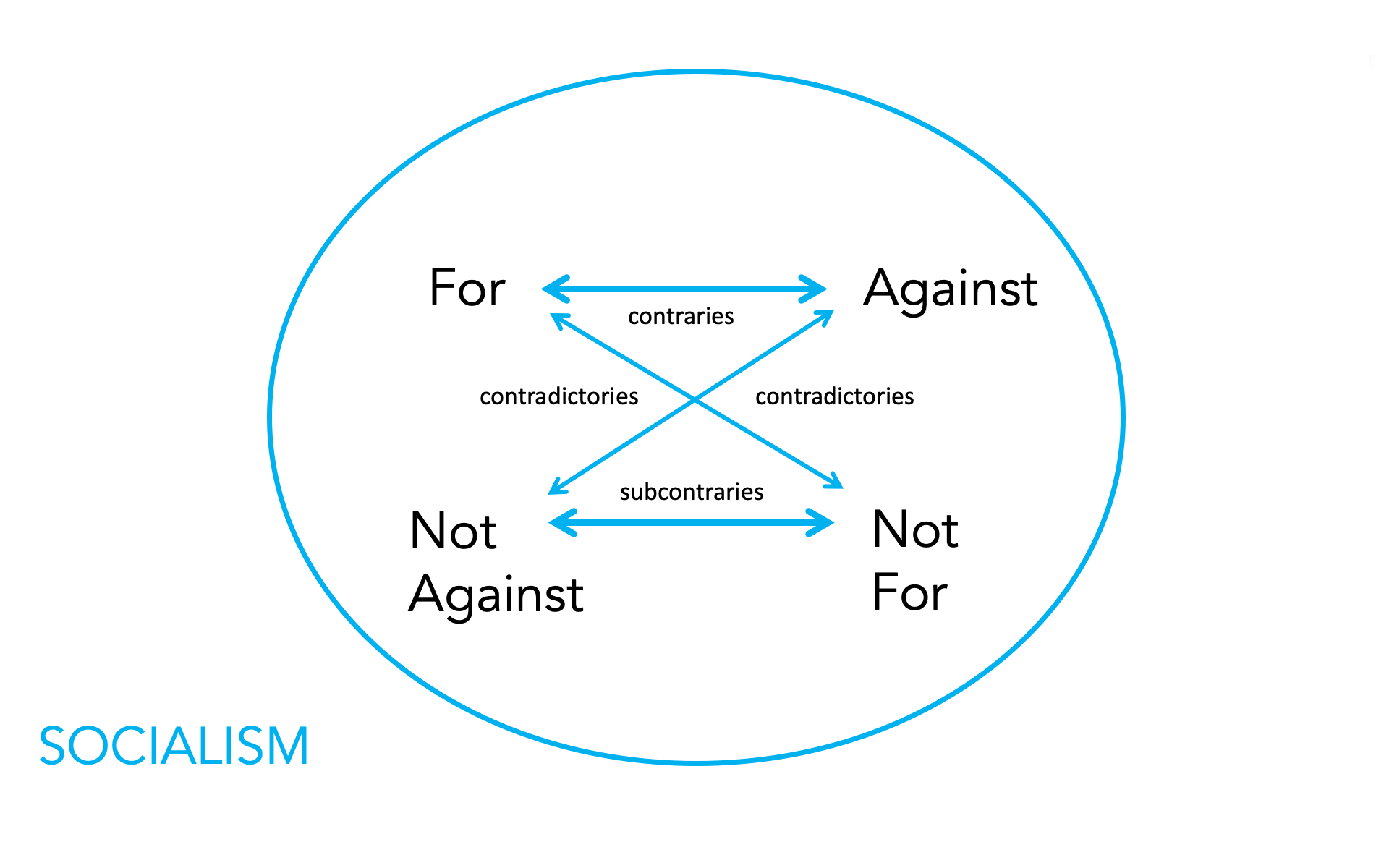
Jelena Vesić, Rachel O’Reilly, Vladimir Jeric Vlidi, On Neutrality: Letter from Melos, (edition Non Aligned Modernisms), Belgrade, 2016
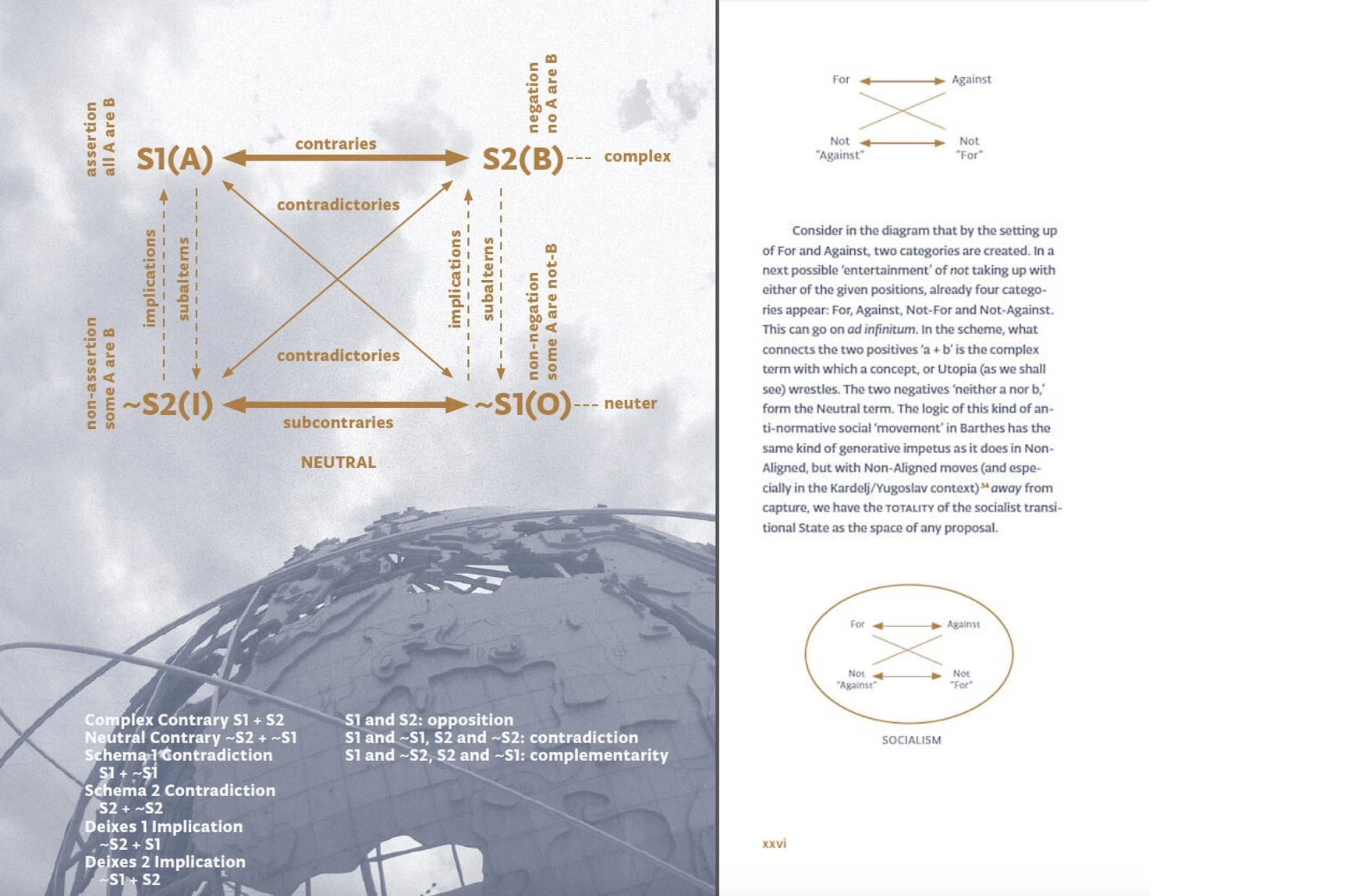
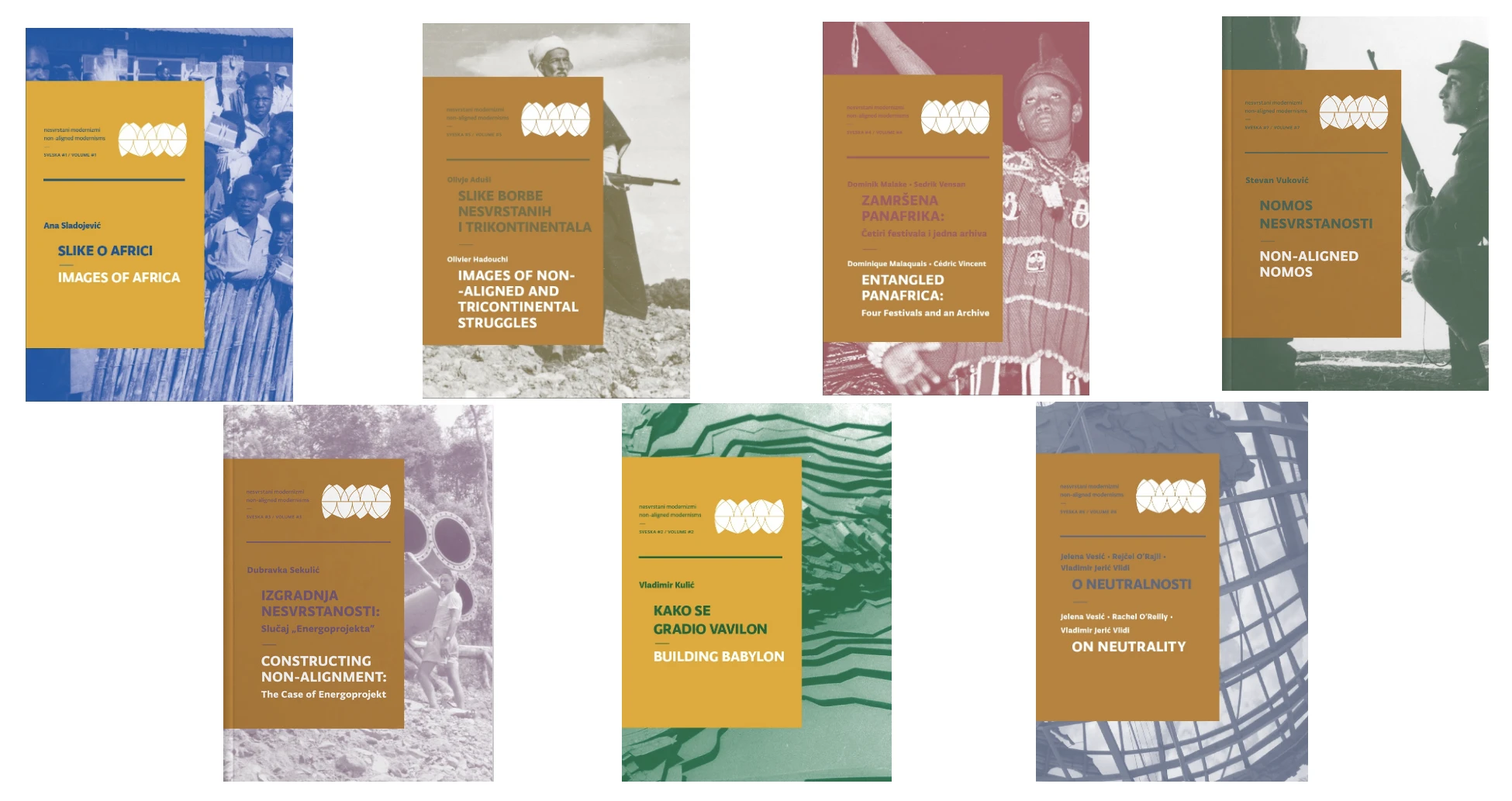
In the essay-book On Neutrality: Letter from Melos (2016) we juxtaposed the notions of active neutrality and political peace, used by the Non-Aligned Movement (NAM) in its international positioning, with contemporary forms of neutralization in conflict management – so-called normalization – with the latter held as a constitutive element of permanent war.2
Conflicts today do not lead towards the resolution of disputed situations but serve to maintain or perpetuate stagnant crises. Giorgio Agamben evokes the Greek term stasis, which means both civil war and immutability – a civil war that is unresolved and drags on.3
Although neutrality as a political concept primarily means not taking part in a war, it gets quite complex as the term continues to be utilized across progressive, conservative, legal-normative and revolutionary identifications. In the political terminology of NAM, active neutrality or politicized neutrality became synonymous with independent politics, (national) sovereignty, friendship and solidarity. Kwame Nkrumah wrote: ‘Our politics of positive neutrality is not passive or neutral politics – this is affirmative politics based on our firm belief in positive action.’4
The politics of active neutrality was opposed to the Euro-Atlantic juridical management of neutralism as well as the Western ideology of peace, while at the same time introducing something new and unexpected. This can be summarized in the thesis of a non-aligned third position, and in the nuanced neither/nor dialectics reflected by Yugoslav politician and architect of socialist self-management Edvard Kardelj in his Historical Roots of Non-Alignment (1975).5 For Kardelj, the two-fold negation of the power blocs did not imply reaching a point of ideal equidistance from the existing centres of power, but countering the power politics as such.
This negation of power politics, symbolically captured by both the historic Bandung Afro-Asian conference of 1955 and the conference of Non-Aligned Countries in Belgrade 1961, marked a movement from the bipolar condition of the Cold War towards a wholly novel situation, as the emerging forces of new and socialist nations articulated the project of political peace as a form of collective solidarity.
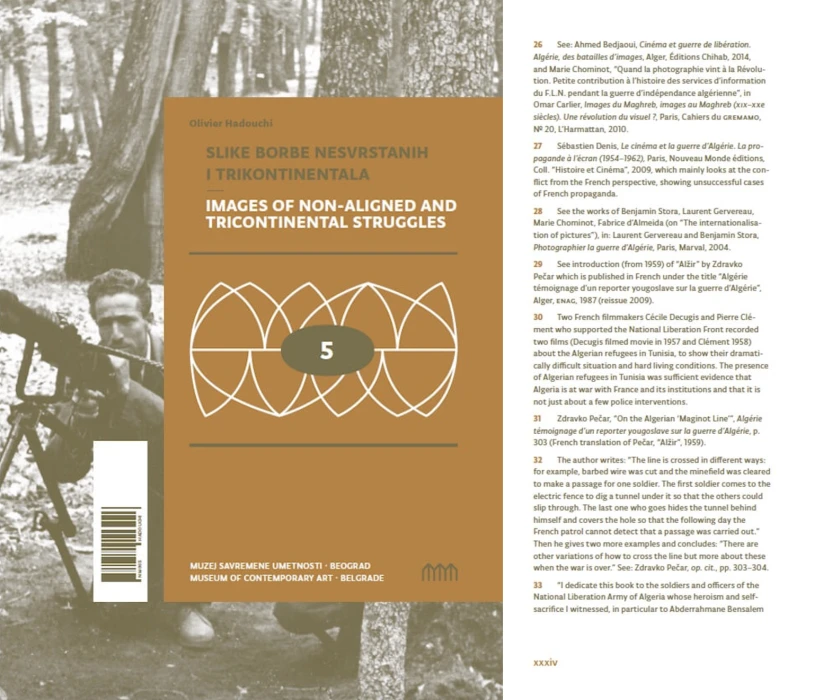
Olivier Hadouchi, Images of Non-Aligned and Tricontinental Struggles, (edition Non Aligned Modernisms), Belgrade, 2016
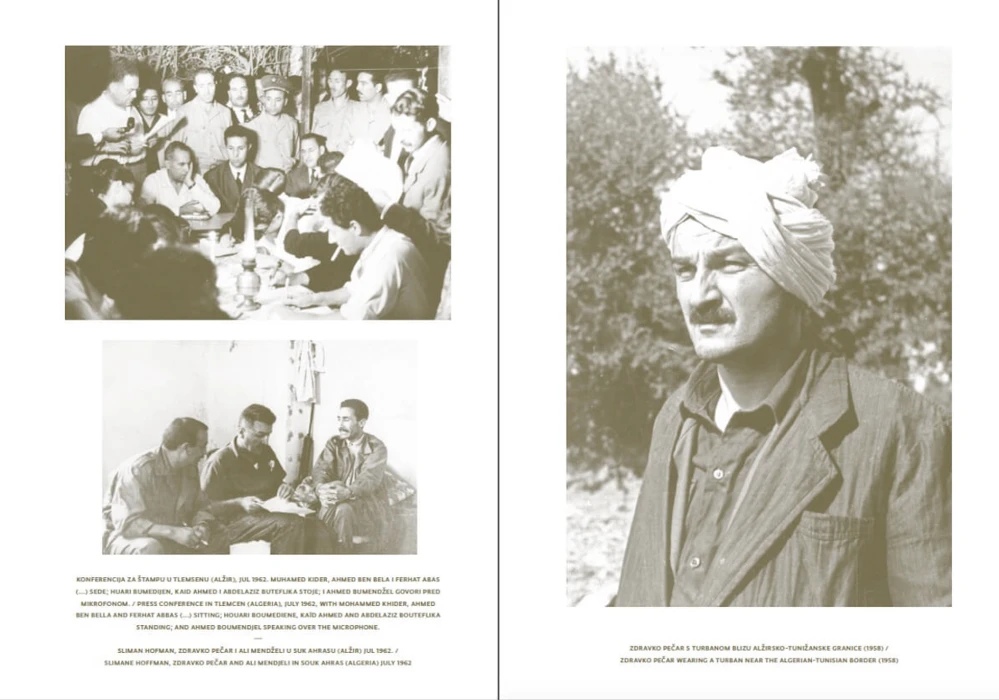
In his essay ‘Images of Non-Aligned and Tricontinental Struggles’, film historian and critic Olivier Hadouchi observes images of guerrilla fighters (the partisans of liberation wars, of wars for independence) figuring as images of solidarity.6 He finds examples of such imagery in pictures from the anti-fascist peoples’ liberation struggle of the Yugoslav Partisans in World War II, in photographs of guerrilla fighters in the Algerian War of Independence (1954–62), and in images of guerrilla political movements in Latin America during the 1970s.
The militant Tricontinental movement appeared on the margins of NAM to promote the unity and sovereignty of the Third World, inspired by the ideas of Frantz Fanon, Amilcar Cabral, Ho Chi Min and Ernesto Che Guevara. The first Tricontinental Conference, held in Havana in January 1966, gathered together various African, Asian and Latin American nations and revolutionary movements of the Latin American subcontinent. For both movements – Tricontinental and Non-Aligned – the common desire was to give representation to the Third World and to create ties between their countries. Many cultural workers from NAM countries (reporters, photographers, film directors and film-makers) contributed to spreading the true picture of the Third World’s struggle for freedom. The movement of Third Cinema (Tercer Cine) played a big role in that context, confronting the traditions of Hollywood and European cinema. For example, Fernando Solanas and Octavio Getino’s documentary La hora de los hornos / The Hour of the Furnaces: Notes and Testimonies on Neocolonialism, Violence and Liberation (1968), which includes archival material (newsreels) and testimonies of Peronist resistance fighters, intellectuals and university leaders, directly participates in the reality of the revolutionary moment in Argentina. The film trilogy The Battle of Chile: The Struggle of an Unarmed People (1975–79) by Patricio Guzmán is another example of cinema vérité in which the camera person performs the act of filming real objects, people and events in a confrontational way, capturing the interaction between the film-makers and their subjects in a documentary essay-film style.
The term ‘Third World’ was coined in 1952 by the demographer Alfred Sauvy, who was inspired by the social-class concept of the ‘Third Estate’. 7 Prior to the French bourgeois revolution, in contrast to the nobility and clergy, those belonging to the Third Estate ‘counted for nothing’ on the political stage, and ‘desired to be something.’8 The Third World, according to Vijay Prashad, does not represent a place, but a project.9
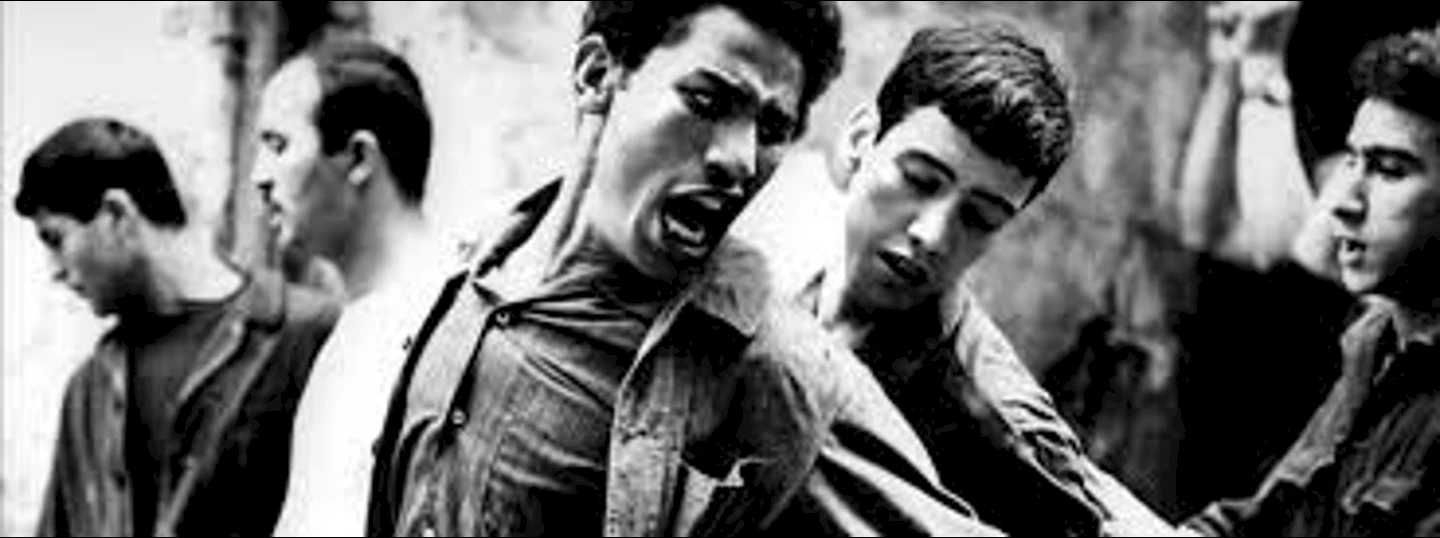
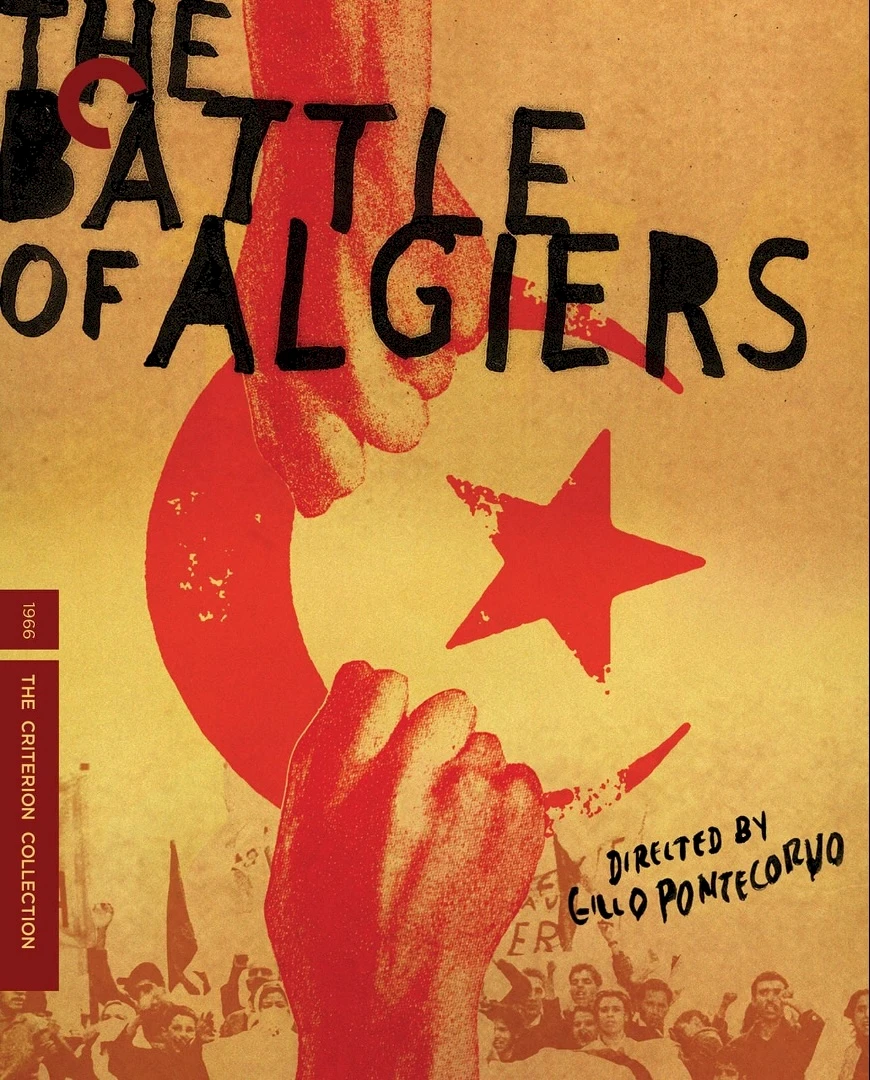
Gillo Pontecorvo, The Battle of Algiers, 1966, film stills
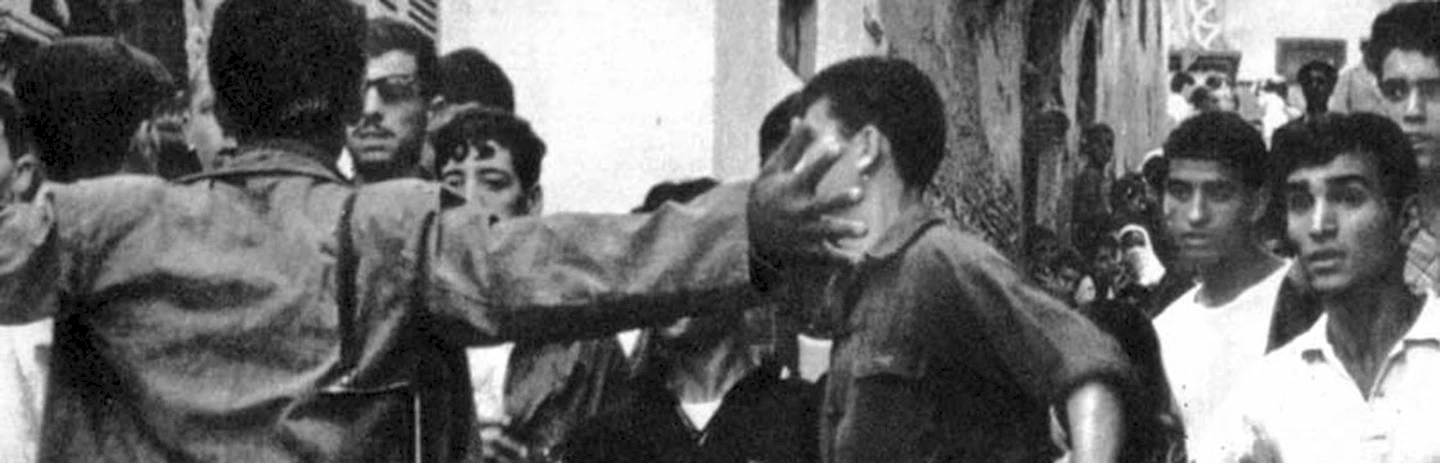
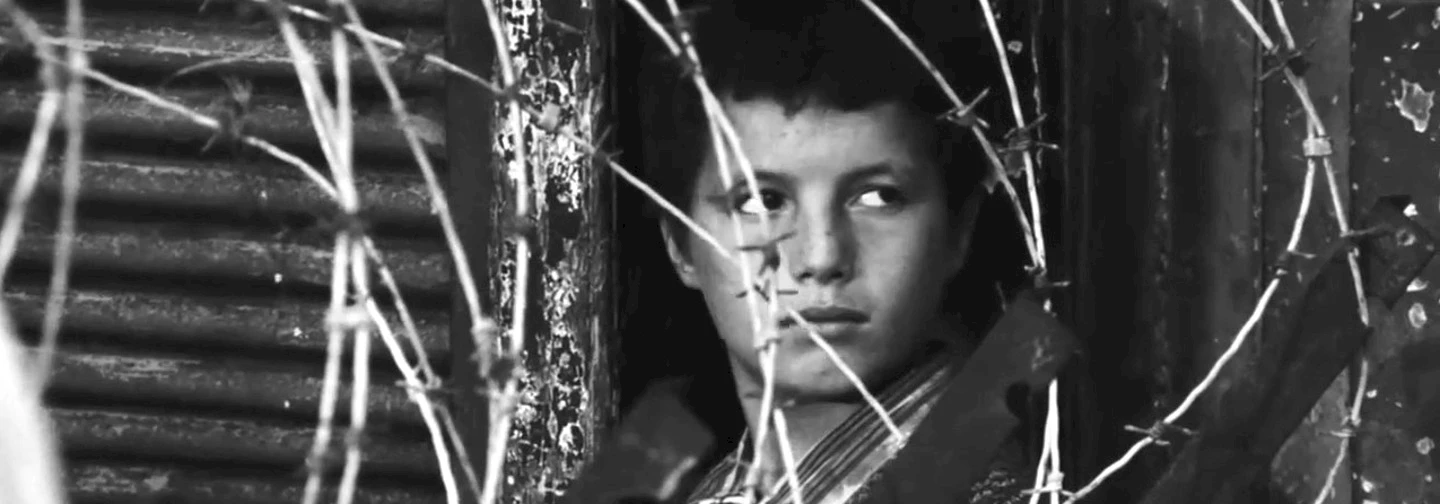
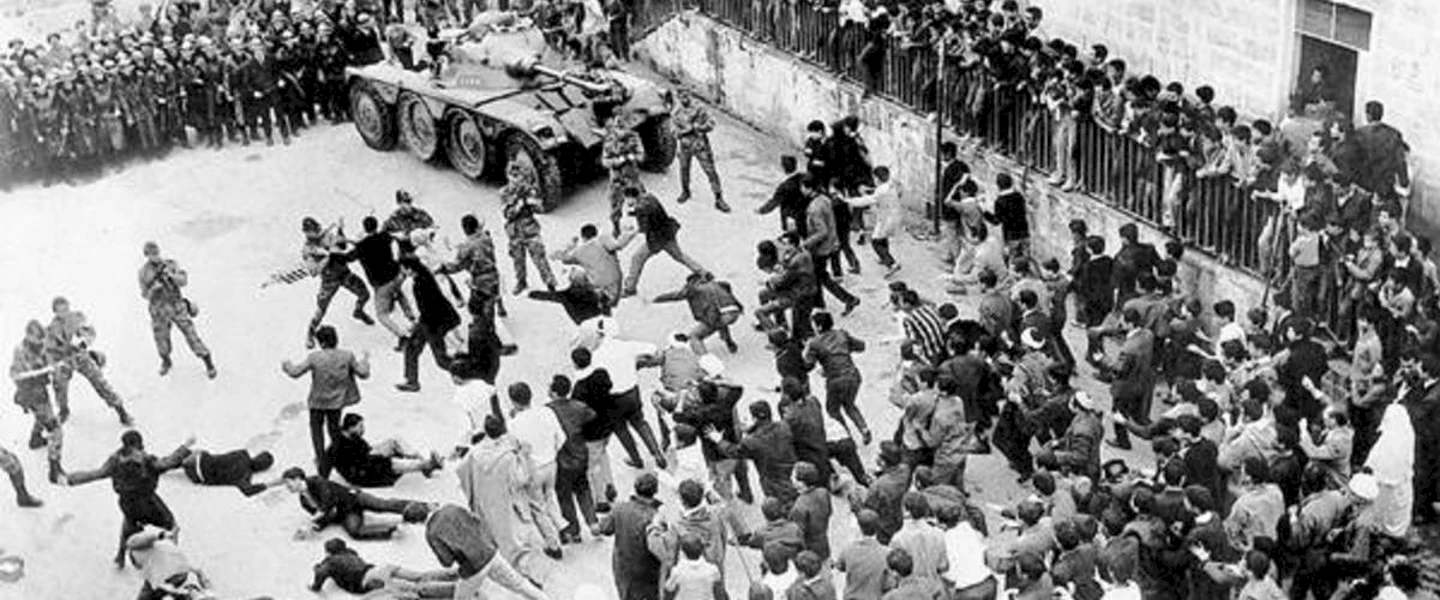
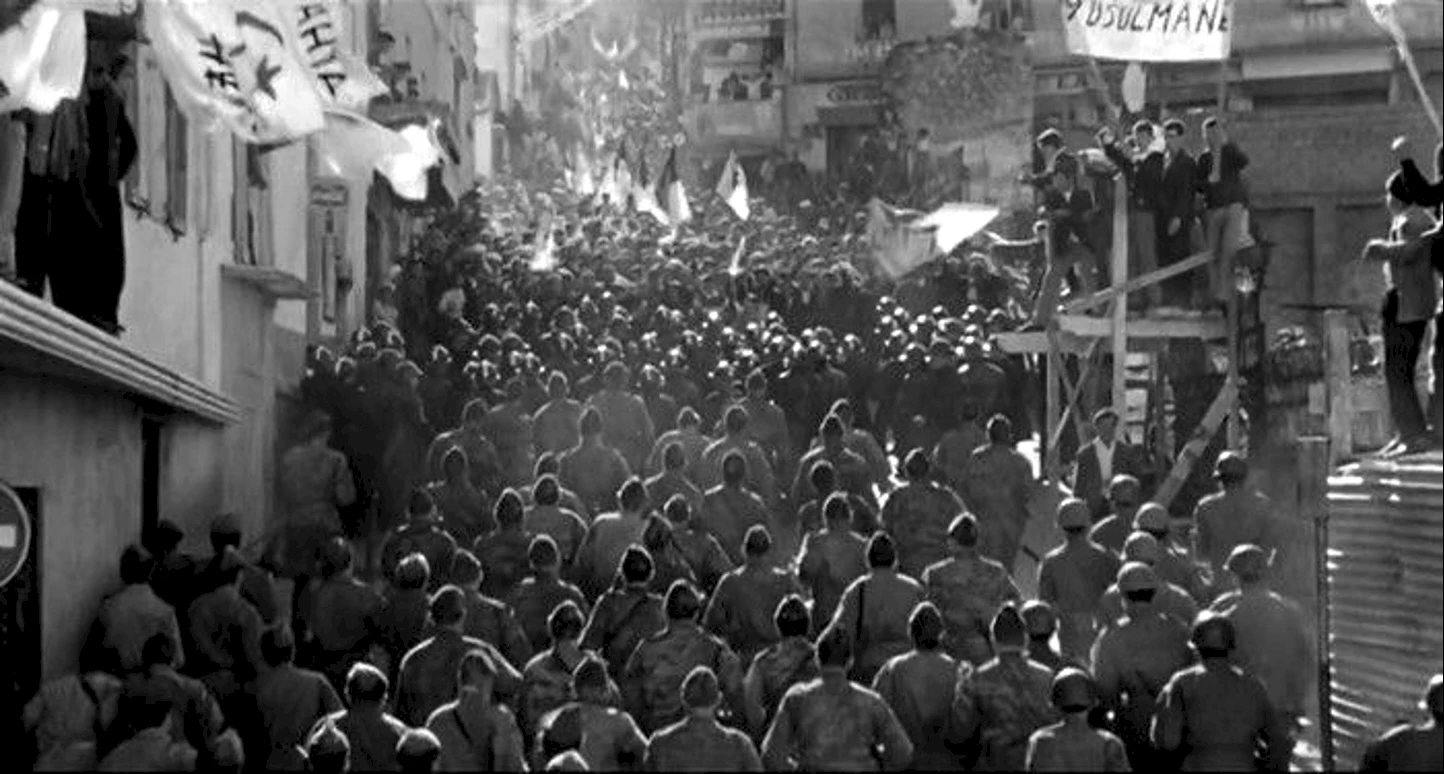
National liberation struggles, guerrilla resistance and counter-insurgent actions in the 1950s and 1960s became increasingly oriented towards influencing people’s thinking, rather than deploying armies. They were implementing the new techniques of political warfare, or, as art theorist and philosopher Stevan Vuković claims in his essay ‘Non Aligned Nomos’, they were establishing the new nomos (order, law).10 This type of warfare may be combined with violence, economic pressure, subversion and diplomacy, but its chief aspect is the use of words, images and ideas, commonly known as propaganda or political warfare.11 Its main goal is that of ‘winning hearts and minds’, rather than conquering territories.
In the Algerian War, the enormous psychological superiority of the rebels efficiently countered the truly enormous material superiority of the French forces. Yet Yacef Saâdi, one of the military commanders of the Algerian National Liberation Front (FLN), wrote in his diary, after Frantz Fanon, that the ‘colonized man finds his freedom in and through violence.’12 Gillo Pontecorvo’s The Battle of Algiers (1966), the ultimate film on the use of violence and guerrilla tactics in the struggle for national liberation, is a direct implementation of Saâdi’s experiences, whose memoirs, written in prison, were used as the script for the film. (Saâdi was barely literate, and dictated the text to a friend.) In the movie, Saâdi plays a character, Djafar, modelled on his own experiences.
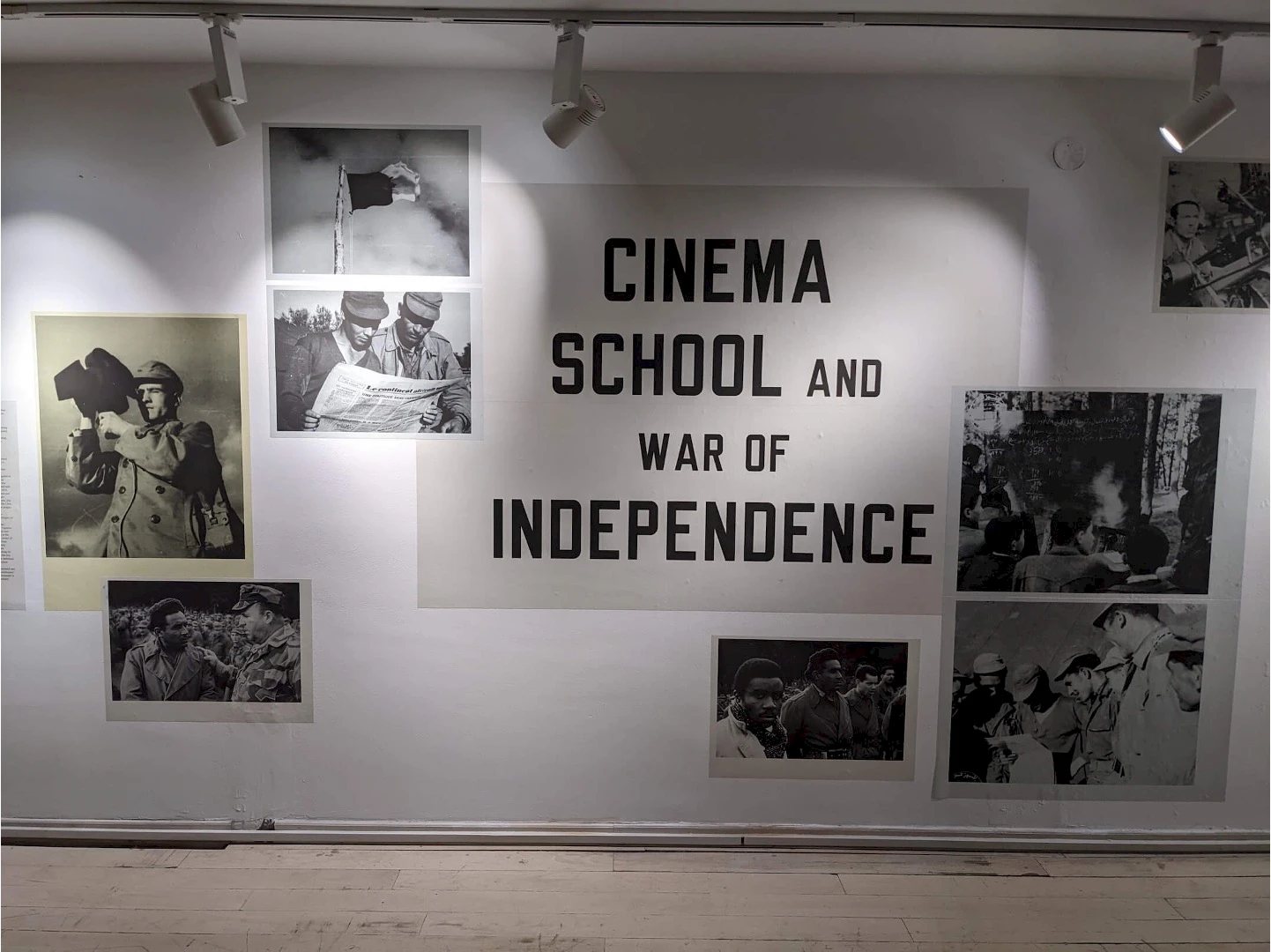
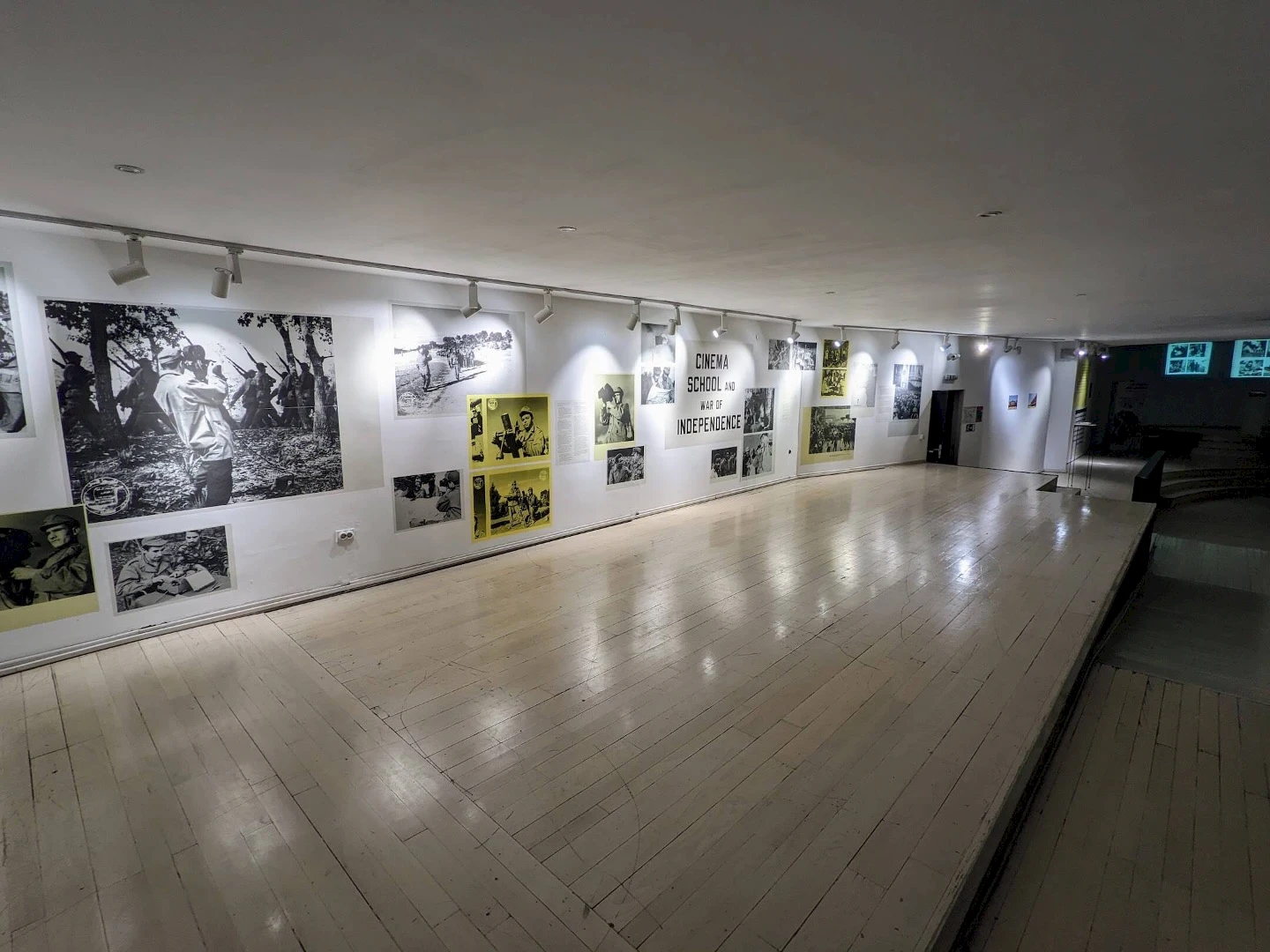
Milica Tomić, Cinema, School and War of Independence, 2022, installation view. Photo: Vladimir Jerić Vlidi
‘As soon as I open my eyes, I see a film’, stated Tom Gotovac, the Zagreb-based protagonist of the New Art Practice movement in 1960s Yugoslavia.13
‘In the midst of the reality of the liberation war in Algiers, I walk, sleep and dream of being in Paris, in a cinema, watching a war movie about the liberation struggles’, stated Stevan Labudović, photographer, film-worker and fighter in the National Liberation Army of Algiers (ALN).14
These two disparate statements are brought together by one thing: the thinking of image through the radical breaks between eyes-open and eyes-closed, between dreaming and waking, between living and projecting.
The militant image – the image that mobilizes, encourages, promises, informs, educates, spurs; an impossible image that cannot be seen, unless it’s passed down by a vision; an image dreamed up while walking with eyes shut, just to be awakened in a better world.
What is the position of a militant artist? What is a militant film? What is a camera person with an instrument for producing images in one hand, and a militant instrument – a machine gun – in the other? What are the images that come into being in the alternation between these two instruments?
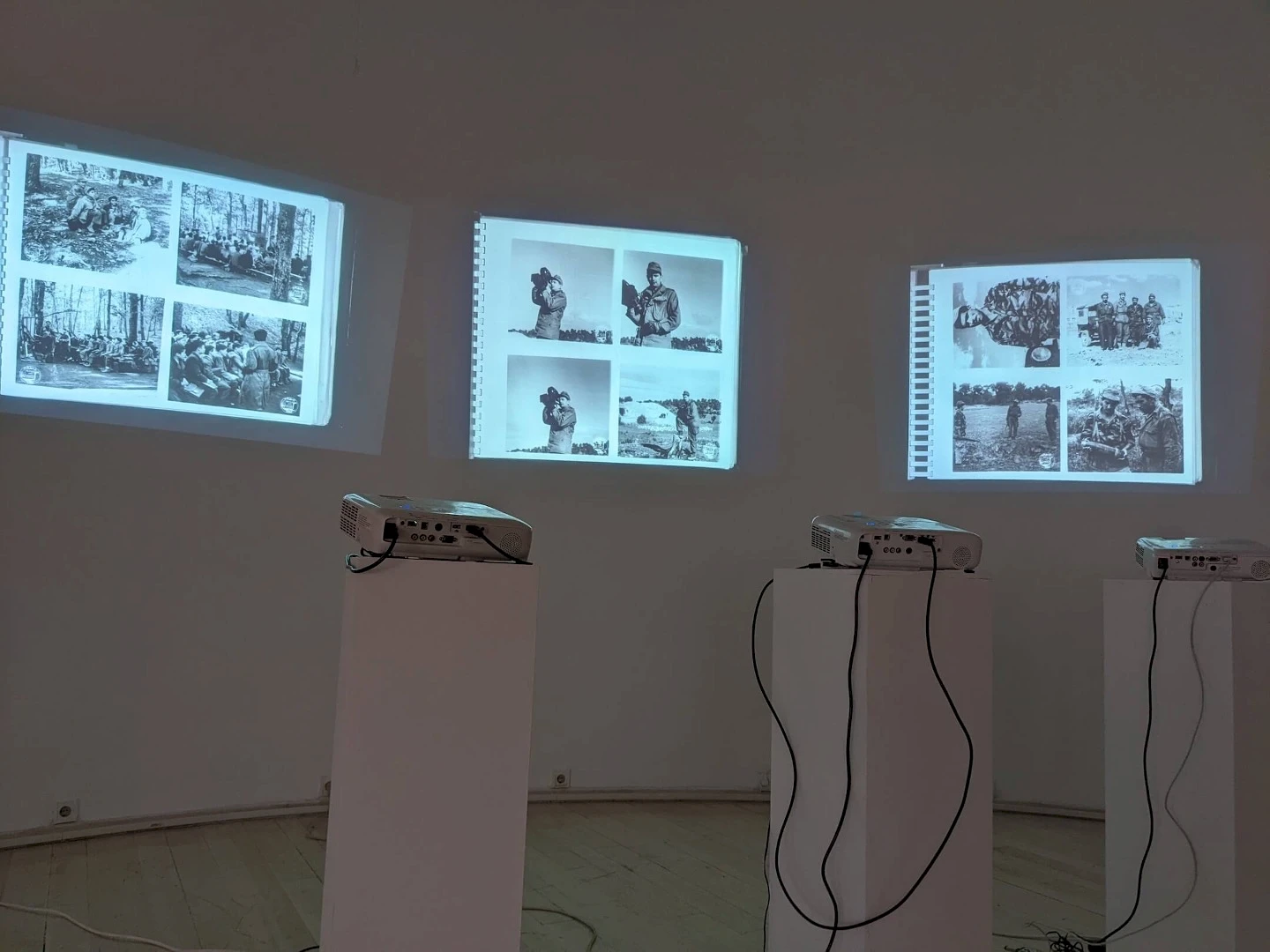
The installation Cinema, School and War of Independence by Milica Tomić (at the Cultural Center of Belgrade in 2022) investigates the politics and ethics of the militant image. Her rethinking of Labudović’s photo albums and infrastructures of political solidarity is displayed through the medium of zidne novine (wall newspapers), in which Labudović had worked as a young partisan. Yugoslavia’s Filmske Novosti’s propaganda department sent Labudović to Algiers in 1959 as part of a Yugoslav programme of solidarity with anti-colonial liberation movements. The autonomous presentations of the National Liberation Army of Algiers (ALN) were important to counter hegemonic images produced by the French colonial regime that depicted occupation forces as keepers of law and order, and the rebels as terrorists. Filmske Novosti, like Labudović himself, was fully aware of the fact that modern warfare is based on a war of images. Organizing a school of film and photography amid the conflict, taking the side of the Algerian independence movement, Filmske Novosti thus enabled the production of news from the field that would not have been available otherwise. As a school, it was mainly political in nature, with a decolonial approach to knowledge, skills, visualization and the use of technology. The school was a materialist embodiment of the principle of necessary, useful knowledge, inviting us to rethink the contemporary professionalist dogma of objective journalism that serves to establish an equidistance between parties in conflict – a hegemonic political horizon of reconciliation, instead of a liberation war for eternal peace.
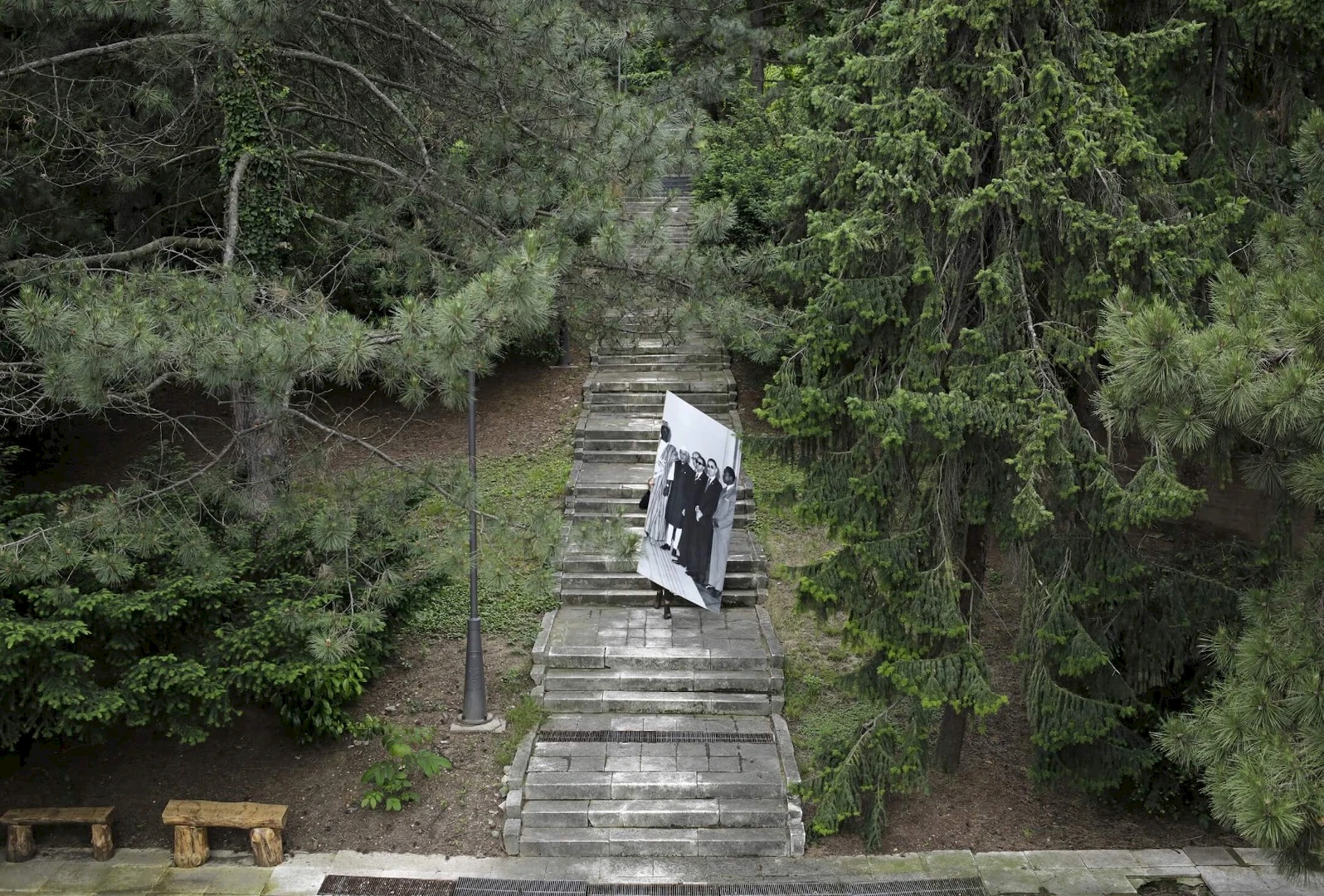
Milica Tomić, Purloined Letter, 2014 (Belgrade)/2019 (Vienna)
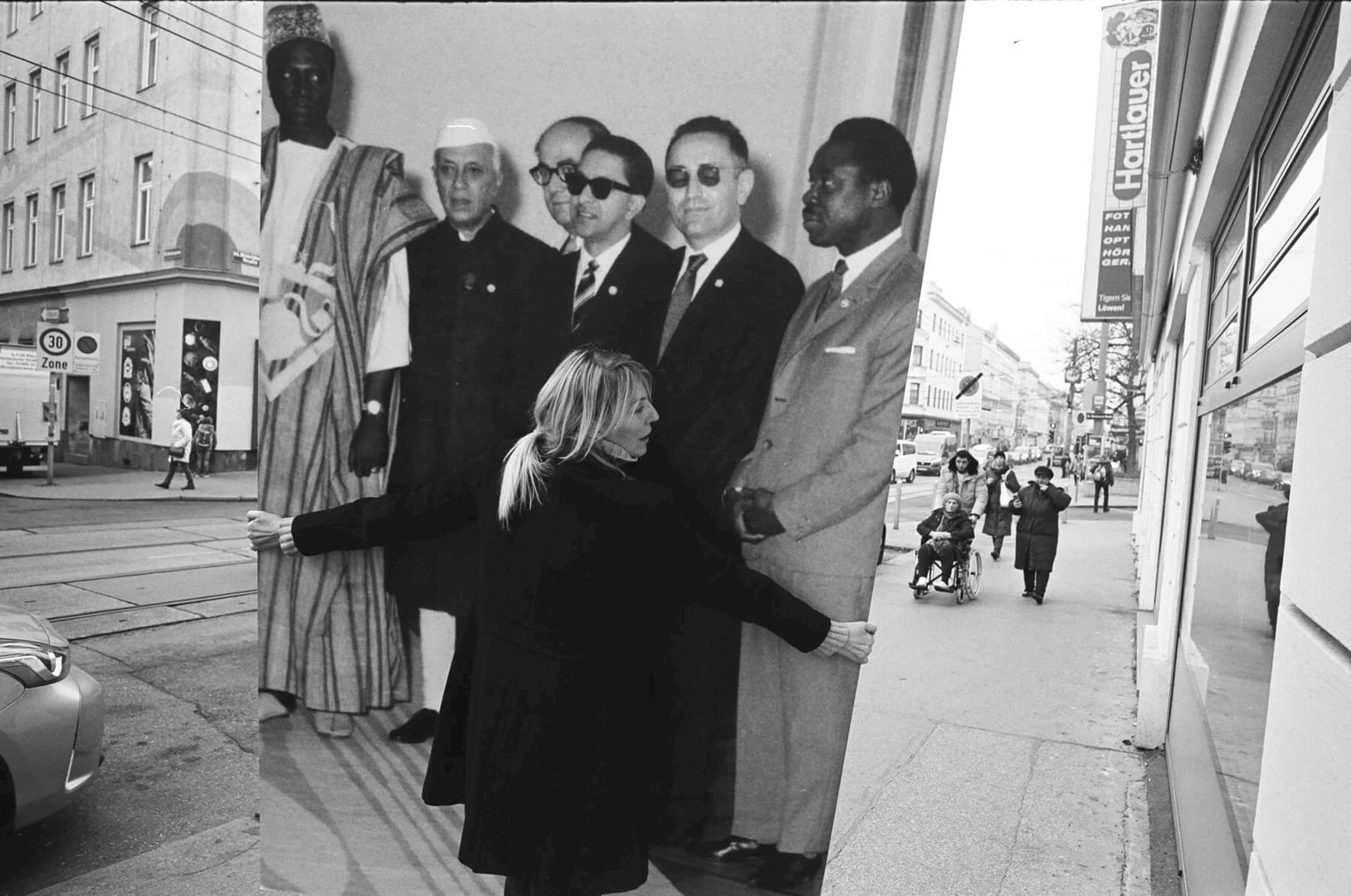
An image of long duration and long struggle is, at the same time, an image that may be used and consumed excessively, its political meaning fading or becoming the very space of the struggle for and by-means-of the image. In this way, the themes of history, and specifically the emancipatory moments of Yugoslav socialism, became the basis of artistic identities in the post–Yugoslav region – a kind of trend or genre in which history and politics were appropriated for the success of individual authors on the critical art market.
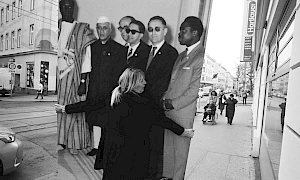
In the above photograph of an action performed by Milica Tomić, Purloined Letter (2014), the artist walks down the steps in the garden of the Museum of Yugoslavia carrying a fragment of the famous photograph of NAM’s leaders, a sort of photo ID of the movement and its establishment during the Belgrade Summit of 1961. Having snatched away this detail, almost stealing it, the artist uses the photographic reproduction of the performance to symbolize the fragmentation of common history under the banner of artistic authorship.
The artist’s body is hidden behind the image, almost completely covered; it is as if the image itself is running away through the forest. It is as if it ‘got legs’, as is said of a stolen object, which is almost literally depicted in this work. Taken from a height, the photo shows a lush canopy of conifers, green cascades of pine branches. The stairs surrounded by deep forest seem to lead nowhere, towards something that we cannot yet see.
The photographic action was recorded in a highly ideological setting, the garden of the former Residency and Memorial Complex of Josip Broz Tito (now the Museum of Yugoslavia), which hosts a significant collection of presidential gifts from countries all around the world, many of which are members of NAM. The Museum of Yugoslavia maintains, conserves and activates its objects and narratives through contemporary art exhibits. It is an inexhaustible resource for contemporary art production, in its restless search for new threads of emancipatory histories. It is a place where ‘archive fever’ is always actual, highly intense, and often combined with left melancholy.
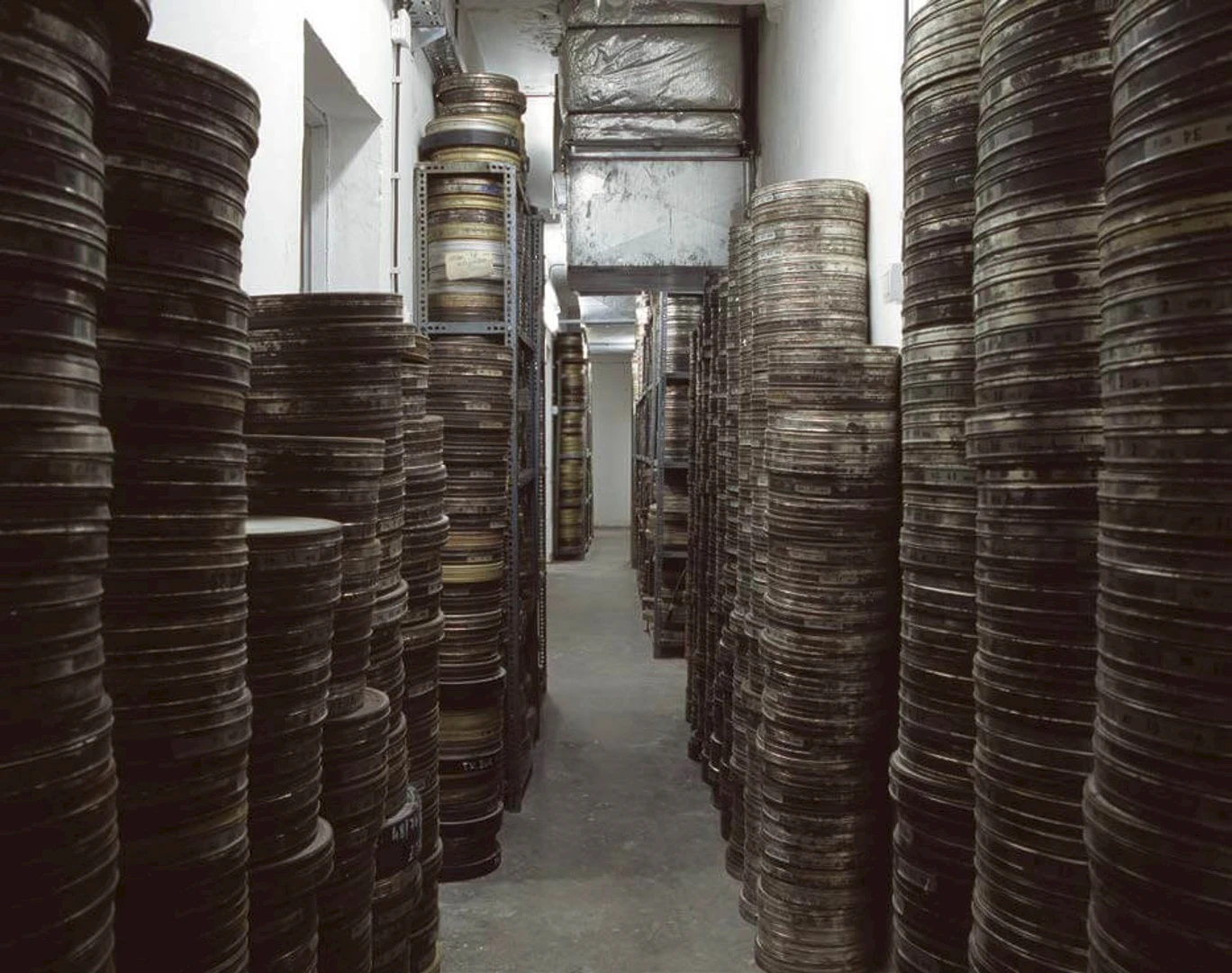
Vesna Pavlović, Fabrics of Socialism, 2013
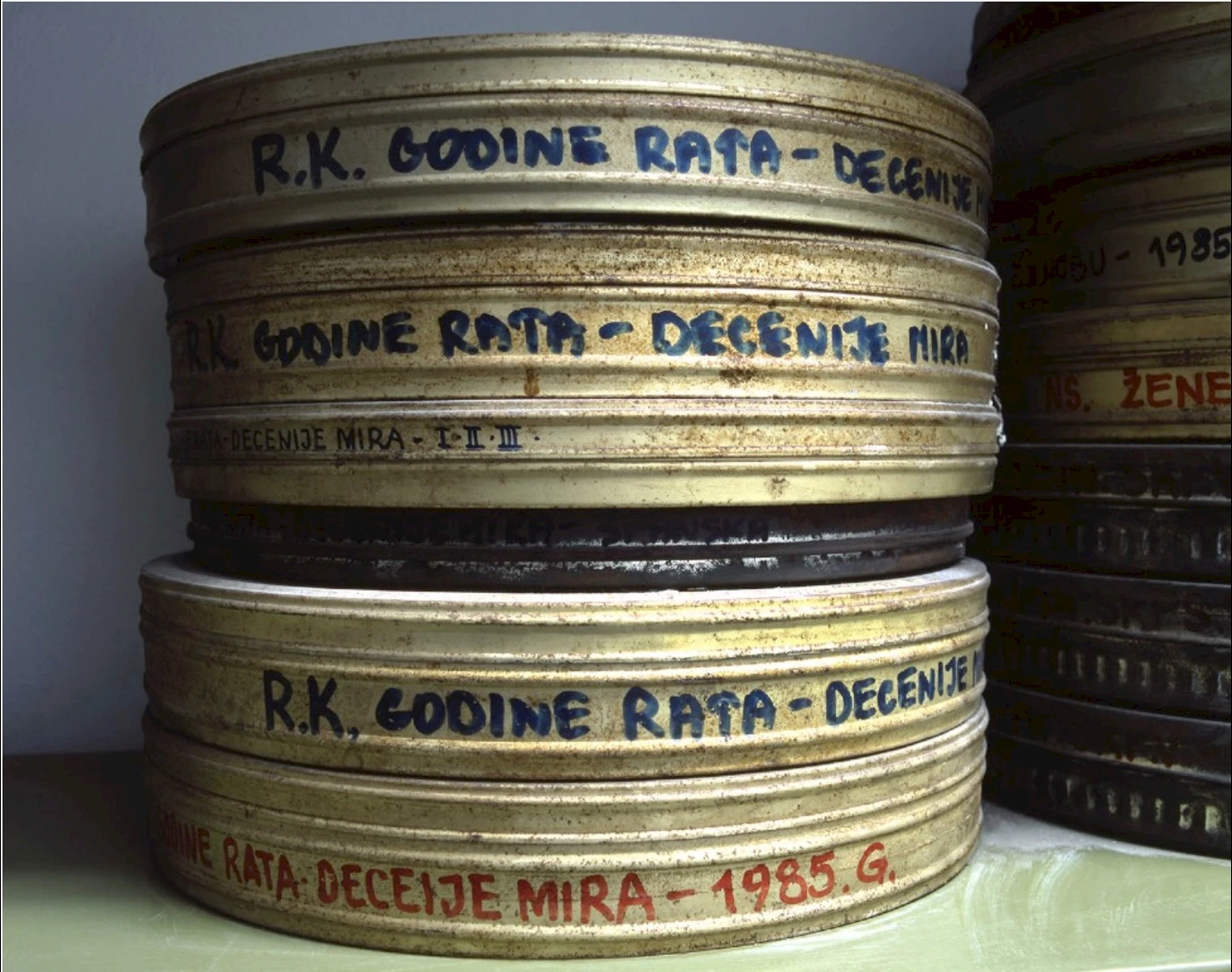
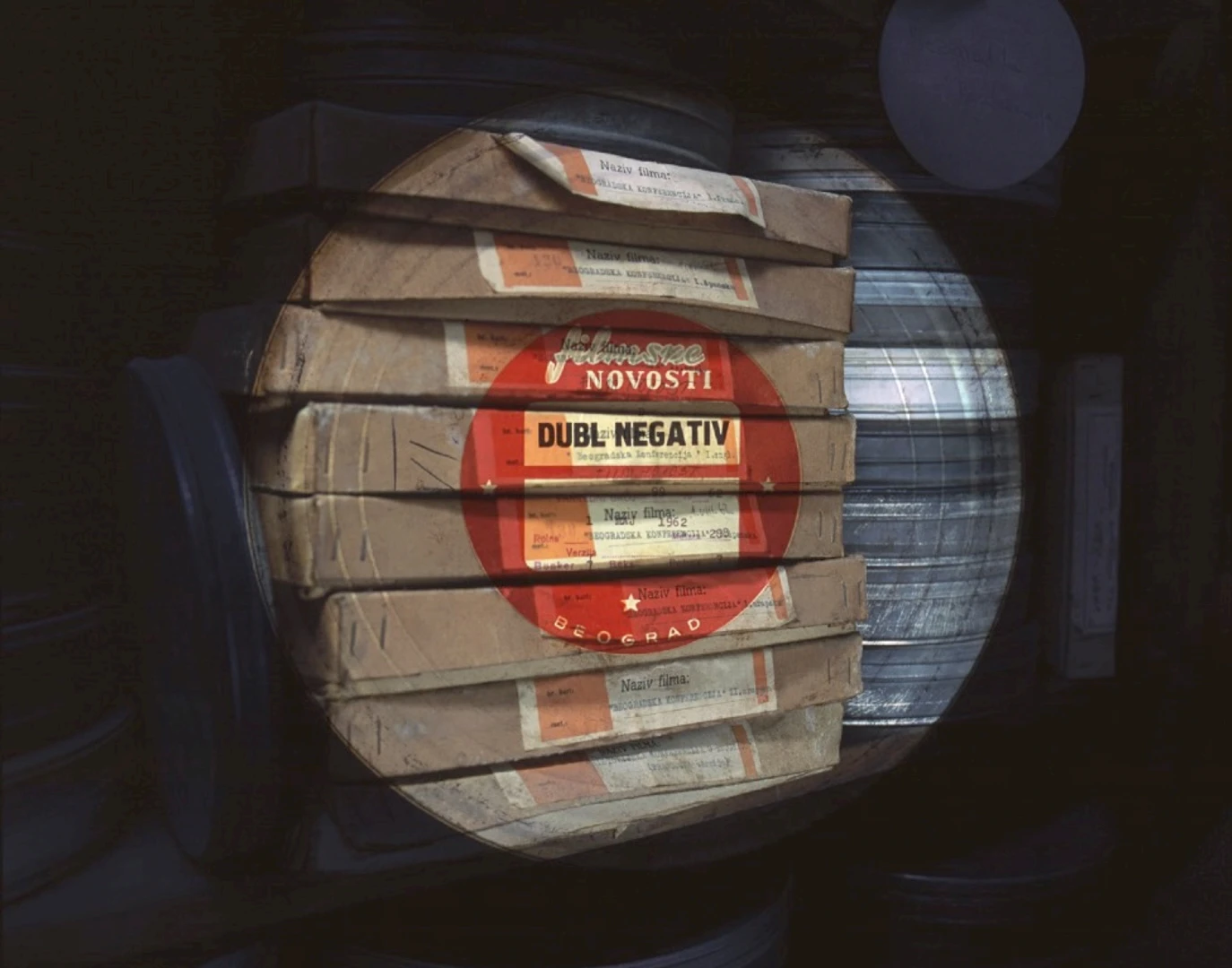
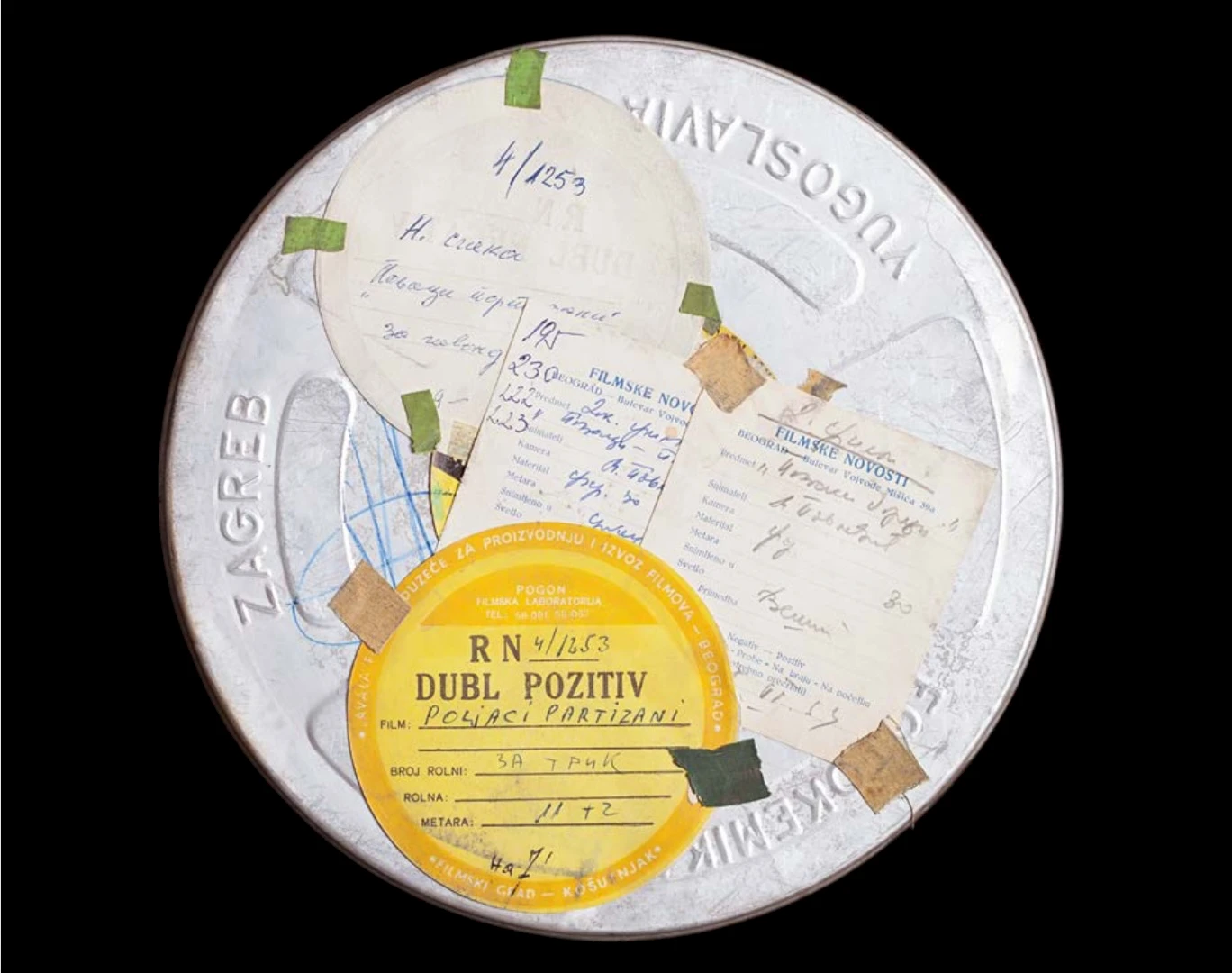
In the photo installation Fabrics of Socialism by Vesna Pavlović (2013) one encounters the very apparatus of the socialist archive, its archival hardware, architecture and infrastructure. In photographing the archival spaces of the Museum of Yugoslavia and Filmske Novosti, Pavlović seeks not to discover ‘lost images’, but rather to show their material conditions of image preservation and indexing. In pre-digital times, the shared experience of a photograph was firmly grounded in photographic objecthood, in the bulky technologies of image-making and reproduction. Objectifying the archive itself as a container of images of liberation wars and horizons of peace, Pavlović captures a certain unsettling quality of the image that, in terms of the event, is cold and vacant. The images contained in all these metal caskets evoke the artist’s claim that ‘the very photographs remind us that memory is a constructed phenomenon.’15 These photographs are themselves archives of their time – their preservation, their material resilience to time’s ravages.
Pavlović remains faithful to her research on photographic materiality and the way that images are staged and presented to their viewers, offering profound insights into the ideological apparatuses and visual philosophy of the analogue photographic image. Her scenes of absence evoke the alienating presence of something that cannot be easily defined: emptied of life and the everyday, the materialities of architectures and infrastructures are communicated as pure form, apparently ‘clean’ and frozen in time and space. Still, each image insists on a certain event, its before and after; it says, ‘I stand for a larger scenario.’
Works by Pavlović and Tomić can be read as reflections on the constellations of history and property within the political economy of the archival image in contemporary art. In an era of ever-expanding historical revisionisms and politics-without-truth, the relentless appropriation, packaging, repackaging and named-artist branding of common heritage as artistic research becomes private property on the market of attention.
Who profits from history, archives and legacy?
What are the ethics and politics of the artistic appropriation of historical content?
Who has the right to these images?
Related activities
-
–Van Abbemuseum
The Soils Project
‘The Soils Project’ is part of an eponymous, long-term research initiative involving TarraWarra Museum of Art (Wurundjeri Country, Australia), the Van Abbemuseum (Eindhoven, Netherlands) and Struggles for Sovereignty, a collective based in Yogyakarta, Indonesia. It works through specific and situated practices that consider soil, as both metaphor and matter.
Seeking and facilitating opportunities to listen to diverse voices and perspectives around notions of caring for land, soil and sovereign territories, the project has been in development since 2018. An international collaboration between three organisations, and several artists, curators, writers and activists, it has manifested in various iterations over several years. The group exhibition ‘Soils’ at the Van Abbemuseum is part of Museum of the Commons. -
–VCRC
Kyiv Biennial 2023
L’Internationale Confederation is a proud partner of this year’s edition of Kyiv Biennial.
-
–MACBA
Where are the Oases?
PEI OBERT seminar
with Kader Attia, Elvira Dyangani Ose, Max Jorge Hinderer Cruz, Emily Jacir, Achille Mbembe, Sarah Nuttall and Françoise VergèsAn oasis is the potential for life in an adverse environment.
-
MACBA
Anti-imperialism in the 20th century and anti-imperialism today: similarities and differences

PEI OBERT seminar
Lecture by Ramón GrosfoguelIn 1956, countries that were fighting colonialism by freeing themselves from both capitalism and communism dreamed of a third path, one that did not align with or bend to the politics dictated by Washington or Moscow. They held their first conference in Bandung, Indonesia.
-
–Van Abbemuseum
Maria Lugones Decolonial Summer School
Recalling Earth: Decoloniality and Demodernity
Course Directors: Prof. Walter Mignolo & Dr. Rolando VázquezRecalling Earth and learning worlds and worlds-making will be the topic of chapter 14th of the María Lugones Summer School that will take place at the Van Abbemuseum in Eindhoven.
-
–MSN Warsaw
Archive of the Conceptual Art of Odesa in the 1980s
The research project turns to the beginning of 1980s, when conceptual art circle emerged in Odesa, Ukraine. Artists worked independently and in collaborations creating the first examples of performances, paradoxical objects and drawings.
-
–Moderna galerijaZRC SAZU
Summer School: Our Many Easts
Our Many Easts summer school is organised by Moderna galerija in Ljubljana in partnership with ZRC SAZU (the Research Centre of the Slovenian Academy of Sciences and Arts) as part of the L’Internationale project Museum of the Commons.
-
–Moderna galerijaZRC SAZU
Open Call – Summer School: Our Many Easts
Our Many Easts summer school takes place in Ljubljana 24–30 August and the application deadline is 15 March. Courses will be held in English and cover topics such as the legacy of the Eastern European avant-gardes, archives as tools of emancipation, the new “non-aligned” networks, art in times of conflict and war, ecology and the environment.
-
–MACBA
Song for Many Movements: Scenes of Collective Creation
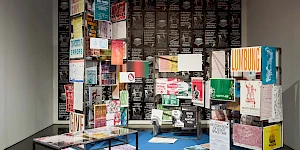
An ephemeral experiment in which the ground floor of MACBA becomes a stage for encounters, conversations and shared listening.
-
–MSU ZagrebVan AbbemuseumModerna galerijaZRC SAZU
Open Call – School of Common Knowledge 2024
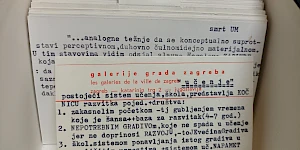
MSU (Zagreb), Van Abbemuseum (Eindhoven), MG+MSUM (Ljubljana), ZRC SAZU (Ljubljana) and L'Internationale invite applications for the new School of Common Knowledge (SCK) to be held in Zagreb and Ljubljana 24–29 May 2024. The School of Common Knowledge draws on the network, knowledge and experience of the L’Internationale museum confederation. Its ambition is to be both nomadic and situated, looking at specific cultural and geopolitical situations while exploring their relations and interdependencies with the rest of the world. The SCK is built on the basis laid by the Glossary of Common Knowledge project initiated by Zdenka Badovinac and Moderna galerija (Ljubljana) and continues its co-learning methodology.
-
–MSU ZagrebModerna galerijaZRC SAZU
School of Common Knowledge 2024
School of Common Knowledge draws on the network, knowledge and experience of the L’Internationale museum confederation. Built on the basis laid by the Glossary of Common Knowledge, a project initiated by Zdenka Badovinac and Moderna Galerija in Ljubljana, it continues its co-learning methodology. Its ambition is to be both nomadic and situated, looking at specific cultural and geopolitical situations while exploring their relations and interdependencies with the rest of the world.
-
Museo Reina Sofia
Palestine Is Everywhere
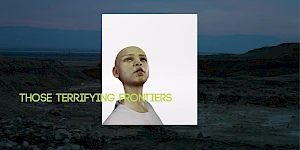
‘Palestine Is Everywhere’ is an encounter and screening at Museo Reina Sofía organised together with Cinema as Assembly as part of Museum of the Commons. The conference starts at 18:30 pm (CET) and will also be streamed on the online platform linked below.
-
HDK-Valand
Book Launch: Collective Study in Times of Emergency, Gothenburg
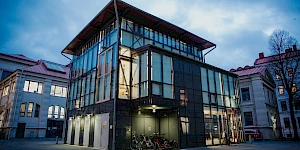
with Nick Aikens (L'Internationale Online / HDK-Valand) and Mills Dray (HDK-Valand), 17h00, Glashuset
-
Moderna galerija
Book Launch: Collective Study in Times of Emergency, Ljubljana
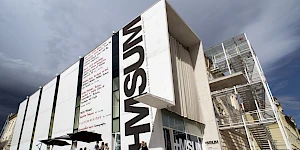
with Nick Aikens (L'Internationale Online / HDK-Valand), Bojana Piškur (MG+MSUM) and Martin Pogačar (ZRC SAZU)
-
WIELS
Book Launch: Collective Study in Times of Emergency, Brussels
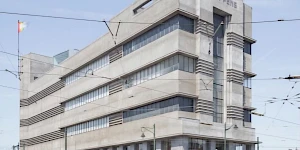
with Nick Aikens (L'Internationale Online / HDK-Valand), Subversive Film and Alex Reynolds, 19h00, Wiels Auditorium
-
–
Kyiv Biennial 2025
L’Internationale Confederation is proud to co-organise this years’ edition of the Kyiv Biennial.
-
–MACBA
Project a Black Planet: The Art and Culture of Panafrica
Curated by MACBA director Elvira Dyangani Ose, along with Antawan Byrd, Adom Getachew and Matthew S. Witkovsky, Project a Black Planet: The Art and Culture of Panafrica is the first major international exhibition to examine the cultural manifestations of Pan-Africanism from the 1920s to the present.
-
–M HKA
The Geopolitics of Infrastructure
The exhibition The Geopolitics of Infrastructure presents the work of a generation of artists bringing contemporary perspectives on the particular topicality of infrastructure in a transnational, geopolitical context.
-
–MACBAMuseo Reina Sofia
School of Common Knowledge 2025
The second iteration of the School of Common Knowledge will bring together international participants, faculty from the confederation and situated organizations in Barcelona and Madrid.
-
NCAD
Book Launch: Collective Study in Times of Emergency, Dublin
with Nick Aikens (L'Internationale Online / HDK-Valand) and members of the L'Internationale Online editorial board: Maria Berríos, Sheena Barrett, Sara Buraya Boned, Charles Esche, Sofia Dati, Sabel Gavaldon, Jasna Jaksic, Cathryn Klasto, Magda Lipska, Declan Long, Francisco Mateo Martínez Cabeza de Vaca, Bojana Piškur, Tove Posselt, Anne-Claire Schmitz, Ezgi Yurteri, Martin Pogacar, and Ovidiu Tichindeleanu, 18h00, Harry Clark Lecture Theatre, NCAD
-
–
Collective Study in Times of Emergency, Amsterdam
Within the context of ‘Every Act of Struggle’, the research project and exhibition at de appel in Amsterdam, L’Internationale Online has been invited to propose a programme of collective study.
-
Museo Reina Sofia
Poetry readings: Culture for Peace – Art and Poetry in Solidarity with Palestine
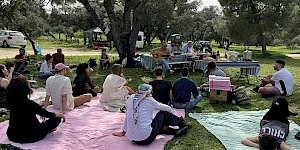
Casa de Campo, Madrid
-
WIELS
Collective Study in Times of Emergency, Brussels. Rana Issa and Shayma Nader
Join us at WIELS for an evening of fiction and poetry as part of L'Internationale Online's 'Collective Study in Times of Emergency' publishing series and public programmes. The series was launched in November 2023 in the wake of the onset of the genocide in Palestine and as a means to process its implications for the cultural sphere beyond the singular statement or utterance.
-
–Museo Reina Sofia
Study Group: Aesthetics of Peace and Desertion Tactics
In a present marked by rearmament, war, genocide, and the collapse of the social contract, this study group aims to equip itself with tools to, on one hand, map genealogies and aesthetics of peace – within and beyond the Spanish context – and, on the other, analyze strategies of pacification that have served to neutralize the critical power of peace struggles.
-
–MSN Warsaw
Near East, Far West. Kyiv Biennial 2025
The main exhibition of the 6th Kyiv Biennial 2025, titled Near East, Far West, is organized by a consortium of curators from L’Internationale. It features seven new artists’ commissions, alongside works from the collections of member institutions of L’Internationale and a number of other loans.
-
MACBA
PEI Obert: The Brighter Nations in Solidarity: Even in the Midst of a Genocide, a New World Is Being Born
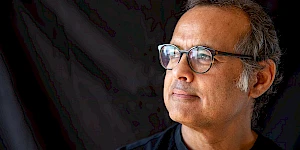
PEI Obert presents a lecture by Vijay Prashad. The Colonial West is in decay, losing its economic grip on the world and its control over our minds. The birth of a new world is neither clear nor easy. This talk envisions that horizon, forged through the solidarity of past and present anticolonial struggles, and heralds its inevitable arrival.
-
–M HKA
Homelands and Hinterlands. Kyiv Biennial 2025
Following the trans-national format of the 2023 edition, the Kyiv Biennial 2025 will again take place in multiple locations across Europe. Museum of Contemporary Art Antwerp (M HKA) presents a stand-alone exhibition that acts also as an extension of the main biennial exhibition held at the newly-opened Museum of Modern Art in Warsaw (MSN).
In reckoning with the injustices and atrocities committed by the imperialisms of today, Kyiv Biennial 2025 reflects with historical consciousness on failed solidarities and internationalisms. It does this across an axis that the curators describe as Middle-East-Europe, a term encompassing Central Eastern Europe, the former-Soviet East and the Middle East.
-
HDK-Valand
MA Forum in collaboration with LIO: Nour Shantout
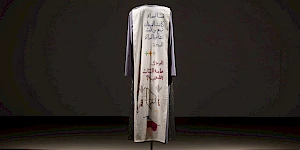
In this artist talk, Nour Shantout will present Searching for the New Dress, an ongoing artistic research project that looks at Palestinian embroidery in Shatila, a Palestinian refugee camp in Lebanon. Welcome!
-
MACBA
PEI Obert: Bodies of Evidence. A lecture by Ido Nahari and Adam Broomberg
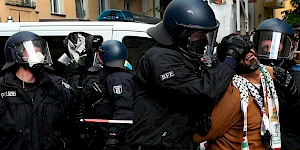
In the second day of Open PEI, writer and researcher Ido Nahari and artist, activist and educator Adam Broomberg bring us Bodies of Evidence, a lecture that analyses the circulation and functioning of violent images of past and present genocides. The debate revolves around the new fundamentalist grammar created for this documentation.
-
–
Everything for Everybody. Kyiv Biennial 2025
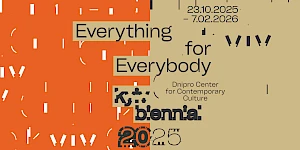
As one of five exhibitions comprising the 6th Kyiv Biennial 2025, ‘Everything for Everybody’ takes place in the Ukraine, at the Dnipro Center for Contemporary Culture.
-
–
In a Grandiose Sundance, in a Cosmic Clatter of Torture. Kyiv Biennial 2025
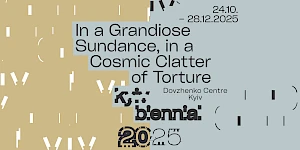
As one of five exhibitions comprising the 6th Kyiv Biennial 2025, ‘In a Grandiose Sundance, in a Cosmic Clatter of Torture’ takes place at the Dovzhenko Centre in Kyiv.
-
MACBA
School of Common Knowledge: Fred Moten
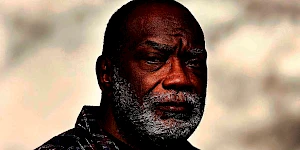
Fred Moten gives the lecture Some Prœposicions (On, To, For, Against, Towards, Around, Above, Below, Before, Beyond): the Work of Art. As part of the Project a Black Planet exhibition, MACBA presents this lecture on artworks and art institutions in relation to the challenge of blackness in the present day.
-
–MACBA
Visions of Panafrica. Film programme
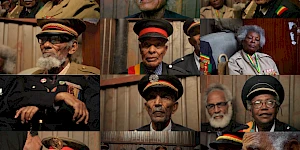
Visions of Panafrica is a film series that builds on the themes explored in the exhibition Project a Black Planet: The Art and Culture of Panafrica, bringing them to life through the medium of film. A cinema without a geographical centre that reaffirms the cultural and political relevance of Pan-Africanism.
-
MACBA
Farah Saleh. Balfour Reparations (2025–2045)
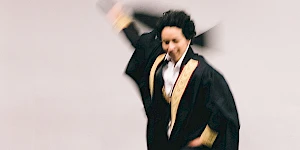
As part of the Project a Black Planet exhibition, MACBA is co-organising Balfour Reparations (2025–2045), a piece by Palestinian choreographer Farah Saleh included in Hacer Historia(s) VI (Making History(ies) VI), in collaboration with La Poderosa. This performance draws on archives, memories and future imaginaries in order to rethink the British colonial legacy in Palestine, raising questions about reparation, justice and historical responsibility.
-
MACBA
Project a Black Planet: The Art and Culture of Panafrica OPENING EVENT
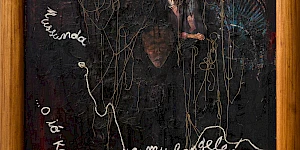
A conversation between Antawan I. Byrd, Adom Getachew, Matthew S. Witkovsky and Elvira Dyangani Ose. To mark the opening of Project a Black Planet: The Art and Culture of Panafrica, the curatorial team will delve into the exhibition’s main themes with the aim of exploring some of its most relevant aspects and sharing their research processes with the public.
-
MACBA
Palestine Cinema Days 2025: Al-makhdu’un (1972)
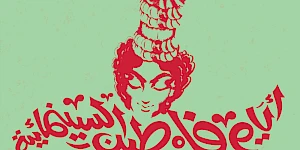
Since 2023, MACBA has been part of an international initiative in solidarity with the Palestine Cinema Days film festival, which cannot be held in Ramallah due to the ongoing genocide in Palestinian territory. During the first days of November, organizations from around the world have agreed to coordinate free screenings of a selection of films from the festival. MACBA will be screening the film Al-makhdu’un (The Dupes) from 1972.
-
Museo Reina Sofia
Cinema Commons #1: On the Art of Occupying Spaces and Curating Film Programmes
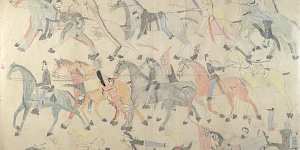
On the Art of Occupying Spaces and Curating Film Programmes is a Museo Reina Sofía film programme overseen by Miriam Martín and Ana Useros, and the first within the project The Cinema and Sound Commons. The activity includes a lecture and two films screened twice in two different sessions: John Ford’s Fort Apache (1948) and John Gianvito’s The Mad Songs of Fernanda Hussein (2001).
-
–
Vertical Horizon. Kyiv Biennial 2025
As one of five exhibitions comprising the 6th Kyiv Biennial 2025, ‘Vertical Horizon’ takes place at the Lentos Kunstmuseum in Linz, at the initiative of tranzit.at.
-
–
International Day of Solidarity with the Palestinian People: Activities
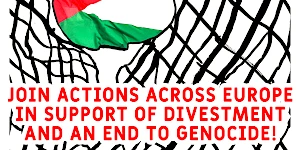
To mark International Day of Solidarity with the Palestinian People and in conjunction with our collective text, we, the cultural workers of L'Internationale have compiled a list of programmes, actions and marches taking place accross Europe. Below you will find programmes organized by partner institutions as well as activities initaited by unions and grass roots organisations which we will be joining.
This is a live document and will be updated regularly.
-
–SALT
Screening: A Bunch of Questions with No Answers
This screening is part of a series of programs and actions taking place across L’Internationale partners to mark International Day of Solidarity with the Palestinian People.
A Bunch of Questions with No Answers (2025)
Alex Reynolds, Robert Ochshorn
23 hours 10 minutes
English; Turkish subtitles -
HDK-Valand
MA Forum in collaboration with LIO: Adam Broomberg
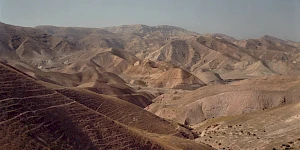
In this MA Forum we welcome artist Adam Broomberg. In his lecture he will focus on two photographic projects made in Israel/Palestine twenty years apart. Both projects use the medium of photography to communicate the weaponization of nature.
-
MACBA
PEI Obert: Until Liberation: A Collective Reading and Listening Session by Learning Palestine
PEI Obert presents a collective session with Learning Palestine. At this historical juncture – amid the ongoing genocide in Gaza and the censorship and repression of all things Palestinian – Learning Palestine invites us to gather not only in refusal but also in affirmation.
Related contributions and publications
-
…and the Earth along. Tales about the making, remaking and unmaking of the world.
Martin PogačarLand RelationsClimatePast in the Present -
The Kitchen, an Introduction to Subversive Film with Nick Aikens, Reem Shilleh and Mohanad Yaqubi
Nick Aikens, Subversive FilmSonic and Cinema CommonslumbungPast in the PresentVan Abbemuseum -
The Repressive Tendency within the European Public Sphere
Ovidiu ŢichindeleanuInternationalismsPast in the Present -
Rewinding Internationalism
InternationalismsVan Abbemuseum -
Troubles with the East(s)
Bojana PiškurInternationalismsPast in the Present -
Right now, today, we must say that Palestine is the centre of the world
Françoise VergèsInternationalismsPast in the Present -
Body Counts, Balancing Acts and the Performativity of Statements
Mick WilsonInternationalismsPast in the Present -
Until Liberation I
Learning Palestine GroupInternationalismsPast in the Present -
Until Liberation II
Learning Palestine GroupInternationalismsPast in the Present -
The Veil of Peace
Ovidiu ŢichindeleanuPast in the Presenttranzit.ro -
Editorial: Towards Collective Study in Times of Emergency
L’Internationale Online Editorial BoardEN es sl tr arInternationalismsStatements and editorialsPast in the Present -
Opening Performance: Song for Many Movements, live on Radio Alhara
Jokkoo with/con Miramizu, Rasheed Jalloul & Sabine SalaméEN esInternationalismsSonic and Cinema CommonsPast in the PresentMACBA -
Siempre hemos estado aquí. Les poetas palestines contestan
Rana IssaEN es tr arInternationalismsPast in the Present -
Indra's Web
Vandana SinghLand RelationsPast in the PresentClimate -
Diary of a Crossing
Baqiya and Yu’adInternationalismsPast in the Present -
The Silence Has Been Unfolding For Too Long
The Free Palestine Initiative CroatiaInternationalismsPast in the PresentSituated OrganizationsInstitute of Radical ImaginationMSU Zagreb -
En dag kommer friheten att finnas
Françoise Vergès, Maddalena FragnitoEN svInternationalismsLand RelationsClimateInstitute of Radical Imagination -
Everything will stay the same if we don’t speak up
L’Internationale ConfederationEN caInternationalismsStatements and editorials -
Reading list: School of Common Knowledge 2024
School of Common KnowledgeSchoolsSituated OrganizationsMSU ZagrebModerna galerijaZRC SAZU -
War, Peace and Image Politics: Part 1, Who Has a Right to These Images?
Jelena VesićInternationalismsPast in the PresentZRC SAZU -
Live set: Una carta de amor a la intifada global
PrecolumbianEN esInternationalismsSonic and Cinema CommonsPast in the PresentMACBA -
Dispatch: In between the lessons. Staying together in uncertain times, laughing in the face of trouble, and disobeying; the future belongs to us
Antonela SoleničkiSchoolsSituated OrganizationsMSU ZagrebModerna galerijaZRC SAZU -
Dispatch: The Commonsverse and Situated Organisations – or why the era of big institutions will come to an end
Denise PolliniSchoolsSituated OrganizationsMSU ZagrebModerna galerijaZRC SAZU -
Dispatch: A Buriti Tree
Lucas PrettiSchoolsSituated OrganizationsMSU ZagrebModerna galerijaZRC SAZU -
Cultivating Abundance
Åsa SonjasdotterLand RelationsClimatePast in the Present -
Dispatch: To whom it may concern – the voice of the censor and re-calibrating words as an act of survival
AnonymousSchoolsSituated OrganizationsMSU ZagrebModerna galerijaZRC SAZU -
Rethinking Comradeship from a Feminist Position
Leonida KovačSchoolsInternationalismsSituated OrganizationsMSU ZagrebModerna galerijaZRC SAZU -
Reading list - Summer School: Our Many Easts
Summer School - Our Many EastsSchoolsPast in the PresentModerna galerija -
The Genocide War on Gaza: Palestinian Culture and the Existential Struggle
Rana AnaniInternationalismsPast in the Present -
Klei eten is geen eetstoornis
Zayaan KhanEN nl frLand RelationsClimatePast in the Present -
Dispatch: ‘I don't believe in revolution, but sometimes I get in the spirit.’
Megan HoetgerSchoolsPast in the Present -
Dispatch: Notes on (de)growth from the fragments of Yugoslavia's former alliances
Ava ZevopSchoolsPast in the Present -
Glöm ”aldrig mer”, det är alltid redan krig
Martin PogačarEN svLand RelationsPast in the Present -
Broadcast: Towards Collective Study in Times of Emergency (for 24 hrs/Palestine)
L’Internationale Online Editorial Board, Rana Issa, L’Internationale Confederation, Vijay PrashadInternationalismsSonic and Cinema Commons -
Beyond Distorted Realities: Palestine, Magical Realism and Climate Fiction
Sanabel Abdel RahmanEN trInternationalismsPast in the PresentClimate -
Collective Study in Times of Emergency. A Roundtable
Nick Aikens, Sara Buraya Boned, Charles Esche, Martin Pogačar, Ovidiu Ţichindeleanu, Ezgi YurteriInternationalismsPast in the PresentSituated Organizations -
Present Present Present. On grounding the Mediateca and Sonotera spaces in Malafo, Guinea-Bissau
Filipa CésarSonic and Cinema CommonsPast in the Present -
Collective Study in Times of Emergency
InternationalismsPast in the Present -
S come Silenzio
Maddalena FragnitoEN itInternationalismsSituated Organizations -
ميلاد الحلم واستمراره
Sanaa SalamehEN hr arInternationalismsPast in the Present -
عن المكتبة والمقتلة: شهادة روائي على تدمير المكتبات في قطاع غزة
Yousri al-GhoulEN arInternationalismsPast in the Present -
Archivos negros: Episodio I. Internacionalismo radical y panafricanismo en el marco de la guerra civil española
Tania Safura AdamEN esInternationalismsPast in the Present -
Re-installing (Academic) Institutions: The Kabakovs’ Indirectness and Adjacency
Christa-Maria Lerm HayesInternationalismsPast in the Present -
Palma daktylowa przeciw redeportacji przypowieści, czyli europejski pomnik Palestyny
Robert Yerachmiel SnidermanEN plInternationalismsPast in the PresentMSN Warsaw -
Masovni studentski protesti u Srbiji: Mogućnost drugačijih društvenih odnosa
Marijana Cvetković, Vida KneževićEN rsInternationalismsPast in the Present -
No Doubt It Is a Culture War
Oleksiy Radinsky, Joanna ZielińskaInternationalismsPast in the Present -
Cinq pierres. Une suite de contes
Shayma NaderEN nl frInternationalisms -
Dispatch: As Matter Speaks
Yeongseo JeeInternationalismsPast in the Present -
Speaking in Times of Genocide: Censorship, ‘social cohesion’ and the case of Khaled Sabsabi
Alissar SeylaInternationalisms -
Reading List: Summer School, Landscape (post) Conflict
Summer School - Landscape (post) ConflictSchoolsLand RelationsPast in the PresentIMMANCAD -
Today, again, we must say that Palestine is the centre of the world
Françoise VergèsInternationalisms -
Isabella Hammad’ın icatları
Hazal ÖzvarışEN trInternationalisms -
To imagine a century on from the Nakba
Behçet ÇelikEN trInternationalisms -
Internationalisms: Editorial
L'Internationale Online Editorial BoardInternationalisms -
Dispatch: Institutional Critique in the Blurst of Times – On Refusal, Aesthetic Flattening, and the Politics of Looking Away
İrem GünaydınInternationalisms -
Until Liberation III
Learning Palestine GroupInternationalismsPast in the Present -

Archivos negros: Episodio II. Jazz sin un cuerpo político negro
Tania Safura AdamEN esInternationalismsPast in the Present -
Cultural Workers of L’Internationale mark International Day of Solidarity with the Palestinian People
Cultural Workers of L’InternationaleEN es pl roInternationalismsSituated OrganizationsPast in the PresentStatements and editorials -
Poetry Against Language Dioxide
Rana IssaInternationalisms -
The Object of Value
SlinkoInternationalismsLand Relations