The Veil of Peace
L’Internationale Online revisits the project The Veil of Peace (2017), undertaken by tranzit.ro, current member of the confederation. Presented here is a slide show of the project and two short texts written by Ovidiu Ţichindeleanu, co-curator of the exhibition. We turn to the project and its images, vocabularies and alliances of peace with renewed urgency in today’s conditions of rampant militarism. We reaffirm our belief in art and artistic thinking as a space to imagine and articulate the conditions for a more equitable, peaceful world.
In the summer of 2017, the fluid curatorial team The Committee for Resurrection (Igor Mocanu, Ovidiu Ţichindeleanu, Raluca Voinea) organized the research exhibition The Veil of Peace at tranzit.ro in Bucharest.
The research stemmed from the common observation of the curators that the culture of peace had been emptied of references and meaning in Romania, but also throughout the region of Eastern Europe, during the post-1989 transition, while the culture of war, militarism and strategy was increasingly pervasive. The curators researched the iconography of peace in the cultural and political archives of real socialism in Romania, namely in the practices of artists, painters, writers and musicians, in journals and everyday objects, as well as in official discourse. The research revealed an abundant field affected by oblivion and neglect, and evidenced an understudied internal history of nuances and differentiation, as well as undervalued local reflections and relations to international struggles for peace and liberation. The curators envisaged at the time the need for other iterative and localized research exhibitions.
Ovidiu Ţichindeleanu, October 2023
The following is the original statement for the exhibition:
In the iconography of real-existing socialism, peace reigns supreme over all symbols. Even more than the peace dove, which has been drawn by the hand of each and every child of the former socialist bloc, “peace” itself is a word that became image.
Peace was the ultimate symbol of communist life. The symbol covered buildings, actions, and art works. It was everywhere, and took a life of its own in popular expressions, official discourse, and artistic practices. Yet from the outside, the “Free World” kept on seeing in the communist peace only a veil, behind which lurked other intentions.
After the fall of the Iron Curtain, the former socialist bloc has become a “conflict region” of the world, starting with the wars of former Yugoslavia at the beginning of the Post-Socialist transition, all the way to the war in Ukraine at the end of it. Thus has been the region reintegrated into the world of capitalism and coloniality.
The symbols of peace have been taken down, they have disappeared or were devalued. The current cultural reach of peace is insignificant. Peace itself has disappeared from the internal social life under the distress of impoverishment, austerity, crises and wars. The veil of peace has thickened into the armors of war. How can we dematerialize war today?
How could we regain the times of peace, how can we start redistributing the historical capital of the image of peace back into common meaning?
Ovidiu Ţichindeleanu, June 2017
Related contributions and publications
-
…and the Earth along. Tales about the making, remaking and unmaking of the world.
Martin PogačarLand RelationsClimatePast in the Present -
The Kitchen, an Introduction to Subversive Film with Nick Aikens, Reem Shilleh and Mohanad Yaqubi
Nick Aikens, Subversive FilmSonic and Cinema CommonslumbungPast in the PresentVan Abbemuseum -
The Repressive Tendency within the European Public Sphere
Ovidiu ŢichindeleanuInternationalismsPast in the Present -
Troubles with the East(s)
Bojana PiškurInternationalismsPast in the Present -
Right now, today, we must say that Palestine is the centre of the world
Françoise VergèsInternationalismsPast in the Present -
Body Counts, Balancing Acts and the Performativity of Statements
Mick WilsonInternationalismsPast in the Present
Related activities
-
–Van Abbemuseum
The Soils Project
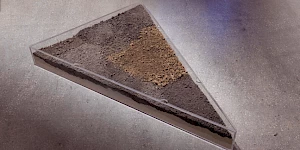
‘The Soils Project’ is part of an eponymous, long-term research initiative involving TarraWarra Museum of Art (Wurundjeri Country, Australia), the Van Abbemuseum (Eindhoven, Netherlands) and Struggles for Sovereignty, a collective based in Yogyakarta, Indonesia. It works through specific and situated practices that consider soil, as both metaphor and matter.
Seeking and facilitating opportunities to listen to diverse voices and perspectives around notions of caring for land, soil and sovereign territories, the project has been in development since 2018. An international collaboration between three organisations, and several artists, curators, writers and activists, it has manifested in various iterations over several years. The group exhibition ‘Soils’ at the Van Abbemuseum is part of Museum of the Commons. -
–VCRC
Kyiv Biennial 2023
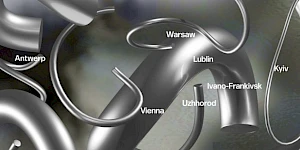
L’Internationale Confederation is a proud partner of this year’s edition of Kyiv Biennial.
-
–MACBA
Where are the Oases?
PEI OBERT seminar
with Kader Attia, Elvira Dyangani Ose, Max Jorge Hinderer Cruz, Emily Jacir, Achille Mbembe, Sarah Nuttall and Françoise VergèsAn oasis is the potential for life in an adverse environment.
-
MACBA
Anti-imperialism in the 20th century and anti-imperialism today: similarities and differences
PEI OBERT seminar
Lecture by Ramón GrosfoguelIn 1956, countries that were fighting colonialism by freeing themselves from both capitalism and communism dreamed of a third path, one that did not align with or bend to the politics dictated by Washington or Moscow. They held their first conference in Bandung, Indonesia.
-
–Van Abbemuseum
Maria Lugones Decolonial Summer School
Recalling Earth: Decoloniality and Demodernity
Course Directors: Prof. Walter Mignolo & Dr. Rolando VázquezRecalling Earth and learning worlds and worlds-making will be the topic of chapter 14th of the María Lugones Summer School that will take place at the Van Abbemuseum in Eindhoven.
-
–tranzit.ro
Non-Western Technologies for the Good Life

The experimental course ‘Non-Western Technologies for the Good Life’ (November 2023–May 2024) celebrates as its starting point the anniversary of 50 years since the publication of Tools for Conviviality, considering that Ivan Illich’s call is as relevant as ever.