Can the artworld strike for climate? Three possible answers
Curator and chair of L’Internationale’s Climate Assembly Jakub Depczyński revisits the panel ‘Can the artworld strike for Climate?’, which he convened as part of Climate Forum II, sharing three very different responses.
As I write, in January 2026, the planetary climate and environmental crisis seems to have faded from public discourse. While the crisis itself accelerates the past two years have seen a rising backlash against environmental policies, climate science and climate movements and organizations. The 2025 Climate Change Conference in Brazil failed to generate any cohesive plan or bring serious commitments from the participating countries to phase out fossil fuels.1 The European Union is progressively watering down its European Green Deal policy plan, quietly abandoning goals set in 2019. And the second Trump administration has recently announced that the US will leave the United Nations Framework Convention on Climate Change and the Intergovernmental Panel on Climate Change.
The waning support for the climate cause is accompanied by the increased criminalization and persecution of climate activists. More and more, governments employ silencing tactics, including anti-protest laws, extending the policing of climate movements and protests, issuing fines and pursuing court cases. Sentences issued by courts for participating in non-violent civil disobedience are more severe (including incarceration), and in some countries climate movements are now officially labelled criminal organizations.2 The mainstream media eagerly entrench this discourse, often maligning climate activists and portraying them as ‘extremists’ and ‘eco-terrorists’.3
It was in this context that I organized the discussion panel ‘Can the Artworld Strike for Climate?’ as part of Climate Forum II in September 2024. The goal was simple: to ask members of the global climate movement how art institutions can support their struggle at such a difficult moment – what are their needs, expectations and demands – and if or how they could understand and imagine art institutions organizing a climate strike. While those participating in different contemporary art worlds know that there are multiple, skilful strategies for representing and discursively evoking climate, the focus of the panel was on direct action. What emerged from the discussion was three possible answers.
The first was given even before the panel itself, from indigenous climate activists. While planning the panel with the curators of the Climate Forum series, it was clear that we wanted indigenous voices in the discussion. I reached out to two indigenous–led climate movements and organizations with an invitation, explaining the basis for the panel as well as our motivations and goals. The first response was silence. Then, after some time a respectful, but firm and telling rejection. I was told that they did not consider a panel organized by a confederation of European museums, arts organizations and universities an appropriate space from which to speak about their struggle for climate, environment, the planet, and their rights. Neither did they feel that there was much art institutions can do to support their cause, or that they can do to support art institutions in their pursuit of a climate strike. The implied advice was clear: artists, cultural workers, academics, researchers, educators, writers, critics and others – discuss and figure this out among yourselves.
The second take was very different. It came from Kinga Parafniuk – a member of the Polish chapter of the youth–led Fridays For Future movement,4 who agreed to participate in the panel. Before the event, she discussed the panel questions with her organization with a view to presenting a shared collective position, rather than an individual perspective. Kinga and her colleagues are young local organizers often working beyond urban centres in northern Poland. They face opposition to climate activism on a daily basis and experience directly the consequences of the political shifts away from the climate cause. Their position was much more sympathetic towards the art system. Kinga claimed that Friday For Futures already considers the artworld an ally in the climate struggle, with many connections and cooperations between activist and artistic circles. For them, every gesture, action, project and programme matters – whether it's through representation, discourse, education or simply platforming climate-conscious voices. She emphasised that in climate organising, as in any other form of activism, there is space for different levels and modes of engagement – from organizing workshops to forming a human chain in order to block a street. If art institutions want to act for climate, they need to find a suitable way of doing it – even if that means sticking to climate–themed exhibitions, public and education programmes or festivals and events. It would be better, she said, if these are co-organized in cooperation with local climate movements and organizations – not only because they can bring in expertise and experience, but because they need public voices of support when they are routinely demonized and maligned. Still, what is crucial is for the artworld to stay with the struggle and not abandon the question of climate as a topic and a cause, especially when popular, political and media support is waning.
The third, much less enthusiastic, came from Helen Wahlgren, co-founder of the Swedish movement Restore Wetlands and active member of the A22 network,5 which is one of the most active European climate movements and the umbrella organisation behind many of the notorious civil disobedience actions from the past couple years.6 Helen is an experienced climate organizer and has been part of global environmental activism for many years, witnessing numerous ups and downs. In her powerful and moving contribution she presented the climate movement as part of the long history of protest, from the XIXth century workers unions and early women’s right activists, through the civil rights movement, to contemporary anti-government protests toppling politicians throughout the world. She pointed out a common element to most successful protest campaigns is disruption, and claimed that without disrupting the flow of everyday life, change is impossible. This is why for her, the current artworld’s engagement with the planetary climate and environmental crisis is inadequate – all the exhibitions, lectures, education programs and workshops are ‘nice’ but ineffective. Helen understood the proposal of a climate strike at face value – shut down museums and galleries and stop any and all cultural or artistic activities, at least for a day. Or a weekend. Or a week, preferably a month. Or even better – until the powers that be finally start working on addressing the crisis seriously. The best case scenario for Helen would be for cultural workers to exit the artworld altogether, organize and join activist groups. The only path to change, she stressed, is to disrupt hostile realities.
To recapitulate, here are the three possible answers to the titular question:
-
The artworld, particularly the mainstreamWestern artworld, is the wrong space to address climate issues, art institutions are ill equipped to understand and tackle its realities and should focus on working out its own issues and contradictions, rather than seek engagement with the activist struggle.
-
The artworld is an ally of the climate movement. Art institutions should engage with the climate question in any way possible, voice public support for climate activists, and stay in the struggle despite the current political shift.
-
The artworld, particularly the mainstream Western artworld is too complicit in anti-climate politics, to effectively address the climate question. To be truly useful, art institutions need to move away from discourse and representation, learn from the activist approach and employ real disruption tactics.
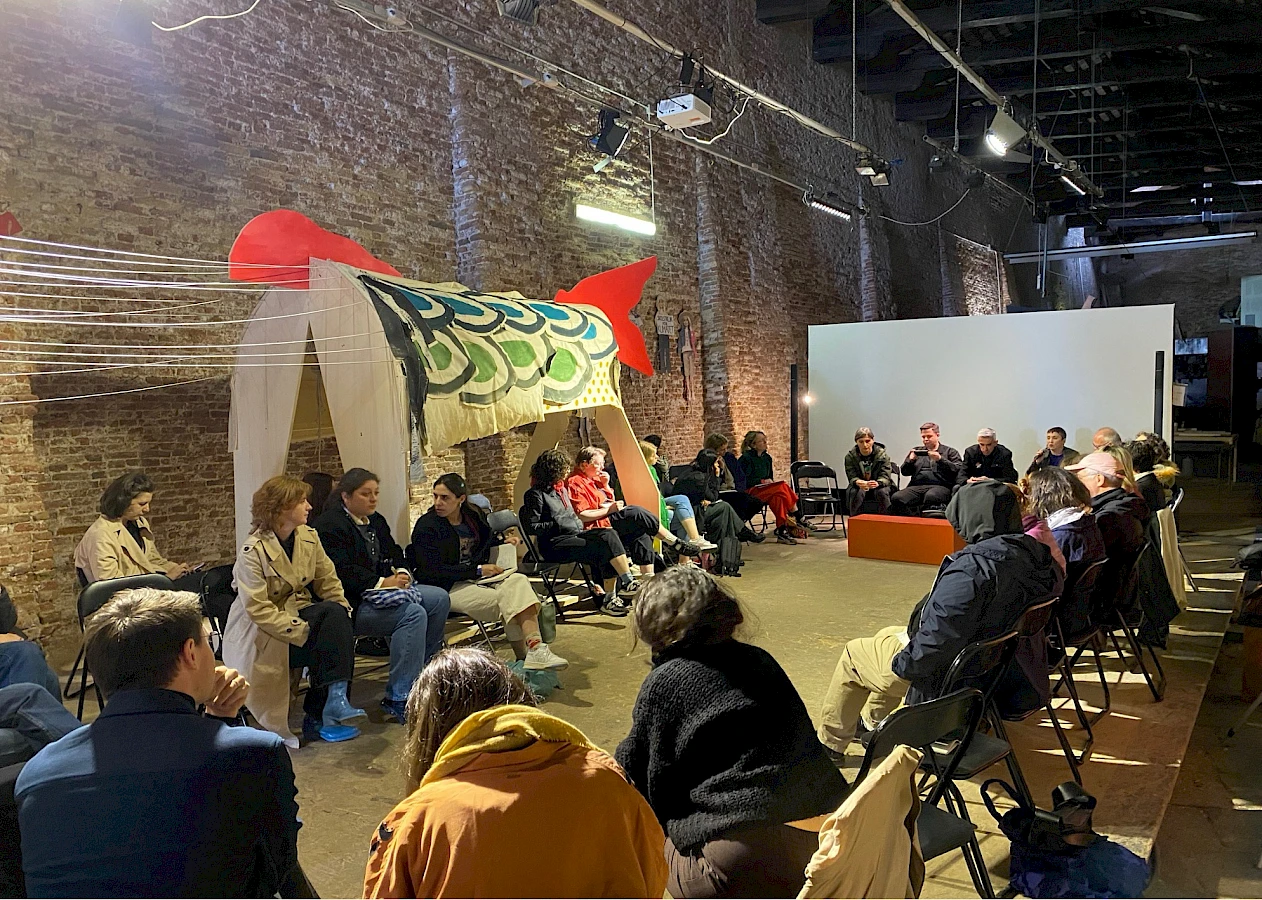
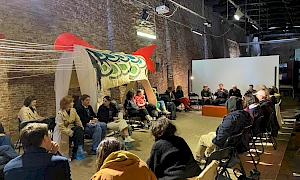
Musuem of the Commons Climate Assembly, ‘Gathering into the Maelstrom’, Sale Docks, Venice, 2024
All of these perspectives heavily influenced our internal discussions within the L’Internationale confederation regarding a joint climate action, planned for 2026. We began with an ambitious proposal to organize a common climate strike: shut down institutions on a chosen day and prepare a programme of activities with local climate activist groups. Unsurprisingly, initial enthusiasm turned into uncertainty and prompted a number of questions: can we, as institutions, proclaim ‘a strike’? Who would actually proclaim it? Wouldn’t it be better coming from the bottom up? Will people working in L’Internationale institutions and organizations – artists, cultural workers, curators, educators, administrators, managers, technicians and others – be eager to join? How will our audiences react? And the authorities, ministries, funders and sponsors? What are the risks involved? Will we get support from the media? Should we close down, or rather just stop normal activities and dedicate the day to climate education platforming activists, scientists and organizers? Shall we release a statement? In whose name? Does it make sense to organize this climate action if in the end we are not able to strike, shut down or disrupt but only organize some thematic activities?
The more we dwelled on these questions, the more it seemed that the artworld and its infrastructure isn’t, in fact, able to accommodate the needs and demands of climate activists. More and more, it became apparent there was embarrassingly little we could do, especially in the face of a deepening anti–climate turn in global politics. Still, we decided to persist with the action – despite the doubts we agreed that what we can do is to platform the activist perspective and work, voice public support for the global climate movement and show that art institutions remain engaged with the climate question, despite the prevailing backlash. At the moment, every member of L’Internationale participating in the action works on building a relationship with a local climate activist group and preparing a joint programme of activities to be realized on a chosen day in 2026. These will range from performances, concerts and screenings, through lectures, tech-ins, discussions and workshops to assemblies, speeches and performative protests. On top of that the activist organizations will prepare written statements – perhaps a list of demands, reflection on the climate cause, testimonial or appeal to politicians or the public - that will be translated and circulated by L'Internationale. The confederation itself will also publish its own statement of support for climate activists, addressed to local and national governments as well as the EU. All of these texts will be read on the day of the action, and later gathered and published as an online zine, together with reports and reflections on how the action unfolded on the day in different places.
Can the artworld strike for climate? Perhaps it was the wrong question from the very beginning. But maybe, in doing something else we can begin to formulate a more appropriate and generative proposition.
Related activities
-
HDK-Valand
Climate Forum I
The Climate Forum is a space of dialogue and exchange with respect to the concrete operational practices being implemented within the art field in response to climate change and ecological degradation. This is the first in a series of meetings hosted by HDK-Valand within L'Internationale's Museum of the Commons programme.
-
–Van Abbemuseum
The Soils Project
‘The Soils Project’ is part of an eponymous, long-term research initiative involving TarraWarra Museum of Art (Wurundjeri Country, Australia), the Van Abbemuseum (Eindhoven, Netherlands) and Struggles for Sovereignty, a collective based in Yogyakarta, Indonesia. It works through specific and situated practices that consider soil, as both metaphor and matter.
Seeking and facilitating opportunities to listen to diverse voices and perspectives around notions of caring for land, soil and sovereign territories, the project has been in development since 2018. An international collaboration between three organisations, and several artists, curators, writers and activists, it has manifested in various iterations over several years. The group exhibition ‘Soils’ at the Van Abbemuseum is part of Museum of the Commons. -
–tranzit.ro
Non-Western Technologies for the Good Life

The experimental course ‘Non-Western Technologies for the Good Life’ (November 2023–May 2024) celebrates as its starting point the anniversary of 50 years since the publication of Tools for Conviviality, considering that Ivan Illich’s call is as relevant as ever.
-
–Institute of Radical Imagination
Gathering into the Maelstrom
‘Gathering into the Maelstrom’ in Venice at Sale Docks is a four-day programme curated by Institute of Radical Imagination (IRI) and Sale Docks.
-
–Institute of Radical Imagination
Gathering into the Maelstrom (exhibition)
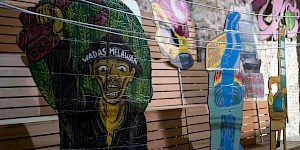
‘Gathering into the Maelstrom’ is curated by Institute of Radical Imagination and Sale Docks within the framework of Museum of the Commons.
-
HDK-Valand
Climate Forum II
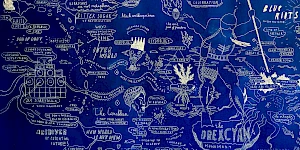
The Climate Forum is a series of online meetings hosted by HDK-Valand within L’Internationale’s Museum of the Commons programme. The series builds upon earlier research resulting in the (2022) book Climate: Our Right to Breathe and reaches toward emerging change practices.
-
HDK-Valand
Climate Forum III
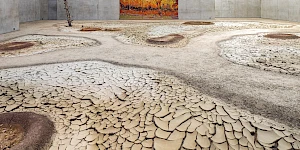
The Climate Forum is a series of online meetings hosted by HDK-Valand within L’Internationale’s Museum of the Commons programme. The series builds upon earlier research resulting in the (2022) book Climate: Our Right to Breathe and reaches toward emerging change practices.
-
MACBA
The Open Kitchen. Food networks in an emergency situation
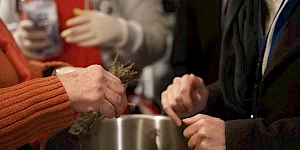
with Marina Monsonís, the Cabanyal cooking, Resistencia Migrante Disidente and Assemblea Catalana per la Transició Ecosocial
The MACBA Kitchen is a working group situated against the backdrop of ecosocial crisis. Participants in the group aim to highlight the importance of intuitively imagining an ecofeminist kitchen, and take a particular interest in the wisdom of individuals, projects and experiences that work with dislocated knowledge in relation to food sovereignty. -
–IMMANCAD
Summer School: Landscape (post) Conflict
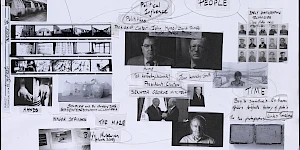
The Irish Museum of Modern Art and the National College of Art and Design, as part of L’internationale Museum of the Commons, is hosting a Summer School in Dublin between 7-11 July 2025. This week-long programme of lectures, discussions, workshops and excursions will focus on the theme of Landscape (post) Conflict and will feature a number of national and international artists, theorists and educators including Jill Jarvis, Amanda Dunsmore, Yazan Kahlili, Zdenka Badovinac, Marielle MacLeman, Léann Herlihy, Slinko, Clodagh Emoe, Odessa Warren and Clare Bell.
-
HDK-Valand
Climate Forum IV
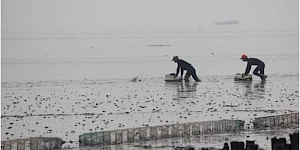
The Climate Forum is a series of online meetings hosted by HDK-Valand within L’Internationale’s Museum of the Commons programme. The series builds upon earlier research resulting in the (2022) book Climate: Our Right to Breathe and reaches toward emerging change practices.
-
–MSU Zagreb
October School: Moving Beyond Collapse: Reimagining Institutions
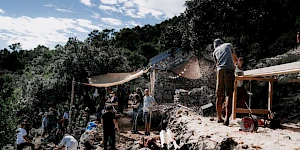
The October School at ISSA will offer space and time for a joint exploration and re-imagination of institutions combining both theoretical and practical work through actually building a school on Vis. It will take place on the island of Vis, off of the Croatian coast, organized under the L’Internationale project Museum of the Commons by the Museum of Contemporary Art in Zagreb and the Island School of Social Autonomy (ISSA). It will offer a rich program consisting of readings, lectures, collective work and workshops, with Adania Shibli, Kristin Ross, Robert Perišić, Saša Savanović, Srećko Horvat, Marko Pogačar, Zdenka Badovinac, Bojana Piškur, Theo Prodromidis, Ovidiu Ţichindeleanu, Progressive International, Naan-Aligned cooking, and others.
-
HDK-Valand
MA Forum in collaboration with LIO: Nour Shantout
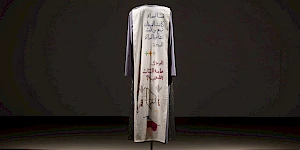
In this artist talk, Nour Shantout will present Searching for the New Dress, an ongoing artistic research project that looks at Palestinian embroidery in Shatila, a Palestinian refugee camp in Lebanon. Welcome!
-
HDK-Valand
MA Forum in collaboration with LIO: Adam Broomberg
In this MA Forum we welcome artist Adam Broomberg. In his lecture he will focus on two photographic projects made in Israel/Palestine twenty years apart. Both projects use the medium of photography to communicate the weaponization of nature.
Related contributions and publications
-
Climate Forum II – Readings
Nick Aikens, Nkule MabasoLand RelationsClimateHDK-Valand -
Decolonial aesthesis: weaving each other
Charles Esche, Rolando Vázquez, Teresa Cos RebolloLand RelationsClimate -
Climate Forum I – Readings
Nkule MabasoEN esLand RelationsClimateHDK-Valand -
…and the Earth along. Tales about the making, remaking and unmaking of the world.
Martin PogačarLand RelationsClimatePast in the Present -
Art for Radical Ecologies Manifesto
Institute of Radical ImaginationLand RelationsClimateInstitute of Radical Imagination -
Ecologising Museums
Land Relations -
Climate: Our Right to Breathe
Land RelationsClimate -
A Letter Inside a Letter: How Labor Appears and Disappears
Marwa ArsaniosLand RelationsClimate -
Seeds Shall Set Us Free II
Munem WasifLand RelationsClimate -
Discomfort at Dinner: The role of food work in challenging empire
Mary FawzyLand RelationsSituated Organizations -
Indra's Web
Vandana SinghLand RelationsPast in the PresentClimate -
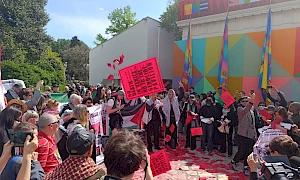
En dag kommer friheten att finnas
Françoise Vergès, Maddalena FragnitoEN svInternationalismsLand RelationsClimateInstitute of Radical Imagination -
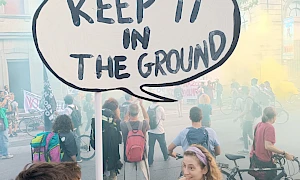
Art and Materialisms: At the intersection of New Materialisms and Operaismo
Emanuele BragaLand RelationsClimateInstitute of Radical Imagination -
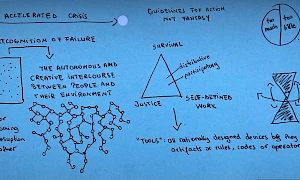
Dispatch: Harvesting Non-Western Epistemologies (ongoing)
Adelina LuftLand RelationsSchoolsClimatetranzit.ro -
Dispatch: From the Eleventh Session of Non-Western Technologies for the Good Life
Ana KunLand RelationsSchoolstranzit.ro -
Dispatch: Practicing Conviviality
Ana BarbuClimateSchoolsLand Relationstranzit.ro -
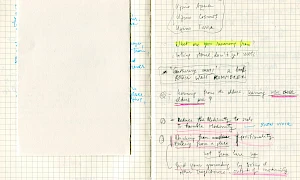
Dispatch: Notes on Separation and Conviviality
Raluca PopaLand RelationsSchoolsSituated OrganizationsClimatetranzit.ro -
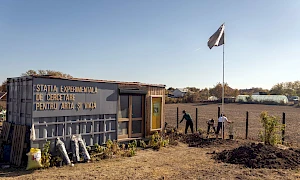
To Build an Ecological Art Institution: The Experimental Station for Research on Art and Life
Ovidiu Ţichindeleanu, Raluca VoineaLand RelationsClimateSituated Organizationstranzit.ro -
Dispatch: A Shared Dialogue
Irina Botea Bucan, Jon DeanLand RelationsSchoolsClimatetranzit.ro -
Art, Radical Ecologies and Class Composition: On the possible alliance between historical and new materialisms
Marco BaravalleLand RelationsClimateInstitute of Radical Imagination -
‘Territorios en resistencia’, Artistic Perspectives from Latin America
Rosa Jijón & Francesco Martone (A4C), Sofía Acosta Varea, Boloh Miranda Izquierdo, Anamaría GarzónLand RelationsClimateInstitute of Radical Imagination -
Unhinging the Dual Machine: The Politics of Radical Kinship for a Different Art Ecology
Federica TimetoLand RelationsClimateInstitute of Radical Imagination -
Cultivating Abundance
Åsa SonjasdotterLand RelationsClimatePast in the Present -
Klei eten is geen eetstoornis
Zayaan KhanEN nl frLand RelationsClimatePast in the Present -
Glöm ”aldrig mer”, det är alltid redan krig
Martin PogačarEN svLand RelationsPast in the Present -
Graduation
Koleka PutumaLand RelationsClimate -
Depression
Gargi BhattacharyyaLand RelationsClimate -

Climate Forum III – Readings
Yolande Zola Zoli van der HeideLand RelationsClimate -
Soils
Land RelationsClimateVan Abbemuseum -
Dispatch: There is grief, but there is also life
Cathryn KlastoLand RelationsClimate -
Dispatch: Care Work is Grief Work
Abril Cisneros RamírezLand RelationsClimate -
Reading List: Lives of Animals
Joanna ZielińskaLand RelationsClimateM HKA -
Sonic Room: Translating Animals
Joanna ZielińskaLand RelationsClimate -
Encounters with Ecologies of the Savannah – Aadaajii laɗɗe
Katia GolovkoLand RelationsClimate -
Trans Species Solidarity in Dark Times
Fahim AmirEN trLand RelationsClimate -
Reading List: Summer School, Landscape (post) Conflict
Summer School - Landscape (post) ConflictSchoolsLand RelationsPast in the PresentIMMANCAD -
Solidarity is the Tenderness of the Species – Cohabitation its Lived Exploration
Fahim AmirEN trLand Relations -
Dispatch: Reenacting the loop. Notes on conflict and historiography
Giulia TerralavoroSchoolsLand RelationsIMMANCAD -
Dispatch: Haunting, cataloging and the phenomena of disintegration
Coco GoranSchoolsLand RelationsIMMANCAD -
Dispatch: Landescape – bending words or what a new terminology on post-conflict could be
Amanda CarneiroSchoolsLand RelationsIMMANCAD -
Dispatch: Landscape (Post) Conflict – Mediating the In-Between
Janine DavidsonSchoolsLand RelationsIMMANCAD -
Dispatch: Excerpts from the six days and sixty one pages of the black sketchbook
Sabine El ChamaaSchoolsLand RelationsIMMANCAD -
Dispatch: Withstanding. Notes on the material resonance of the archive and its practice
Giulio GonellaSchoolsLand RelationsIMMANCAD -
Climate Forum IV – Readings
Merve BedirLand RelationsHDK-Valand -
Land Relations: Editorial
L'Internationale Online Editorial BoardLand Relations -
Dispatch: Between Pages and Borders – (post) Reflection on Summer School ‘Landscape (post) Conflict’
Daria RiabovaSchoolsLand RelationsIMMANCAD -
Between Care and Violence: The Dogs of Istanbul
Mine YıldırımLand Relations -
The Debt of Settler Colonialism and Climate Catastrophe
Nataša Petrešin-Bachelez, Olivier Marbœuf, Samia Henni, Marie-Hélène Villierme and Mililani GanivetLand Relations -
We, the Heartbroken, Part II: A Conversation Between G and Yolande Zola Zoli van der Heide
G, Yolande Zola Zoli van der HeideLand Relations -
Poetics and Operations
Otobong Nkanga, Maya TountaLand Relations -
Breaths of Knowledges
Robel TemesgenClimateLand Relations -
Algumas coisas que aprendemos: trabalhando com cultura indígena em instituições culturais
Sandra Ara Benites, Rodrigo Duarte, Pablo LafuenteEN ptLand Relations -
Conversation avec Keywa Henri
Keywa Henri, Anaïs RoeschEN frLand Relations -
Mgo Ngaran, Puwason (Manobo language) Sa Kada Ngalan, Lasang (Sugbuanon language) Sa Bawat Ngalan, Kagubatan (Filipino) For Every Name, a Forest (English)
Kulagu Tu BuvonganLand Relations -
Making Ground
Kasangati Godelive Kabena, Nkule MabasoLand Relations -
The Climate Reader: Propositions, poetics, operations
Land RelationsClimateHDK-Valand -
Can the artworld strike for climate? Three possible answers
Jakub DepczyńskiLand Relations -
The Object of Value
SlinkoInternationalismsLand Relations