Body Counts, Balancing Acts and the Performativity of Statements
As part of the publishing strand ‘Towards Collective Study in Times of Emergency’ artist and educator Mick Wilson dissects the rhetorical operations and calculations taking place in media, political and institutional statements since 7 October. Wilson offers a detailed analysis of ‘public utterances’ and how questions of contextualisation, the evocation of genocide and the call for ‘symmetrical’ rhetorical responses reveals the ‘balancing acts’ at play when one is urged to speak.
This text considers the rhetorical conditions of formation and circulation of statements issued from within the contemporary art field on the current violences of state, para-state and non-state actors across Israel-Palestine. Such statements include not only condemnations of violence and calls to end it, but also statements of solidarity with various peoples and positions caught within the machinations of violence. These pronouncements by institutions, networks and individuals have churned out a cascading flow of denunciations and counter-denunciations.
The making of statements has been disdained by some as mere posturing or virtue signalling, waving its self-regarding semaphores while parading itself over the corpses, obscuring atrocity even as it claims to denounce it. Others point to the importance accorded such statements by different constituencies caught within the frames of conflict, when those subject to dehumanisation experience a moment of humanisation through affirmations of solidarity from others. Statements of this kind may also be seen as ideological arenas where competing accounts of the cultural, the political and the nature of violence are rehearsed and critiqued.
The production of these statements is enacted at various degrees of spatial and locutionary proximity or remoteness to slaughter and suffering. The following describes some aspects of the fundamentally contested rhetorical frameworks within which such statements are formed; though it does so without any hope of resolving or settling these contestations. The rhetorical mode of the statements under consideration here is epideictic, ‘distributing blame’, and its performative agency is that of shaming. For some decades now, the advocates of international humanitarian law have described their modus operandi as ‘mobilizing shame’.1 To condemn is, etymologically, to forcefully inflict a loss – in one sense, this is the loss of standing within a discursive community. Epideictic rhetoric proposes a delimiting of the edges of that community, placing some speakers just beyond the threshold of belonging, and radically excluding others, in a speech act that seeks to expel the condemned actor(s) from the charmed circle of those who are in good standing. This way of speaking is also an attempt, through the affect of public shaming, to modify or bring an end to the offending behaviour.
The following extracts are from art-world statements appearing in the US art press, here placed together to indicate the recursive and cascading dynamics of these condemnations.
The art world’s silence speaks volumes. As a Jewish woman who’s been writing about art, artists, galleries, museums, auction houses, foundations, fairs, lawsuits for more than 17 years, I feel a mix of pain, disappointment, rage, and fear. Why are the Jews being slaughtered and the art world turns a blind eye—and goes on shopping at Frieze London as if nothing happened? Where is the solidarity? Where is the empathy? Where is the moral compass?2
We demand that the institutional silence around the ongoing humanitarian crisis that 2.3 million Palestinians are facing in the occupied and besieged Gaza Strip be broken immediately … Silence at this urgent time of crisis and escalating genocide is not a politically neutral position … We, the undersigned, reject violence against all civilians, regardless of their identity, and we call for ending the root cause of violence: oppression, and the occupation. [Emphasis in original]3
The decision to decry Israel’s defensive actions without acknowledging this heinous act not only lacks balance but veers dangerously close to anti-Semitism … We are distressed by the open letter recently posted on Artforum, which does not acknowledge the ongoing mass hostage emergency, the historical context, and the atrocities committed in Israel on October 7, 2023—the bloodiest day in Jewish history since the Holocaust. We denounce all forms of violence in Israel and Gaza and we are deeply concerned over the humanitarian crisis. We—Dominique Lévy, Brett Gorvy, Amalia Dayan—condemn the open letter for its one-sided view. We hope to foster discourse that can lead to a better understanding of the complexities involved.4
There is a recursive operation in how the above address the conditions, stakes, meaning and impacts of speaking and/or not speaking: ‘silence speaks volumes’; ‘silence … is not a politically neutral position’; ‘the decision to decry … without acknowledging’; ‘we … condemn … for its one-sided view. We hope to foster discourse … lead to a better understanding of the complexities’. The action of condemnation rebounds upon itself as the speakers condemn those who have not condemned, or those who, in their condemnations, appear to have misspoken or even morally degraded themselves. Thus, these performative utterances tend towards a mise en abyme.
The wider discursive context of the convulsed art system – what we might, with some caution, call ‘the international public sphere’5 – is riven by extraordinary fault lines of moral and legal contestation and rhetorical misdirection with respect to Palestine-Israel. ‘Rhetorical misdirection’ here is used as shorthand for the way that the use of terms such as ‘apartheid’, ‘occupation’ and ‘war crime’ to designate dimensions of Israel-Palestine by ‘the highest international bodies defending human rights in the field of international relations’ is systematically downplayed within dominant global north media discourses. This effectively renders use of these terms as merely tendentious rather than as critically reasoned positions based on profoundly compelling prima facie evidence or clearly documented breaches of law.6 Such wider frames of contestation shape the discursive and affective resources deployed in art world statements. Here, it may help to pick out three fault lines: genocidal violence as the paradigmatic event demanding moral condemnation; the moral hazards of historical contextualisation; and the demand for balance in what is proposed as a symmetrical rhetorical arena.7
Genocidal violence as the paradigmatic event demanding moral condemnation
Recently, TIME magazine published a piece entitled: ‘Is What’s Happening in Gaza a Genocide? Experts Weigh In’.8 Noting the specificities of genocide as a crime within international law, the piece concludes with contrasting views on whether a theoretical adjudication of genocide according to international law is useful or not within the horizon of a mass killing’s actual unfolding. Some scholars say it is a ‘bad use of focus’ to dwell on whether these events can be called a genocide because ‘proving whether something is a genocide takes time, and does not actually stop people from being killed.’9 Another commentator, Dirk Moses, writing specifically in response to the current violence in Palestine-Israel, recently argued in the Boston Review that: ‘The point of genocide claims is not only legal and strategic but—as with the Russian invasion of Ukraine and the Chinese treatment of Uyghur citizens—urgent and moral, concerned both with saving lives or stemming humanitarian disaster.’10
‘Genocide’ as a term is not limited to its juridical construction as a specific crime within international humanitarian law. It is also a symbolic ‘crime of crimes’ that points to population-scale killing, biopolitical projects of ethnic purification and territory acquisition, and the destruction of conditions of life. The term has a complicated genealogy. Although the Ottoman genocide of the Armenians was an important precedent for the elaboration of the term in international law, it is the Nazi genocide of the Jews that serves as the preeminent instance and the fundamental image of genocide in the international public sphere. Despite scholarly debate, this image of genocide is constructed in terms of modalities of hatred rather than as a specific form of systematically reasoned political violence.11
Genocide is popularly construed as a crime of collective affect as epitomised by the hatemongering anti-Semitic animus of the Protocols of the Elders of Zion rather than the calculation and legal niceties recorded in the Protocol of the Wannsee Conference.12 Thus even the industrial, bureaucratic and thoroughly rationalized methodologies of slaughter are seen as secondary to the primary logics of hatred and cruelty. This modelling of genocide as the extreme terminus of an arc of hate crime has a bearing on the latitude created in international law for states to slaughter civilians and non-combatants during war.
Proving … acts of genocide is extraordinarily difficult given the parameters set by international law. That is no accident. When state parties to the UNGC negotiated in 1947 and 1948, they distinguished genocidal intent from military necessity so that states could wage the kind of wars that Russia and Israel are conducting today and avoid prosecution for genocide. The high legal standard stems from the restrictive UNGC definition of genocide, which was modelled on the Holocaust and requires that a perpetrator intend to “destroy, in whole or in part, a national, ethnical, racial or religious group, as such” (the dolus specialis) in at least one of five prescribed ways (the actus reus). The words “as such” are widely regarded as imposing a stringent intent requirement: an act counts as genocide only if individuals are targeted solely by virtue of their group membership—like Jews during World War II—and not for strategic reasons like suppressing an insurgency. Despite many assertions of Palestinian collective guilt by Israeli leaders, they also insist that the IDF targets Hamas as a security threat, and not Palestinians “as such.” If the Holocaust is unique, as commonly asserted, how are other cases of mass violence against civilians supposed to measure up? The point is that it is very difficult to do so.13
Genocide, as the target of moral condemnation, is fraught, then, not only as something that must be tested against a highly particularised, contingent and demanding definitional framework, but one that also intersects with the specificity of the Holocaust.
The legal ambiguation of the latest violence is not limited to questions of genocide. The International Bar Association recently reflected on the appropriate juridical framing of the 7 October Hamas attack, also described by some as genocidal in its indiscriminate attack on civilians and its framing in terms of hatred of the Jews, underlining that this too is a matter of disputed legal categorisation, because: ‘there’s no universal agreement as to what law applies to the conflict between Israel and Hamas’, the 7 October attack included. Some argue that ‘the law of occupation applies in all occupied Palestinian territories’ and that ‘Israel, which disputes that Palestine is a state to which Geneva Convention IV and the law of occupation could apply, rejects this position.’14 Others argue that the ‘attack falls under the law of non-international armed conflict between Israel and Hamas, a non-state actor’, and yet others ‘argue that the attack doesn’t fall under international humanitarian law at all, but constitutes a lesser form of collective violence, such as internal disturbances or terrorism falling within the ambit of domestic Israeli law, which in any case prohibits murder, kidnappings and the taking of hostages.’15 Regardless of intentions, this proposed or generated uncertainty of legal construction contributes to a rhetorical framing of violent events as somehow undecidable or unknowable and further exacerbates the sense that a clear moral pronouncement is both required yet somehow obstructed and obfuscated.
The moral hazards of historical contextualisation
Condemnations are typically caught up in multiple axes of contestation, not just in terms of what precise moral or juridical categorisation applies to the violence condemned, but also with regard to which forms of historicisation or contextualisation are allowed or acceptable. For example, when the Secretary-General of the UN António Guterres asserted that the 7 October attacks by Hamas were ‘appalling’ but ‘did not happen in a vacuum’ he was accused of giving a ‘justification for terrorism and murder.’16 Guterres noted that the Palestinians ‘have been subjected to 56 years of suffocating occupation’ and ‘have seen their land steadily devoured by settlements and plagued by violence; their economy stifled; their people displaced and their homes demolished. Their hopes for a political solution to their plight have been vanishing.’17 His explicit condemnation – ‘the grievances of the Palestinian people cannot justify the appalling attacks by Hamas. And those appalling attacks cannot justify the collective punishment of the Palestinian people’ – appeared to some to be diluted or negated by this historical contextualisation. The Israeli ambassador to the UN, Gilad Erdan, declared that everyone ‘understands well that the meaning of the words is Israel has guilt for the actions of Hamas or at the very least it shows his understanding of the “background” leading up to the massacre that Hamas perpetrated.’ Again, the accusation of moral failure is not only an attempted act of shaming and exclusion, it is also a reflexive move, proposed to delimit what is, and what is not, the correct way to parse another’s utterance of condemnation.
Judith Butler, in a measured and precisely formulated text in the London Review of Books, published in the immediate aftermath of 7 October, has written of the frameworks that are available when one wishes ‘to speak about the violence, the present violence, the history of violence and its many forms.’18 Butler describes how the impulse to speak hits an immediate obstruction as the available frameworks make ‘it nearly impossible to say what one has to say’. Butler questions how the narrative framing of current violence within a larger arc of histories and systems of violence is seen by some as necessarily standing ‘in the way of strong moral condemnation’. As an example of a proposed contextualisation or historical narrative that proceeds in error, Butler cites the Harvard Palestine Solidarity Committee who made a statement that ‘the apartheid regime is the only one to blame’ for Hamas’s deadly attacks. This is identified by Butler as an error in moral reasoning. Butler’s own position is clear: ‘Israeli violence against Palestinians is overwhelming: relentless bombing, the killing of people of every age in their homes and on the streets, torture in their prisons, techniques of starvation in Gaza and the dispossession of homes’; however, to use this ‘to exonerate Hamas’ is ‘corrupt’ moral reasoning since ‘nothing should exonerate Hamas from responsibility for the hideous killings they have perpetrated’. Butler asserts that a condemnation may contextualise, historicise, make meaningful, but still not in any way seek to exonerate those responsible for atrocities.
Historical contextualisation and narrative, even without claiming a causal sequence, disrupts a reductive account of violence as a spontaneous outburst of evil. Any approach that places the event of violence in relation to questions of meaning or a context of emergence may seem especially troubling to victims of that violence or to those who wish to denounce it as simply the eruption of ‘pure cruelty’.19 Saying that murderers are human agents with human purposes that unfold in extreme and all-consuming violations of other humans seems inconsistent with the idea of a ‘sheer evil’ that erupts from a reservoir of timeless hatred.20 Identifying contexts, histories or frames of legibility for atrocity is seen as diluting condemnation. It may even appear to some to give succour to the bearers of violence. A judgement on violence, a condemnation that is supplemented, prefaced or structured by a contextualisation of that violence, appears for some not to augment its moral force but rather to dilute it. When speaking of violence, anything that nuances atrocity is already seen by some as an apology or equivocation rather than effective condemnation.
The rhetorical struggle over what is acceptable and unacceptable in contextualising the 7 October attacks can be contrasted with how the Holocaust is invoked as a referential field in other accounts of these atrocities. The number of people killed in the Hamas attack of 7 October has been consistently transposed into the figure of ‘the single largest murder of Jews since the Holocaust’, most influentially perhaps in Biden’s ‘I would argue it’s the deadliest day for Jews since the Holocaust.’21 Likewise, CNN carried a headline that read: ‘October 7 was the deadliest day for Jews since the Holocaust. The Shoah Foundation is now documenting it.’22 The rhetorical force here is not simply in communicating the enormity of the number of fatalities in a single day. The invocation of the Holocaust positions Hamas as an agent of violence in continuity with the genocidal project of Nazism. This framing reactivates the construction of Hamas, the Palestinians or the Arabs as anachronistic proxies for the Nazis, already a well-established trope within discourse on Israel-Palestine.23 This construction activates a powerful semantic nexus of world-historical criminality and archetypal evil, proposing a moral equivalence between Nazi genocidal violence and Palestinian violent and non-violent resistance, all reduced to interchangeable instances of virulent, all-consuming anti-Semitism.24
In most other contexts, the use of explicit or implicit analogy with Nazism and the Holocaust is viewed as deeply problematic. Indeed, for some, it is, in a profound sense, unholy. However, in this rhetorical framing of the body count of 7 October, such correlation serves to mobilise the Holocaust as a suasive resource, at once describing the enormity of violence and decontextualising it from proximate conditions of emergence such as dispossession and occupation.
The rhetorical instrumentalisation of the Holocaust is a highly contested space. B’Tselem – The Israeli Information Center for Human Rights in the Occupied Territories, has consistently avoided invoking the taboo images of the Holocaust or Nazism in its condemnations of Israeli state violence. Instead, it itemises and evidences human rights violations in their immediate specificity and factuality, rather than through analogy or relay to other historical events. Even B’Tselem’s use of the term ‘apartheid’ in relation to the Israeli territorial regime avoids analogical reasoning in favour of a definitional approach: ‘“Apartheid” has long been an independent term, entrenched in international conventions, referring to a regime’s organizing principle: systematically promoting the dominance of one group over another and working to cement it.’25 However, B’Tselem has challenged what it sees as the leveraging of the Holocaust for political purposes. In 2020, in anticipation of the possibility that Netanyahu might use the seventy-fifth anniversary of the liberation of Auschwitz and the Fifth World Holocaust Forum in Jerusalem as an opportunity to call on the International community to back Israel’s claim that the International Criminal Court has no jurisdiction in the Occupied Territories, Hagai El-Ad, the executive director of B’Tselem asserted: ‘Netanyahu didn't invent the idea of leveraging the Holocaust for political gain. Yet he is taking even that low to new depths, stripping Palestinians of basic human rights in the name of the survivors of the Holocaust.’26
In an attempt to operate a different historical contextualisation, some have asked the question as to whether the current Gaza bombardments and wave of intensified West Bank settler violence constitute a second Nakba.27 Francesca Albanese, UN special rapporteur on human rights in occupied Palestinian territories has said that: ‘There is a grave danger that what we are witnessing may be a repeat of the 1948 Nakba’.28 ‘Al Nakba’, meaning ‘catastrophe’ in Arabic, refers to the massacres, mass displacement and dispossession of Palestinians during the 1948 Palestine war and within the establishment of the Israeli state. This contextualisation attempts to position current violence within a decades-long narrative of dispossession.
Here, invoking the Nakba may be understood as a countermove to the Holocaustal framings of Palestinian resistance in general and Hamas’s attacks of 7 October – and indeed all anti-Zionist and anti-Israel mobilisations – as simply the continuation of Nazi anti-Semitism: The figure of Al Nakba seeks to reinstall the story of dispossession and ethnic cleansing into the foundational moment of the Israeli state and into the ongoing matrices of political violence. For some the Nakba is not a completed historical event, but the open horizon of contemporary violence in Israel-Palestine. The figure of ‘a second Nakba’ then seeks to position current violence not as an episodic outburst of ongoing violence, but rather as a repetition and extension of the violence that established the current territorial, demographic and conflict dynamics of Palestine-Israel.29
The different ways of invoking historical contexts, frames and resonances identified in the preceding paragraphs might seem to suggest a simple symmetry of rhetorical moves or devices deployed within a dichotomous universe of discourse: two sides, two views. However, this reduces the possible positions of all speakers to two in an absolute binary. This is to misconstrue the rhetorical dynamics. It feeds a reductive identitarian framing of conflict divorced from an analysis of the ongoing redistribution of resources and the basic conditions for life. Describing rhetorical agency is not simply a matter of itemising tropes or assigning utterances to appropriate rhetorical categories of genre, figure, theme, device, mode of address, and so forth. The suasive power of different rhetorical manoeuvres is calibrated by extra-discursive factors such as the material and infrastructural resources that are deployed in the mediation and dissemination of a given rhetorical gambit. The assignment of a differential ethos and legitimacy to speakers within a given discursive arena is also a key dimension in shaping the suasive potentials of different rhetorical moves and delimiting the repertoire of possible utterances available to a given speaker.
Balance: the demand for symmetrical rhetorical responses
When a speaker picks some human horror so as to denounce it as atrocious, they will on occasion be challenged for their selectivity. Why is this particular violent actor and action chosen for moral condemnation but not another? Why is this scene of violation a target of empathy and moral outrage when another comparable scene is not specifically itemised and named? Why do passions flow here and why are they restrained there? These questions are also rhetorical devices used within the formulation of condemnation. They propose a special kind of moral calculus that interrogates the selective distribution of outrage, empathy and identification. This appears as an extraordinarily difficult challenge to anyone who utters a condemnation, as the world has no shortage of horror, atrocity and surpassing violences. However, this moral calculus is usually diverted by the invocation of a covering statement: ‘We condemn all violence.’30
With respect to Hamas’s violence of October 7, the violence of the occupation, and the current wave of slaughter of children and non-combatants in Gaza, ‘we condemn all violence’ is usually not sufficient to meet the demand that condemnations be equally distributed, i.e., be ‘balanced’. The Artforum letter of 19 October 2023, that concludes: ‘We, the undersigned, reject violence against all civilians, regardless of their identity’, was met, in the ‘Response to the Open Letter of October 19’, by the challenge that the letter ‘does not acknowledge the ongoing mass hostage emergency, the historical context, and the atrocities committed in Israel on October 7, 2023’. The ‘Response’ also includes a covering condemnation of violence: ‘We denounce all forms of violence in Israel and Gaza’, but makes no specific reference to any atrocity other than those commissioned by Hamas, and makes no reference to violence in the West Bank. The refusal to accept a covering denunciation of violence as adequate to demonstrate some imagined moral objectivity while invoking the same device points again to the strange mise en abyme of the condemnation genre.
Proposing an absolute polarity within the discursive field – two sides, two views – is also at work in the demands for balance in condemnations of violence. Calling for balance entails a difficult calibration when it comes to the grim ledger of body counts. Elsewhere, I have attempted to discuss how the body count appears paradoxically as a way to speak truth to power and as a technique of biopolitical governance.31 The counting of the dead is again shaped by rhetorical means, as we have seen already in the numbering of the dead of 7 October. The rhetorical latitude in specifying the scale of a massacre is clear if we contrast Lévy, Gorvy and Dayan’s reference to ‘the bloodiest day in Jewish history since the Holocaust’ with Lior Haiat’s count, in an official statement from Israel's foreign ministry: ‘Around 1,200 is the official number of victims of the October 7 massacre’.32 The scale of subsequent killing by the IDF in Gaza of civilians and non-combatants is far greater; this body count is unfolding in a different register, and still rising. That the infrastructure of health, education and public archive are systematically targeted for reduction to complete rubble also speaks to a strategically different order of democidal violence. There are many sources that disclose the comparative volumes of deaths between the ‘two sides’. This Manichaean logic of ‘two sides, two views’ discloses the radical asymmetries in casualty rates – a radical asymmetry that is not limited to the current phase of violence, but is rather a structural feature of the decades of ongoing violence in Israel-Palestine. This is just one of many asymmetries that intersect with the challenge of achieving the requisite balance in framing condemnations.
The body count also brings us back to the question of the ethos assigned to different speakers. The numbers of fatalities for 7 October have been revised down from ‘more than 1,400’ to ‘around 1,200’, a revision that took place on 10 November. The numbers of the dead and injured being provided by institutional sources in Gaza have been framed as subject to doubt and unreliability because of the overwhelming destruction within which the body counts are produced, but also, and more decisively, because they are authored by what is termed as ‘the Gaza-based Ministry of Health – an agency in the Hamas-controlled government’,33 or ‘the Health Ministry in Hamas-run Gaza’.34 There is an asymmetric distribution of ethos here as Israeli state institutional sources are accorded more reliability or trustworthiness than Gaza-based institutions in the dominant media. Given the strategic importance of disinformation campaigns, and given the institutional asymmetries between Israeli state and Palestinian quasi-state (and dependent) apparatuses across Palestine-Israel it would seem to recommend against according a differential ethos of truthfulness or trustworthiness here. Especially given the ample evidence for a systematic misrepresentation of the violence of occupation by the Israeli state as extensively documented by ‘Breaking the Silence’, an organization of veteran soldiers who have served in the Israeli military since the start of the Second Intifada and have taken it upon themselves to expose the public to the reality of everyday life in the Occupied Territories.35
You are speaking about the conditions of speaking, but people are dying
Returning to Butler’s piece for the LRB, they note that ‘almost immediately, people want to know what ‘side’ you are on, and clearly the only possible response to such killings is unequivocal condemnation’. It is striking that, in identifying frameworks that both enable and limit speaking, and in identifying the demand to ‘take sides’, one of the first limits pronounced by Butler is that a speaker must unequivocally condemn ‘such violence’. This opens a question as to where the perpetrators of such violence are placed, with respect to the community of speakers that is speaking or that is spoken for, by Butler. Where does pronouncing this ‘unequivocal’ limit place the bearers, advocates, apologists and strategists of such violence with respect to 'our’ community of speakers?36 The killers presumably cannot both enact such violence and condemn it unequivocally. So, because ‘the only possible response to such killings is unequivocal condemnation’, they are in a place of impossible response, beyond the community of speakers. There seems to be a misfire, an infelicity, in the condemnation, which in seeking to denounce violence somehow slips towards disavowing it as an event, positioning it as something always already beyond the pale, out there behind the wall that gathers us within the charmed circle of communicative reason.
We have seen how some speakers are caught in the knot of what must be condemned, of what must be condemned as unspeakable evil, and the rhetorical frameworks that make it ‘nearly impossible to say what one has to say.’37 There are others, caught immediately and mediately within the nexus of violence, who are placed, in different ways, among the unspeaking: the infants not yet able to speak, and so many that never will; the many newly dead who do not speak; those made speechless by atrocity; and those who will not speak though they can, because they fear to say something wrong, something cruel or hateful, or somehow to misspeak and so to summon a condemnation upon themselves as the bearers of the unspeakable, as the agents of violence, as hateful speakers with hate-filled speech. No itemisation of speaking and unspeaking positions will be adequate or comprehensive. No speaker,38 regardless of position, can speak so as to encompass all other speakers and unspeakers.
In speaking myself (and at some length) about the conditions of speaking, it may be pointed out that I have lost sight of what needs to be spoken about. The statements that I began with speak of systematic violences, calculated death-making, the slaughtering not just of persons but of whole peoples. They speak of a need to say something. Yet in trying to map how such speaking is contested, perhaps my words simply obscure the world-murdering violence that seems, at first, to call out to us to speak.
So what does all this speaking seek to accomplish? To disclose the truth of the world? To delimit what is legitimate and what is illegitimate violence? To indicate who may be killed and who should not be? To calculate the proportionality of body counts? To narrativise and contextualise evental violence? To mourn the dead? To valorise the living? To negotiate the untruth, disinformation and propaganda of the agents of violence? To address the targets of violence as fellow beings, to propose to be in relation with the killed and the wounded, to be in solidarity with those of ‘us’ who are being, and have been slaughtered? To produce the speaker as complicit, or as innocent, or as enraged bystander? To call attention to those who are not allowed to speak? To stop the violence? To delegitimise the demand to stop the violence? To describe the frameworks that limit the possibility of what may be spoken? To equivocate violences? To speak over and drown out the voices of those targeted for killing?
I have attempted to speak about some of the rhetorical conditions that enable and limit speaking. I have done so, perhaps naively, imagining that this might marginally adjust such frameworks, at least for some speakers. More broadly, I would like to propose that the act of speaking could become part of the work of listening. This is not to evoke the listening rhetoric of the men of letters, nor to call for ‘understanding’ between ‘two sides’. But rather to call for listening to these wretched violences as themselves so many speech acts: violences articulating grievances, lies, self-righteous rages, vicious bloodlusts, vengeful spites; violences that may be speaking in bad faith, but are speaking nonetheless. It is an integral part of the atrocity of these endlessly cruel acts that – vile, extreme, mendacious and unspeakable as they are – they are not simply meaningless. They are acts not of pure cruelty but cruelty adulterated with meaning, perhaps even as saturated with meaning as they are saturated in blood.
The impulse towards utterance that we experience in response to the mediated address of violence – mediated, that is, for those of us not already cast into the killing zone – is more than an unfolding of position or moral judgement. It is the force of affect pulsing through our broken collective body as it is battered and addressed by violence, and confounded as to what it suffers in the suffering of others. Perhaps we end up merely vocalising in the impossibility of reciprocal call and response. Perhaps we end up not speaking at all. Perhaps we mutter dumbly amid murdered and murdering worlds. Yet still, these violences hail ‘us’ – the ‘us’ that is to be counted among the living and the dead.
Related activities
-
–Van Abbemuseum
The Soils Project
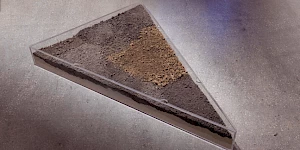
‘The Soils Project’ is part of an eponymous, long-term research initiative involving TarraWarra Museum of Art (Wurundjeri Country, Australia), the Van Abbemuseum (Eindhoven, Netherlands) and Struggles for Sovereignty, a collective based in Yogyakarta, Indonesia. It works through specific and situated practices that consider soil, as both metaphor and matter.
Seeking and facilitating opportunities to listen to diverse voices and perspectives around notions of caring for land, soil and sovereign territories, the project has been in development since 2018. An international collaboration between three organisations, and several artists, curators, writers and activists, it has manifested in various iterations over several years. The group exhibition ‘Soils’ at the Van Abbemuseum is part of Museum of the Commons. -
–VCRC
Kyiv Biennial 2023
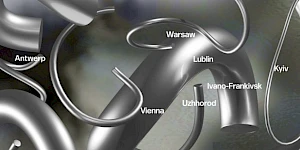
L’Internationale Confederation is a proud partner of this year’s edition of Kyiv Biennial.
-
–MACBA
Where are the Oases?
PEI OBERT seminar
with Kader Attia, Elvira Dyangani Ose, Max Jorge Hinderer Cruz, Emily Jacir, Achille Mbembe, Sarah Nuttall and Françoise VergèsAn oasis is the potential for life in an adverse environment.
-
MACBA
Anti-imperialism in the 20th century and anti-imperialism today: similarities and differences
PEI OBERT seminar
Lecture by Ramón GrosfoguelIn 1956, countries that were fighting colonialism by freeing themselves from both capitalism and communism dreamed of a third path, one that did not align with or bend to the politics dictated by Washington or Moscow. They held their first conference in Bandung, Indonesia.
-
–Van Abbemuseum
Maria Lugones Decolonial Summer School
Recalling Earth: Decoloniality and Demodernity
Course Directors: Prof. Walter Mignolo & Dr. Rolando VázquezRecalling Earth and learning worlds and worlds-making will be the topic of chapter 14th of the María Lugones Summer School that will take place at the Van Abbemuseum in Eindhoven.
-
–MSN Warsaw
Archive of the Conceptual Art of Odesa in the 1980s
The research project turns to the beginning of 1980s, when conceptual art circle emerged in Odesa, Ukraine. Artists worked independently and in collaborations creating the first examples of performances, paradoxical objects and drawings.
-
–Moderna galerijaZRC SAZU
Summer School: Our Many Easts
Our Many Easts summer school is organised by Moderna galerija in Ljubljana in partnership with ZRC SAZU (the Research Centre of the Slovenian Academy of Sciences and Arts) as part of the L’Internationale project Museum of the Commons.
-
–Moderna galerijaZRC SAZU
Open Call – Summer School: Our Many Easts
Our Many Easts summer school takes place in Ljubljana 24–30 August and the application deadline is 15 March. Courses will be held in English and cover topics such as the legacy of the Eastern European avant-gardes, archives as tools of emancipation, the new “non-aligned” networks, art in times of conflict and war, ecology and the environment.
-
–MACBA
Song for Many Movements: Scenes of Collective Creation
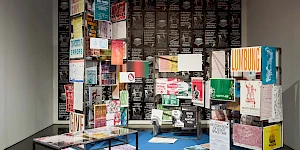
An ephemeral experiment in which the ground floor of MACBA becomes a stage for encounters, conversations and shared listening.
-
Museo Reina Sofia
Palestine Is Everywhere
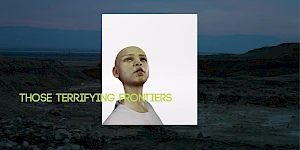
‘Palestine Is Everywhere’ is an encounter and screening at Museo Reina Sofía organised together with Cinema as Assembly as part of Museum of the Commons. The conference starts at 18:30 pm (CET) and will also be streamed on the online platform linked below.
-
HDK-Valand
Book Launch: Collective Study in Times of Emergency, Gothenburg
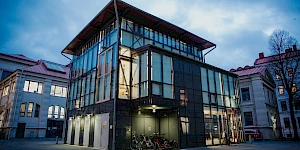
with Nick Aikens (L'Internationale Online / HDK-Valand) and Mills Dray (HDK-Valand), 17h00, Glashuset
-
Moderna galerija
Book Launch: Collective Study in Times of Emergency, Ljubljana
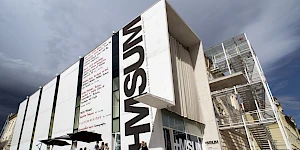
with Nick Aikens (L'Internationale Online / HDK-Valand), Bojana Piškur (MG+MSUM) and Martin Pogačar (ZRC SAZU)
-
WIELS
Book Launch: Collective Study in Times of Emergency, Brussels
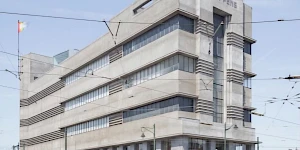
with Nick Aikens (L'Internationale Online / HDK-Valand), Subversive Film and Alex Reynolds, 19h00, Wiels Auditorium
-
–
Kyiv Biennial 2025
L’Internationale Confederation is proud to co-organise this years’ edition of the Kyiv Biennial.
-
–MACBA
Project a Black Planet: The Art and Culture of Panafrica
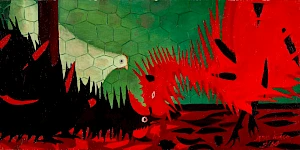
Curated by MACBA director Elvira Dyangani Ose, along with Antawan Byrd, Adom Getachew and Matthew S. Witkovsky, Project a Black Planet: The Art and Culture of Panafrica is the first major international exhibition to examine the cultural manifestations of Pan-Africanism from the 1920s to the present.
-
–M HKA
The Geopolitics of Infrastructure
The exhibition The Geopolitics of Infrastructure presents the work of a generation of artists bringing contemporary perspectives on the particular topicality of infrastructure in a transnational, geopolitical context.
-
–MACBAMuseo Reina Sofia
School of Common Knowledge 2025
The second iteration of the School of Common Knowledge will bring together international participants, faculty from the confederation and situated organizations in Barcelona and Madrid.
-
NCAD
Book Launch: Collective Study in Times of Emergency, Dublin
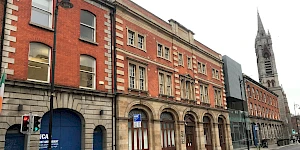
with Nick Aikens (L'Internationale Online / HDK-Valand) and members of the L'Internationale Online editorial board: Maria Berríos, Sheena Barrett, Sara Buraya Boned, Charles Esche, Sofia Dati, Sabel Gavaldon, Jasna Jaksic, Cathryn Klasto, Magda Lipska, Declan Long, Francisco Mateo Martínez Cabeza de Vaca, Bojana Piškur, Tove Posselt, Anne-Claire Schmitz, Ezgi Yurteri, Martin Pogacar, and Ovidiu Tichindeleanu, 18h00, Harry Clark Lecture Theatre, NCAD
-
–
Collective Study in Times of Emergency, Amsterdam
Within the context of ‘Every Act of Struggle’, the research project and exhibition at de appel in Amsterdam, L’Internationale Online has been invited to propose a programme of collective study.
-
Museo Reina Sofia
Poetry readings: Culture for Peace – Art and Poetry in Solidarity with Palestine
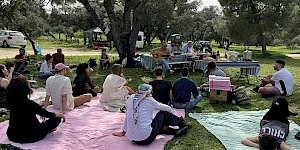
Casa de Campo, Madrid
-
WIELS
Collective Study in Times of Emergency, Brussels. Rana Issa and Shayma Nader
Join us at WIELS for an evening of fiction and poetry as part of L'Internationale Online's 'Collective Study in Times of Emergency' publishing series and public programmes. The series was launched in November 2023 in the wake of the onset of the genocide in Palestine and as a means to process its implications for the cultural sphere beyond the singular statement or utterance.
-
–Museo Reina Sofia
Study Group: Aesthetics of Peace and Desertion Tactics
In a present marked by rearmament, war, genocide, and the collapse of the social contract, this study group aims to equip itself with tools to, on one hand, map genealogies and aesthetics of peace – within and beyond the Spanish context – and, on the other, analyze strategies of pacification that have served to neutralize the critical power of peace struggles.
-
–MSN Warsaw
Near East, Far West. Kyiv Biennial 2025
The main exhibition of the 6th Kyiv Biennial 2025, titled Near East, Far West, is organized by a consortium of curators from L’Internationale. It features seven new artists’ commissions, alongside works from the collections of member institutions of L’Internationale and a number of other loans.
-
MACBA
PEI Obert: The Brighter Nations in Solidarity: Even in the Midst of a Genocide, a New World Is Being Born
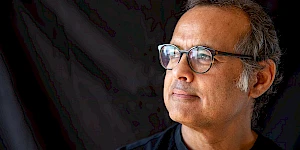
PEI Obert presents a lecture by Vijay Prashad. The Colonial West is in decay, losing its economic grip on the world and its control over our minds. The birth of a new world is neither clear nor easy. This talk envisions that horizon, forged through the solidarity of past and present anticolonial struggles, and heralds its inevitable arrival.
-
–M HKA
Homelands and Hinterlands. Kyiv Biennial 2025
Following the trans-national format of the 2023 edition, the Kyiv Biennial 2025 will again take place in multiple locations across Europe. Museum of Contemporary Art Antwerp (M HKA) presents a stand-alone exhibition that acts also as an extension of the main biennial exhibition held at the newly-opened Museum of Modern Art in Warsaw (MSN).
In reckoning with the injustices and atrocities committed by the imperialisms of today, Kyiv Biennial 2025 reflects with historical consciousness on failed solidarities and internationalisms. It does this across an axis that the curators describe as Middle-East-Europe, a term encompassing Central Eastern Europe, the former-Soviet East and the Middle East.
-
HDK-Valand
MA Forum in collaboration with LIO: Nour Shantout
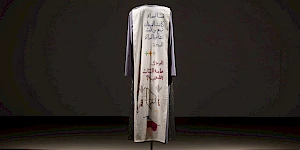
In this artist talk, Nour Shantout will present Searching for the New Dress, an ongoing artistic research project that looks at Palestinian embroidery in Shatila, a Palestinian refugee camp in Lebanon. Welcome!
-
MACBA
PEI Obert: Bodies of Evidence. A lecture by Ido Nahari and Adam Broomberg
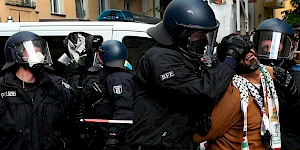
In the second day of Open PEI, writer and researcher Ido Nahari and artist, activist and educator Adam Broomberg bring us Bodies of Evidence, a lecture that analyses the circulation and functioning of violent images of past and present genocides. The debate revolves around the new fundamentalist grammar created for this documentation.
-
–
Everything for Everybody. Kyiv Biennial 2025
As one of five exhibitions comprising the 6th Kyiv Biennial 2025, ‘Everything for Everybody’ takes place in the Ukraine, at the Dnipro Center for Contemporary Culture.
-
–
In a Grandiose Sundance, in a Cosmic Clatter of Torture. Kyiv Biennial 2025
As one of five exhibitions comprising the 6th Kyiv Biennial 2025, ‘In a Grandiose Sundance, in a Cosmic Clatter of Torture’ takes place at the Dovzhenko Centre in Kyiv.
-
MACBA
School of Common Knowledge: Fred Moten
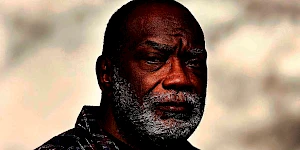
Fred Moten gives the lecture Some Prœposicions (On, To, For, Against, Towards, Around, Above, Below, Before, Beyond): the Work of Art. As part of the Project a Black Planet exhibition, MACBA presents this lecture on artworks and art institutions in relation to the challenge of blackness in the present day.
-
–MACBA
Visions of Panafrica. Film programme
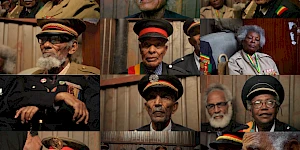
Visions of Panafrica is a film series that builds on the themes explored in the exhibition Project a Black Planet: The Art and Culture of Panafrica, bringing them to life through the medium of film. A cinema without a geographical centre that reaffirms the cultural and political relevance of Pan-Africanism.
-
MACBA
Farah Saleh. Balfour Reparations (2025–2045)

As part of the Project a Black Planet exhibition, MACBA is co-organising Balfour Reparations (2025–2045), a piece by Palestinian choreographer Farah Saleh included in Hacer Historia(s) VI (Making History(ies) VI), in collaboration with La Poderosa. This performance draws on archives, memories and future imaginaries in order to rethink the British colonial legacy in Palestine, raising questions about reparation, justice and historical responsibility.
-
MACBA
Project a Black Planet: The Art and Culture of Panafrica OPENING EVENT
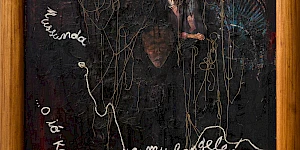
A conversation between Antawan I. Byrd, Adom Getachew, Matthew S. Witkovsky and Elvira Dyangani Ose. To mark the opening of Project a Black Planet: The Art and Culture of Panafrica, the curatorial team will delve into the exhibition’s main themes with the aim of exploring some of its most relevant aspects and sharing their research processes with the public.
-
MACBA
Palestine Cinema Days 2025: Al-makhdu’un (1972)
Since 2023, MACBA has been part of an international initiative in solidarity with the Palestine Cinema Days film festival, which cannot be held in Ramallah due to the ongoing genocide in Palestinian territory. During the first days of November, organizations from around the world have agreed to coordinate free screenings of a selection of films from the festival. MACBA will be screening the film Al-makhdu’un (The Dupes) from 1972.
-
Museo Reina Sofia
Cinema Commons #1: On the Art of Occupying Spaces and Curating Film Programmes
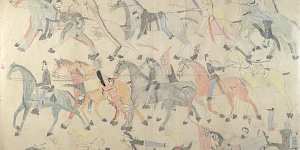
On the Art of Occupying Spaces and Curating Film Programmes is a Museo Reina Sofía film programme overseen by Miriam Martín and Ana Useros, and the first within the project The Cinema and Sound Commons. The activity includes a lecture and two films screened twice in two different sessions: John Ford’s Fort Apache (1948) and John Gianvito’s The Mad Songs of Fernanda Hussein (2001).
-
–
Vertical Horizon. Kyiv Biennial 2025
As one of five exhibitions comprising the 6th Kyiv Biennial 2025, ‘Vertical Horizon’ takes place at the Lentos Kunstmuseum in Linz, at the initiative of tranzit.at.
-
–
International Day of Solidarity with the Palestinian People: Activities
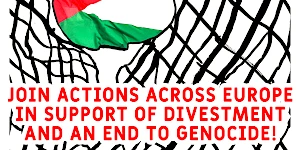
To mark International Day of Solidarity with the Palestinian People and in conjunction with our collective text, we, the cultural workers of L'Internationale have compiled a list of programmes, actions and marches taking place accross Europe. Below you will find programmes organized by partner institutions as well as activities initaited by unions and grass roots organisations which we will be joining.
This is a live document and will be updated regularly.
-
–SALT
Screening: A Bunch of Questions with No Answers
This screening is part of a series of programs and actions taking place across L’Internationale partners to mark International Day of Solidarity with the Palestinian People.
A Bunch of Questions with No Answers (2025)
Alex Reynolds, Robert Ochshorn
23 hours 10 minutes
English; Turkish subtitles -
HDK-Valand
MA Forum in collaboration with LIO: Adam Broomberg
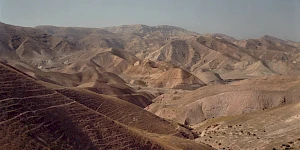
In this MA Forum we welcome artist Adam Broomberg. In his lecture he will focus on two photographic projects made in Israel/Palestine twenty years apart. Both projects use the medium of photography to communicate the weaponization of nature.
-
MACBA
PEI Obert: Until Liberation: A Collective Reading and Listening Session by Learning Palestine
PEI Obert presents a collective session with Learning Palestine. At this historical juncture – amid the ongoing genocide in Gaza and the censorship and repression of all things Palestinian – Learning Palestine invites us to gather not only in refusal but also in affirmation.
Related contributions and publications
-
…and the Earth along. Tales about the making, remaking and unmaking of the world.
Martin PogačarLand RelationsClimatePast in the Present -
The Kitchen, an Introduction to Subversive Film with Nick Aikens, Reem Shilleh and Mohanad Yaqubi
Nick Aikens, Subversive FilmSonic and Cinema CommonslumbungPast in the PresentVan Abbemuseum -
The Repressive Tendency within the European Public Sphere
Ovidiu ŢichindeleanuInternationalismsPast in the Present -
Rewinding Internationalism
InternationalismsVan Abbemuseum -
Troubles with the East(s)
Bojana PiškurInternationalismsPast in the Present -
Right now, today, we must say that Palestine is the centre of the world
Françoise VergèsInternationalismsPast in the Present -
Body Counts, Balancing Acts and the Performativity of Statements
Mick WilsonInternationalismsPast in the Present -
Until Liberation I
Learning Palestine GroupInternationalismsPast in the Present -
Until Liberation II
Learning Palestine GroupInternationalismsPast in the Present -
The Veil of Peace
Ovidiu ŢichindeleanuPast in the Presenttranzit.ro -
Editorial: Towards Collective Study in Times of Emergency
L’Internationale Online Editorial BoardEN es sl tr arInternationalismsStatements and editorialsPast in the Present -
Opening Performance: Song for Many Movements, live on Radio Alhara
Jokkoo with/con Miramizu, Rasheed Jalloul & Sabine SalaméEN esInternationalismsSonic and Cinema CommonsPast in the PresentMACBA -
Siempre hemos estado aquí. Les poetas palestines contestan
Rana IssaEN es tr arInternationalismsPast in the Present -
Indra's Web
Vandana SinghLand RelationsPast in the PresentClimate -
Diary of a Crossing
Baqiya and Yu’adInternationalismsPast in the Present -
The Silence Has Been Unfolding For Too Long
The Free Palestine Initiative CroatiaInternationalismsPast in the PresentSituated OrganizationsInstitute of Radical ImaginationMSU Zagreb -
En dag kommer friheten att finnas
Françoise Vergès, Maddalena FragnitoEN svInternationalismsLand RelationsClimateInstitute of Radical Imagination -
Everything will stay the same if we don’t speak up
L’Internationale ConfederationEN caInternationalismsStatements and editorials -
War, Peace and Image Politics: Part 1, Who Has a Right to These Images?
Jelena VesićInternationalismsPast in the PresentZRC SAZU -
Live set: Una carta de amor a la intifada global
PrecolumbianEN esInternationalismsSonic and Cinema CommonsPast in the PresentMACBA -
Cultivating Abundance
Åsa SonjasdotterLand RelationsClimatePast in the Present -
Rethinking Comradeship from a Feminist Position
Leonida KovačSchoolsInternationalismsSituated OrganizationsMSU ZagrebModerna galerijaZRC SAZU -
Reading list - Summer School: Our Many Easts
Summer School - Our Many EastsSchoolsPast in the PresentModerna galerija -
The Genocide War on Gaza: Palestinian Culture and the Existential Struggle
Rana AnaniInternationalismsPast in the Present -
Klei eten is geen eetstoornis
Zayaan KhanEN nl frLand RelationsClimatePast in the Present -
Dispatch: ‘I don't believe in revolution, but sometimes I get in the spirit.’
Megan HoetgerSchoolsPast in the Present -
Dispatch: Notes on (de)growth from the fragments of Yugoslavia's former alliances
Ava ZevopSchoolsPast in the Present -
Glöm ”aldrig mer”, det är alltid redan krig
Martin PogačarEN svLand RelationsPast in the Present -
Broadcast: Towards Collective Study in Times of Emergency (for 24 hrs/Palestine)
L’Internationale Online Editorial Board, Rana Issa, L’Internationale Confederation, Vijay PrashadInternationalismsSonic and Cinema Commons -
Beyond Distorted Realities: Palestine, Magical Realism and Climate Fiction
Sanabel Abdel RahmanEN trInternationalismsPast in the PresentClimate -
Collective Study in Times of Emergency. A Roundtable
Nick Aikens, Sara Buraya Boned, Charles Esche, Martin Pogačar, Ovidiu Ţichindeleanu, Ezgi YurteriInternationalismsPast in the PresentSituated Organizations -
Present Present Present. On grounding the Mediateca and Sonotera spaces in Malafo, Guinea-Bissau
Filipa CésarSonic and Cinema CommonsPast in the Present -
Collective Study in Times of Emergency
InternationalismsPast in the Present -
S come Silenzio
Maddalena FragnitoEN itInternationalismsSituated Organizations -
ميلاد الحلم واستمراره
Sanaa SalamehEN hr arInternationalismsPast in the Present -
عن المكتبة والمقتلة: شهادة روائي على تدمير المكتبات في قطاع غزة
Yousri al-GhoulEN arInternationalismsPast in the Present -
Archivos negros: Episodio I. Internacionalismo radical y panafricanismo en el marco de la guerra civil española
Tania Safura AdamEN esInternationalismsPast in the Present -
Re-installing (Academic) Institutions: The Kabakovs’ Indirectness and Adjacency
Christa-Maria Lerm HayesInternationalismsPast in the Present -
Palma daktylowa przeciw redeportacji przypowieści, czyli europejski pomnik Palestyny
Robert Yerachmiel SnidermanEN plInternationalismsPast in the PresentMSN Warsaw -
Masovni studentski protesti u Srbiji: Mogućnost drugačijih društvenih odnosa
Marijana Cvetković, Vida KneževićEN rsInternationalismsPast in the Present -
No Doubt It Is a Culture War
Oleksiy Radinsky, Joanna ZielińskaInternationalismsPast in the Present -
Cinq pierres. Une suite de contes
Shayma NaderEN nl frInternationalisms -
Dispatch: As Matter Speaks
Yeongseo JeeInternationalismsPast in the Present -
Speaking in Times of Genocide: Censorship, ‘social cohesion’ and the case of Khaled Sabsabi
Alissar SeylaInternationalisms -
Reading List: Summer School, Landscape (post) Conflict
Summer School - Landscape (post) ConflictSchoolsLand RelationsPast in the PresentIMMANCAD -
Today, again, we must say that Palestine is the centre of the world
Françoise VergèsInternationalisms -
Isabella Hammad’ın icatları
Hazal ÖzvarışEN trInternationalisms -

To imagine a century on from the Nakba
Behçet ÇelikEN trInternationalisms -
Internationalisms: Editorial
L'Internationale Online Editorial BoardInternationalisms -
Dispatch: Institutional Critique in the Blurst of Times – On Refusal, Aesthetic Flattening, and the Politics of Looking Away
İrem GünaydınInternationalisms -
Until Liberation III
Learning Palestine GroupInternationalismsPast in the Present -
Archivos negros: Episodio II. Jazz sin un cuerpo político negro
Tania Safura AdamEN esInternationalismsPast in the Present -
Cultural Workers of L’Internationale mark International Day of Solidarity with the Palestinian People
Cultural Workers of L’InternationaleEN es pl roInternationalismsSituated OrganizationsPast in the PresentStatements and editorials -
Poetry Against Language Dioxide
Rana IssaInternationalisms -
The Object of Value
SlinkoInternationalismsLand Relations