Present Present Present. On grounding the Mediateca and Sonotera spaces in Malafo, Guinea-Bissau
Through text and excerpts from films produced over the past eight years, film maker Filipa César narrates her long-term engagement with the films, history and communities of Guinea-Bissau, and the collective realisation of the Mediateca and Sonotera in Malafo, situated in the geographical centre of the country. César uses the spiral shape of the analogue audio or film reel as a departure point to think through non-linear spatial, sonic and temporal practices, and the possibilities for mobilizing archives in, and for, the present.
Spiral Traversing Assembly
We adopted a strategy that we might call centrifugal: we started [the armed struggle] in the centre and moved towards the periphery of our country.
– Amílcar Cabral1
Excerpt from Spell Reel, Filipa César et al, 2017
Over the past decade, working through the digitalization and activation of Guinea-Bissau’s anti-colonial film and audio archive, I have become aware of the implications of the spiral shape of the analogue audio or film reel.2 In the processes of archiving, reproducing and mediating audio-visual material, the spiral mechanics of these medialities offer possibilities for experiencing and performing time as a recurrent cycle (always otherwise), beyond the linear construction of past–present–future. In a linear (or enlightened) conception, time is imagined as a straight, progressive vector where the past is something irreparable, unreachable, prompting action in the present toward a justice to be performed and achieved in the future. What was, will never be. What is ahead is plannable or programmable.
Through ongoing exchanges with my ciné-kin in Guinea-Bissau (Sana na N'Hada, Flora Gomes, Suleimane Biai and others), I have learned that this time-construct is not self-evident:3 The actualizing gestures of these archival practices are materially and epistemologically linked to the spiral. By allowing past events and entities to be inscribed onto the present material world, their material dynamics and potencies echo animistic cosmologies in Guinea-Bissau. Through their archival activation – rather than only representation – events, sounds, people, shadows, light, entities, crossings and emotions are encountered and made present beyond the traces captured on the spiral-wound tape. Volatile narratives are de- and recomposed as temporalities collapse. These layered encounters have the potential to re-pair – that is, to bring together again – what was once separated: to ‘perform the rite that would repair the web of time where it had been broken,’ a move towards reconciliation in the present.4
Excerpt from Spell Reel, Filipa César et al, 2017
One of our formats for such endeavours was a mobile cinema developed within the frame of the project ‘From Boé to Berlin’ for the Visionary Archive Festival (Arsenal – Institute for Film and Video Art in Berlin, 2015). Travelling across Guinea-Bissau and to various sites in Europe with the fragmented digitized Guinean film archive, the project entailed projecting images and sounds from different temporalities with an assembly of agencies, people, places and other forces.5 This laboratory of cinema as assembly played out the layered experience of spiral time: the assembly convened, spellbound by the collective hallucinatory experience of seeing together what is otherwise present.6
Excerpt from Spell Reel, Filipa César et al, 2017
The mobile cinema followed a spiral centrifugal movement, echoing Amílcar Cabral’s strategic movement in the armed struggle for the liberation of Guinea-Bissau. We initiated the first screening in the centre of the country, where PAIGC (African Party for the Independence of Guinea and Cape Verde) had established the core base of the armed struggle in the mid-1960s, before taking the images and sounds around the country: Móres, Cacheu, Bissau, Buba, Gabu, Boé, and then further towards Berlin, Europe, the Americas and Asia.
Excerpt from Spell Reel, Filipa César et al, 2017
Humbling the Mediateca
I understood that Sana na N'Hada’s sound-editing of the film O Regresso de Amílcar Cabral also served as an archive of music that otherwise might never be listened to again.
– Mû Mbana7
The idea to build the Mediateca evolved just after the premiere of Spell Reel (2017), the film that traces the digitization of the Guinean film and video archive and its many itinerancies. A group of film-makers and cinephiles proposed a gathering to think about anti-colonial archival practices beyond Europe.8 The conversation, held at We Are Born Free! Empowerment Radio in Berlin, focused on how to create spaces for archival laboratories in Guinea and other sites across Africa, where those attending had ties.9 At stake was understanding how the unearthing of anti-colonial archives, their activations, and the reflections and experiences we had gathered might constitute a method for a practice of struggle or a form of archival activism.10
We discussed the case of working with the Guinean audio-visual archive, which had enabled an intense learning curve – from digitization, performative screenings and mobile cinema to discussions and activations, questioning the politics of archival practices. These initiatives, however, were primarily driven or funded by European allies. With the Cairo Cimatheque as a reference, we focused on the urgency of establishing a space for these processes to occur independently in Guinea-Bissau.11 A magical coincidence occurred when Guinean poet and architect Marinho de Pina, unaware of the Guinean archive project, attended the screening of Spell Reel and joined this gathering. From that day on, Marinho was part of the collective imagining of the building of the Mediateca.
What follows outlines quests, dreams, thoughts, politics and multiple other sources that informed the building of the Mediateca. The name ‘Mediateca’ arose from our work with archives, work that mediates not only images and sounds but also other forces, entities, emotions and imaginaries. Mediateca became a shelter for medialities that are, in part, beyond our grasp.12
In the 1950s, Amílcar Cabral, then an agronomist working for the Portuguese authorities, identified three principles for the Pessubé colonial farm, which he led and reshaped into an experimental farming lab in Bissau during colonial rule:
- Flattening hierarchies between farmers, scientists, and the state
- Promoting research and experimentation
- Serving as a hub for the translocal exchange of knowledge
These principles guided our imagining of the Mediateca: a space for horizontal encounters, experimentation and knowledge exchange, based on the militant legacy of Guinea-Bissau’s audio-visual collection. This space was informed by what I have called an ‘agropoetics of liberation’, hinting at Amílcar Cabral’s agronomic work and established in Malafo through Sana na N'Hada’s connection to the community and the land.13
Malafo, situated in the geographic centre of Guinea-Bissau, is a Balanta farming village of Sana’s ancestors. ‘Abotcha’, meaning ‘on the ground, humble, situated, on land, onshore’ in Balanta, became another motto for the Mediateca: how to work from Malafo while being connected to the world and engaged with decisions imposed from afar.
To imagine the Mediateca building with the community, we embarked on a series of workshops.
Excerpt from Resonance Spiral, Marinho de Pina & Filipa César et al, 2024
‘Militant Education’, developed in collaboration with Portuguese historian Sónia Vaz Borges, was a workshop for participants to learn from the militant education system during the Guinean liberation movement, which established approximately 164 schools in liberated zones and neighbouring countries during the war of independence (1963–74). Archival material and oral accounts from witnesses informed this workshop, leading to experimental activations of the legacy of militant education, and discussions on which of its methods were useful for Mediateca.14
Excerpt from Mangrove School, 2022, Sónia Vaz Borges & Filipa César et al
‘Mangrove School’ was a speculative exercise, in which people were asked to imagine the living conditions of students and teachers who established jungle schools in Guinea’s mangrove wetlands during the liberation struggle. Based on Marcelino Mutna’s account of a school sheltered in the mangroves in the 1970s, we built a school in the Malafo mangrove and restaged scenes of learning in this rhizomatic environment. The documentation resulted in the film Mangrove School (2020).
Excerpt from Mangrove School, 2022, Sónia Vaz Borges & Filipa César et al
‘Traditional Architecture’ was led by Guinean architect Marinho de Pina, who wrote his master’s thesis on traditional building materials, forms and techniques in Guinea-Bissau and now shared his knowledge of environmentally friendly construction. Together with the Malafo community, we built a scale model of the village to test the placement, orientations, shapes and functions of the Mediateca building. This workshop helped develop a collective understanding of the community’s needs and how they might be articulated through the Mediateca.15
The building, made of adobe shaped with mud prepared by termites, rests on a stone foundation, with mahogany wood pillars, palm tree trunks for the roof structure, woven bamboo covered with mud for the ceiling and a zinc roof.16 Thanks to the Calouste Gulbenkian Foundation, from 2022 to 2024 the Mediateca was able to fund sixteen workshops in music (and musical instrument–building), archival practices, cinema, theatre and agroecological activities.17
Excerpt from Resonance Spiral, Marinho de Pina & Filipa César et al, 2024
We often discussed that the Malafo community didn’t necessarily need the gentrification that might come with the Mediateca’s activities. Yet, despite the risks and conflicts, the space has been envisioned as an artificial buffer between the traditional farming community and the inevitable impact of neoliberal forces and forces of capital encroaching on Guinea-Bissau. This might be another function of the Mediateca – the mediation between traditional and capitalist modes of living.18
Excerpt from Resonance Spiral, Marinho de Pina & Filipa César et al, 2024
Stirring the Sonotera
Listening to music is a gesture in which the body tunes into the mathesis universalis. This is possible because acoustic vibrations not only penetrate but also resonate with the body’s skin. The skin, that no-man’s-land between a human being and the world, transforms from boundary to link.
– Vilém Flusser19
To focus on sound is to emphasize its medium – indeed, its media.
– Louis Chude-Sokei20
Excerpt from Resonance Spiral, Marinho de Pina & Filipa César et al, 2024
In the peak of the rainy season, groups of two dozen teenage girls join together to plant rice for their families and community. In one day, with water over the knees, they can plant enough to supply a family’s yearly rice needs. Their singing-while-planting becomes a complex interplay between sounding, splashing and listening. The sonic is activated as part of movement, breathing, bathing, and labour. Singing together synchronizes the forces of the group and of water reverberance in a collective body. One voice launches the first refrain, which is echoed in chorus. In each refrain that follows, always initiated by a different person, a single voice ignites many, activating rhythm, breathing and movement. Words, rhyme and harmony entangle old and new knowledge through a soothing communal process of sonic transmission. Culture and agriculture are intertwined.
The latent presence in the Malafo community of oral traditions and music, and the legacy of the sonoteque in the Guinean archive, initiated in the 1970s by Sana na N'Hada and his comrades, made it clear that the future Mediateca would need to foreground and give space to the sonic. This led to various activities around music: building instruments, singing and dancing workshops, storytelling and listening sessions.
Excerpt from Resonance Spiral, Marinho de Pina & Filipa César et al, 2024
Summoning old and new, the idea of the Sonotera developed as a space that merges a sonoteque (sound archive and studio) with a seed bank (sementera in Creole). The Sonotera will celebrate the entanglement of culture and agriculture by bringing together sounds and seeds – the natural vessels of genetic material whose geopolitical regulation reflects the power dynamics of the archive.
Is there a contradiction between live music-making and the gestures of recording, archiving and playing sound reels or digital files? Technical mediation didn’t begin with wired devices or digital coding. Medialities are intrinsic to music-making and producing socialities, whether through airwaves, resonating mud walls and dirt floors, or the repetition of lyrics and rhythms. Wired or wireless, the transmission of electric signals and of reverberating waves of rhythm, tone and message in a body both involve mineral, metallic and electrical connectors, receivers and transmitters. Here are three reflections on medialities informing the Sonotera:
- Mediality as Technical Continuum: Attending to the sonic, as in the Guinean sonoteque that gathered sounds for unknown, still-to-come uses. This understanding of medialities as a technical continuum, without pre-determined purpose, connects oral/sonic transfers to analogue or digital supports.
- Mediality as Transfer: Multi-instrumentalist and poet Mû Mbana notes how some of Sana na N'Hada’s films serve as carriers and traffickers of sounds that would otherwise never be heard again.
- Mediality as Deep Focus on Sound: In The Sound of Culture (2016), Louis Chude-Sokei argues that focusing on sound itself, beyond rhythm, melody and performance, brings us to the core of mediality.21
Electric music-production technology still entails the performance of tasks of transfer, close to those involved in traditional music practices: transfers between disciple and musician, singer or storyteller. Traditional or contemporary, music-making in Guinea extends beyond entertainment, comprising sonic iterations of spiritual and mental care in the face of suffering – stirring the troubles from the water in a calabash. This underlines the mediality of music and informs the design of the Sonotera at the Mediateca.
Still under construction, the Sonotera will be a space for study, retreat, listening, playing, research and sonic-wave transfer. It will allow for three different meanings of ‘present’ to be practiced:
- Present – the here and now, the collapse of time
- Present – (attending to) what inheres in matter, vibration, inscription and archive
- Present – gift, offerings, intentions, tools to share and seed
The Sonotera is envisioned as a place for halting time and studying (in) geometries of the sonic, echoing Pauline Oliveros’s belief that deep listening is a necessary pause before action: ‘Listening is directing attention to what is heard, gathering meaning, interpreting, and deciding on action.’
Listening involves the body, which vibrates in resonance with the material world.22 As Vilém Flusser synthesizes: ‘It is exactly because the gesture [of listening to music] is so profane, so technical, so public … that music is the greatest, most sacred mystery. It does not need to conceal itself, for in its magnificent, supercomplex simplicity, it is obscure … For it is life in death and death in life.’23
Through infinite connection, the self dissolves, and with it, the structures of rational divide – blame, value, choice. There is no selfishness without self, and soothing belonging takes place within the collective, traversed by invisible matter, vibrating bodies and the vital force of plant seeds – the most ancestral form of archive and life-mediality. The Sonotera celebrates the sonic seeding practices of spiral recurrences, offering the present to be present in the present.24
Amílcar Cabral, Revolution in Guinea: An African People’s Struggle, London: Stage 1, 1969, p. 10.
Guinean cinema evolved within the eleven-years-long war for independence from Portuguese colonialism (1963–74) when Amílcar Cabral, the leader of PAIGC (Partido Africano para a Independência da Guiné e Cabo Verde / African Party for the Independence of Guinea and Cape Verde), sent four young Guineans, Flora Gomes, Sana na N'Hada, Josefina Crato and José Bolama Cobumba, to the Cuban Film Institute (ICAIC) to learn how to make cinema under the guidance of Santiago Alvarez. Amílcar Cabral and the movement’s propagandist vision was to make his people and the world aware of the ongoing struggle, and to build their own national imaginary. Amílcar Cabral was murdered on 20 January 1973. He did not live to witness either the Proclamation of Independence in September 1973, which had been envisioned and prepared for over two decades of struggle, or its visionary film documentation. Cinema, along with the Creole language and militant education, was a tool of political imagination. Together, they were the means to establish a pillar of collective memory and unity to promote the rise of the newly liberated Guinea. Cinematic practices in Guinea-Bissau thrived for some years after independence. But with the coup d’état ignited by Nino (Bernardo) Vieira in 1980, this militant cinema stopped being a governmental priority and the film-makers turned to international co-production to produce feature films – Mortu Nega (1988) by Flora Gomes and Xime (1994) by Sana na N'Hada. In 2012 all the fragmentary remains of this archive, including the film O Regresso de Amílcar Cabral / The Return of Amílcar Cabral (1976), were experimentally digitized by the Arsenal – Institute for Film and Video Art, Berlin. The process was initiated by Filipa César, Sana na N'Hada and many others, in the context of the digitization project ‘Animated Archive’ and the accompanying research project ‘Luta ca caba inda’ (‘The struggle is not over yet’ in Creole), and framed within the umbrella project ‘Living Archive – Archive Work as a Contemporary Artistic and Curatorial Practice’. This ongoing collaboration, named after an unfinished film in the archive, focuses on experimental ways of keeping the archive open – and, with it, access to its kaleidoscopic imaginary and refracted potencies. See: arsenal-berlin.de.
‘Ciné-kinship’ is a term I use to address personal, emotional and intellectual relations that evolve from common experience and interest in engaged cinematic practices beyond national and systemic constructs and divides while, nevertheless, not masking differences of position, privilege or access when attending to the negotiations and adjustments inherent to those processes and to the distribution of means.
‘Cinema as Assembly’ is a term conceived by Māori film-maker Barry Barclay and adopted by film anthropologist Massimiliano Mollona for the name of a collective and working group, as it has been now for this L’Internationale Online publishing strand. See: instituteofradicalimagination.org.
Later, in collaboration with the Goethe Institut, this discussion evolved with further participants towards the manifesto ‘Call for Action and Reflection on Decolonising Film Archives’, a work in progress. See: goethe.de.
See Filipa César, ‘Cine-Animism: The Return of Amílcar Cabral and Many Returns’, in Accidental Archivism: Shaping Cinema’s Futures with Remnants of the Past (ed. Stefanie Schulte Strathaus and Vinzenz Hediger), Meson Press, 2023.
See Filipa César, ‘Meteorisations: Amílcar Cabral’s Agronomy of Liberation’, Third Text, vol. 32, no. 2–3, 2018: pp. 254–72.
Malafo workshop, ‘The Legacy of the Schools in the Liberated Zones‘, September 2020, in collaboration with Harun Farocki Institut. See Sónia Vaz Borges, Militant Education, Liberation Struggle, Consciousness: The PAIGC education in Guinea Bissau 1963–1978, Berlin: Peter Lang, 2019.
In collaboration with Fundación ‘La Caixa’, the mangrove research project was initiated by Sónia Vaz Borges and Filipa César, in dialogue with Sana na N'Hada, the Malafo community and Guinean scientists Rui Nene N'djata (agronomist, water and soil engineer) and Marcelino Mutna (chemist). See the film Mangrove School and the text ‘Militant Mangrove School’ (both 2020) by Sónia Vaz Borges and Filipa César: manifold.umn.edu. See also Tom Holert, Politics of Learning, Politics of Space: Architecture and the Education Shock in the 1960s and 1970s, Berlin: De Gruyter, 2020.
In 2021, with the cession of a piece of land by the community of Malafo (of which Sana na N'Hada is a member), and thanks to various funding support, it was possible for the Geba Filmes cooperative to edify the Mediateca as a 468m2 ecological building made of local materials, with 100 percent solar energy, two water wells, a mediatheque and library (bibliotera), a multipurpose open space and a residence. In 2024, with additional funding, it was possible to construct a community kitchen and the 250m2 Sonotera building (for a future sound studio and seedbank). Together with the women of the Satna Fai farming collective, artist Sancho Silva created the Nhambarkutar, a snail-shaped experimental permaculture garden. The Mediateca was officially opened in September 2022. The project is a joint collaboration between film-makers Sana na N'Hada and Suleimane Biai from Geba Filmes, artist Filipa César from elsehere e.V. and author and architect Marinho de Pina, among others, who, in 2020, in dialogue with the community of Malafo, represented by Bedan na Onça, Pereira na Onça of APEE (Associação de Pais e Encarregados de Educação) and N'Sai N'diba of Satna Fai (Association of Women Farmers of Malafo) imagined the space. The construction was financed with support from AFIELD (2018), Ajuda e.V., Hering-Stiftung Natur und Mensch (2020–22) and FfAI (Foundation for Art Initiatives) (2023).
The communities of Malafo and Enxalé (the neighbouring village where director Sana na N'Hada was born) are in a delicate situation in the face of imminent mining exploration, authorized by the state. In November 2023, the state of Guinea-Bissau signed a contract with a foreign company to prospect for heavy sands in the wetlands between the two villages, where the bolanhas (rice fields) and an extensive mangrove ecosystem thrive. Without presenting any environmental impact study, the company set up shop on the site and has already started building its facilities, a well and a new road for the flow of minerals to be extracted. The situation is very alarming because we are in a flooded area (most of Guinea-Bissau’s territory is below sea level) where any water contamination automatically means contamination of the rice paddies, groundwater and natural sanctuaries on which the community depends. In 2023 a similar mining project devastated the lives and resources of several villages in the Varela area, in the north of the country next to the border with Senegal. The imminent mining of the wetlands in the Enxalé/Malafo area could mean the devastation of the community–resource relationship that is so valuable in this part of Guinea. We have been discussing the mediation role that the Mediateca, as a hub for international exchange and collective reflection in the hands of the community, could have in documenting the process and channelling information about the impact of similar cases in other countries.
Louis Chude-Sokei, The Sound of Culture: Diaspora and Black Technopoetics, Middletown, Connecticut: Wesleyan University Press, 2016, p. 9.
Kerry O’Brien, ‘Listening as Activism: The “Sonic Meditations” of Pauline Oliveros’, The New Yorker, 9 December 2016.
The thoughts in this text are deeply indebted to conversations and listening sessions with Mû Mbana, Marinho de Pina, Sana na N'Hada, the Malafo community, all authors mentioned and those ungraspable.
Related contributions and publications
-
…and the Earth along. Tales about the making, remaking and unmaking of the world.
Martin PogačarLand RelationsClimatePast in the Present -
The Kitchen, an Introduction to Subversive Film with Nick Aikens, Reem Shilleh and Mohanad Yaqubi
Nick Aikens, Subversive FilmSonic and Cinema CommonslumbungPast in the PresentVan Abbemuseum -
The Repressive Tendency within the European Public Sphere
Ovidiu ŢichindeleanuInternationalismsPast in the Present -
Troubles with the East(s)
Bojana PiškurInternationalismsPast in the Present -
Right now, today, we must say that Palestine is the centre of the world
Françoise VergèsInternationalismsPast in the Present -
Body Counts, Balancing Acts and the Performativity of Statements
Mick WilsonInternationalismsPast in the Present
Related activities
-
–Van Abbemuseum
The Soils Project
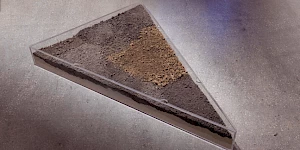
‘The Soils Project’ is part of an eponymous, long-term research initiative involving TarraWarra Museum of Art (Wurundjeri Country, Australia), the Van Abbemuseum (Eindhoven, Netherlands) and Struggles for Sovereignty, a collective based in Yogyakarta, Indonesia. It works through specific and situated practices that consider soil, as both metaphor and matter.
Seeking and facilitating opportunities to listen to diverse voices and perspectives around notions of caring for land, soil and sovereign territories, the project has been in development since 2018. An international collaboration between three organisations, and several artists, curators, writers and activists, it has manifested in various iterations over several years. The group exhibition ‘Soils’ at the Van Abbemuseum is part of Museum of the Commons. -
–VCRC
Kyiv Biennial 2023
L’Internationale Confederation is a proud partner of this year’s edition of Kyiv Biennial.
-
–MACBA
Where are the Oases?
PEI OBERT seminar
with Kader Attia, Elvira Dyangani Ose, Max Jorge Hinderer Cruz, Emily Jacir, Achille Mbembe, Sarah Nuttall and Françoise VergèsAn oasis is the potential for life in an adverse environment.
-
MACBA
Anti-imperialism in the 20th century and anti-imperialism today: similarities and differences
PEI OBERT seminar
Lecture by Ramón GrosfoguelIn 1956, countries that were fighting colonialism by freeing themselves from both capitalism and communism dreamed of a third path, one that did not align with or bend to the politics dictated by Washington or Moscow. They held their first conference in Bandung, Indonesia.
-
–Van Abbemuseum
Maria Lugones Decolonial Summer School
Recalling Earth: Decoloniality and Demodernity
Course Directors: Prof. Walter Mignolo & Dr. Rolando VázquezRecalling Earth and learning worlds and worlds-making will be the topic of chapter 14th of the María Lugones Summer School that will take place at the Van Abbemuseum in Eindhoven.
-
–MSN Warsaw
Archive of the Conceptual Art of Odesa in the 1980s
The research project turns to the beginning of 1980s, when conceptual art circle emerged in Odesa, Ukraine. Artists worked independently and in collaborations creating the first examples of performances, paradoxical objects and drawings.