The Kitchen, an Introduction to Subversive Film with Nick Aikens, Reem Shilleh and Mohanad Yaqubi
As part of a series of articles reflecting on the practice of Lumbung as put forward in Documenta 15, Nick Aikens is in conversation with Subversive Film on the poccassion of their presentation of Tokyop Reels (2022) at the Van Abbemuseum. The conversation touches on enacting solidarity, archive as erasure and the ongoing struggle for Palestinian liberation.
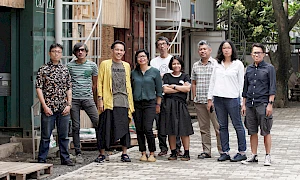
Reem Shilleh: We are in the study space of The Kitchen in the centre of Brussels, a project we co-founded in 2018 as a collective work space.1
Nick Aikens: Could you talk about how Subversive Film started, why, and where it started?
RS: Subversive Film was formed in 2011. It was a natural step at the beginning of the research, which Mohanad had started and I joined, and which looked at the history and the resonances – the mere existence, actually – of Palestinian militant cinema, or militant cinema that was developed around the Palestinian struggle from the early 1960s until the early 1980s. It was initially research for a film: Off Frame AKA Revolution Until Victory (63:00), which was later released in 2016. A film has a limited duration and during our research we came across material that was quite unknown to us. (When I say ‘us’, I also mean the generational us.) We found all these films and publications, and it became clear that Off Frame could only contain parts of these, and that it would impose a filmic narrative on the excerpts. So it felt necessary to do something further with the films in themselves. They had to continue to be shown, so we decided to think about how we could work with them and what the format could be. We worked with another friend, who at the time was also doing research on political images in relation to Palestine, and we started Subversive Film together in Ramallah and London. However, Subversive Film is not connected to a place; it moves with us and the films. The first impulse we had was to screen films, so we started conceiving and making film programmes and putting the films in relation to one another. There is a common ground to them, which is the Palestinian struggle for liberation, but they come from wide contexts, cinematically and politically.
Mohanad Yaqubi: Our inspiration as a collective came mainly from the material itself. When you look at these films, you never see names. You see a Film Unit here, a Film Unit there – people working collectively. So it didn’t make sense to say that it was me presenting these films; it had to somehow be done in a collective form. We felt – perhaps naively or nostalgically – that we could be a continuation of the practice of collectivity. Yet the question was how to bring back this practice of militant film after a pause of twenty to thirty years. We never saw it as an artistic practice – it has always been a political practice. The word ‘subversive’ came from the films themselves. And every time we show these films, we do so in reference to today. Especially since we are talking about a struggle that hasn’t been resolved, there is always a subversive element – it moves the audience. The name Subversive Film also refers to one film, because it relates to the act of screening, the time of the projection. It’s a singular case, not a collection. We are not doing subversive films; it is the act, the practice of watching, that we are interested in.
NA: You are programming material while also making and producing films. Do you consider your work curatorial?
RS: Yes, even the films we produce are curatorial exercises. They propose looking at a group of films from the research – to engage with them through watching segments as a method of viewing militant cinema. Perpetual Recurrences (2016, 57:00), specifically, is an exercise in film programming: putting scenes from many different films alongside each other to establish certain patterns that recur in films on and in Palestine between 1968 and 2013. We consider ourselves a research and production collective, in the largest sense, whether this is for a film programme or a film work, a publication or a lecture.
NA: Let’s turn to the Tokyo Reels project (2022), which features in the exhibition ‘Everything worthwhile is done with other people’, at the Van Abbemuseum, Eindhoven. Can you describe what people encounter?
Tokyo Reels, 2022, installation view, Everything worthwhile is done with other people, Van Abbemusuem, Eindhoven, May - September 2023, curated by Yolande Zola Zoli van der Heide with Nick Aikens. Photo: Peter Cox
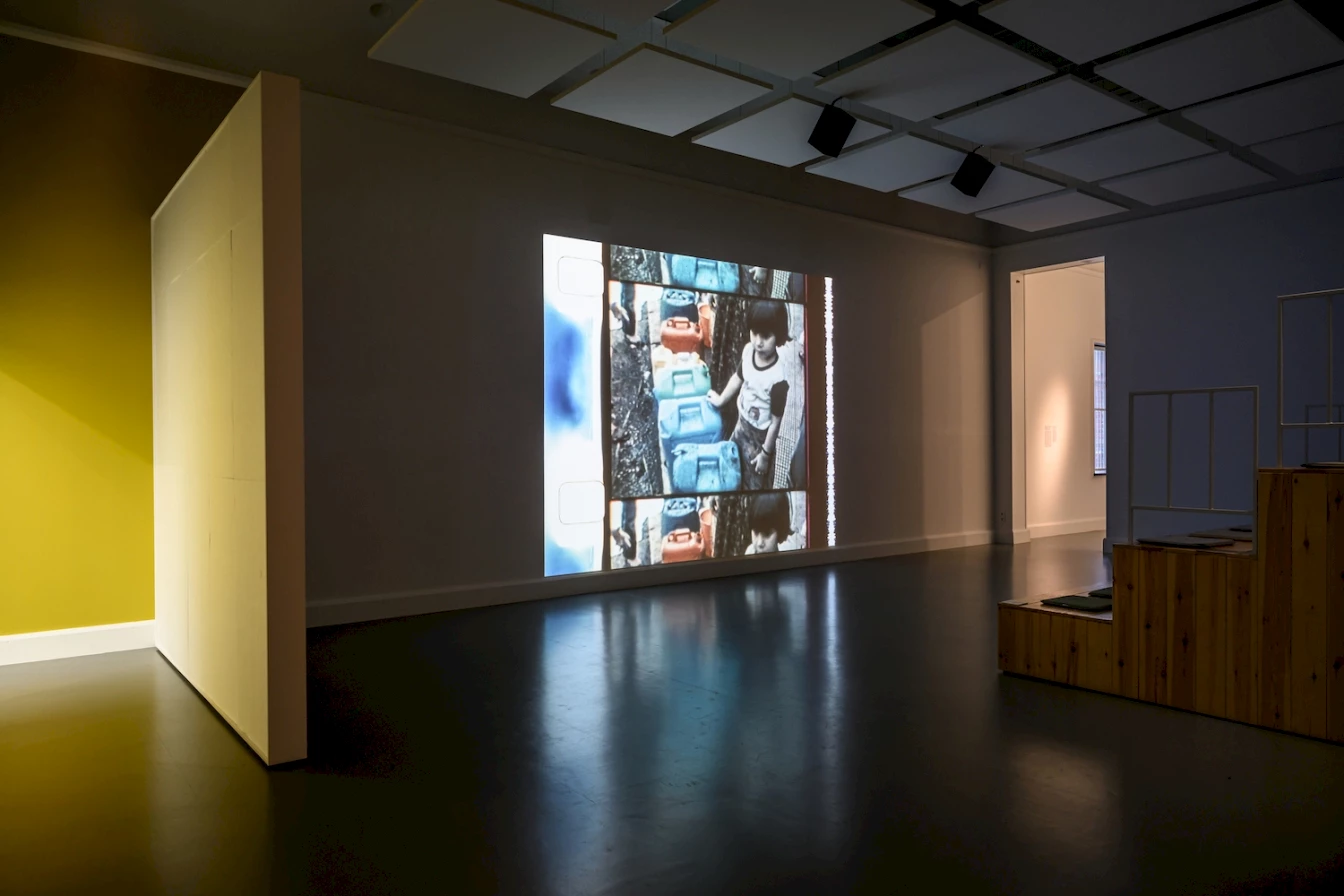
Tokyo Reels, 2022, installation view, Everything worthwhile is done with other people, Van Abbemusuem, Eindhoven, May – September 2023, curated by Yolande Zola Zoli van der Heide with Nick Aikens. Photo: Peter Cox.
MY: Visitors see a digital scan of a collection of twenty films on 16mm. These films were given to us in Japan to be discussed and re-presented after being in storage for thirty years. We are not showing the films; we’re showing the whole scan, which includes the sprockets on the side where you can recognise the type of negative. It includes the optical soundtrack and reveals the process of screening. Usually when you go to the cinema you only have the perspective of viewing the image itself; we zoom out so you can see the process. It looks like a cinema, even though it could be in any space. This is an intervention on our end, but this is also how militant cinema was screened: with a 16mm projector, in a classroom, in a union office, at a demonstration. Someone would hang a screen and people would sit down and that’s how the cinema as a space started. Subverting the format of screening itself is always our interest; we question cinema as a place where you pay for a ticket and sit down. The ability to create screening situations wherever you are is a practice that many people forget. Usually you have to go to an actual cinema to be able to watch cinema. But essentially, cinema is the meeting of people who have chosen to watch something together, and to learn something while doing so.
RS: The Tokyo Reels installation shows twenty films that are screened continuously, for about ten hours in total. We decided to show them as one long film – they are not timed screenings. It is a proposition for the audience to step into the process of screening films. It is set up to invite people to walk in and watch and engage in that way with the films, and then leave. It is a space in which we would like to offer opportunities for contemplation. As Monahad said, it is not set up as a strict cinema space. It does not have separate seats; rather, it is a place for collective viewing. In addition, the proposition is to be part of the research process that we have been working on.
NA: Returning to the material itself, how did you come across it?
MY: It was a coincidence. Some people may say it was luck, but when you are deeply engaged in a process, relations emerge in a heightened way. After the screening of Off Frame AKA Revolution Until Victory at the Image Forum cinema in Tokyo in 2017, a woman from the audience came forward and gave me a list of films in Japanese and said she wanted to speak to me about them. I started checking and translating the list of names. I recognised some but not others, so I became interested and naturally wanted to learn more about the films. We went back to Japan and it became clear that this was not an archive but rather a collection, not available to the public. Those that look after the collection see themselves as the guardians of a set of memories, and they want the films to move forward and be seen. They wanted to give us the twenty films to digitise them and extend their lives. We brought them from Japan to Ghent, where I work, and in 2020 began the scanning process, working frame by frame, in an empty school, since this was during the pandemic.
NA: Who was it that gave you the list?
MY: Her name is Aoe Tanami. Together with Mineo Mitsui, she has been caring for these films over the years. They are both part of the solidarity with Palestine grassroots movement in different ways. This is a Japanese movement – it is hard to say that it is a single organised body, but rather a number of different groups and initiatives.
NA: Could you talk about the types of films in Tokyo Reels?
RS: It is a diverse collection. There are films that were produced by different revolutionary Film Units, which we are quite familiar with. There are films that are Japanese productions, one of which was produced by a Japanese TV station, and some were existing Palestinian and international films that had been adapted to be shown to a Japanese audience. For example, in the collection there is a version of Land Day, made by the Palestinian film-maker Ghaleb Shaath in 1978, which has a ten-minute introduction in Japanese, in which Yuzo Itagaki, a professor of modern Middle Eastern history, sets up the context of the political situation of the lives of Palestinians inside the 1948 territories, in order for the public to be able to fully engage with the film that follows. And then there are some odd films in the collection that were made by the states of Jordan, Kuwait and Iraq, promoting the project of modernity in the three countries. The one from Jordan is called Welcome to Jordan (1964), and is basically a promotional film for tourism in Jordan. This is also the case with Temptation to Return (1966), a film that takes us through Iraq’s historical and present riches. They have no direct or obvious relationship to the Palestinian struggle. And, of course, then we have the militant films made from within the revolutionary movement, by the different Film Units of the political and guerrilla factions. Finally, some of the films in the collection were made by humanitarian groups and peace committees.
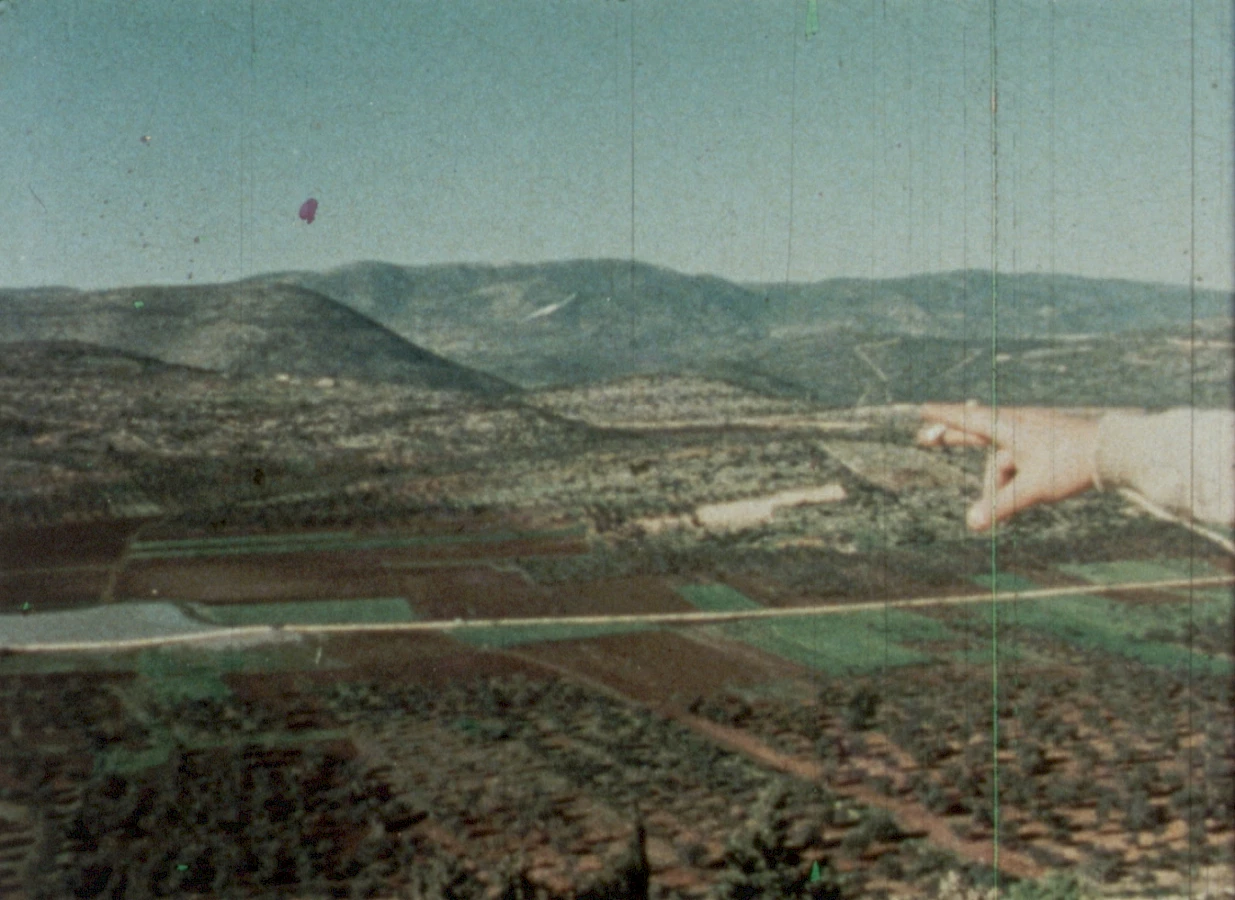
Still from Land Day (1978, dir. Ghaleb Shaath). Image capture by Subversive Film.
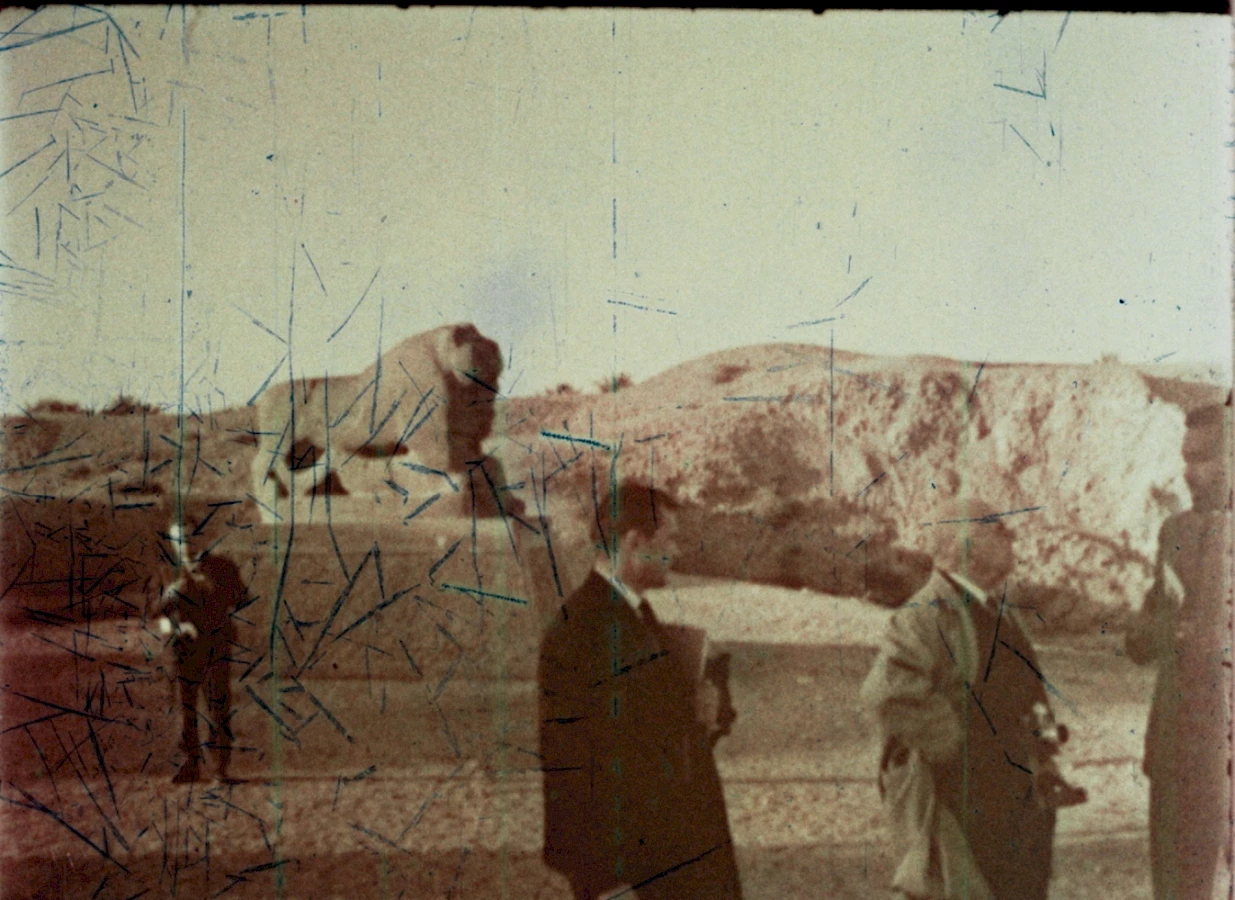
Still from Temptation to Return (1966, dir. Victor Haddad). Image capture by Subversive Film.
NA: It may feel obvious to you (and maybe also to me), but why make this project now? What is the urgency to do this work?
RS: This question takes us beyond Tokyo Reels – it relates to working with films from ‘past struggles’. Why bring them back now? There is a necessity to build on past structures of solidarity and political activation that we desperately need now. Struggles are ongoing – some national liberations from colonial regimes were achieved and yet the struggles continue. The Palestinian struggle is specific: it is ongoing as a struggle for liberation from a settler-colonial and apartheid regime, even though the revolutionary period during which the films were made has ended. There is no post-liberation in Palestine. We still need those films as a resource, so we return to them to see how these networks of distribution and support operated, because showing films about Palestine is exercising solidarity. In the case of the films of Tokyo Reels, it means that knowledge was transmitted to Japan, so that people there could have facts about the struggle. Importantly, the knowledge gained from these films raises questions – and possibilities – of support, of action. Once you support someone, that support is returned. In this way, Tokyo Reels also encapsulates the moment – the moment being 2017 – that the films came towards us.
Arriving at this knowledge was an extensive process, however, beginning with the encounter in Tokyo, then transporting the films, then scanning, watching and reading every single material inscription of the films and their packaging. Reading the boxes and the stickers on the canisters – where the prints were made, where they were screened, instructions for screening – these were all clues to uncovering networks of solidarity and support.
MY: Another layer of Tokyo Reels and its necessity in the here and now is to think of it in the context of the archive, and of archival practice. To produce an archive, and to generate criteria as to what is deemed archivable and how, is usually the act of a state or an institution. What does it mean when you as an individual, or as a collective or underground movement, start to frame materials and stories and position them as an archive? You begin a process of inclusion, creating potential for narrative, for a perspective on history, for a source of power, and – just as importantly – you begin to generate new circuits of economy. And this challenges the premises of the institutionalised archives. These practices of archiving as inclusion and pluripotency are common in geographies of ongoing struggle and reckoning with structural oppression and violence.
RS: I think archiving, and understanding archiving, is very important in places that have been colonised, because it is always about processes of erasure. We look for what is in the archive and the question is always what is not in the archive. On a broader scale, I think there are still questions to reflect on: how to archive, whether to archive, which archives should remain, which should be taken apart.
NA: Having this project in the museum emphasises what you are saying, as the museum is deeply invested in archiving processes. In the case of the Van Abbemuseum, it’s a city museum, and part of the city apparatus, so showing Tokyo Reels there offers another way of thinking through the question of the archive and the collection. The material, here in the museum, is a proposition to think through the films themselves, but also what it means to collect, to safeguard, to have the capacity to be calling something an archive. When you showed the project at documenta fifteen it was another type of proposition, because the museum structure was not there. There, the solidarity of the collectives in Kassel was foregrounded. The proposition of Tokyo Reels changes in different places.
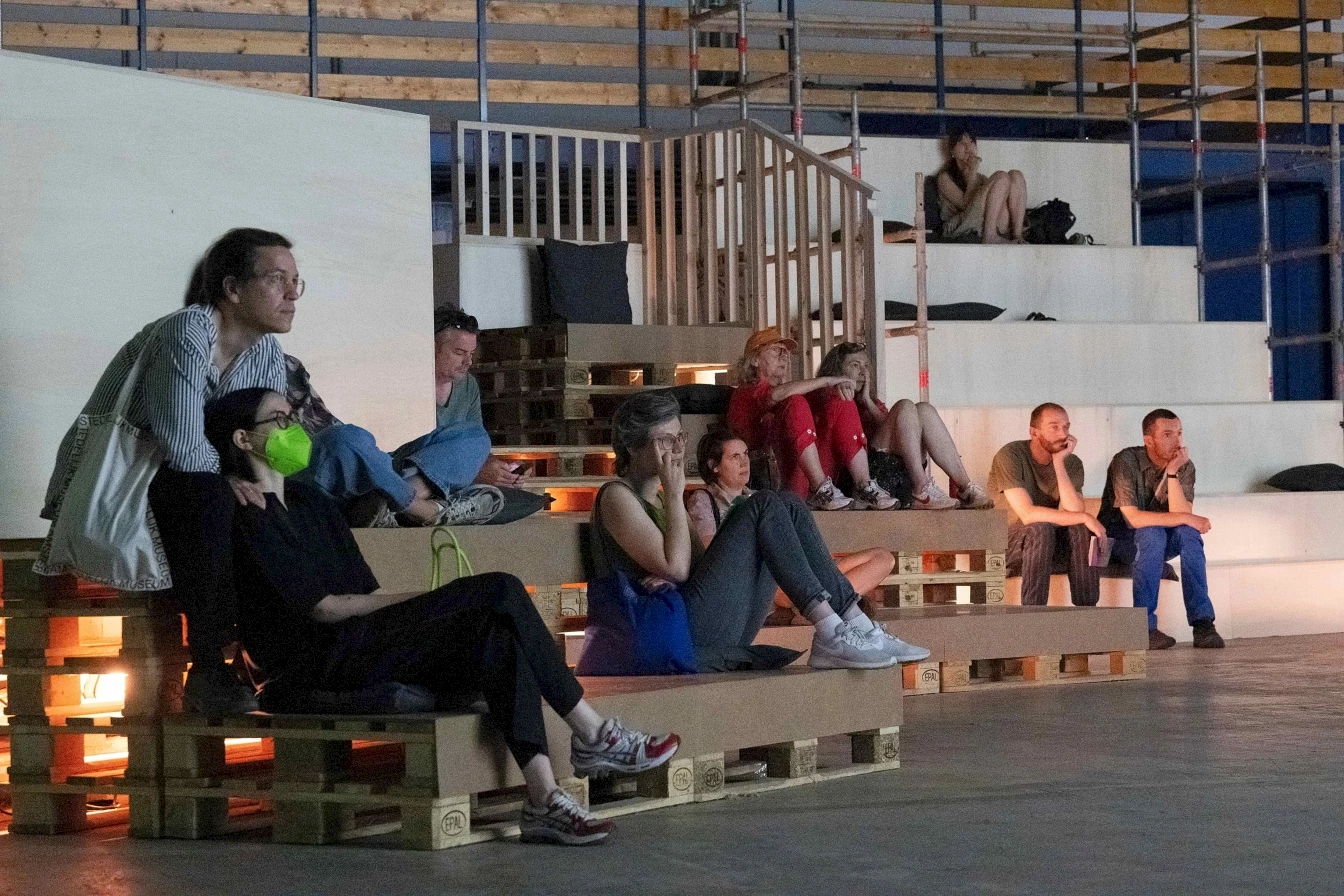
Watching Tokyo Reels at Hübner Areal, documenta 15, Kassel, 2022. Photo: Nils Klinger.
RS: Of course, the places where they will be presented, or will pass through, is all part of making the works. What are the implications of showing Tokyo Reels in a museum? A museum is a rigid, finite structure where relations are defined and set. It was important to think about how to bring Tokyo Reels into the museum. This is why we wanted to make a study space, because studying is a process, something that is not finished. We want to try and see how to continue research in the museum – as with Tokyo Reels, it’s not meant to end or finish.
MY: The study space is the place where things are connected. We do not provide a narrative.
RS: It lays bare the material we are engaging with as an opportunity to make alternative connections. The idea is not to say ‘This is what you saw, this is the research, this is the outcome of the research.’ We show the connections. The material is left as loose fragments.
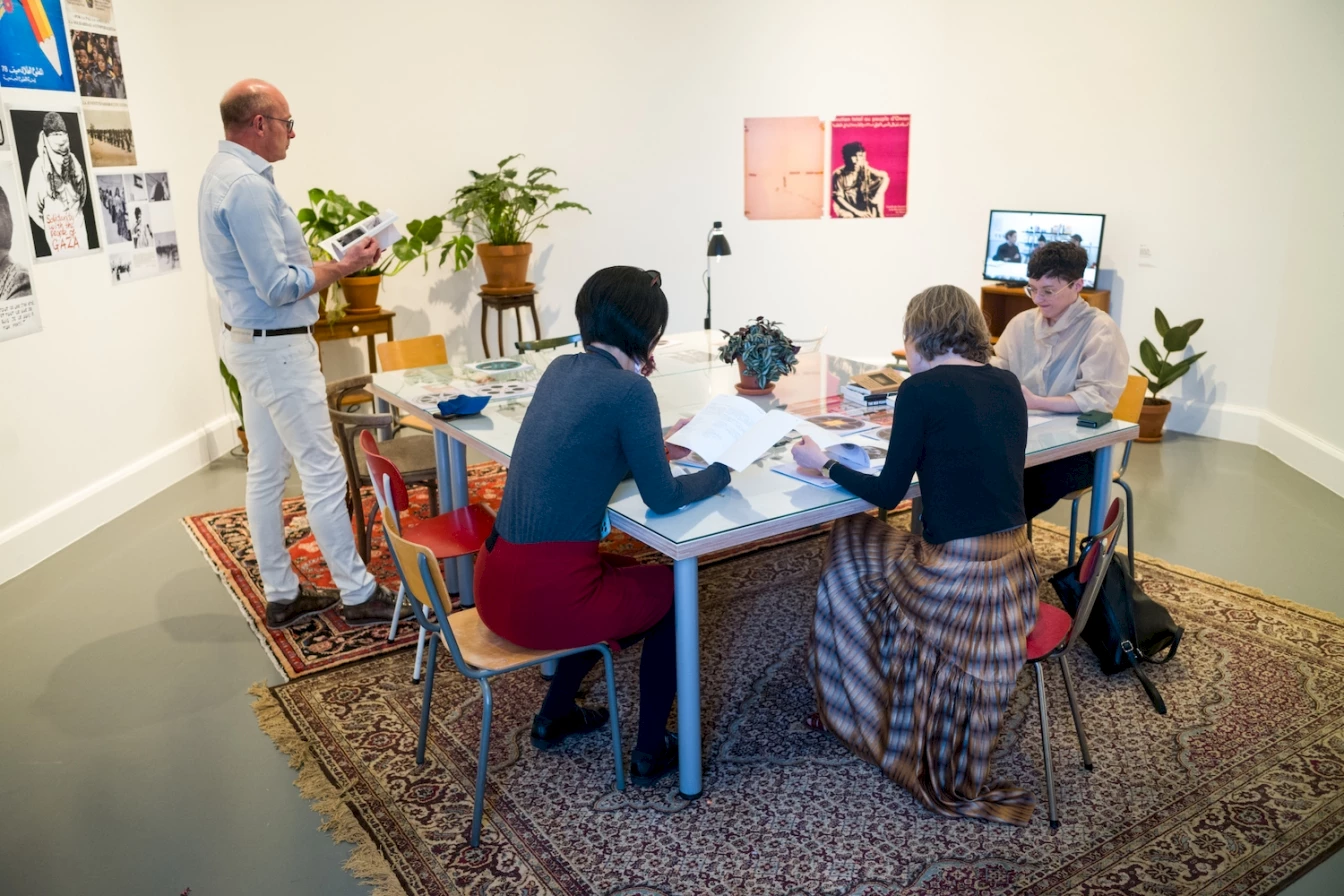
The Kitchen (Tokyo Reels), 2023, installation view, Everything worthwhile is done with other people, Van Abbemusuem, Eindhoven, May – September 2023, curated by Yolande Zola Zoli van der Heide with Nick Aikens. Photo: Boudewijn Bollmann.
NA: I would like to share a reflection from my colleague and co-curator of ‘Everything worthwhile is done with other people’, Yolande Zola Zoli van der Heide. When we were discussing this interview, Yolande reflected on Saidiya Hartman’s idea of critical fabulations in relation to beauty. Yolande described her feeling of slight discomfort in being taken by the beauty of some of the footage and imagery, given there is also this extreme violence in some of the images and histories. She brought up this quote from Hartman:
Beauty as a discourse and a set of values is so structured by a very colonial, racist history and archival violence. So how do you steal something from it that’s enabling, but not be caught up in its structure of value?2
Would you like to speak to this quote?
MY: Saidiya Hartman addresses this question of violence and image in ‘Venus in Two Acts’3. She works with the Western imagination of Venus and the manifestation of that body in a woman. This is Hartman’s entrance into the archive of slavery. It takes some time to realise that the Venus she is talking about is a body that has been tortured and killed on a transatlantic slave ship. Is this choice of entry a way to speak to a Western canon of knowledge, using a colonial aesthetic, or rather an Orientalist imagination? We similarly use the method of fabulation; we are talking about the beauty of cinema, the 16mm, the optical, the type of negative, but once you get into the material, the violence is in front of you. It is important to decide which vehicle to use, which form of aesthetics, and how that is understood within a certain context. This is not understood in countries that haven’t had a culture of cinema. For instance in Palestine, nobody in my generation or younger ever encountered the 16mm technology and image, the grains and the notches. The aesthetics around the industry of cinema are not transmitted in the same way as in Germany or the Netherlands, because we are operating within another structure of aesthetics.
RS: The films are films made by Palestinians; they are images produced by the colonised, and this in itself is claiming power: an act of self-determination. The beauty is in the fact that the image was made by the people who were struggling. We don’t speak of it so much now, but the notion of representation and self-representation was key for this period of militant film in relation to Palestine. Before 1968, and the making of the first self-made Palestinian image post-1948, Palestine was represented by the mechanisms set by her colonisers. First it was the Ottomans, then it was the British, then the Israelis. In between there was the UNRWA (United Nations Relief and Works Agency for Palestine Refugees in the Near East), which was established for Palestinian refugees after 1948. Between these various regimes and bodies the Palestinians suffered acts of either erasure or victimhood in the representation of Palestine and her plight. Then, in 1968, the first Film Unit was formed in a kitchen in an apartment in Amman, Jordan, where the Palestinian revolutionary body was slowly formulating, organising and swelling. The camera started to shoot; Palestinian film-makers Mustafa Abu Ali, Hani Jowharieh and Sulafa Jadallah were shooting footage that was edited into films which in essence were the seed of the revolutionary cinema, the Palestinian militant cinema. So yes, of course, the images are images of violence, but they are also made as a weapon against oppression. This is their power.
MY: Violence is also a question of perspective. Welcome to Jordan, for example, is a state-made film for promoting tourism, made as part of the Jordanian Pavilion project at the World’s Fair in 1964–65. The film contains no images of violence. You see Jerusalem, Nablus, Ramallah – all Palestinian cities in the West Bank – presented as the jewels of the Jordanian crown, or ‘Jordan, the Holy Land’, stripping any possibility of the representation or voice of the Palestinians. This was the period during which the West Bank was under the administrative rule of the Jordanian state. You have to remember this film was made in that early period of the dispossessed Palestine, with Zionism and its foundational claim that there are no such things as Palestinians, and with the erasure of the land and its people. In the film, the camera spends some time focused on the map of Jordan, which includes the cities of the West Bank, and there is no mention of Palestine or Palestinians.
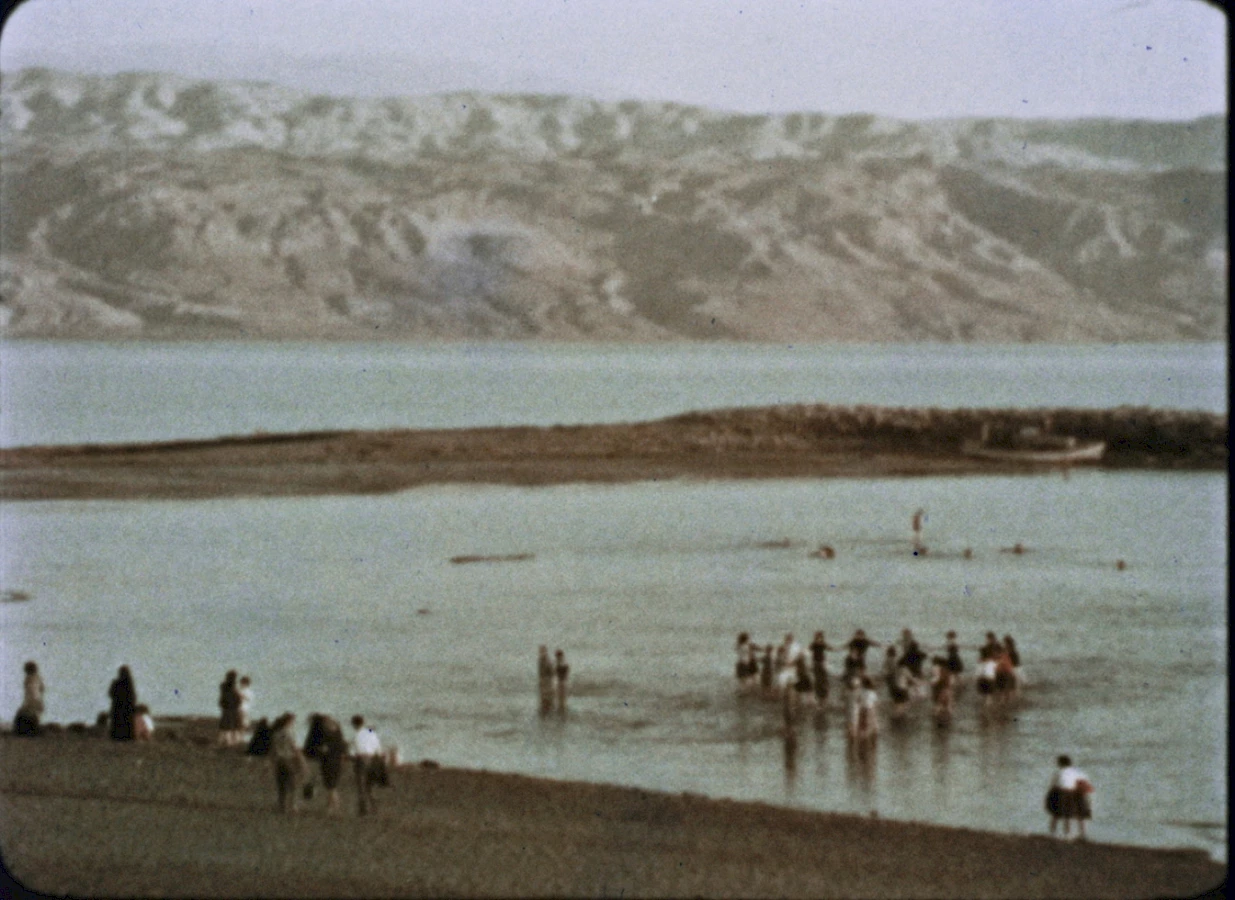
Still from Welcome to Jordan (1964, dir. Tom Hollyman). Image capture by Subversive Film.
NA: I would like to close with a question Yolande and I have been asking ourselves, and the collectives and collaborators in this exhibition: What can we achieve together that is not possible alone? Within the context of Tokyo Reels, of Subversive Film, as film-makers, redistributors and archivists, how do you relate to that question?
RS: Everything is more possible together!
MY: More knowledge, more experiences, more speculation.
RS: The necessity of speculation.
MY: That is what the collective does: it opens up narratives. Also, we need to leave the realm of the individual behind – to get out of the age of psychoanalysis, that is what collectivity offers. Freud is not allowed to speak!
RS: We are not going to close with Freud. But I think it is impossible to work individually.
NA: Yes – to think, to act, to be. Without collectivity this is not possible.
RS: Absolutely.
MY: It is also necessary to consider the type of material that is produced collectively. It reduces the meaning if you start to look at it as a person; if you don’t look at it from a position of collectivity, the meaning of this material is lost. But what can you look at that hasn’t been produced collectively? If you look at agricultural practices, can you look at them as an individual? They’re an accumulation of collective practices.
RS: We go back to the idea of authorship and the inscription of the author on the work, whether it’s producing a film programme or cultivating two hectares of olives. I think it is now necessary to think about what collectivity does because we need to think into the future in a way that thinks together. When it comes to archives, too, you cannot inscribe one single story or history onto a memory. This is what institutions try to do, but archival practice is about multiplicity – the multitudes of reading, working with, unpacking, destroying and restructuring the archive.
NA: Both Tokyo Reels and The Kitchen are propositions that trouble the idea of collective memory. They are structures and invitations to practice and convene in relation.
Related activities
-
–Van Abbemuseum
The Soils Project
‘The Soils Project’ is part of an eponymous, long-term research initiative involving TarraWarra Museum of Art (Wurundjeri Country, Australia), the Van Abbemuseum (Eindhoven, Netherlands) and Struggles for Sovereignty, a collective based in Yogyakarta, Indonesia. It works through specific and situated practices that consider soil, as both metaphor and matter.
Seeking and facilitating opportunities to listen to diverse voices and perspectives around notions of caring for land, soil and sovereign territories, the project has been in development since 2018. An international collaboration between three organisations, and several artists, curators, writers and activists, it has manifested in various iterations over several years. The group exhibition ‘Soils’ at the Van Abbemuseum is part of Museum of the Commons. -
–VCRC
Kyiv Biennial 2023
L’Internationale Confederation is a proud partner of this year’s edition of Kyiv Biennial.
-
–MACBA
Where are the Oases?
PEI OBERT seminar
with Kader Attia, Elvira Dyangani Ose, Max Jorge Hinderer Cruz, Emily Jacir, Achille Mbembe, Sarah Nuttall and Françoise VergèsAn oasis is the potential for life in an adverse environment.
-
MACBA
Anti-imperialism in the 20th century and anti-imperialism today: similarities and differences

PEI OBERT seminar
Lecture by Ramón GrosfoguelIn 1956, countries that were fighting colonialism by freeing themselves from both capitalism and communism dreamed of a third path, one that did not align with or bend to the politics dictated by Washington or Moscow. They held their first conference in Bandung, Indonesia.
-
–Van Abbemuseum
Maria Lugones Decolonial Summer School
Recalling Earth: Decoloniality and Demodernity
Course Directors: Prof. Walter Mignolo & Dr. Rolando VázquezRecalling Earth and learning worlds and worlds-making will be the topic of chapter 14th of the María Lugones Summer School that will take place at the Van Abbemuseum in Eindhoven.
-
–MSN Warsaw
Archive of the Conceptual Art of Odesa in the 1980s
The research project turns to the beginning of 1980s, when conceptual art circle emerged in Odesa, Ukraine. Artists worked independently and in collaborations creating the first examples of performances, paradoxical objects and drawings.
-
–Moderna galerijaZRC SAZU
Summer School: Our Many Easts
Our Many Easts summer school is organised by Moderna galerija in Ljubljana in partnership with ZRC SAZU (the Research Centre of the Slovenian Academy of Sciences and Arts) as part of the L’Internationale project Museum of the Commons.
-
–Moderna galerijaZRC SAZU
Open Call – Summer School: Our Many Easts
Our Many Easts summer school takes place in Ljubljana 24–30 August and the application deadline is 15 March. Courses will be held in English and cover topics such as the legacy of the Eastern European avant-gardes, archives as tools of emancipation, the new “non-aligned” networks, art in times of conflict and war, ecology and the environment.
-
–MACBA
Song for Many Movements: Scenes of Collective Creation
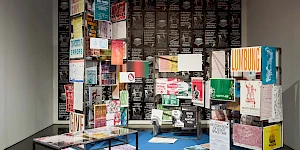
An ephemeral experiment in which the ground floor of MACBA becomes a stage for encounters, conversations and shared listening.
-
–MSU ZagrebVan AbbemuseumModerna galerijaZRC SAZU
Open Call – School of Common Knowledge 2024
MSU (Zagreb), Van Abbemuseum (Eindhoven), MG+MSUM (Ljubljana), ZRC SAZU (Ljubljana) and L'Internationale invite applications for the new School of Common Knowledge (SCK) to be held in Zagreb and Ljubljana 24–29 May 2024. The School of Common Knowledge draws on the network, knowledge and experience of the L’Internationale museum confederation. Its ambition is to be both nomadic and situated, looking at specific cultural and geopolitical situations while exploring their relations and interdependencies with the rest of the world. The SCK is built on the basis laid by the Glossary of Common Knowledge project initiated by Zdenka Badovinac and Moderna galerija (Ljubljana) and continues its co-learning methodology.
-
Museo Reina Sofia
Palestine Is Everywhere
‘Palestine Is Everywhere’ is an encounter and screening at Museo Reina Sofía organised together with Cinema as Assembly as part of Museum of the Commons. The conference starts at 18:30 pm (CET) and will also be streamed on the online platform linked below.
-
–
Kyiv Biennial 2025
L’Internationale Confederation is proud to co-organise this years’ edition of the Kyiv Biennial.
-
–MACBA
Project a Black Planet: The Art and Culture of Panafrica
Curated by MACBA director Elvira Dyangani Ose, along with Antawan Byrd, Adom Getachew and Matthew S. Witkovsky, Project a Black Planet: The Art and Culture of Panafrica is the first major international exhibition to examine the cultural manifestations of Pan-Africanism from the 1920s to the present.
-
–M HKA
The Geopolitics of Infrastructure
The exhibition The Geopolitics of Infrastructure presents the work of a generation of artists bringing contemporary perspectives on the particular topicality of infrastructure in a transnational, geopolitical context.
-
–MACBAMuseo Reina Sofia
School of Common Knowledge 2025
The second iteration of the School of Common Knowledge will bring together international participants, faculty from the confederation and situated organizations in Barcelona and Madrid.
-
–
Collective Study in Times of Emergency, Amsterdam
Within the context of ‘Every Act of Struggle’, the research project and exhibition at de appel in Amsterdam, L’Internationale Online has been invited to propose a programme of collective study.
-
Museo Reina Sofia
Poetry readings: Culture for Peace – Art and Poetry in Solidarity with Palestine
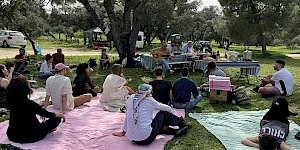
Casa de Campo, Madrid
-
–Museo Reina Sofia
Study Group: Aesthetics of Peace and Desertion Tactics
In a present marked by rearmament, war, genocide, and the collapse of the social contract, this study group aims to equip itself with tools to, on one hand, map genealogies and aesthetics of peace – within and beyond the Spanish context – and, on the other, analyze strategies of pacification that have served to neutralize the critical power of peace struggles.
-
–MSN Warsaw
Near East, Far West. Kyiv Biennial 2025
The main exhibition of the 6th Kyiv Biennial 2025, titled Near East, Far West, is organized by a consortium of curators from L’Internationale. It features seven new artists’ commissions, alongside works from the collections of member institutions of L’Internationale and a number of other loans.
-
MACBA
PEI Obert: The Brighter Nations in Solidarity: Even in the Midst of a Genocide, a New World Is Being Born
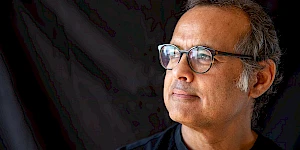
PEI Obert presents a lecture by Vijay Prashad. The Colonial West is in decay, losing its economic grip on the world and its control over our minds. The birth of a new world is neither clear nor easy. This talk envisions that horizon, forged through the solidarity of past and present anticolonial struggles, and heralds its inevitable arrival.
-
–M HKA
Homelands and Hinterlands. Kyiv Biennial 2025
Following the trans-national format of the 2023 edition, the Kyiv Biennial 2025 will again take place in multiple locations across Europe. Museum of Contemporary Art Antwerp (M HKA) presents a stand-alone exhibition that acts also as an extension of the main biennial exhibition held at the newly-opened Museum of Modern Art in Warsaw (MSN).
In reckoning with the injustices and atrocities committed by the imperialisms of today, Kyiv Biennial 2025 reflects with historical consciousness on failed solidarities and internationalisms. It does this across an axis that the curators describe as Middle-East-Europe, a term encompassing Central Eastern Europe, the former-Soviet East and the Middle East.
-
HDK-Valand
MA Forum in collaboration with LIO: Nour Shantout
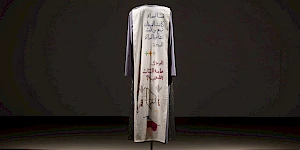
In this artist talk, Nour Shantout will present Searching for the New Dress, an ongoing artistic research project that looks at Palestinian embroidery in Shatila, a Palestinian refugee camp in Lebanon. Welcome!
-
MACBA
PEI Obert: Bodies of Evidence. A lecture by Ido Nahari and Adam Broomberg
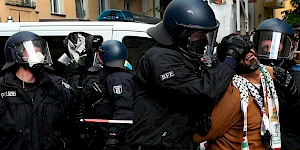
In the second day of Open PEI, writer and researcher Ido Nahari and artist, activist and educator Adam Broomberg bring us Bodies of Evidence, a lecture that analyses the circulation and functioning of violent images of past and present genocides. The debate revolves around the new fundamentalist grammar created for this documentation.
-
–
Everything for Everybody. Kyiv Biennial 2025
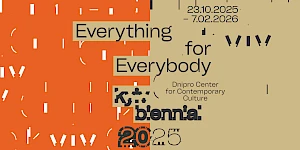
As one of five exhibitions comprising the 6th Kyiv Biennial 2025, ‘Everything for Everybody’ takes place in the Ukraine, at the Dnipro Center for Contemporary Culture.
-
–
In a Grandiose Sundance, in a Cosmic Clatter of Torture. Kyiv Biennial 2025

As one of five exhibitions comprising the 6th Kyiv Biennial 2025, ‘In a Grandiose Sundance, in a Cosmic Clatter of Torture’ takes place at the Dovzhenko Centre in Kyiv.
-
MACBA
School of Common Knowledge: Fred Moten
Fred Moten gives the lecture Some Prœposicions (On, To, For, Against, Towards, Around, Above, Below, Before, Beyond): the Work of Art. As part of the Project a Black Planet exhibition, MACBA presents this lecture on artworks and art institutions in relation to the challenge of blackness in the present day.
-
–MACBA
Visions of Panafrica. Film programme
Visions of Panafrica is a film series that builds on the themes explored in the exhibition Project a Black Planet: The Art and Culture of Panafrica, bringing them to life through the medium of film. A cinema without a geographical centre that reaffirms the cultural and political relevance of Pan-Africanism.
-
MACBA
Farah Saleh. Balfour Reparations (2025–2045)
As part of the Project a Black Planet exhibition, MACBA is co-organising Balfour Reparations (2025–2045), a piece by Palestinian choreographer Farah Saleh included in Hacer Historia(s) VI (Making History(ies) VI), in collaboration with La Poderosa. This performance draws on archives, memories and future imaginaries in order to rethink the British colonial legacy in Palestine, raising questions about reparation, justice and historical responsibility.
-
MACBA
Project a Black Planet: The Art and Culture of Panafrica OPENING EVENT
A conversation between Antawan I. Byrd, Adom Getachew, Matthew S. Witkovsky and Elvira Dyangani Ose. To mark the opening of Project a Black Planet: The Art and Culture of Panafrica, the curatorial team will delve into the exhibition’s main themes with the aim of exploring some of its most relevant aspects and sharing their research processes with the public.
-
MACBA
Palestine Cinema Days 2025: Al-makhdu’un (1972)
Since 2023, MACBA has been part of an international initiative in solidarity with the Palestine Cinema Days film festival, which cannot be held in Ramallah due to the ongoing genocide in Palestinian territory. During the first days of November, organizations from around the world have agreed to coordinate free screenings of a selection of films from the festival. MACBA will be screening the film Al-makhdu’un (The Dupes) from 1972.
-
Museo Reina Sofia
Cinema Commons #1: On the Art of Occupying Spaces and Curating Film Programmes
On the Art of Occupying Spaces and Curating Film Programmes is a Museo Reina Sofía film programme overseen by Miriam Martín and Ana Useros, and the first within the project The Cinema and Sound Commons. The activity includes a lecture and two films screened twice in two different sessions: John Ford’s Fort Apache (1948) and John Gianvito’s The Mad Songs of Fernanda Hussein (2001).
-
–
Vertical Horizon. Kyiv Biennial 2025
As one of five exhibitions comprising the 6th Kyiv Biennial 2025, ‘Vertical Horizon’ takes place at the Lentos Kunstmuseum in Linz, at the initiative of tranzit.at.
-
Museo Reina Sofia
Sonic and Cinema Commons
Sonic and Cinema Commons is a research, programming and publishing project that explores how cinema and sonic experiences generate spaces for the formation of interpretive communities, foster collective debate and prefigure proposals for the commons. Co-organised with L’Internationale Online, 2025 and 2026.
-
HDK-Valand
MA Forum in collaboration with LIO: Adam Broomberg
In this MA Forum we welcome artist Adam Broomberg. In his lecture he will focus on two photographic projects made in Israel/Palestine twenty years apart. Both projects use the medium of photography to communicate the weaponization of nature.
-
MACBA
PEI Obert: Until Liberation: A Collective Reading and Listening Session by Learning Palestine

PEI Obert presents a collective session with Learning Palestine. At this historical juncture – amid the ongoing genocide in Gaza and the censorship and repression of all things Palestinian – Learning Palestine invites us to gather not only in refusal but also in affirmation.
Related contributions and publications
-
…and the Earth along. Tales about the making, remaking and unmaking of the world.
Martin PogačarLand RelationsClimatePast in the Present -
The Kitchen, an Introduction to Subversive Film with Nick Aikens, Reem Shilleh and Mohanad Yaqubi
Nick Aikens, Subversive FilmSonic and Cinema CommonslumbungPast in the PresentVan Abbemuseum -
The Repressive Tendency within the European Public Sphere
Ovidiu ŢichindeleanuInternationalismsPast in the Present -
Rewinding Internationalism
InternationalismsVan Abbemuseum -
Troubles with the East(s)
Bojana PiškurInternationalismsPast in the Present -
Right now, today, we must say that Palestine is the centre of the world
Françoise VergèsInternationalismsPast in the Present -
Body Counts, Balancing Acts and the Performativity of Statements
Mick WilsonInternationalismsPast in the Present -
Until Liberation I
Learning Palestine GroupInternationalismsPast in the Present -
Until Liberation II
Learning Palestine GroupInternationalismsPast in the Present -
Prácticas lumbung para resistir y colaborar desde el arte
Constanza Yévenes BiénzobasEN eslumbungSituated OrganizationsMuseo Reina Sofia -
Algunos términos que guían a lumbung press: Definiendo “edición”
Erick BeltránEN eslumbungSituated OrganizationsMACBA -
A dialogical tour through the exhibition The Making of Modern Art
Steven ten Thije, Quinsy GarioDialoguesVan Abbemuseum -
Art Museums and Democracy
Charles Esche, Manuel Borja-Villel, Bart de BaereDialoguesM HKAVan AbbemuseumMuseo Reina Sofia -
Statement in support of documenta fifteen
L’Internationale ConfederationStatements and editorialslumbung -
The Veil of Peace
Ovidiu ŢichindeleanuPast in the Presenttranzit.ro -
Live set: Apotome
Khyam AllamiSonic and Cinema Commons -
How to prepare for a hurricane, pt. 2
Quinsy GarioVan Abbemuseum -
Editorial: Towards Collective Study in Times of Emergency
L’Internationale Online Editorial BoardEN es sl tr arInternationalismsStatements and editorialsPast in the Present -
The City in the Museum. A retrospective on two years Werksalon in the Van Abbemuseum
Van Abbemuseum -
The 1980s. Today's Beginnings? An alternative view on the 80s
Van Abbemuseum -
Opening Performance: Song for Many Movements, live on Radio Alhara
Jokkoo with/con Miramizu, Rasheed Jalloul & Sabine SalaméEN esInternationalismsSonic and Cinema CommonsPast in the PresentMACBA -
Siempre hemos estado aquí. Les poetas palestines contestan
Rana IssaEN es tr arInternationalismsPast in the Present -
Indra's Web
Vandana SinghLand RelationsPast in the PresentClimate -
Mix tape: Let's funk up all genders!
Materia Hache / Others to the FrontEN esSonic and Cinema CommonsSituated OrganizationsMuseo Reina Sofia -
Diary of a Crossing
Baqiya and Yu’adInternationalismsPast in the Present -
The Silence Has Been Unfolding For Too Long
The Free Palestine Initiative CroatiaInternationalismsPast in the PresentSituated OrganizationsInstitute of Radical ImaginationMSU Zagreb -
War, Peace and Image Politics: Part 1, Who Has a Right to These Images?
Jelena VesićInternationalismsPast in the PresentZRC SAZU -
Live set: Una carta de amor a la intifada global
PrecolumbianEN esInternationalismsSonic and Cinema CommonsPast in the PresentMACBA -
Cultivating Abundance
Åsa SonjasdotterLand RelationsClimatePast in the Present -
Reading list - Summer School: Our Many Easts
Summer School - Our Many EastsSchoolsPast in the PresentModerna galerija -
The Genocide War on Gaza: Palestinian Culture and the Existential Struggle
Rana AnaniInternationalismsPast in the Present -
Klei eten is geen eetstoornis
Zayaan KhanEN nl frLand RelationsClimatePast in the Present -
Dispatch: ‘I don't believe in revolution, but sometimes I get in the spirit.’
Megan HoetgerSchoolsPast in the Present -
Dispatch: Notes on (de)growth from the fragments of Yugoslavia's former alliances
Ava ZevopSchoolsPast in the Present -
Glöm ”aldrig mer”, det är alltid redan krig
Martin PogačarEN svLand RelationsPast in the Present -
Broadcast: Towards Collective Study in Times of Emergency (for 24 hrs/Palestine)
L’Internationale Online Editorial Board, Rana Issa, L’Internationale Confederation, Vijay PrashadInternationalismsSonic and Cinema Commons -
Soils
Land RelationsClimateVan Abbemuseum -
Beyond Distorted Realities: Palestine, Magical Realism and Climate Fiction
Sanabel Abdel RahmanEN trInternationalismsPast in the PresentClimate -
Collective Study in Times of Emergency. A Roundtable
Nick Aikens, Sara Buraya Boned, Charles Esche, Martin Pogačar, Ovidiu Ţichindeleanu, Ezgi YurteriInternationalismsPast in the PresentSituated Organizations -
Present Present Present. On grounding the Mediateca and Sonotera spaces in Malafo, Guinea-Bissau
Filipa CésarSonic and Cinema CommonsPast in the Present -
Collective Study in Times of Emergency
InternationalismsPast in the Present -
ميلاد الحلم واستمراره
Sanaa SalamehEN hr arInternationalismsPast in the Present -
عن المكتبة والمقتلة: شهادة روائي على تدمير المكتبات في قطاع غزة
Yousri al-GhoulEN arInternationalismsPast in the Present -
Archivos negros: Episodio I. Internacionalismo radical y panafricanismo en el marco de la guerra civil española
Tania Safura AdamEN esInternationalismsPast in the Present -
Re-installing (Academic) Institutions: The Kabakovs’ Indirectness and Adjacency
Christa-Maria Lerm HayesInternationalismsPast in the Present -
Palma daktylowa przeciw redeportacji przypowieści, czyli europejski pomnik Palestyny
Robert Yerachmiel SnidermanEN plInternationalismsPast in the PresentMSN Warsaw -
Mix tape: International
Roberta Miss aka Nur/SeSonic and Cinema CommonsM HKA -
Masovni studentski protesti u Srbiji: Mogućnost drugačijih društvenih odnosa
Marijana Cvetković, Vida KneževićEN rsInternationalismsPast in the Present -
No Doubt It Is a Culture War
Oleksiy Radinsky, Joanna ZielińskaInternationalismsPast in the Present -
Dispatch: As Matter Speaks
Yeongseo JeeInternationalismsPast in the Present -
Reading List: Summer School, Landscape (post) Conflict
Summer School - Landscape (post) ConflictSchoolsLand RelationsPast in the PresentIMMANCAD -
Sonic and Cinema Commons: Editorial
L'Internationale Online Editorial BoardSonic and Cinema Commons -
Housing Music
Onkar Singh KularSonic and Cinema Commons -

Until Liberation III
Learning Palestine GroupInternationalismsPast in the Present -

Archivos negros: Episodio II. Jazz sin un cuerpo político negro
Tania Safura AdamEN esInternationalismsPast in the Present -
Cultural Workers of L’Internationale mark International Day of Solidarity with the Palestinian People
Cultural Workers of L’InternationaleEN es pl roInternationalismsSituated OrganizationsPast in the PresentStatements and editorials -
Cine zapatista y estética obedencial: poéticas insurgentes desde la comunidad
Natalia Arcos Salvo, Louis HendersonEN esSonic and Cinema Commons