Sonic and Cinema Commons: Editorial
This publishing strand explores, through practice, how the sonic and cinema create spaces to assemble communities and structure ways of being in common. The series includes mix tapes, broadcasts, recordings and explorations of moving image work.
Music, and the sonic more broadly, allow for particular forms of public formation and expression – whether through sound system culture, on dance floors or via forms of broadcasting. Sonic articulation (through formulations of rhythms and sampling) and transmission (through parties, gathering and programming) create specific modalities of collectivity that have been central to diverse forms of community building and counter culture. This strand includes a number of practices who, in different ways, mobilize the affordances of sonic spaces as tools to come together, resist oppressions and exclusions and build solidarities. It draws on programming within the confederation, such as performances and a DJ set that took place within the exhibition and public programme ‘Song for Many Movements’ (MACBA, 2024) or the contribution of Others to the Front which arose out of their participation in the ‘Notes for a Time Apart’ programme (MNCARS, 2023), and partners with different platforms, including Radio Alhara, 24 Hour Palestine and KIOSK Radio, to disseminate material.
The strand also aims to navigate the socialising processes and potential of cinema, beyond the image. The practices we aim to constellate explore the potential of cinema to gather, assemble and produce common spaces – spaces here being understood in architectural, social and political terms. Historically, cinema has been a vital tool across different emancipatory and liberatory struggles. Working through these histories, practices in this strand seek to understand what role it can play in today’s cultural and political conjuncture, moving beyond dominant, often violent forms of representation and their modes of distribution, towards a proposition for the commons. For example in ‘Present Present Present. On grounding the Mediateca and Sonotera spaces in Malafo, Guinea-Bissau’ artist Filipa Cesar narrates her long-term engagement with the films, history and communities of Guinea-Bissau.
The series plays an important role in L’Internationale’s research and publishing, centering music and moving image, rather than a discursive reading of them. In keeping with the editorial approach of L’Internationale Online, contributions are part of a process of collective study across different spaces. That means that contributions here appear in dialogue with screenings, workshops, DJ sets, broadcasts and lectures happening across the confederation and beyond.
Related contributions and publications
-
The Kitchen, an Introduction to Subversive Film with Nick Aikens, Reem Shilleh and Mohanad Yaqubi
Nick Aikens, Subversive FilmSonic and Cinema CommonslumbungPast in the PresentVan Abbemuseum -
Present Present Present. On grounding the Mediateca and Sonotera spaces in Malafo, Guinea-Bissau
Filipa CésarSonic and Cinema CommonsPast in the Present -
Mix tape: International
Roberta Miss aka Nur/SeSonic and Cinema CommonsM HKA -
Mix tape: Let's funk up all genders!
Materia Hache / Others to the FrontEN esSonic and Cinema CommonsSituated OrganizationsMuseo Reina Sofia -
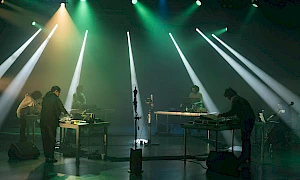
Live set: Apotome
Khyam AllamiSonic and Cinema Commons -
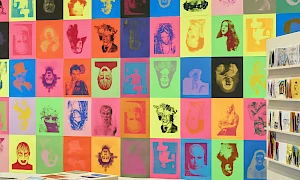
Opening Performance: Song for Many Movements, live on Radio Alhara
Jokkoo with/con Miramizu, Rasheed Jalloul & Sabine SalaméEN esInternationalismsSonic and Cinema CommonsPast in the PresentMACBA -
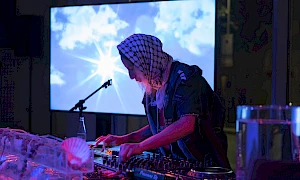
Live set: Una carta de amor a la intifada global
PrecolumbianEN esInternationalismsSonic and Cinema CommonsPast in the PresentMACBA -
Broadcast: Towards Collective Study in Times of Emergency (for 24 hrs/Palestine)
L’Internationale Online Editorial Board, Rana Issa, L’Internationale Confederation, Vijay PrashadInternationalismsSonic and Cinema Commons
Related activities
-
–MACBA
Song for Many Movements: Scenes of Collective Creation
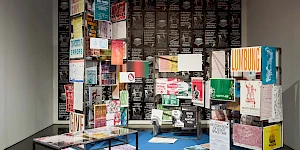
An ephemeral experiment in which the ground floor of MACBA becomes a stage for encounters, conversations and shared listening.
-
–MACBA
Visions of Panafrica. Film programme
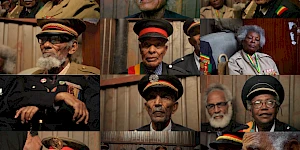
Visions of Panafrica is a film series that builds on the themes explored in the exhibition Project a Black Planet: The Art and Culture of Panafrica, bringing them to life through the medium of film. A cinema without a geographical centre that reaffirms the cultural and political relevance of Pan-Africanism.
-
Museo Reina Sofia
Cinema Commons #1: On the Art of Occupying Spaces and Curating Film Programmes
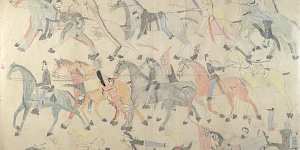
On the Art of Occupying Spaces and Curating Film Programmes is a Museo Reina Sofía film programme overseen by Miriam Martín and Ana Useros, and the first within the project The Cinema and Sound Commons. The activity includes a lecture and two films screened twice in two different sessions: John Ford’s Fort Apache (1948) and John Gianvito’s The Mad Songs of Fernanda Hussein (2001).
-
Museo Reina Sofia
Sonic and Cinema Commons
Sonic and Cinema Commons is a research, programming and publishing project that explores how cinema and sonic experiences generate spaces for the formation of interpretive communities, foster collective debate and prefigure proposals for the commons. Co-organised with L’Internationale Online, 2025 and 2026.
-
–SALT
This Porous Earth: Screening, Talk, and Workshop Program
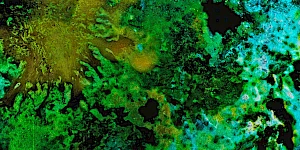
This Porous Earth is a screening, talk, and workshop program at Salt Beyoğlu exploring the relationships between cinema and the natural world through the material properties of film itself.