Statement on the Venice Biennale’s decision to host the Israeli Pavilion in the Arsenale
L’Internationale urges the Venice Biennale to reverse its decision to host the Israeli Pavilion within the Arsenale for the 2026 International Art Exhibition.
This move is deeply troubling. While Israel cannot use its permanent pavilion in the Giardini della Biennale due to renovation works, the Biennale has decided to place it within the Arsenale – one of the exhibition’s most central spaces. Such a move carries clear legal-administrative and symbolic implications. Unlike the Giardini pavilions, which reflect long-standing national presences within the Biennale’s historic grounds, participation in the Arsenale is the result of an invitation by the Biennale Foundation itself. The hosting of a national pavilion in this context is not neutral or incidental: it constitutes an explicit institutional endorsement.
Israel’s war crimes and ongoing genocide in Gaza have been widely documented by international bodies: the mass civilian casualties, the forced displacement of Palestinians, and the systematic destruction of the material conditions for life. Placing the Israeli Pavilion at the heart of the Biennale constitutes a form of cultural legitimation. It contributes to the normalization and aestheticization of state violence, transforming a vital platform of international cultural exchange into a vehicle for art-washing.
This choice is even more troubling in light of the events of the previous Biennale. In 2024, many L’Internationale members joined the Art Not Genocide Alliance (ANGA), which mobilized thousands of artists, curators, writers and cultural workers worldwide to demand accountability from the Biennale. ANGA’s mobilization played a decisive role in the closure of the Israeli Pavilion and helped to amplify Palestinian voices that were otherwise marginalized or excluded. The current decision to embrace the Israeli state within the Biennale’s central exhibition space is therefore a deliberate political statement – one which L’Internationale firmly opposes.
The Venice Biennale plays a decisive role in shaping artistic canons, national narratives and institutional legitimacy, co-producing cultural hegemony on a global scale. Its decisions reverberate far beyond the exhibition itself, influencing funding structures, institutional agendas, and the conditions under which artists and curators operate worldwide. When such platforms choose silence – or worse, symbolic alignment – in the face of ongoing colonial violence and genocide they actively contribute to the erosion of professional ethics and public accountability.
In response to the Biennale’s current decision, ANGA has launched a new campaign that is gathering support from a growing number of signatories across continents, disciplines and at every institutional level. This mobilization signals not only dissent, but a growing refusal among artists and cultural workers to accept the instrumentalization of art institutions as shields for state violence.
As a confederation of cultural institutions committed to critical practice, international solidarity and institutional responsibility, L’Internationale believes that international art events must not become platforms for the normalization of genocide. Nor should they be spaces in which colonial violence is rendered invisible through curatorial rhetoric or cultural prestige. What is at stake here is not only the credibility of the Venice Biennale, but the ethical foundations upon which the contemporary art sector claims to stand.
This is why we urge the Venice Biennale to reverse its decision to host the Israeli pavilion within the Arsenale. Likewise, we call on fellow cultural workers and institutions to take a position and make their voices heard.
Related contributions and publications
-
Statement on the dismissal of Alistair Hudson
L’Internationale ConfederationStatements and editorials -
Editorial: Towards Collective Study in Times of Emergency
L’Internationale Online Editorial BoardEN es sl tr arInternationalismsStatements and editorialsPast in the Present -
Statement in support of documenta fifteen
L’Internationale ConfederationStatements and editorialslumbung -
Everything will stay the same if we don’t speak up
L’Internationale ConfederationEN caInternationalismsStatements and editorials -
Statement on the attack on Kakhovka Water Dam
L’Internationale ConfederationStatements and editorials -
In solidarity with all the people affected by the earthquake in Turkiye and Syria
L’Internationale ConfederationStatements and editorials -
Public letter on WHW termination as directors of Kunsthalle Wien
L’Internationale ConfederationStatements and editorials -
Never Again War!
L’Internationale ConfederationEN es pl sl sv ca nl ukStatements and editorials
Related activities
-
–
International Day of Solidarity with the Palestinian People: Activities
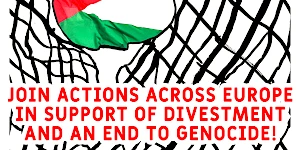
To mark International Day of Solidarity with the Palestinian People and in conjunction with our collective text, we, the cultural workers of L'Internationale have compiled a list of programmes, actions and marches taking place accross Europe. Below you will find programmes organized by partner institutions as well as activities initiated by unions and grass roots organisations which we will be joining.
This is a live document and will be updated regularly.
-
–
Marking Earth Day through Climate Action: Activities
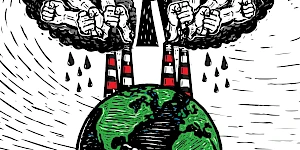
To collectively mark Earth Day, and in conjunction with our collective text, we the cultural workers of L'Internationale have compiled a list of programmes and actions taking place across Europe. Below you will find programmes organized by partner institutions.
This is a live document and will be updated regularly.