Dispatch: Institutional Critique in the Blurst of Times – On Refusal, Aesthetic Flattening, and the Politics of Looking Away
In this dispatch from Istanbul, artist İrem Günaydın ruminates on artistic labour, rejection, censorship and institutional positioning in times of genocide.
The title borrows the phrase ‘the blurst of times’ from The Simpsons (S04E17), where a monkey, hired by Mr. Burns to write the greatest novel ever, mistakenly types, It was the best of times, it was the blurst of times. The line humorously misfires while attempting to recreate the famous first sentence, ‘best of times, worst of times’, from Charles Dickens’ A Tale of Two Cities. It’s a joke, but one laced with accidental resonance. Referencing the Infinite Monkey Theorem – the idea that a monkey hitting keys at random for an infinite amount of time will eventually reproduce any given text – the scene absurdly collapses infinite possibility into a single moment of near-success, foiled by one misplaced letter. That tension between genius and gibberish, effort and error, is not unfamiliar to artists. Contemporary artistic labour often feels like typing into a void: endlessly producing under pressure, often misread, often rejected. Like the monkey’s almost-profound failure, the artist’s work exists in a system that demands legibility and punishes deviation. This essay takes that slippage seriously. ‘The blurst of times’ signals a fractured present – one that feels absurd, tragic, and numbingly familiar to artists navigating today’s institutional landscape.
The inbox fills with rejections, or worse, silence. Application after application disappears into the ether of institutional indifference. Meanwhile, the art world continues to applaud the photogenic, the digestible, the vaguely ‘urgent’ work that somehow avoids naming anything at all.
I’ve begun to think that rejections form a kind of shadow practice. They build up like sediment. They shape the rhythm of our work more than any exhibition deadline. And strangely, they sharpen something too: a clarity, a resistance. To keep applying in the blurst of times, knowing the system prefers the silent, the fashionable, the unlooking, is itself an act of critique. Perhaps to keep making after rejection is not only to persist, but to insist: that the work is not dependent on applause, that the only value is not in being seen, but in continuing to see otherwise.
In a field increasingly driven by visibility metrics, resisting the urge to be legible in the present becomes a form of artistic dissent. It opens up space for work that doesn't yet fit, that lags behind or runs ahead of the institutional clock. In these blurst of times, to be an artist is to practice refusal, not only of what to depict, but of what to become.
Today, institutions champion works that perform urgency without holding any real stakes. The fashionable thrives precisely because it is non-threatening; it circulates easily, decorates, and affirms the institution’s self-image as progressive, without asking it to take risks. This dangerous mediocrity is not accidental. It’s selected. Curated. Funded.
We live in the blurst of times – where major cultural institutions choose to ignore the genocide in Gaza, remain silent on censorship (if not enforce it), and turn away from state violence. That logic trickles down: when an institution refuses to speak, it rewards work that doesn’t speak either. It prefers art that looks away. Even institutions beyond the so-called ‘centre’, those calling themselves ‘critical’, often adopt the same posture. Many strategically perform a reverse Orientalist aesthetic: narrating the ‘East’ as bruised, lyrical, and manageable enough to fit, never enough to disrupt.
Their fluency in institutional language allows them to frame work within familiar, grant-friendly tropes, trauma, identity, ecology, colonialism, solidarity, and displacement, but only in exhibition-ready formats. These themes don’t circulate for what they provoke, but for how easily they can be contained. Compressed into wall texts. Filtered into press releases. Art that fits the expected image of the Global South: poetic in its suffering, polished in its despair, composed to remain recognizable. These institutions mirror the logic of Western validation. They maintain their place by appearing to look. But they are not looking. Not at Gaza. Not at censorship. Not at what hurts.
There is always a fashion in art. It changes its clothes every few seasons: the anthropocene, the archive, the glitch, the healing ritual, the wound. But like any fashion industry, it demands surface. It wants just enough content to be legible, just enough pain to be moving, just enough political suggestion to be admired, but never too much. Never enough to rupture comfort or implicate the institution itself. Trauma, but poetic. Identity, but beautifully staged. Displacement, but with high-resolution images. 8k, preferably. The institution doesn’t want the mess, the complexity, the politics; it wants the performance of relevance. This is how critique is neutralized: through framing. This is how art is disarmed. The institution absorbs. It flattens. It selects the version of a theme that is most palatable, feasible, visually appealing, and exportable. And in doing so, it determines who gets visibility, not based on depth or resistance, but on how well an artist’s work can be framed within its own spectacle of relevance.
What happens when you do not comply with these frames? When your work cannot be reduced to a fashionable caption? When your voice does not echo what the institution wants to hear? What happens when you name the unnameable and stand with the silenced?
You face censorship, indifference, or rejection.
This is where rejection becomes more than a personal defeat. It becomes structural. Ideological. The artist who does not flatten becomes a threat, not because of radicalism, but because they insist on another kind of seeing.
The inbox is still mostly quiet. But maybe it’s not silence, it’s sediment. The layered remains of refusals that signal the work has not folded itself to fit. Each unanswered proposal, each curt rejection is not a void; together, they are a counter-archive. They mark the refusal to be compliant, the refusal to become fluent in the expected dialect.
And in this quiet, counter-archive, something holds. Not hope, necessarily. But continuity. A slow, stubborn insistence that there is still value in making the work, even when no one is looking, especially when no one is looking.
Below are photographs from İrem Günaydın's ongoing series – unsanctioned, site-specific inscriptions written in lipstick on museum restroom mirrors, each beginning with 'The museum is…' to reflect, distort, and confront the institution’s presence, politics, and self-image as an artist. All images courtesy the artist.
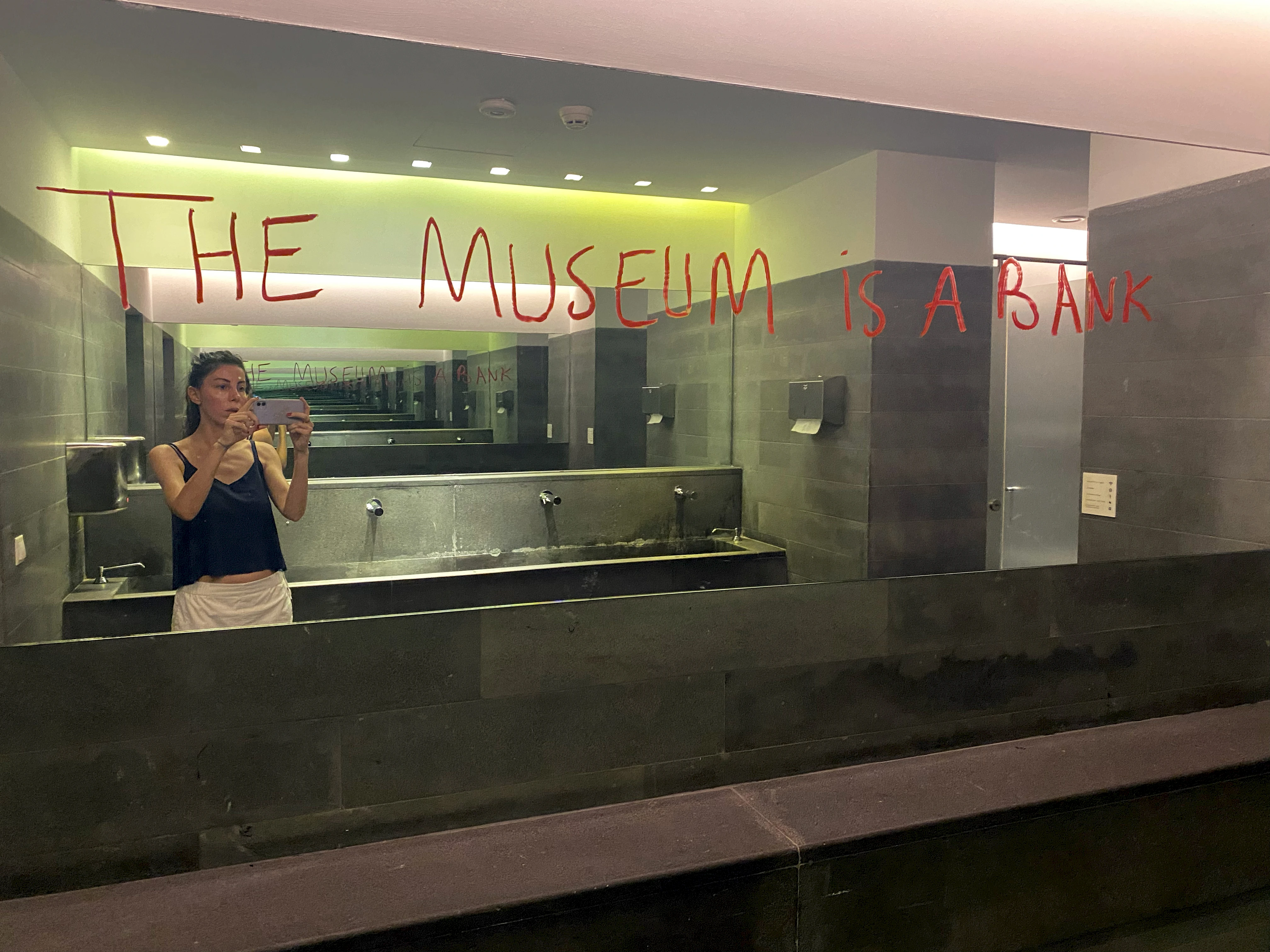
The museum is a bank — SALT Beyoğlu, İstanbul, 2025
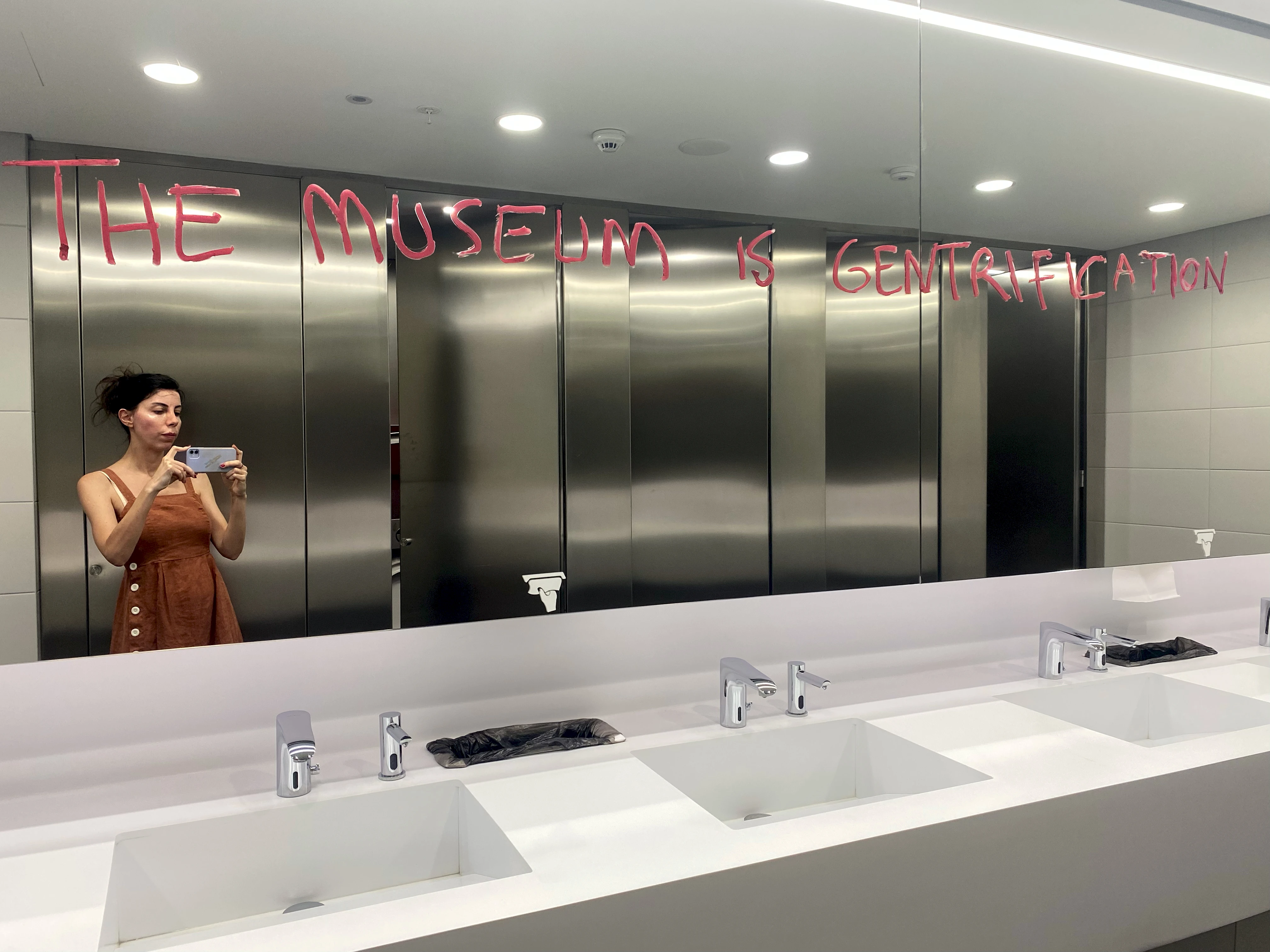
The museum is gentrification — Arter, İstanbul, 2025
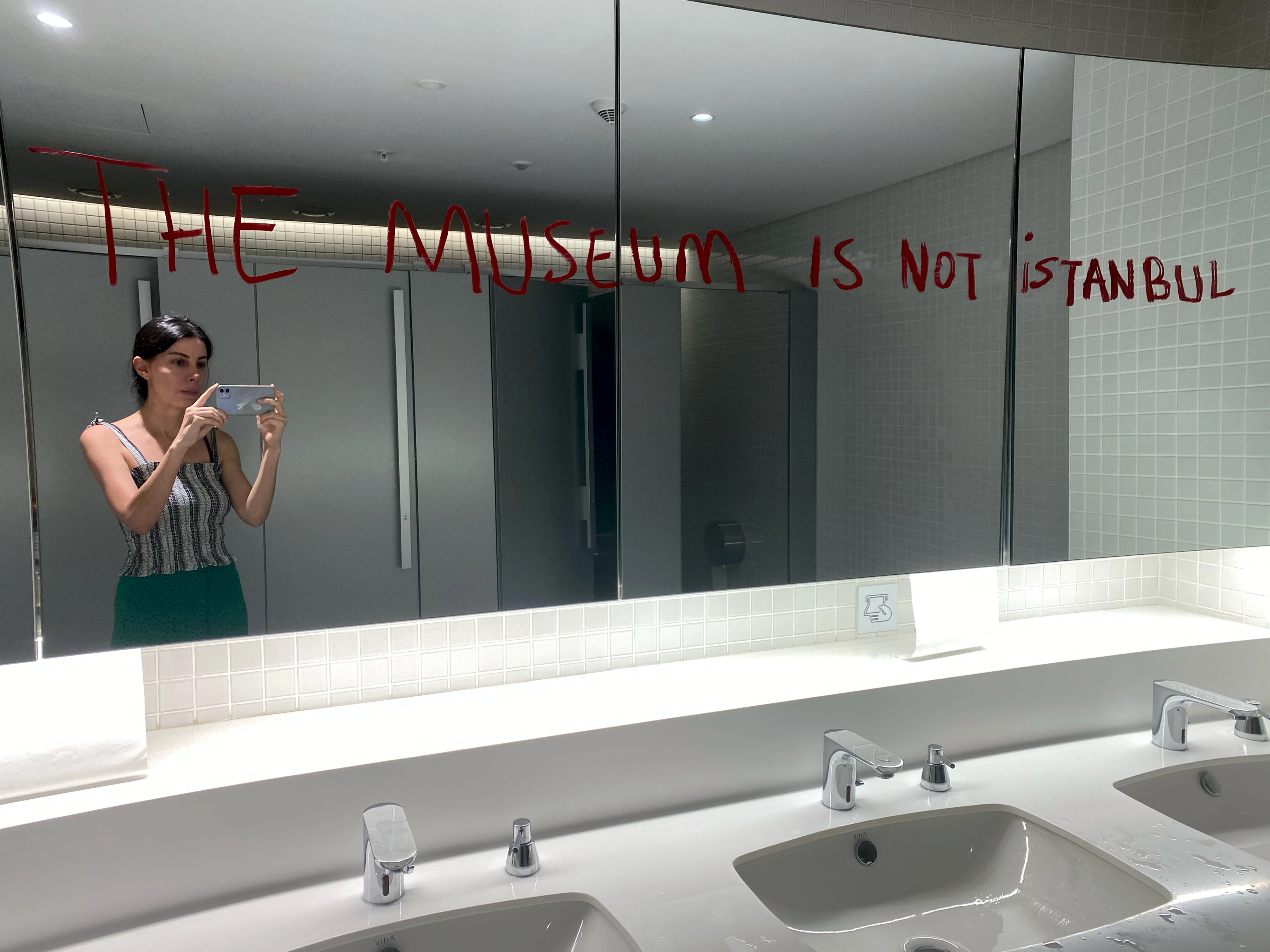
The museum is not İstanbul—İstanbul Modern, 2025
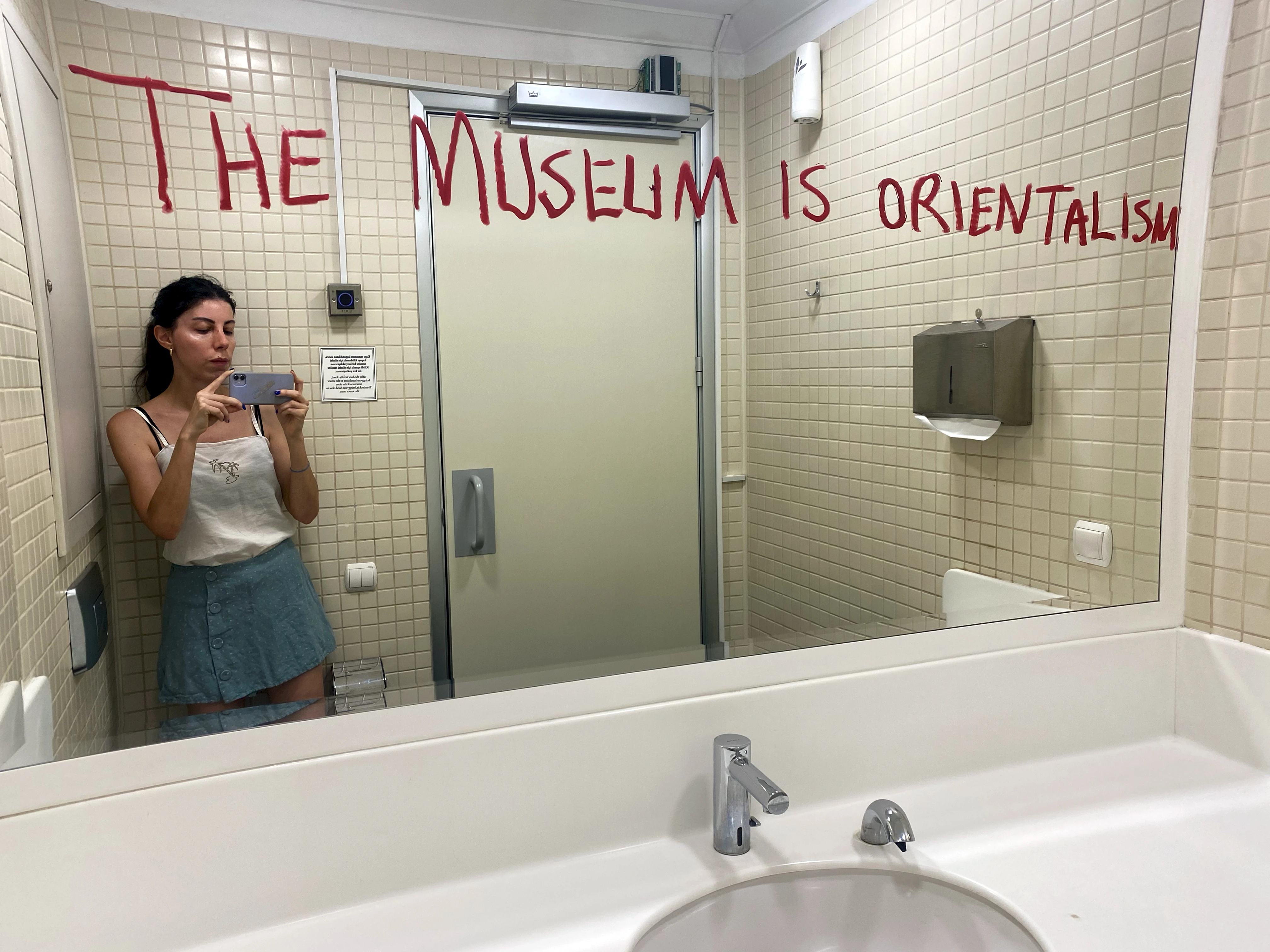
The museum is orientalism — Pera Museum, Istanbul, 2025
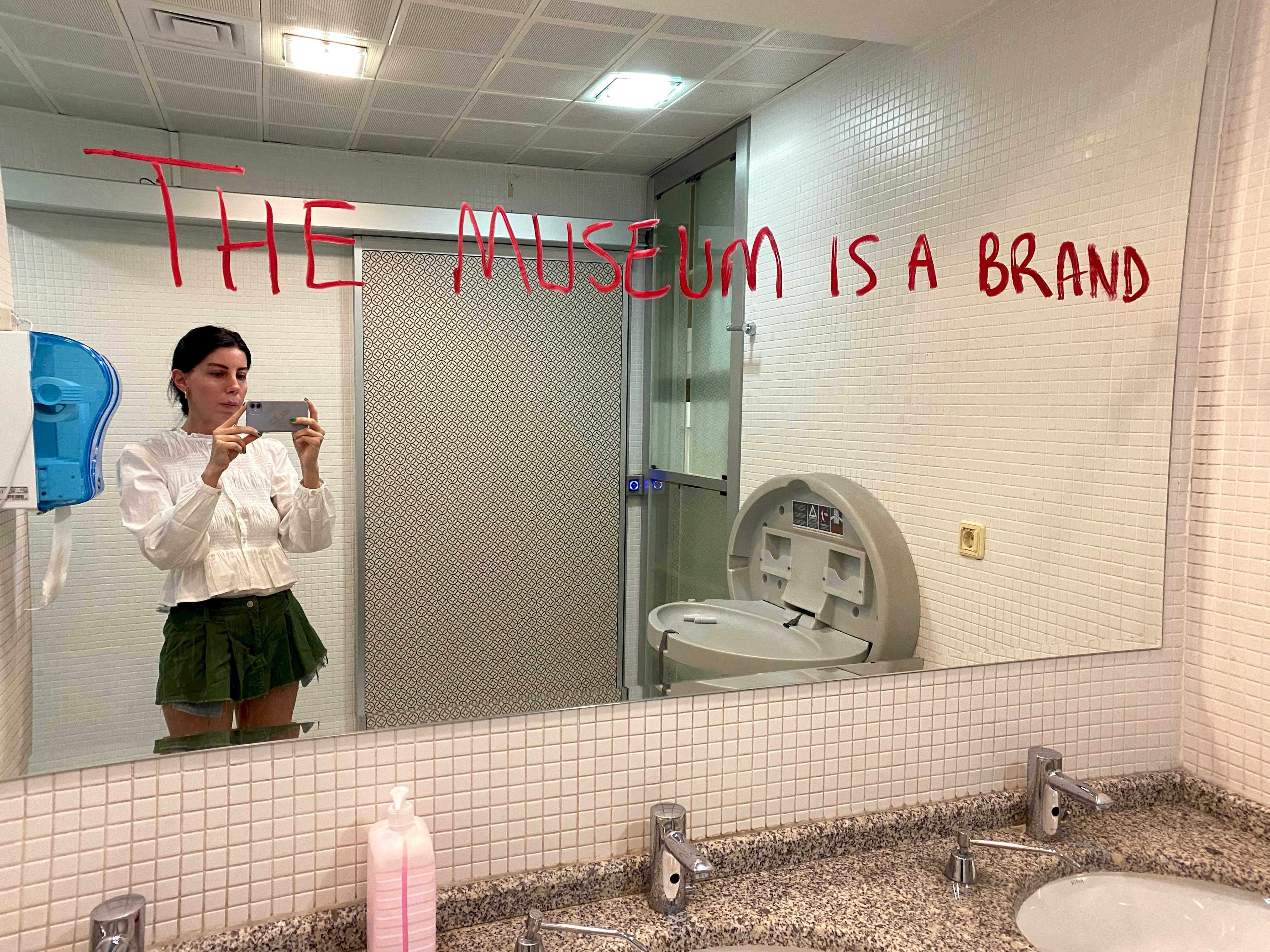
The museum is a brand — Sakıp Sabancı Museum, Istanbul, 2025
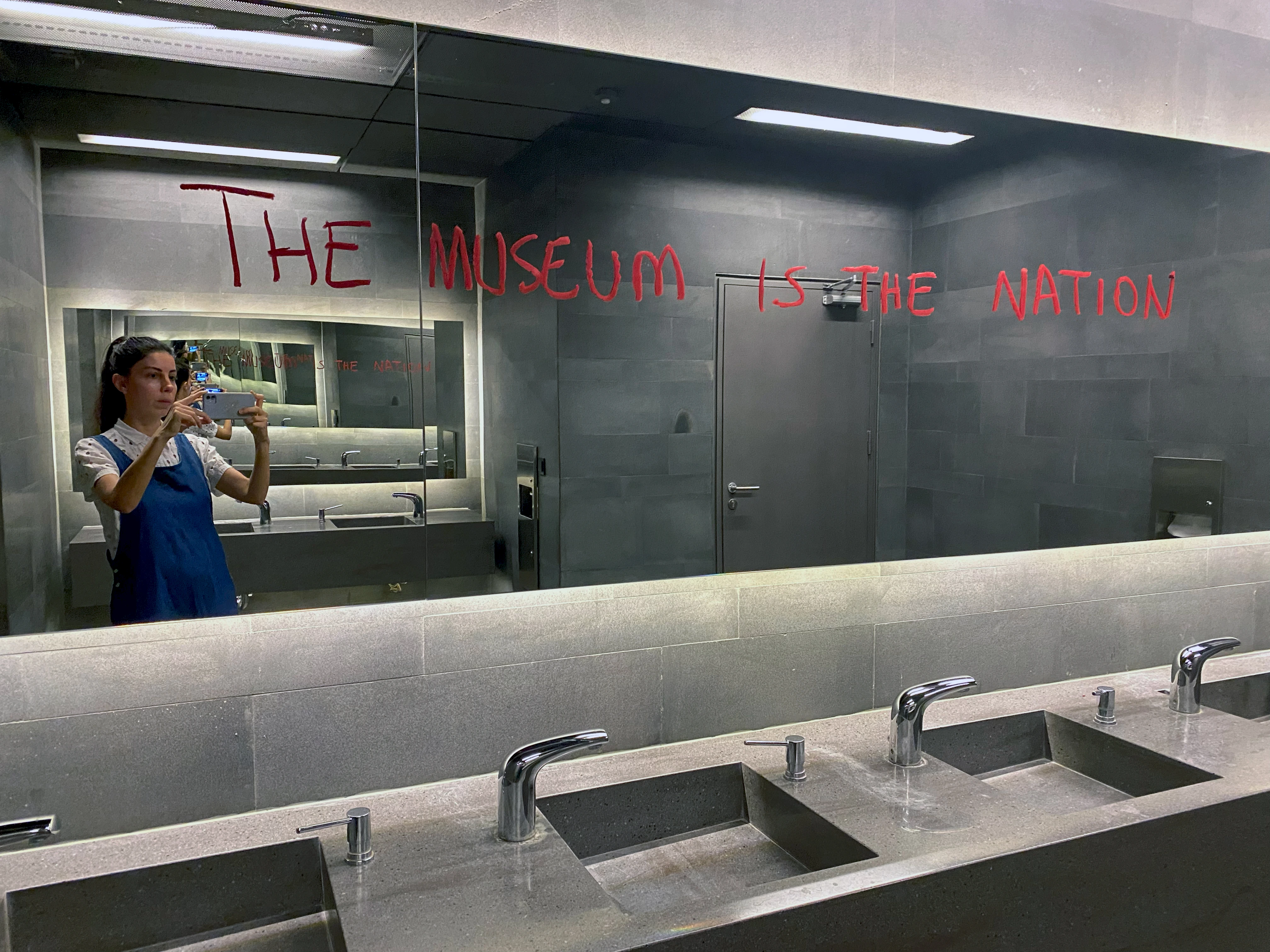
The museum is the nation — İstanbul Museum of Painting and Sculpture
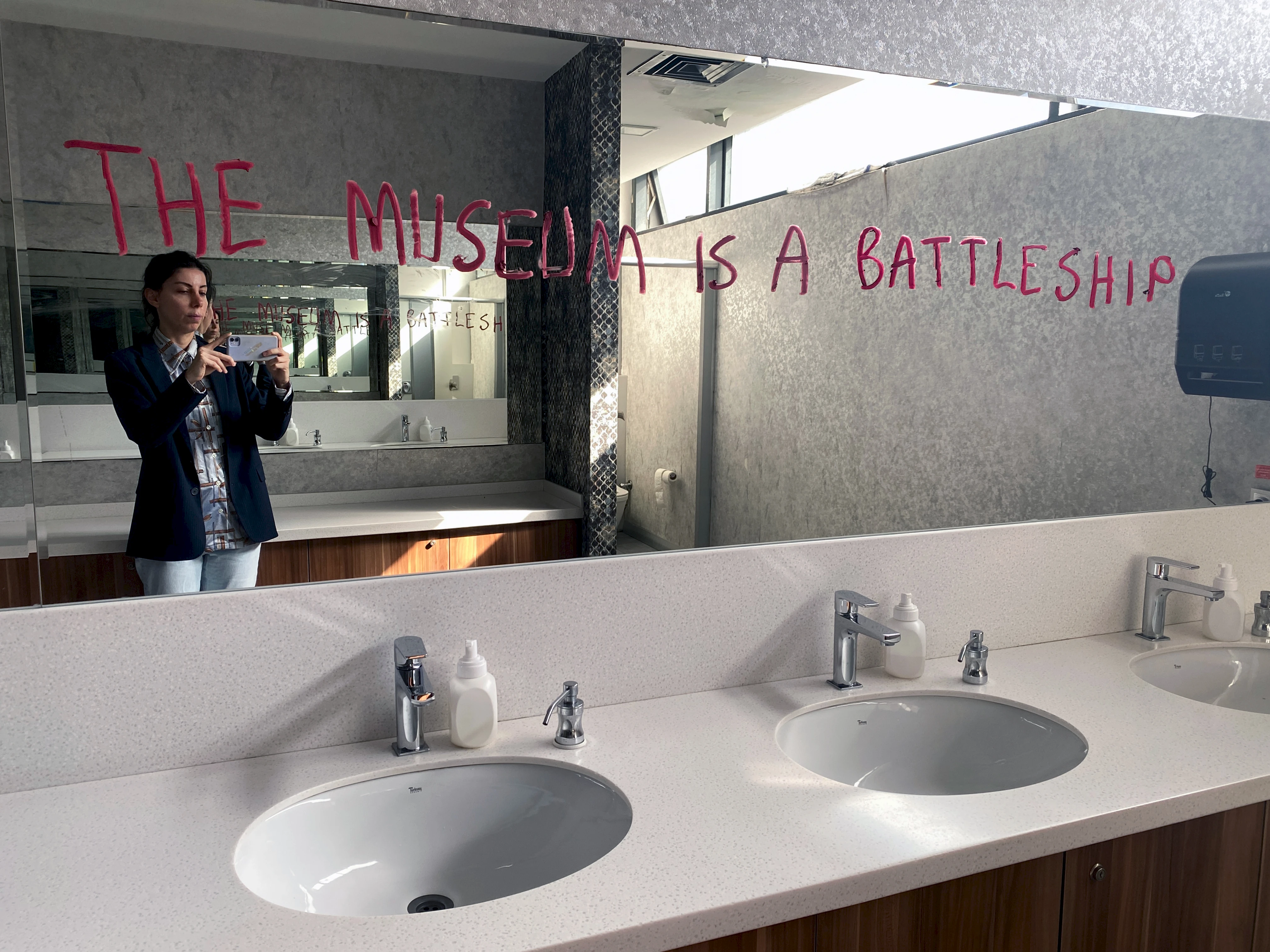
The museum is a battleship — İstanbul Naval Museum, Istanbul
Related contributions and publications
-
The Repressive Tendency within the European Public Sphere
Ovidiu ŢichindeleanuInternationalismsPast in the Present -
Rewinding Internationalism
InternationalismsVan Abbemuseum -
Troubles with the East(s)
Bojana PiškurInternationalismsPast in the Present -
Right now, today, we must say that Palestine is the centre of the world
Françoise VergèsInternationalismsPast in the Present -
Body Counts, Balancing Acts and the Performativity of Statements
Mick WilsonInternationalismsPast in the Present -
Until Liberation I
Learning Palestine GroupInternationalismsPast in the Present
Related activities
-
Museo Reina Sofia
Palestine Is Everywhere
‘Palestine Is Everywhere’ is an encounter and screening at Museo Reina Sofía organised together with Cinema as Assembly as part of Museum of the Commons. The conference starts at 18:30 pm (CET) and will also be streamed on the online platform linked below.
-
HDK-Valand
Book Launch: Collective Study in Times of Emergency, Gothenburg
with Nick Aikens (L'Internationale Online / HDK-Valand) and Mills Dray (HDK-Valand), 17h00, Glashuset
-
Moderna galerija
Book Launch: Collective Study in Times of Emergency, Ljubljana
with Nick Aikens (L'Internationale Online / HDK-Valand), Bojana Piškur (MG+MSUM) and Martin Pogačar (ZRC SAZU)
-
WIELS
Book Launch: Collective Study in Times of Emergency, Brussels
with Nick Aikens (L'Internationale Online / HDK-Valand), Subversive Film and Alex Reynolds, 19h00, Wiels Auditorium
-
NCAD
Book Launch: Collective Study in Times of Emergency, Dublin
with Nick Aikens (L'Internationale Online / HDK-Valand) and members of the L'Internationale Online editorial board: Maria Berríos, Sheena Barrett, Sara Buraya Boned, Charles Esche, Sofia Dati, Sabel Gavaldon, Jasna Jaksic, Cathryn Klasto, Magda Lipska, Declan Long, Francisco Mateo Martínez Cabeza de Vaca, Bojana Piškur, Tove Posselt, Anne-Claire Schmitz, Ezgi Yurteri, Martin Pogacar, and Ovidiu Tichindeleanu, 18h00, Harry Clark Lecture Theatre, NCAD
-
–
Collective Study in Times of Emergency, Amsterdam
Within the context of ‘Every Act of Struggle’, the research project and exhibition at de appel in Amsterdam, L’Internationale Online has been invited to propose a programme of collective study.