A Metonymy for Repair. Side B
In this two part contribution across text and moving image Esé Emmanuel and Yaw Atuobi address the Atlantic Ocean as a site of underwater histories, a 'cartography of currents,' spanning extraction, violence as well as the movement of intellectual life. Movements in water bodies, they write, becomes a ‘metonymy for repair’.
11.
We see the solidarities forged between diasporic and continental Africans in resisting colonial rule and Apartheid, and providing asylum for revolutionaries targeted by the Western imperial core. But this kinship must not be taken as intact and continuous. This kinship was wounded in the capturing of people from Africa, in the slave ship and on the plantation.1 We understand the contingency of this kinship, as something made up and something dissolved, bound in an architecture of brutality, invaded by the notion of property relations.2 Hence an important inflection of the idea of race, of Blackness as a moment of racial solidarity, according to Saidiya Hartman, ‘was expressed in the language of kinship because it both evidenced the wound and attempted to heal it’.3 It was developed by those chained in the hold, the orphans, the exiles, and the progeny. Desire to heal, however, is not sufficient for reparation. But the attempts mark the centuries between the inception of modernity and now, the perpetual after of histories, both recorded and felt, of feverish movements of Black people across the Atlantic ‘not only as commodities but engaged in various struggles towards emancipation, autonomy, and citizenship’.4
12.
The global project of antiblackness still operates, and interferes with our attempts at repair, its fingerprints everywhere in the wake, with us even as we participate in wake work. Christina Sharpe braids the connotations of the wake, among other things, as the recoil of a gun, the track of the ship, the consciousness of Blackness in the afterlives of slavery, the hold, and extends it to the weather of the sky and the sea.
13.
The weather is singularity, a distorting event from which a total environment of abjection issues. The weather produces the Black being, the agent buried under the archives, as the non-citizen. We exceed the violence that overrepresents itself in our horizons, therefore, the weather here is both ‘disaster and possibility’,5 that is, if we are lucky. Or not. We are unlucky, have been unlucky, we (that is both part and crowd) are in bad weather, in the wake of the disaster, but the predictably unpredictable transformations of the disaster is our possibility. We are unlucky, escaping and constrained by the sentence of history on both sides of the Atlantic and beneath. In a weather constituted and constructed to keep breath out of Black bodies, Sharpe asks how to name the returning and retaining of breath in the Black body? She finds the word: aspiration, ‘a violent and life-saving mode’, a praxis of the wake: a hot, moist breath in the lungs.6
14.
Like the wake, repair follows: its position, or pre-position, is posterior. After something is damaged, it can be repaired. We have learned this in the body. Repair is response. There is something incomplete in its separation from context. When tissue breaks, the body summons inflammation, the pools of blood, the rising warmth. The cardinal sign of calor7 signals repair or an attempt at it. In narrow injury the site can be bounded with fluid. The inflammation is confined. But what happens when the wound is everywhere? When the wound is a singularity,8 disturbing the coordinates by which after and before are kept separate and distinct and one can now finally move past the past? When the before collapses under the after and the trauma condenses into a singularity? All who survive it, do so in an after, in the wake, sacrificing parts of themselves to the centripetal force of its violence.
15.
The lynched Black body has endured its own metonymies.
16.
Metaphor is the ‘trope of resemblance par excellence’,9 therefore it is a process that works by full assurance of kinship. Two likes can replace each other without an issue. Metaphor is an overconfident simile, assimilating resemblance to identity. It operates in the provinces of the same, the self, of reflections. Metonymy instead operates like a motley crew on a pirate ship: contingency, association, contiguity.10 The metaphor presupposes the integrity of the present and the beyond the present, in the absence which is still present because of the persistence of the feeling of kinship, of likeness. It carries meaning and sense over the borders of semantics like a favoured citizen carrying contraband across a militarized national border. Just like that. Other mobile bodies and histories, alterized, reduced, humiliated at the border, the motley crew, must be strategic. They must memorize their changed names11 because one could not trust resemblance. They are confronted with their dissimilarity at each turn except their togethernesses, the utter factuality of their co-presences. So they hold on to what is near, at hand, at foot. Whatever kinship, whatever likenesses, they forge it in this contact. And its fictive nature will always show, like a scar.
The Black historian, the Black woman in the archives, must reckon with the shards, the rare instances of full names and identities. She will countenance a massive world of disfigurement as will frustrate any attempt at translation. Figuring, figures of language, they are useless with this scale of dislocations. She returns from her hard-work in pieces, her sack filled with traces, avatars without originals, hints, vast nothingnesses. Metaphor is unsuited to wake work. There is nothing like that.
17.
The Middle Passage did not carry all its human cargo to term or port. The journey was a lossy transmission. As a metaphor,12 the ship is an incontinent, fraudulently abortifacient vessel. What kind of repair might the Black body attempt? Can we imagine a repair that holds dear to our chest a restoration to wholeness? That attempts repatriation to natal geographies? And yet we stumble on the impossibility of these aspirations.
18.
We who are one and crowd are beside ourselves and each other in the hold and wake. The origin is everywhere and nowhere and the horizon only recedes farther. We look near, and repair, turning part towards part, reknitting net knot to net knot, we repair, pairing and pairing, we repair. At the level of the nearest surviving bit between us, the parts that remain of the irrecoverably lost in the intermittent heat and cool of the Atlantic, the fragments that arrived, in bodies alive as hydrogen, like oxygen,13 we sit in the ardour of the wake, we alloy, we stitch, we sit together, a motley, marked crew, narrowing the gulfs that frustrate our metonymies.
19.
Toni Morrison, posed a question from the audience during an interview session with Juan Williams, a question about how to survive whole in a world of perpetual victimhood, replied:
… that is a nice, big, fat, eastern, western philosophical question about how you get through. Sometimes you don’t survive whole. You just survive in part. But the grandeur of life is that attempt.14
20.
If one reads the oceanic heat transfer, the constriction and slackening of the thermohaline belt alongside the diasporic crisscrossing currents of the Black Atlantic – those human flows, return-movements and intellectual circulations between Africa and the African diaspora, that tension and sag – then the gyres, in their slow revolutions, in their accumulation of fragments and particles and stresses and currents, can be read as an attempt at writing new conditions for Black weather, however fragile: an attempt at a partial repair.
Related contributions and publications
-
A Metonymy for Repair. Side A
Esé Emmanuel and Yaw AtuobiLand RelationsPast in the Present -
Black Atlantis: the Plantationocene
Ayesha Hameed -
Archivos negros: Episodio I. Internacionalismo radical y panafricanismo en el marco de la guerra civil española
Tania Safura AdamEN esInternationalismsPast in the Present -
Archivos negros: Episodio II. Jazz sin un cuerpo político negro
Tania Safura AdamEN esInternationalismsPast in the Present -

Archivos negros: Episodio III. Panafricanismo y la diáspora negra en España
Tania Safura AdamEN esInternationalismsPast in the Present -
Archivos negros | Black Archives
Tania Safura AdamEN esInternationalismsMACBA -
Decolonial aesthesis: weaving each other
Charles Esche, Rolando Vázquez, Teresa Cos RebolloLand RelationsClimate -
Climate Forum I – Readings
Nkule MabasoEN esLand RelationsClimateHDK-Valand -
…and the Earth along. Tales about the making, remaking and unmaking of the world.
Martin PogačarLand RelationsClimatePast in the Present -
Art for Radical Ecologies Manifesto
Institute of Radical ImaginationLand RelationsClimateInstitute of Radical Imagination -
The Kitchen, an Introduction to Subversive Film with Nick Aikens, Reem Shilleh and Mohanad Yaqubi
Nick Aikens, Subversive FilmSonic and Cinema CommonslumbungPast in the PresentVan Abbemuseum -
The Repressive Tendency within the European Public Sphere
Ovidiu ŢichindeleanuInternationalismsPast in the Present
Related activities
-
HDK-Valand
Climate Forum I
The Climate Forum is a space of dialogue and exchange with respect to the concrete operational practices being implemented within the art field in response to climate change and ecological degradation. This is the first in a series of meetings hosted by HDK-Valand within L'Internationale's Museum of the Commons programme.
-
–Van Abbemuseum
The Soils Project
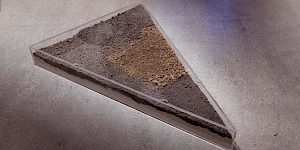
‘The Soils Project’ is part of an eponymous, long-term research initiative involving TarraWarra Museum of Art (Wurundjeri Country, Australia), the Van Abbemuseum (Eindhoven, Netherlands) and Struggles for Sovereignty, a collective based in Yogyakarta, Indonesia. It works through specific and situated practices that consider soil, as both metaphor and matter.
Seeking and facilitating opportunities to listen to diverse voices and perspectives around notions of caring for land, soil and sovereign territories, the project has been in development since 2018. An international collaboration between three organisations, and several artists, curators, writers and activists, it has manifested in various iterations over several years. The group exhibition ‘Soils’ at the Van Abbemuseum is part of Museum of the Commons. -
–VCRC
Kyiv Biennial 2023
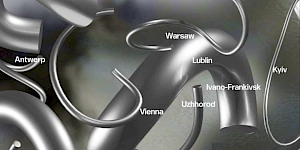
L’Internationale Confederation is a proud partner of this year’s edition of Kyiv Biennial.
-
–MACBA
Where are the Oases?
PEI OBERT seminar
with Kader Attia, Elvira Dyangani Ose, Max Jorge Hinderer Cruz, Emily Jacir, Achille Mbembe, Sarah Nuttall and Françoise VergèsAn oasis is the potential for life in an adverse environment.
-
MACBA
Anti-imperialism in the 20th century and anti-imperialism today: similarities and differences
PEI OBERT seminar
Lecture by Ramón GrosfoguelIn 1956, countries that were fighting colonialism by freeing themselves from both capitalism and communism dreamed of a third path, one that did not align with or bend to the politics dictated by Washington or Moscow. They held their first conference in Bandung, Indonesia.
-
–Van Abbemuseum
Maria Lugones Decolonial Summer School
Recalling Earth: Decoloniality and Demodernity
Course Directors: Prof. Walter Mignolo & Dr. Rolando VázquezRecalling Earth and learning worlds and worlds-making will be the topic of chapter 14th of the María Lugones Summer School that will take place at the Van Abbemuseum in Eindhoven.