A Metonymy for Repair. Side A
In this two part contribution across text and moving image Esé Emmanuel and Yaw Atuobi address the Atlantic Ocean as a site of underwater histories, a 'cartography of currents,' spanning extraction, violence as well as the movement of intellectual life. Movements in water bodies, they write, becomes a ‘metonymy for repair’.
1.
Bounded by the Americas on one flank and Africa-Eurasia on the other, the Atlantic Ocean has become the site of countless maps and atlases, a cartographic archive of modernity’s relentless project of dividing the globe. It carries within it something like the shadow of Atlas: a burden of history, of empire, of movement. The ocean is indissociable from the charters and naval expeditions, the colonial wars and merchant arteries that constructed the modern world-system. From the Iberian voyages to the vast flows of captive Africans across its waters, from the extraction of colonial goods to the scientific enterprises that followed naval power, the Atlantic is freighted with human and geological significance: a reserve also of fish stocks, offshore oil and gas, mid-ocean ridges, abyssal plains.1 In its basins one can trace a clockwise sweep – from the Newfoundland and Labrador Basin, past the North American trough, down to Brazil and Angola, across the Guinea–Sierra Leone margin, then to Cape Verde and the Canaries, up towards Iberia and West Europe.2 What if, in telling the story of underwater geology and seafloor spreading we sidelined the human sediment – the enslaved Africans plunging through this ocean? The standard narrative charts magma, ridges, age bands; yet the Atlantic also holds submerged history, those locked up in the sea.3
2.
The theft and trade of captive flesh across the Atlantic was an injury of the body and mind. A split that occurred at the level of the wrists and ankles, of neck and waist, in the navel: at the level of kinship between the African continent and its diaspora. The institution of slavery targeted the relations between family and community, contact between a body and its appendages. In our search backwards and forwards, we encounter parts without counterparts. A field of unfinished, scattered bits and pieces, a world of afters still aftering.
3.
Across the surface of the Atlantic, a choreography of currents, both windy and watery, circulates heat and salt. The cold air masses in the Northern Hemisphere, the predictable trade winds, blow westward dragging in its train the North Equatorial drift. The Canary Current, warmed in the tropics, drifts southward along the West African coast, and merges with this westward North Equatorial flow. At each turn, the Coriolis effect of the Earth’s spinning and rotation twists the airflow, subverting it northward.4 The North Equatorial Current bends through the Antilles and Caribbean, following this wind turn, rising again as the rapid Gulf Stream, until the westerly winds push it eastward into the cooling North Atlantic Drift – a slow spinning of massive waters that oceanographers call the North Atlantic Gyre.5 Further below the equator, the Coriolis effect diverts the airflow southward, picking Guinea and Agulhas currents in the westward South Equatorial Current, which arcs into the Brazil Current before cooling in the colder density of the Antarctic Ocean, completing the circuit of the South Atlantic Gyre.6 Cooling salt-saturated water sinks in both poles, creating vacuums for warm, lighter waters to fill them up. Warm air and water heat up the Northern and Southern Hemispheres, while the tropics are cooled by the re-arrival of colder air and currents. This is the thermohaline mechanism for the conveyor belt of the Atlantic: a traffic in salt and heat. Through these gyrations, warmth from the tropics is parcelled outward and exchanged, ensuring the temperate moderation of coastal climates. The gyres, in their slow revolutions, are at once mechanisms of life and of accumulation: they ferry nutrients and moisture towards the continents, yet also gather the detritus, offering them back to the land.
4.
Like the absorptive potential of oceanic flux, we imagine kinship as a force cognizant of the enduring heat of colonialism and racism across the Black world and, holding it within itself, offers succour until an eventual diffusal.
5.
Since the 1950s the mechanism of this traffic, what is called the Atlantic Meridional Overturning Circulation (AMOC), which conveys heat and salt and moderates our climate, has become quite compromised. This is what might be called an inflammation-in-process: surface and sub-surface Atlantic temperatures rising, salinity patterns disturbed and deep-water formation slowed, giving the North Atlantic a faint but real fever. Researchers have argued that the system has ‘weakened by about 15 % since 1950’ according to earlier reconstructions. At the same time, scientists note rising sea-surface warmth and increased heat-storage in the Atlantic basin, hints at an imminent collapse in the oceanic conveyor belt.7
6.
If one reads the oceanic rise in heat and the slackening of the thermohaline belt alongside the diasporic crisscrossing currents of the Black Atlantic – those human flows, return-movements and intellectual circulations between Africa and the African diaspora, that tension and sag – then the heating and imminent collapse of the AMOC becomes parallel to the ambivalence that characterizes continental and diasporic kinship. Of frustration and longing.
7.
Which figure of language offers itself to us? We enlist the movements in water bodies, and their heat currents, as a metonymy for repair.
8.
There have been attempts at repair. In the sense of re-patriation. It was a pretext for deportations and resettlements, a way of getting rid, or solving the problem, of the ‘black poor’, a scheme favoured by eighteenth- and nineteenth-century Anglo-American philanthropic capitalism and the British empire.8 The formations of Freetown and Liberia dissimulated a desire by colonial powers to dispose of the emancipated Black loyalists from Britain, Jamaican Maroons from Jamaica, manumitted Africans in America.9 While some Africans rejected the ongoing repatriation, others championed it. Sierra Leone and Liberia received some of the earliest organized repatriations. Recent history informs us that repair, as repatriation, does not guarantee repair as reparation. But the longing has not stopped. Its current, like westerly winds, have pulled others across the Atlantic, since the nineteenth century, into the twentieth and now, the twenty-first.
9.
Waves of intellectual and political movement running from the West Indies and the Americas back towards Africa returned with a transatlantic register of Pan-African consciousness – a solidarity that Édouard Glissant, borrowing Kamau Brathwaite, stages as a subterranean or “submarine” unity beneath the visible archipelago of nations.10 Figures such as Edward Wilmot Blyden, George Padmore, C.L.R. James, Amy Jacques, Amy Ashwood, W.E.B. Du Bois and Frantz Fanon11 arrived on the continent as texts, speeches and embodied presence; together, their work supplied the doctrinal and affective fuel of a Black internationalism that contested the forms and violences of the new world-system. That internationalisme noir,12 hot with argument and alliance, kept the nerves and muscles of a Black Atlantic collectivity twitching; its largest single post-war pageant was arguably FESTAC ’77 in Lagos, a month-long convocation of artists and delegations from across Africa and the diaspora.13 Nation states along the Gulf of Guinea have since enacted policies meant to institutionalize belonging – campaigns such as Ghana’s ‘Year of Return’14 initiatives and recent laws in Benin that create pathways for descendants of enslaved peoples to claim nationality15 – gestures intended as reparative, though uneven in effect.
10.
The decolonial ferment of the 50s beside the uptick in Atlantic temperature. We think in metonymy, the placing side by side. As diasporic actors, Jacques, Padmore, Fanon, committed to struggles on the continent, bringing calor to the sites of thought and action, the Atlantic waters too began to churn with altered energy, the heat rising upon the globe melting more ice, raising sea levels. These are not causally linked, but an alignment of incidences, in the pattern of metonymy. Again, we approach repair knowing the risks, knowing the injuries that pockmark past attempts. Tensions have risen and do rise between the diaspora and the continental Africans over how the memory of the transatlantic trade is treated. Flares are easy because a wound is filling out itself with fluid and heat. Feelings run amok, as we expect them to. The diaspora, in earnest, reaches out for answers, but is disappointed. The Africans who remain on the continent also recoil in confused resentment. Sometimes, the relations flash into laxity. The topic is still hot but no one will drop it.
Related contributions and publications
-
A Metonymy for Repair. Side B
Esé Emmanuel and Yaw AtuobiLand RelationsPast in the Present -
Archivos negros: Episodio I. Internacionalismo radical y panafricanismo en el marco de la guerra civil española
Tania Safura AdamEN esInternationalismsPast in the Present -
Black Atlantis: the Plantationocene
Ayesha Hameed -
Archivos negros: Episodio II. Jazz sin un cuerpo político negro
Tania Safura AdamEN esInternationalismsPast in the Present -

Archivos negros: Episodio III. Panafricanismo y la diáspora negra en España
Tania Safura AdamEN esInternationalismsPast in the Present -
Archivos negros | Black Archives
Tania Safura AdamEN esInternationalismsMACBA -
Decolonial aesthesis: weaving each other
Charles Esche, Rolando Vázquez, Teresa Cos RebolloLand RelationsClimate -
Climate Forum I – Readings
Nkule MabasoEN esLand RelationsClimateHDK-Valand -
…and the Earth along. Tales about the making, remaking and unmaking of the world.
Martin PogačarLand RelationsClimatePast in the Present -
Art for Radical Ecologies Manifesto
Institute of Radical ImaginationLand RelationsClimateInstitute of Radical Imagination -
The Kitchen, an Introduction to Subversive Film with Nick Aikens, Reem Shilleh and Mohanad Yaqubi
Nick Aikens, Subversive FilmSonic and Cinema CommonslumbungPast in the PresentVan Abbemuseum -
The Repressive Tendency within the European Public Sphere
Ovidiu ŢichindeleanuInternationalismsPast in the Present
Related activities
-
HDK-Valand
Climate Forum I
The Climate Forum is a space of dialogue and exchange with respect to the concrete operational practices being implemented within the art field in response to climate change and ecological degradation. This is the first in a series of meetings hosted by HDK-Valand within L'Internationale's Museum of the Commons programme.
-
–Van Abbemuseum
The Soils Project
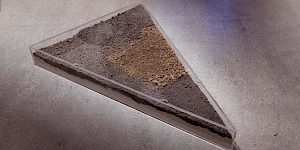
‘The Soils Project’ is part of an eponymous, long-term research initiative involving TarraWarra Museum of Art (Wurundjeri Country, Australia), the Van Abbemuseum (Eindhoven, Netherlands) and Struggles for Sovereignty, a collective based in Yogyakarta, Indonesia. It works through specific and situated practices that consider soil, as both metaphor and matter.
Seeking and facilitating opportunities to listen to diverse voices and perspectives around notions of caring for land, soil and sovereign territories, the project has been in development since 2018. An international collaboration between three organisations, and several artists, curators, writers and activists, it has manifested in various iterations over several years. The group exhibition ‘Soils’ at the Van Abbemuseum is part of Museum of the Commons. -
–VCRC
Kyiv Biennial 2023
L’Internationale Confederation is a proud partner of this year’s edition of Kyiv Biennial.
-
–MACBA
Where are the Oases?
PEI OBERT seminar
with Kader Attia, Elvira Dyangani Ose, Max Jorge Hinderer Cruz, Emily Jacir, Achille Mbembe, Sarah Nuttall and Françoise VergèsAn oasis is the potential for life in an adverse environment.
-
MACBA
Anti-imperialism in the 20th century and anti-imperialism today: similarities and differences
PEI OBERT seminar
Lecture by Ramón GrosfoguelIn 1956, countries that were fighting colonialism by freeing themselves from both capitalism and communism dreamed of a third path, one that did not align with or bend to the politics dictated by Washington or Moscow. They held their first conference in Bandung, Indonesia.
-
–Van Abbemuseum
Maria Lugones Decolonial Summer School
Recalling Earth: Decoloniality and Demodernity
Course Directors: Prof. Walter Mignolo & Dr. Rolando VázquezRecalling Earth and learning worlds and worlds-making will be the topic of chapter 14th of the María Lugones Summer School that will take place at the Van Abbemuseum in Eindhoven.