Seeds Shall Set Us Free II
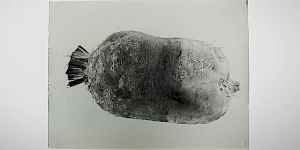
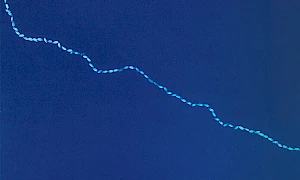
In the context of the fraught history of rice cultivation and distribution in Bangladesh, this work juxtaposes Wasif’s cyanotypes of rice grains and plants with archive documents and photographs from one of the largest community grain banks in the country. In Bangladesh rice production was curtailed by indigo and jute cultivation imposed for the world market by the British colonial system. The artist collaborated with the research-based organization UBINIG, founded by a group of activists in 1984 to support the new Naya Krishi Andolan agricultural movement, which currently includes more than 100,000 farming families. This movement promotes local and non-chemical agriculture and indigenous agricultural knowledge to protect biodiversity and workers’ well-being.


The views and opinions published here mirror the principles of academic freedom and do not necessarily reflect the views or positions of the L'Internationale confederation and its members.
Related activities
Climate Forum
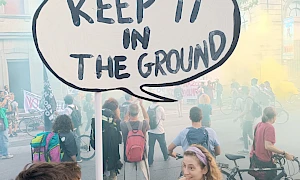
The Climate Forum is a space of dialogue with respect to the concrete eco-political operational practices implemented within the art field.
The Climate Forum is a space of dialogue and exchange with respect to the concrete operational practices being implemented within the art field in response to climate change and ecological degradation. This is the first in a series of meetings hosted by HDK-Valand within L'Internationale's Museum of the Commons programme.
The series builds upon earlier research resulting in the (2022) book Climate: Our Right to Breathe and reaches toward emerging change practices. It asks: How might the speculative and critical insights framed within the registers of the discursive, the affective, and the symbolic be operationalised within everyday working? While the wider agenda of the series is to consider institutional practices, the first session maps some of the ways ecopolitics are formulated by artist and activist iniatives.
Register here.
The Soils Project
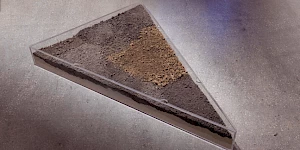
The Soils Project, is part of the eponymous, long term research initiative involving Tarrawara Museum of Art, Wurundjeri Country, Australia, the Van Abbemuseum in Eindhoven, Netherlands and Struggles for Sovereignty, a collective based in Yogyakarta, Indonesia. It works through specific and situated practices that consider soil, as both metaphor and matter. A further iteration of the project will open at the Van Abbemuseum in May - September 2024 as part of Museum of the Commons.
The Soils Project has been in development since 2018. An international collaboration between three organisations, and several artists, curators, writers and activists, the project has manifested in various iterations over several years including a three-part public webinar series titled The Soils Project: groundwork, and a two-week workshop, titled The Soils Project: On Country, for participating curators and artists. With a curatorium comprising arts workers from TarraWarra Museum of Art, the Van Abbemuseum, and Struggles for Sovereignty, the project’s approach seeks and facilitates opportunities to listen to diverse voices and perspectives around notions of caring for land, soil and sovereign territories.
Developed from this journey, The Soils Project’s forthcoming exhibition will embrace the deep histories of each participant’s location, examining the multiplicity of landscapes and environments, and the impact of colonisations and global industries on cultural heritage, land management and traditional knowledges.
Non-Western Technologies for the Good Life
The experimental course 'Non-Western Technologies for the Good Life' (November 2023 – May 2024) celebrates as its starting point the anniversary of 50 years since the publication of Tools for Conviviality, considering that Ivan Illich’s call is as relevant as ever.
Summer School: Our Many Easts
Our Many Easts summer school is organised by Moderna galerija in Ljubljana in partnership with ZRC SAZU (the Research Centre of the Slovenian Academy of Sciences and Arts) as part of the L’Internationale project Museum of the Commons.
Open Call – Summer School: Our Many Easts
Our Many Easts summer school takes place in Ljubljana 24–30 August and the application deadline is 15 March. Courses will be held in English and cover topics such as the legacy of the Eastern European avant-gardes, archives as tools of emancipation, the new “non-aligned” networks, art in times of conflict and war, ecology and the environment.
Gathering into the Maelstrom
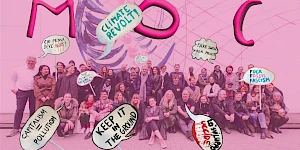
Gathering into the Maelstrom in Venice at Sale Docks is a four-day programme curated by Institute of Radical Imagination (IRI) and Sale Docks.
Related contributions
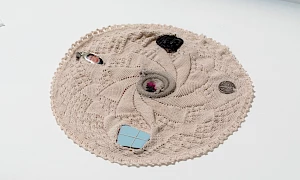
Decolonial aesthesis: weaving each other
Climate Forum Readings
…and the Earth along. Tales about the making, remaking and unmaking of the world.
Art for Radical Ecologies Manifesto
Pollution as a Weapon of War
A Letter Inside a Letter: How Labor Appears and Disappears
Seeds Shall Set Us Free II
Pollution as a Weapon of War – a conversation with Svitlana Matviyenko
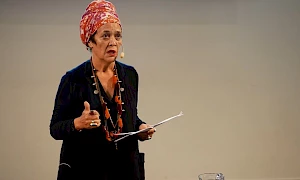
Françoise Vergès – Breathing: A Revolutionary Act
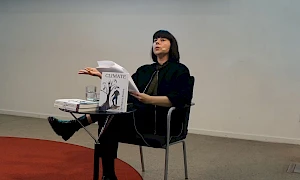
Ana Teixeira Pinto – Fire and Fuel: Energy and Chronopolitical Allegory
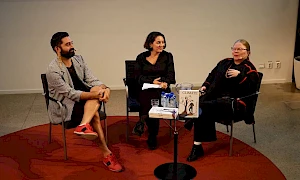
Watery Histories – a conversation between artists Katarina Pirak Sikku and Léuli Eshrāghi
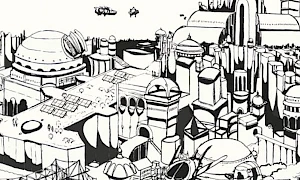
Indra's Web
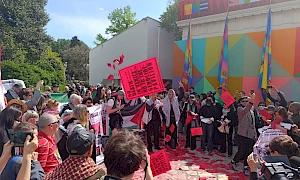
One Day, Freedom Will Be