‘Near East, Far West’ and the proposition of Middle East Europe: A conversation between Nick Aikens, Charles Esche, Nav Haq, Serge Klymko and Magda Lipska
A year on from its opening, curators of the main exhibiton of the Kyiv Biennial 2025 reflect on the exhibition. The conversation moves through the impulse for and context of the exhibiton’s collective realistation, as well as its propositions of ‘Near East Far West’, the show’s title, and ‘Middle East Europe’.
Nick Aikens: It’s almost a year since the opening of Near East, Far West at MSN Warsaw (Muzeum Sztuki Nowoczesnej w Warszawie). We started discussing the project two years prior to that. There was an invitation, or a proposition, from the Kyiv Biennial that we do this exhibition as L’Internationale. Magda, you were involved in those early discussions.
Magda Lipska: The immediate catalyst was Russia’s full-scale invasion of Ukraine in February 2022. This coincided with internal discussions within the L’Internationale confederation regarding its expansion: we proposed inviting the Kyiv-based VCRC (Visual Culture Research Center), the organization behind the Kyiv Biennial (launched in 2015) with which we had been collaborating since 2018. During these talks, we agreed to collaborate on two editions of the biennial, to be held in 2023 and 2025 during ‘Museum of the Commons’, a new project by L’Internationale launched in February 2023.
At the time, none of us knew how the war would unfold or whether it would still be ongoing in 2025. However, we agreed that if the war continued, we would organize it in our space in Warsaw; if it would end, the Kyiv Biennial would take place in Kyiv. This was unfortunately not the case.
And that is only part of the story. On 7 October 2023, Hamas attacked Israel, followed by the Israeli invasion of the Gaza Strip. These events deeply divided opinion and inflamed emotions within L’Internationale. We wanted to respond in a meaningful way; some felt we should issue a statement condemning the genocide, while others believed we should take concrete action. At that time, the confederation included HKW (Haus der Kulturen der Welt) in Berlin, for who issuing a statement in support of Palestine as a German institution was unthinkable, even though it simultaneously declared its readiness to engage in pro-Palestinian support initiatives. These discussions – often difficult and extremely heated – prompted Vasyl Cherepanyn to propose addressing these issues through artistic means within the framework of a biennial, for the co-creation of which he invited all members of L’Internationale. We wanted to understand why it was so difficult to reach a consensus on Palestine in Europe, whereas support for Ukraine was apparently self-evident. While the answer might seem obvious in the West, the situation in the East is not necessarily the same: Poland, for instance, recognized Palestinian statehood as early as 1988; yet it was here that the Holocaust took place, alongside postwar pogroms against the Jewish population, not to mention the anti-Zionist campaign of the late 1960s. These events have a lasting impact on the perspective through which Palestinian-Israeli relations are viewed, much as in the case of Germany.
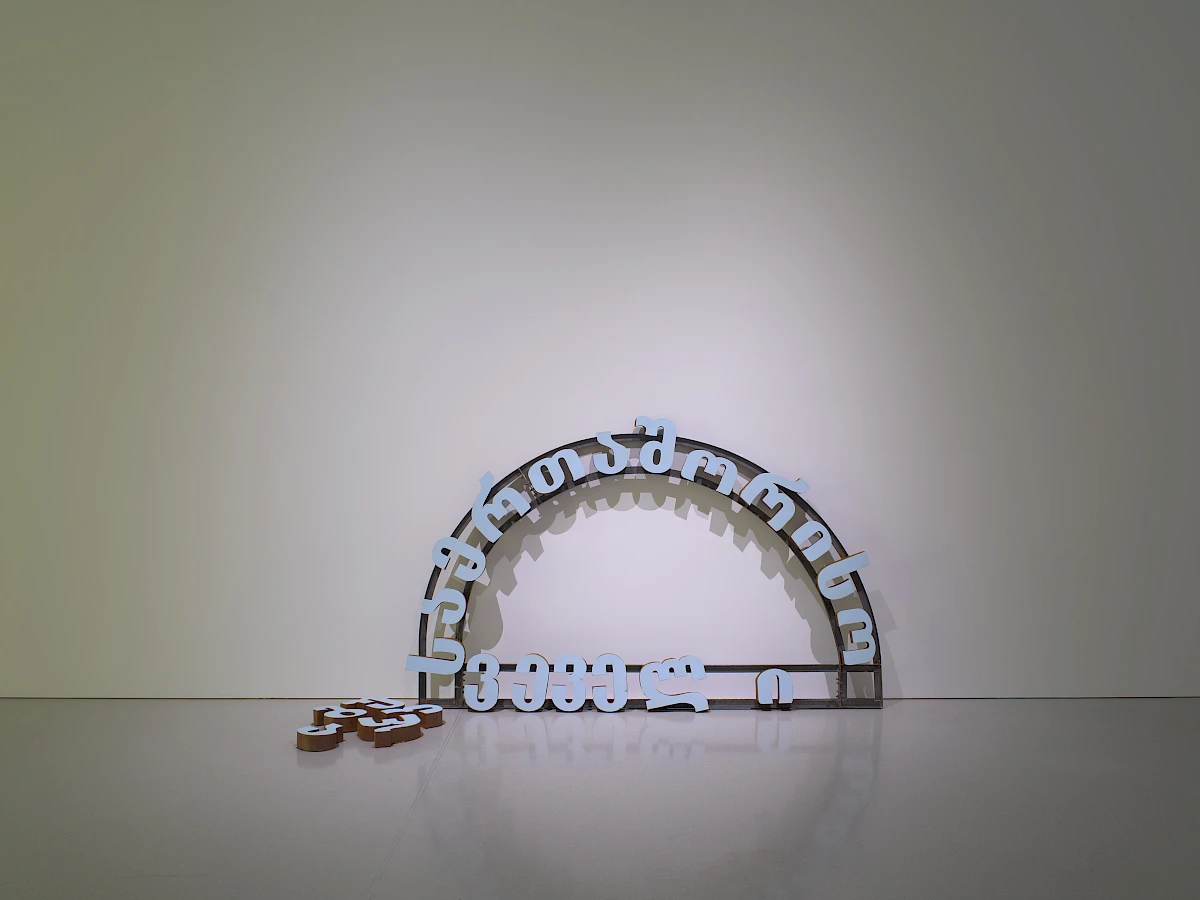
Tolia Astakhishvili, International, 2024, installation view Museum of Modern Art in Warsaw. Photo: Alicja Szulc
Charles Esche: We shouldn’t forget that the Kyiv Biennial should happen in Kyiv. What happened was the displacement of an activity that violence forced to occur elsewhere. Simply put, that raises the question of whether what we did was the right thing: I’m not saying there was an alternative, but I think it’s worth asking what it means to displace the activity and, in a sense, normalize the situation. This is very much the Palestinian question as well, at least historically, before the current phase of the genocide started. How do you normalize a situation of exception, of abnormality? And to what extent does that achieve, or fail to achieve, the bigger cause, which here would be the liberation of Ukraine and the end of the war, with Russia’s defeat or at least a negotiated ceasefire?
That was also the background to the conversation. Magda is right that it was Vasyl who asked why we didn’t think about combining these two questions. They are linked, in the sense that what happened historically in Palestine foreshadows many of the techniques that are being used elsewhere in the world. Palestine has been the laboratory of violence for the world since 1948, more or less, and certainly since the 1990s and the end of the Cold War. That made the violence that was happening, and is happening, in Ukraine and the violence in Palestine not separate issues but very similar ones, with histories of occupation, imperialism and colonialism connected to them.
That is what we did with the exhibition. We tried to weave relations between these locations, which, from a Western subject’s point of view – from my people’s point of view – are utterly different. I think it is completely unsustainable on any ethical level, but this is where most of the Western political territory is, and this is what we’re dealing with: that, to put it very simply, in one case the genocide is good, and in the other the slaughter of Ukrainians is not good.
NA: As Magda says, there was a pre-history, in terms of the biennial coming into the L’Internationale ‘Museum of the Commons’ project and then this particular moment in Berlin. And already at the beginning there was this need to think genocide and full-scale invasion together.
Within L’Internationale and its history there have been numerous shared projects and research trajectories, and some attempts at co-curatorial work, Spirits of Internationalism being an early one. But the exhibition is quite a unique example of a curatorial group from across the confederation coming together. Those early meetings were as much about trying to figure out how we wanted to work together as about what we wanted to show or say.
At the same time, this was happening in parallel with a rewriting of L’Internationale’s mission statement, trying to rethink what the confederation stood behind and stood for. In those early meetings of ‘Near East Far West’, we named anti-fascism, solidarity and internationalism – these are words that also appear in our mission statement, and they were key to finding a shared political position that the exhibition was speaking to, or speaking with.
Nav Haq: Within the confederation, I would still say this exhibition was quite an exceptional collaboration. There was a genuine sense of wanting to see what we could bring to such a project with our various capacities. I think first of MSN hosting the biennial – an amazing new museum and infrastructure in Warsaw – with its proximity to Ukraine, and the activities you had done there, like hosting the Sunflower Solidarity Centre. Thinking in that way about what we could bring from our own conditions and infrastructures was actually very generative
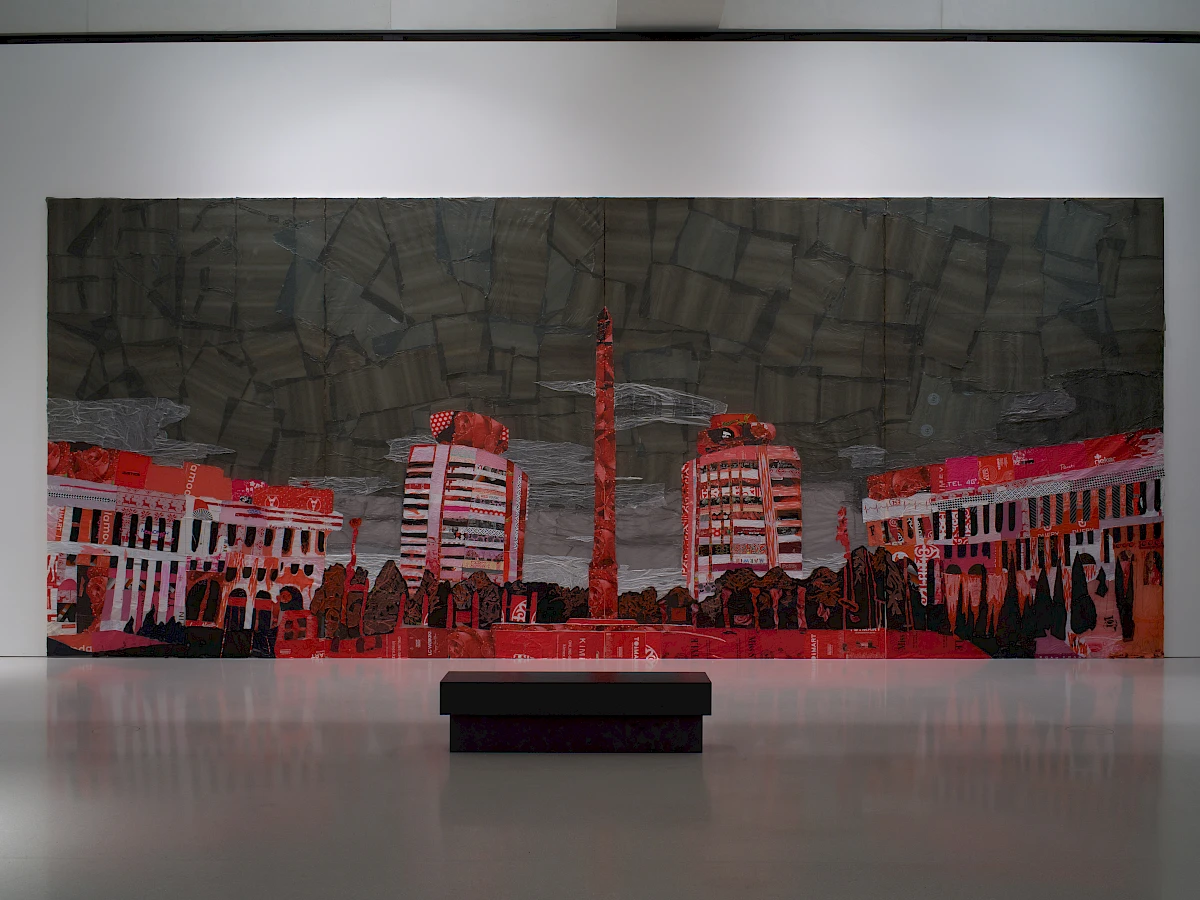
Saule Suleimenova, Sky above Almaty. Qandy Qańtar _Bloody January, installation view Museum of Modern Art in Warsaw. Photo: Alicja Szulc
For M HKA, as a collecting institution, it was a case of thinking about what we could contribute that would be meaningful. For example, Saule Suleimanova’s Sky Above Almaty: Qandy Qańtar/Bloody January (2022) work was a new acquisition for the museum, jointly with Tselinny Center in Almaty. We haven’t even exhibited it at M HKA yet, but we offered for it to be presented first as part of this exhibition in Warsaw. So, in terms of organizing something based on what each of us could offer from our own institutional set-up, I thought it was very effective. I see it as a model for what L ’Internationale could be.
NA: Let’s turn to the title ‘Near East, Far West’, which took a long time for us to land on.
NH: I was never convinced about the title. It’s an unnecessary attempt to reformulate ‘Middle East Europe’ in my eyes. As such, I didn’t see the necessity, especially as I find ‘Middle East Europe’ stronger and more evocative. When I was reading the description of the Berlin iteration of the biennial at KW, they don’t use the term ‘Middle East’. They use ‘West Asia’, which is in itself an attempt to find more progressive terminology, although I think even the new term is questionable. This kind of reversal or reorientation of the colonial gaze in titles, particularly of ‘East and West’ or ‘centre and periphery’, was abundant in post-colonial theory some decades ago, and it became a cliche. Middle East Europe on the other hand is, I think, a different and more interesting geopolitical proposition.
Serge Klymko: It stems from the Soviet or post-Soviet formulation of the region. In the Soviet and post-Soviet classification, what in the West is called the Middle East is called the Near East, a term also deployed in Western Europe. So that was also the play.
ML: I really like this title, precisely because of its ambiguity. However, the ideological weight of the term lies elsewhere. These geographical references to proximity and distance fit into a conceptual repertoire and are part of an imperial mindset. They stem from the colonial language of conquest that categorized the East into Near, Middle, and Far. These terms are not only Eurocentric but are also geopolitical constructs. And it is precisely these terms that shape the way we view the world. I find this deeply problematic. The same applies to the term ‘Eastern Europe’. Poland and Ukraine lie at the geographical centre of Europe. We are Eastern only from the perspective of Western Europe, which has always defined ‘the East’ in terms of backwardness and regression. We wanted to play with this idea, given that no one really questions the central position of the West. Introducing a concept like the ‘Far West’ thus constitutes a kind of countermove – challenging the perspective from which policy is shaped. It points to a different centre and expresses a critique of the imperial foundations of Western thought.
SK: The title also works with the feeling of solidarity. In certain respects, even though the territorial distance between them may be huge, the countries of the East feel much closer to one another than they do to countries in West, which may be closer geographically but which work by their own logic, apparently without real understanding, empathy or solidarity with what is going on in the east of Europe or in the Middle East.
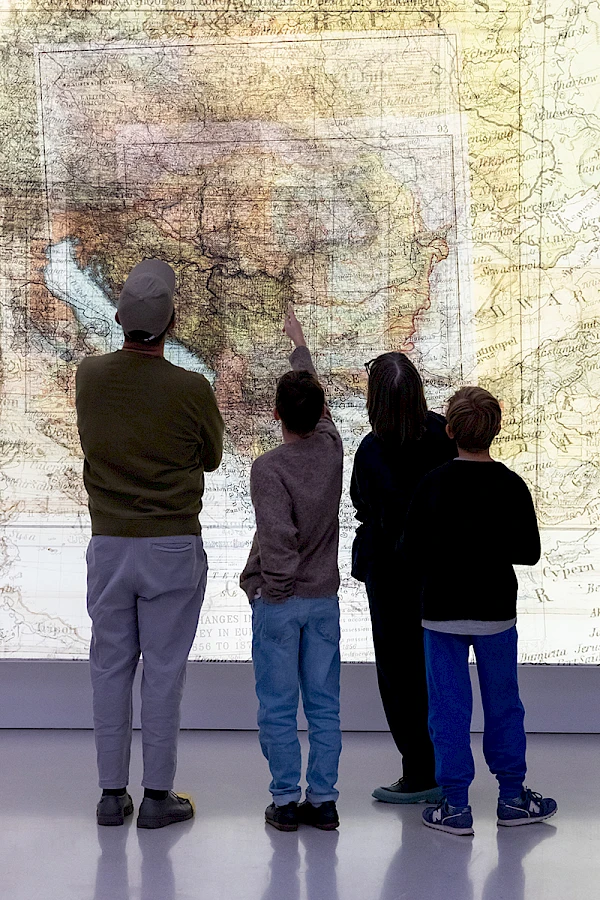
Lana Čmajčanin, 551.35 - Geometry of Time, 2014, installation view, Museum of Modern Art in Warsaw. Photo: Alicja Szulc
CE: I think there’s an interesting point here from the perspective of a Western subject like me, which is that these terms shift the geocultural location. They each do it in ways that are slightly different, but more or less the same. I was brought up in a narrative in which the only art histories were told by Western states; largely from New York, though later it became a bit more pluralized. The idea that the narrative shifts is also a kind of geopolitical action. In the 1930s, a British prime minister could say that Czechoslovakia was a country of which we knew little, so it didn’t matter if the Germans occupied it. That is the inheritance of the Western mindset in relation to these territories.
Moving to Middle East Europe, what I like about it is that it also distinguishes between Central Europe, which is where the exhibition happened, in Warsaw or at least in Berlin, and Eastern Europe, and in a way puts Kyiv in the centre. Kyiv is the centre of Middle East Europe. So there is a bracketed ambiguity: ‘“Middle East Europe”, or “Middle East Europe”’, and I like that play of terms. On the one hand, it might define Kyiv as the centre, the main city, of Middle East Europe. On the other hand, you could understand it as the relation between two areas that are, in a sense, divided by the great powers and not allowed to have a dialogue on their own terms. Historically, it was the French and the British; now it's the Israeli–American axis that determines that relationship.
I think it was really important in that regard that the exhibition wasn’t confined to the Palestinian and Ukrainian situations. There was also Turkey, the Caucasus, and Central Asian questions; and other works from the collections, such as those by Lawrence Abu Hamdan and Navine Dossos, brought in a wider Middle East: not only the Palestinian lands, but also Lebanon and Saudi Arabia to some extent. Even so, that is an important argument about a geocultural shift that maybe we needed to take further. That’s where a publication was missing, to some extent, and where a whole set of other questions could have been developed.
It’s also interesting for a cultural institution to say that the force we’re looking at is no longer located in the Far West but somewhere else, and that this is where our cultural future – or cultural present, as well as our military present – is being forged. It could also have been interesting if this had been articulated from a key institution in Western Europe! I think that’s what the exhibition tried to say, and the title does it well. I understand that from Nav’s point of view it’s maybe a little too neat, but I quite like it, because it creates an expectation in visitors that they’re seeing a different geography, a closeness and a farness that shifts. I’m not sure whether that works in Poland to the same extent, but in the Netherlands it would certainly work to shift a geography that is very firmly rooted in people’s identity, whatever their ethnic background. There still tends to be a centrality of the West, and of New York, in culture today.
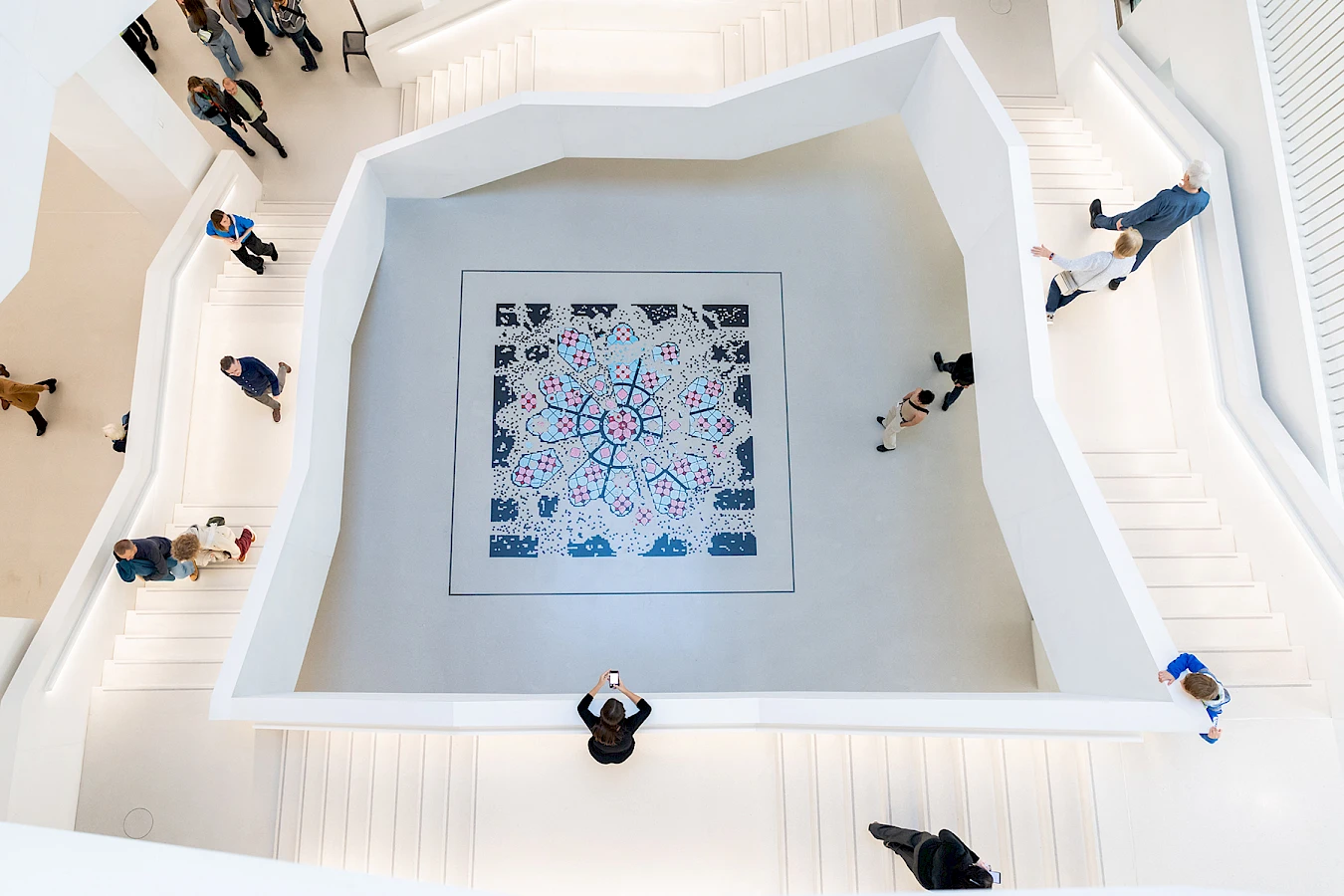
Aykan Safoğlu, Rosette, 2024, installation view Museum of Modern Art in Warsaw. Photo: Alicja Szulc
NA: I think you’re right. And there’s also a reorientation, or a dynamism, that ‘Near East, Far West’ evokes, rather than Middle East Europe as a place, or an imagined place – what Edward Said calls an imaginative geography. ‘Near East, Far West’, depending on your orientation, takes you either further away or closer. Within the exhibition, there were a number of different scales and cartographies that allowed you to zoom in, to be near or far. I think of viewing Aykan Safoğlu’s Rosette (Rose window) (2025) that was placed in the atrium of the MSN building. Seen from above, the piece reveals itself as a fractured mosaic of the window of the Sirkeci railway terminus in Istanbul, the eastern terminus of the Orient Express but also the point of departure for migrant workers from Turkey journeying to Germany following the recruitment agreement between the two countries in the 1960s. Or visitors finding themselves amid pipes in the Nord Stream pipeline as part of Hito Steyerl’s Leak (2024), which explores how the so-called ‘cultural pipeline’ between the Soviet Union – now the Russian Federation – and (West) Germany has been a crucial part of the promotion of fossil fuel infrastructure. Or looking up at the sky over Beirut in Lawrence Abu Hamdan’s The Diary of a Sky (2024), which documents the ongoing presence of Israeli fighter jets and drones over Beirut. This idea of moving near and far, of being reoriented and rescaled, was very much part of the exhibition.
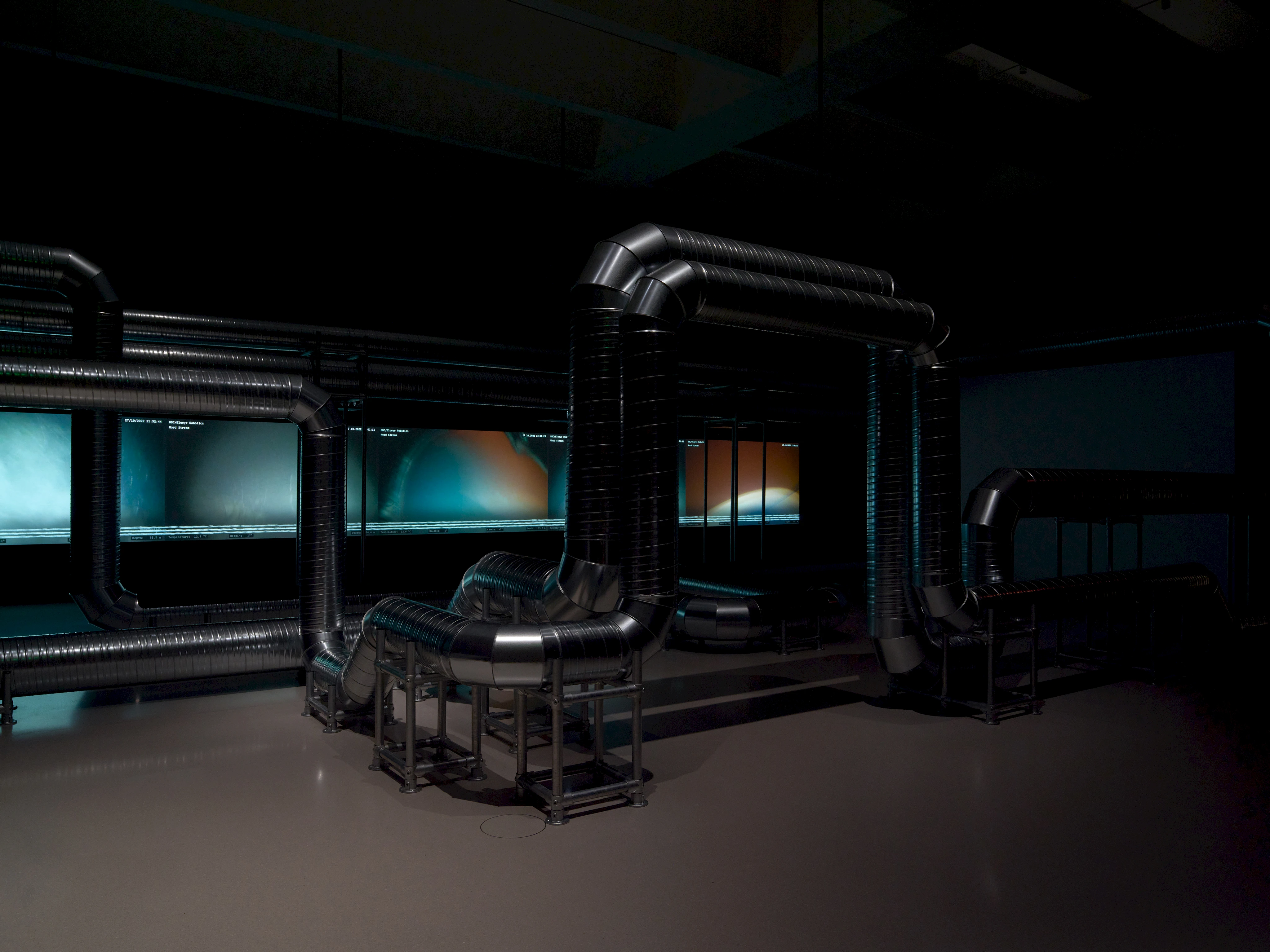
Hito Steyerl, The Leak, 2024, installation view, Museum of Modern Art in Warsaw. Photo: Alicja Szulc
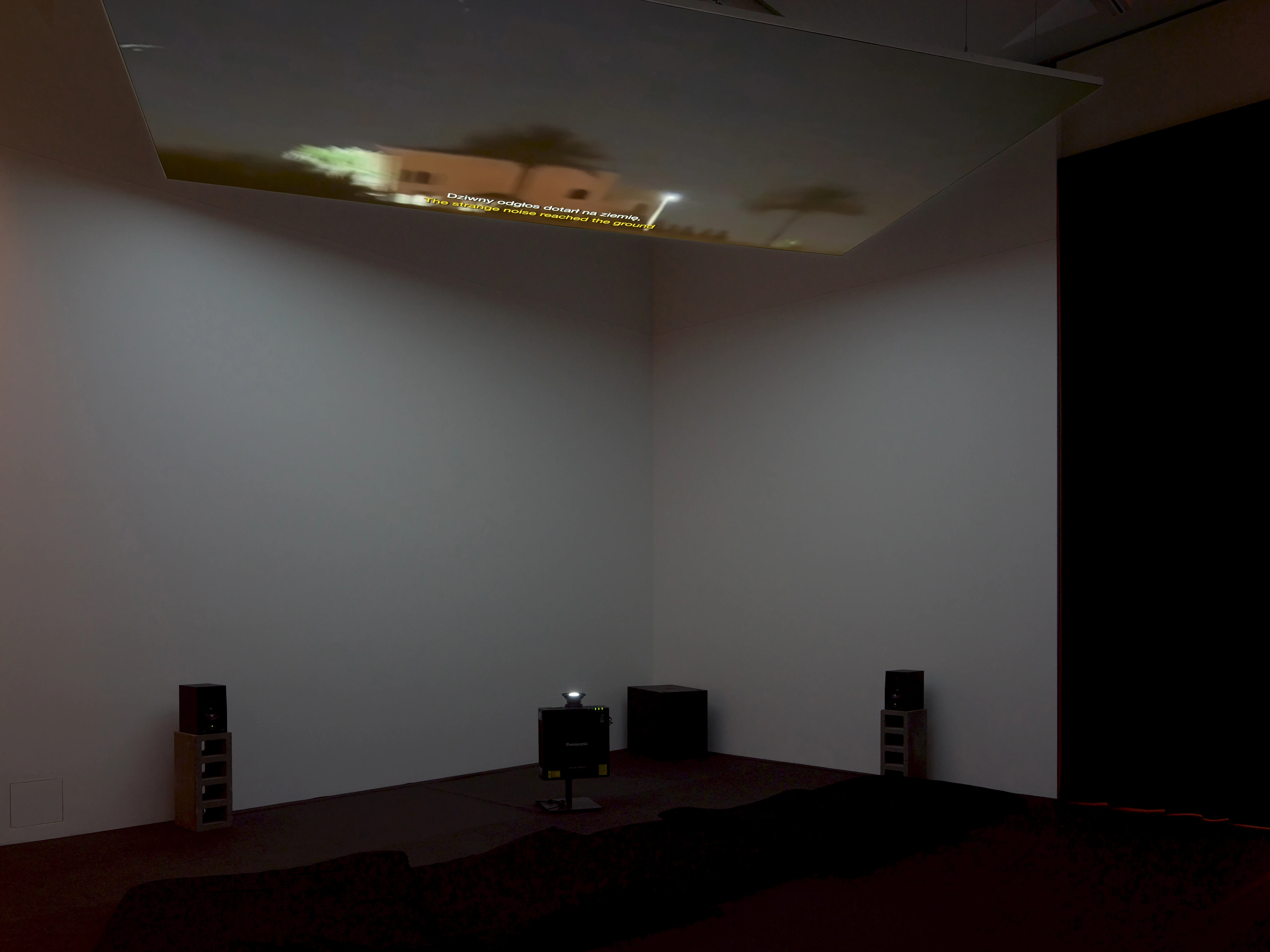
Lawrence Abu Hamdan, Diary of a Sky, 2024, installation view, Museum of Modern Art in Warsaw. Photo: Alicja Szulc
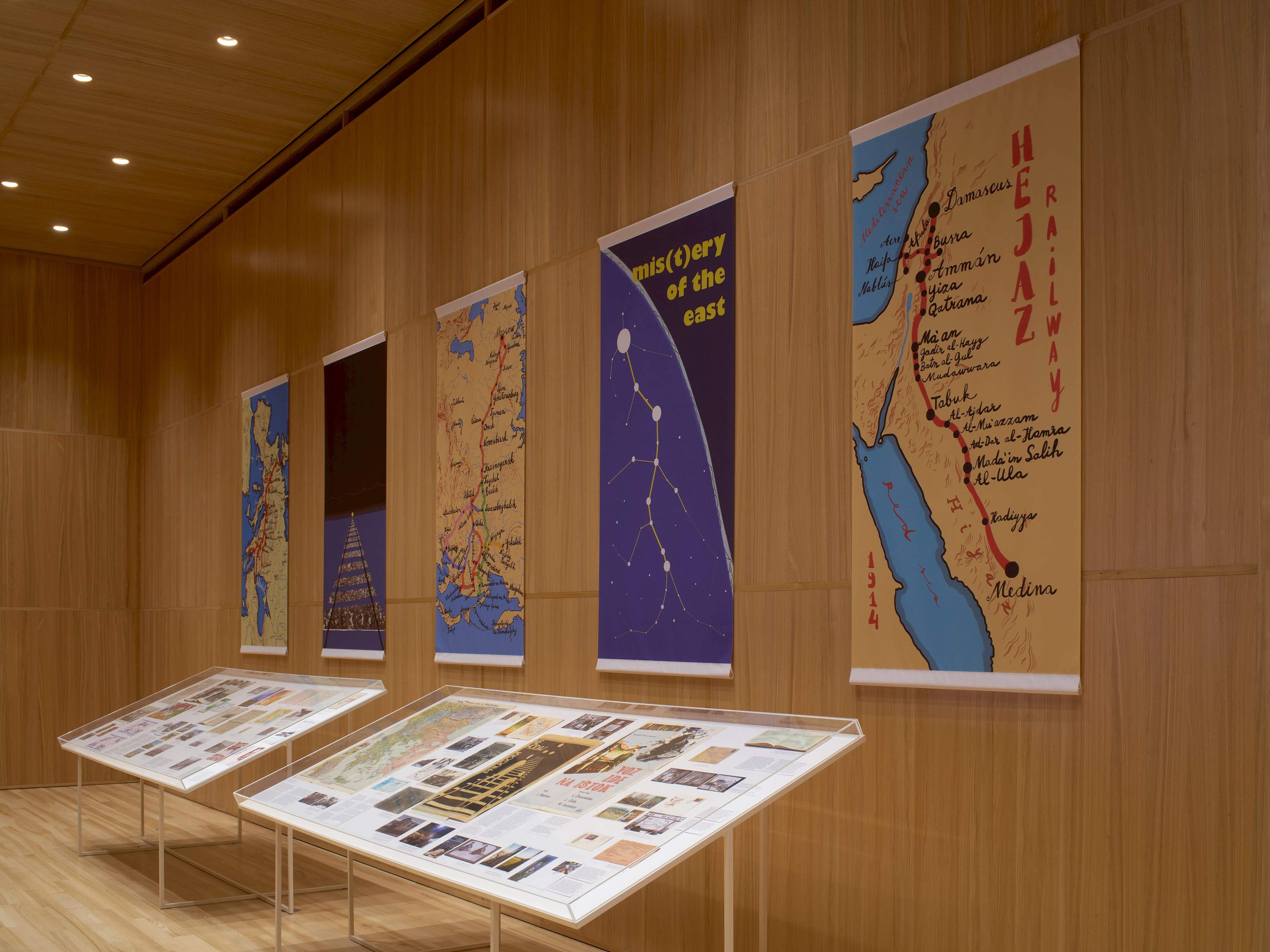
'East of East: Trains and the Making of the East'. Research by Bojana Piškur, installation view, Museum of Modern Art in Warsaw. Photo: Alicja Szulc
SK: In that sense, the titles of the subsequent exhibitions that comprised the Biennial form a kind of perfect trilogy: ‘Homelands and Hinterlands’1 and ‘A Bird That Cannot Land’2 also play with these distances: the bird’s-eye view, and the feeling of home underneath it. Distance is present in all three propositions and in many of the works that comprised these shows.
Nav, the term ‘Middle East Europe’ was something you put on the table. Is it something you thought about in relation to the process of the exhibition, or something you had been thinking about separately?
NH: I suppose it does engage with my focus towards Eurasia. In this case, though, it came out of attempting to write a description of what we were trying to do. It seemed a useful device to give clarity about the focus of the biennial. So it was a construct, a neologism of some kind, articulating a new and complex cultural and geopolitical paradigm. Thinking about different kinds of historical internationalist perspectives, this kind of multi-regionality is really important: to be able to construct new constellations, formulations and perhaps antagonisms. ‘East’ appears in both ‘Middle East’ and ‘Eastern Europe’, so in this instance ‘Middle East Europe’ works as a simple and useful device to describe something timely, layered and yet incongruous.
As we moved further with the exhibition, some of the projects that started to stand out were really about the historical relations and connectivity between the two regions, and the kind of proximity that did exist but might no longer do so – Bojana Piškur’s research project and archival display on historical railway infrastructures, in that sense, was very helpful.
NA: This was also an interesting example of an exhibition being a process of trying to figure out an idea. The term ‘Middle East Europe’ was put on the table as a proposition rather than a firmly worked-out construct. But the exhibition itself and some of the works brought to it – Bojana’s research into train networks, and I think of Lana Čmajčanin’s lightbox with overlaid archival maps of the Balkans – help us to think about what that construct might mean, in terms of how these different geographies, imaginaries, and political contexts can be brought together. You were saying that was picked up and developed further in Berlin?
SK: I think it was rather a reconfiguring along the same line. The Berlin iteration drew on a selection of works from the existing chapters, and the whole sphere of Middle East Europe grew out of that. That was the basis for the exhibition in Berlin, though it probably had a more poetic touch at KW. They had a proper public programme to unpack the ideas behind what we tried to put forward in Warsaw.
In Warsaw we didn’t only put Palestine and Ukraine in focus, we also tried to think larger, and that direction was also taken in Berlin. They worked with more points on the map in Eastern Europe and the Middle East, and they also took up music, or the sonic, as a form of expression. So they evolved the concept we started in Warsaw.
NA: In the exhibition there were seven commissions that were, for the most part, by Ukrainian artists. That was also a clear decision. Some works were drawn from the collections and archives of institutional partners of L’Internationale, others were loaned. We also invited different people to make proposals in specific contexts – Merve Elveren was key in that regard. But there was a very clear decision that the new work we commissioned for the exhibition would come from Ukrainian artists.
CE: I think that was inevitable once we decided to base the exhibition on the collections of confederation members, because the works of Ukrainian artists are absent from many of those collections. That is itself a comment on what we were saying about shifting the geopolitical and geocultural maps in the head, if you like, of the artistic or curatorial field. It was also definitely a decision to support artists in Ukraine, or artists who had left Ukraine but were still working with the context of Ukraine.
What would have been nice – and we did do this a little with Palestinian works when I was still in L’Internationale, when there was an attempt to buy some work collectively – is a discussion about buying Ukrainian work collectively. But I don’t know whether that happened after I left.
ML: I disagree. First of all, the commissions were not limited to Ukrainian artists. We commissioned three non-Ukrainian contributions, two of which were completed. Secondly, at MSN we have been regularly acquiring works by artists from Ukraine since at least 2012. The same applies to M HKA. So, this decision did not stem from a lack of prior engagement, but rather from a desire to present a narrative about Ukraine that was timely and critical of the unfolding situation.
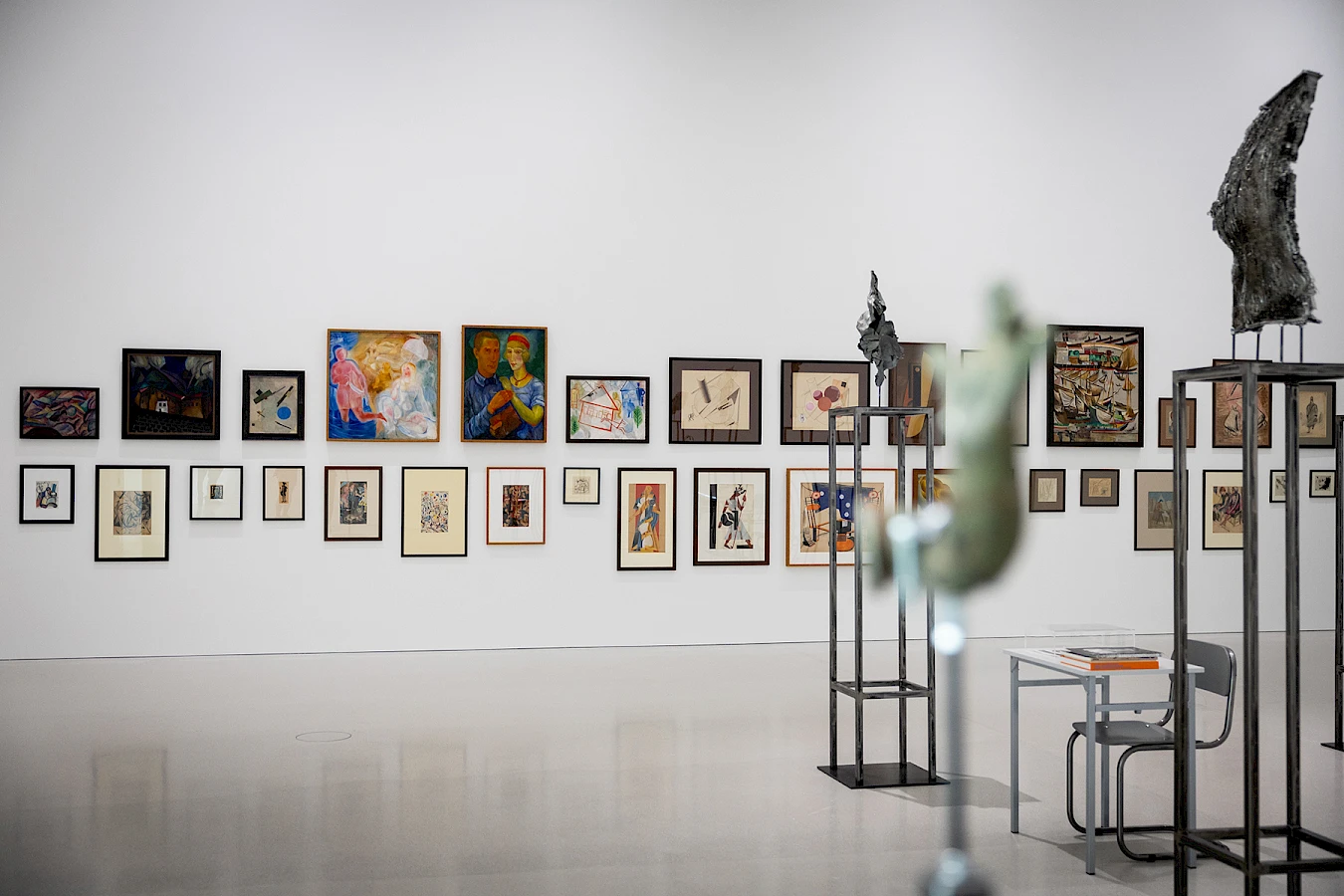
Exhibition view, ‘Near East Far West’ Museum of Modern Art in Warsaw. Photo: Alicja Szulc
Ukrainians had already lived through three years of war; perceptions of the conflict and its consequences were constantly evolving, and that process continues. We wanted to address the realities of the moment and stay as close to them as possible. That is precisely why we commissioned a work from Dana Kavelina, who tackled the subject of the forced mobilization of men in Ukraine – an issue that was not being discussed at the time and probably still is not openly debated there. It was not a narrative found in mainstream media. In Poland, at least, one mostly heard about the heroic stance of the country’s defenders, who are operating with limited resources. The same goes for the work by Nikita Kadan, which examined Ukrainian art history through the lens of Russian colonial policy.
CE: I take the point. Maybe, just to rescue myself a little, it’s also partly what Magda said: given that there had been three years of war at that point, a lot of the work in the collections perhaps felt less relevant, even if it was by Ukrainian artists. Or it could be by Ukrainian artists who had different relations with the war – the Kharkiv photographers, for instance. It’s a more complicated narrative than when those works were acquired. I think the truth is that new work needed to be produced, because the situation in Ukraine has changed so dramatically over the past four years. But I also think the absence from some collections wasn’t a coincidence: their focus is elsewhere. That’s maybe fair enough, but it’s interesting that relatively few collections represent this, and perhaps they don’t represent the Ukraine of today so much as the Ukraine of 20 or 30 years ago.
NA: Reflecting on this project from the context of L’Internationale, many colleagues have acknowledged that working through this exhibition, realizing it together, staging it at MSN and in Ukraine is a concrete model for what it means to work in solidarity with an internationalist perspective. It feels more relevant than ever to take this with us into the future.
I also feel, despite Nav ’s reservations, that both ‘Near East, Far West’ and ‘Middle East Europe’ are incredibly resonant as propositions: the former for its kind of reorientation without quite landing, and the latter for underscoring the necessity first to become aware of, then to redefine how we think and name this place or that, and to find new vocabularies to do so.
CE: I’d be interested to hear what the reaction was in Warsaw…
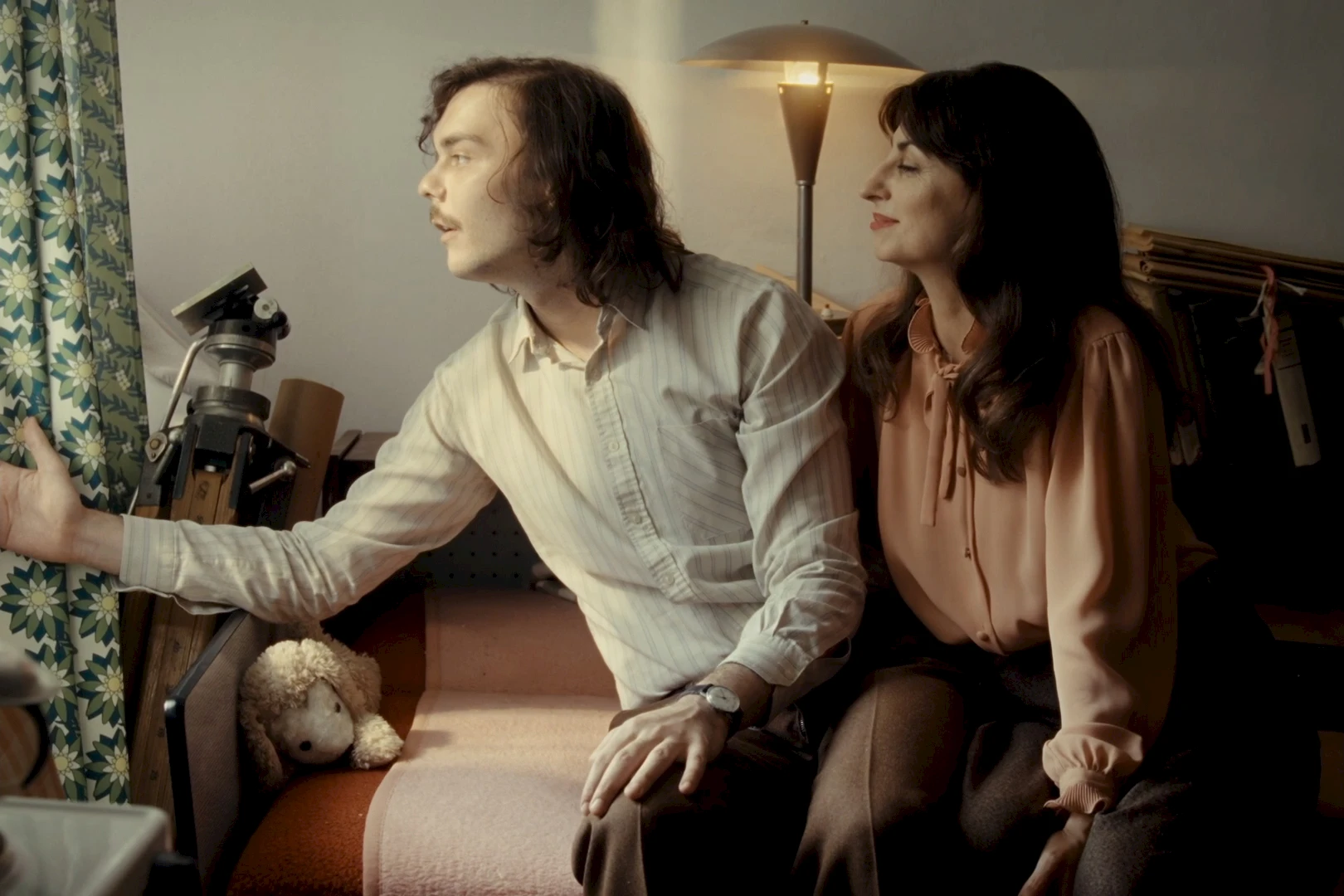
Asaf Gruber, Miraculous Accident, 2025 (film stills), 30 min, DCP. Courtesy the artist
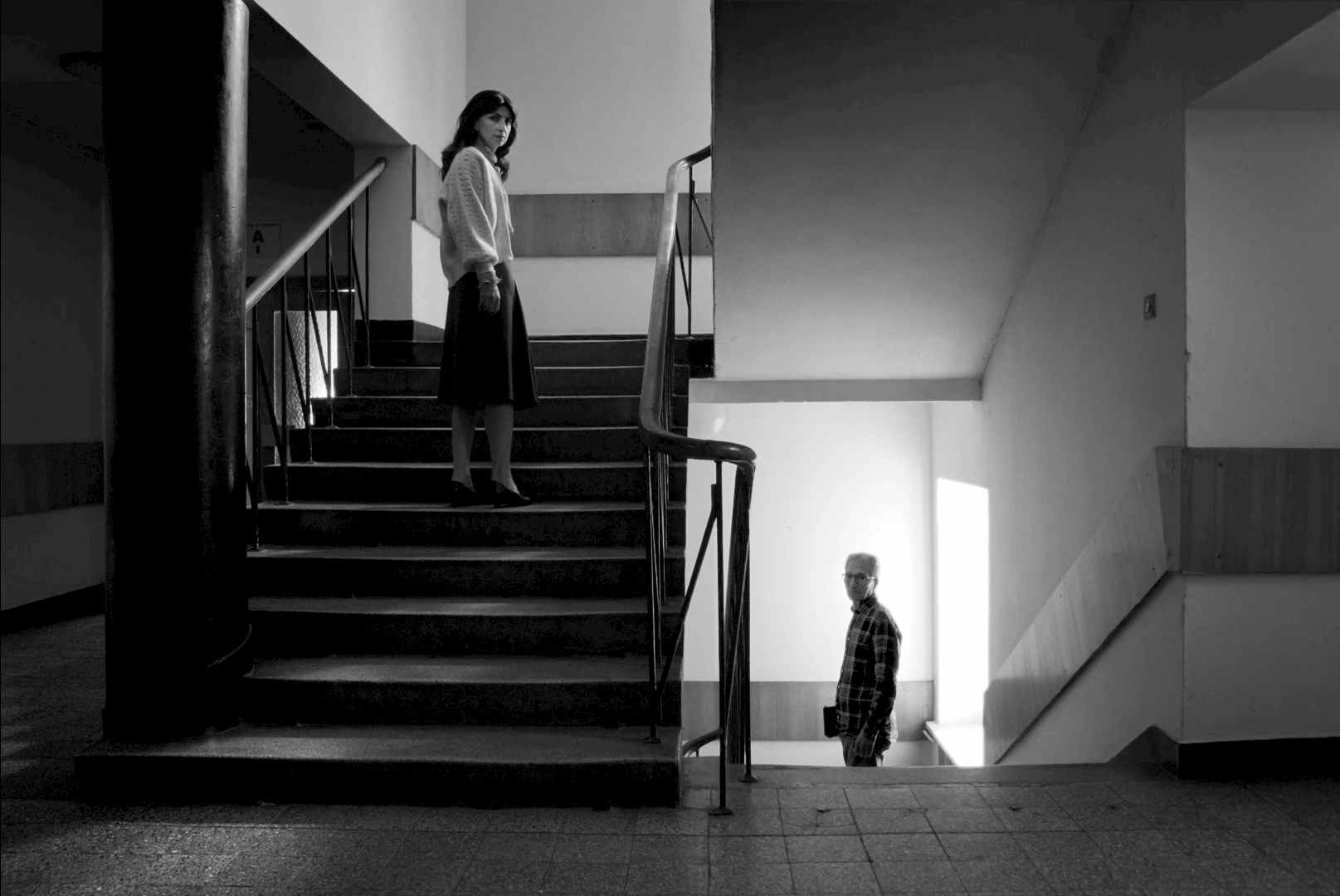
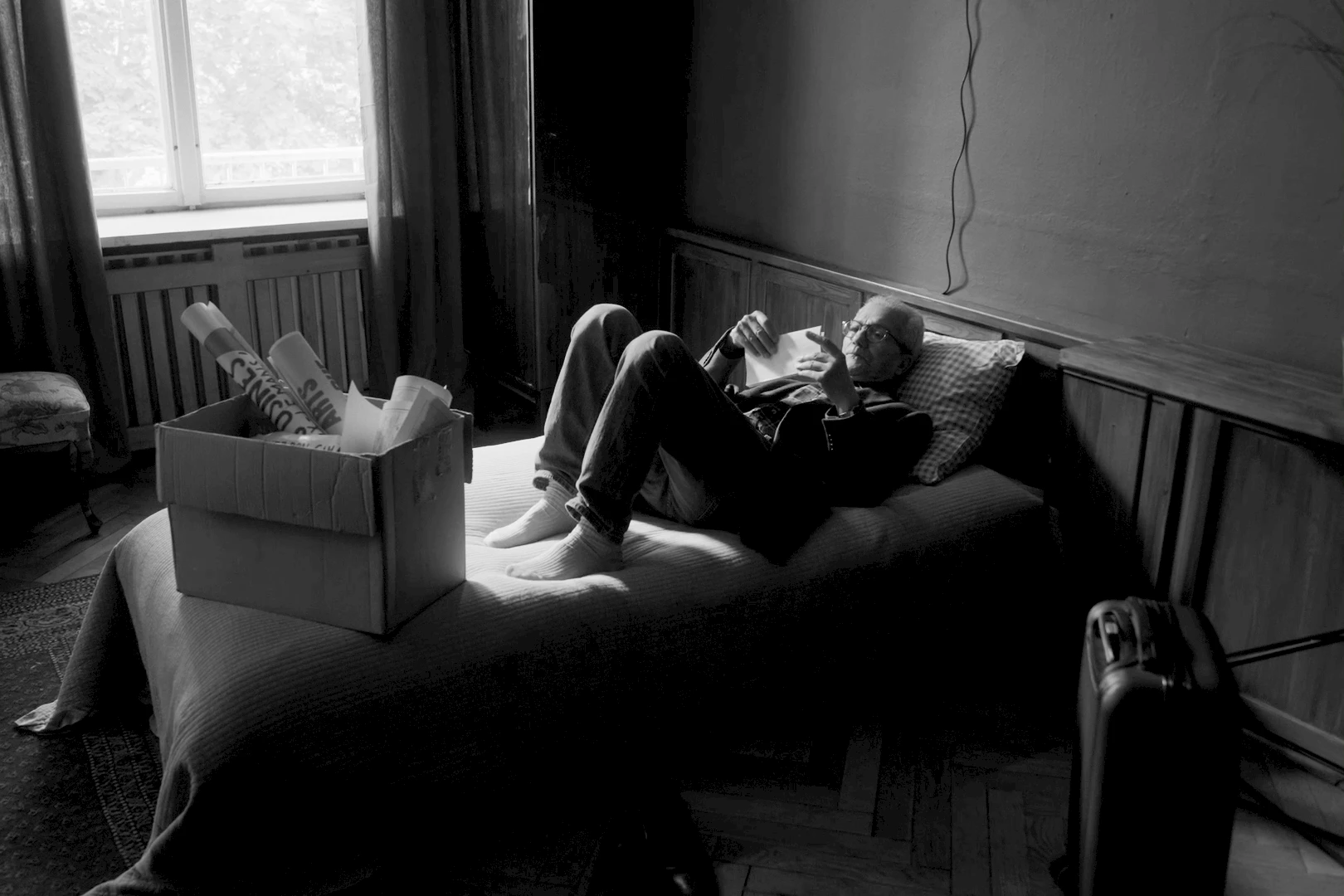
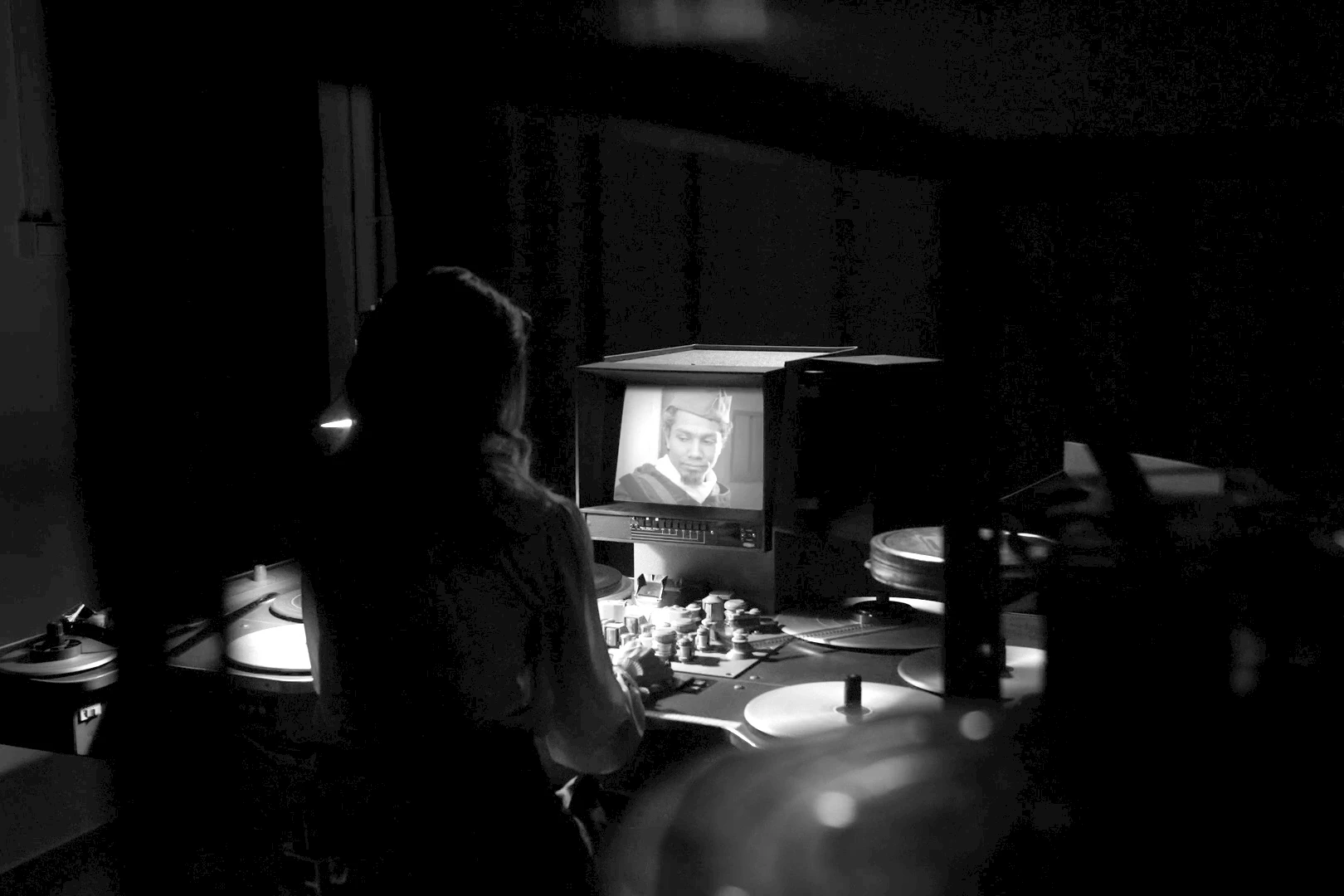
ML: The reach was quite significant. I don’t remember the numbers, but most of the main newspapers covered the exhibition. Equally important was the international reception of the exhibition. Frieze magazine included the show in its most important exhibitions of 2025, for example, which, despite what one thinks of these lists, means that the show gained international attention. Anecdotally, I often hear comments that this was the most compelling exhibition we have done at the museum so far. And this is said by people who don’t make easy judgments. I believe its strength lay in the attempt to show the complexity of the situation from multiple perspectives. Assaf Gruber’s work has played a major role in embedding the Palestinian issue in the history of Eastern European antisemitism, presenting it as a conflict ‘delegated’ to the Middle East, the price of which is now being paid by the Palestinians. The works of artists Oraib Toukan and Dana Kavelina allowed us to look at the issue of war from a humane, emotional perspective. We also managed to avoid the trap of exceptionalism, which, in my view, is crucial when seeking narratives that can unite rather than divide. The exhibition showed that both the issues of Palestine–Israel and those of the post-Soviet regions are part of a colonial matrix.
SK: What also happened in the year since the exhibition, and what complicates the question of Middle East Europe even more, is Iran. There is a famous line from the Soviet film White Sand of the Desert (1970): ‘The East is a delicate matter’. And now the question of Iran has also shifted the perception of the region, I would say. Iran is a rather divisive figure in this configuration, because it didn’t start the current war there: it was attacked by ‘imperial’ forces. But at the same time it is Russia’s close ally, and Ukraine has signed drone and air-defence agreements with Saudi Arabia and other Gulf states to counter the axis of Iran, North Korea and Russia. That’s another layer that was not present a year ago.
And oil prices are actually playing against Ukraine. Even when Iran, Russia’s partner, is attacked and pressured, it is Ukraine that takes the heat: they miss weapons from the USA; vital Patriot missile interceptors aren’t being delivered, fuel prices are rising and Russia profits from its oil exports. And energy logistics has become a new weapon that affects the West but reciprocally affects the East, particularly Ukraine at a time of war. The exhibition at KW didn’t have time to catch up with these developments either. We might have a chance to reflect on that through the next edition.
CE: It is not my call anymore, but this shifting geography, which relates to the titles and to a lot of what we’ve spoken about, could be something interesting for the future of L’Internationale as well. It makes a proposition that isn't the old colonial routes towards the West, but different imperial traces that go in different directions. It would be nice to think that this could be built upon and taken forward. It seems that ‘Middle East Europe’, perhaps more than ‘Near East, Far West’, is something that could have a life beyond this edition of the biennial. I was always struck that Kenneth Clark’s BBC series Civilisation3 starts in the valleys of the Tigris and Euphrates and then never goes back. According to him, all civilization begins in this one place, but he never has any curiosity about what might have happened there afterwards. Given what we know now that he didn’t, I think it’s very telling that he never goes back, because that’s partly where the problems start.
Related contributions and publications
-
Decolonial aesthesis: weaving each other
Charles Esche, Rolando Vázquez, Teresa Cos RebolloLand RelationsClimate -
Climate Forum I – Readings
Nkule MabasoEN esLand RelationsClimateHDK-Valand -
…and the Earth along. Tales about the making, remaking and unmaking of the world.
Martin PogačarLand RelationsClimatePast in the Present -
Art for Radical Ecologies Manifesto
Institute of Radical ImaginationLand RelationsClimateInstitute of Radical Imagination -
The Kitchen, an Introduction to Subversive Film with Nick Aikens, Reem Shilleh and Mohanad Yaqubi
Nick Aikens, Subversive FilmSonic and Cinema CommonslumbungPast in the PresentVan Abbemuseum -
The Repressive Tendency within the European Public Sphere
Ovidiu ŢichindeleanuInternationalismsPast in the Present
Related activities
-
–
Kyiv Biennial 2025
L’Internationale Confederation is proud to co-organise this years’ edition of the Kyiv Biennial.
-
HDK-Valand
Climate Forum I
The Climate Forum is a space of dialogue and exchange with respect to the concrete operational practices being implemented within the art field in response to climate change and ecological degradation. This is the first in a series of meetings hosted by HDK-Valand within L'Internationale's Museum of the Commons programme.
-
–Van Abbemuseum
The Soils Project
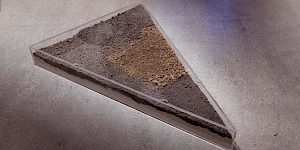
‘The Soils Project’ is part of an eponymous, long-term research initiative involving TarraWarra Museum of Art (Wurundjeri Country, Australia), the Van Abbemuseum (Eindhoven, Netherlands) and Struggles for Sovereignty, a collective based in Yogyakarta, Indonesia. It works through specific and situated practices that consider soil, as both metaphor and matter.
Seeking and facilitating opportunities to listen to diverse voices and perspectives around notions of caring for land, soil and sovereign territories, the project has been in development since 2018. An international collaboration between three organisations, and several artists, curators, writers and activists, it has manifested in various iterations over several years. The group exhibition ‘Soils’ at the Van Abbemuseum is part of Museum of the Commons. -
–VCRC
Kyiv Biennial 2023
L’Internationale Confederation is a proud partner of this year’s edition of Kyiv Biennial.
-
–MACBA
Where are the Oases?
PEI OBERT seminar
with Kader Attia, Elvira Dyangani Ose, Max Jorge Hinderer Cruz, Emily Jacir, Achille Mbembe, Sarah Nuttall and Françoise VergèsAn oasis is the potential for life in an adverse environment.
-
MACBA
Anti-imperialism in the 20th century and anti-imperialism today: similarities and differences
PEI OBERT seminar
Lecture by Ramón GrosfoguelIn 1956, countries that were fighting colonialism by freeing themselves from both capitalism and communism dreamed of a third path, one that did not align with or bend to the politics dictated by Washington or Moscow. They held their first conference in Bandung, Indonesia.
-
–Van Abbemuseum
Maria Lugones Decolonial Summer School
Recalling Earth: Decoloniality and Demodernity
Course Directors: Prof. Walter Mignolo & Dr. Rolando VázquezRecalling Earth and learning worlds and worlds-making will be the topic of chapter 14th of the María Lugones Summer School that will take place at the Van Abbemuseum in Eindhoven.