Land Art as Useful Art. Part 2: The Politics of Land Use
Deirdre O’Mahony is an Irish artist whose work centres on the politics of landscape, relationships between rural and urban areas, rural sustainability and food security. In this two-part interview, she discusses the different trajectories of her work with curator, writer, and educator Sebastian Cichocki, Head of the Postartistic Practice Studio at the University of Arts in Poznań, Poland. Part 2 focuses on the politics of land use from multiple perspectives. This text was published on the occassion of, ‘a (sort of) retrospective exhibition by Deirdre O‘Mahony consisting of an interview, found objects, artworks’, 17(Joy), a project space located at Schleifmühlgasse 17, Vienna (10 April – 10 June 2026).
Sebastian Cichocki: We are currently witnessing a troubling trend across the EU, whereby far-right movements are appropriating the grievances of farmers and weaponizing the concept of ‘blood and soil’ to bolster exclusionary nationalist identities. We are seeing the impact of globalization and the climate crisis on marginalized farming communities in Europe, making them vulnerable to populist propaganda. Your X-PO (2007) and SPUD projects suggest an alternative form of ‘rootedness’ that is more open and internationalist. How can postartistic artists work within these land relations to provide a counter-narrative to populist simplifications of rural life?1 How can we reclaim the contemporary rural imaginary, under what, during the 2023 EVA International, I labelled ‘post-pastoral’ conditions?
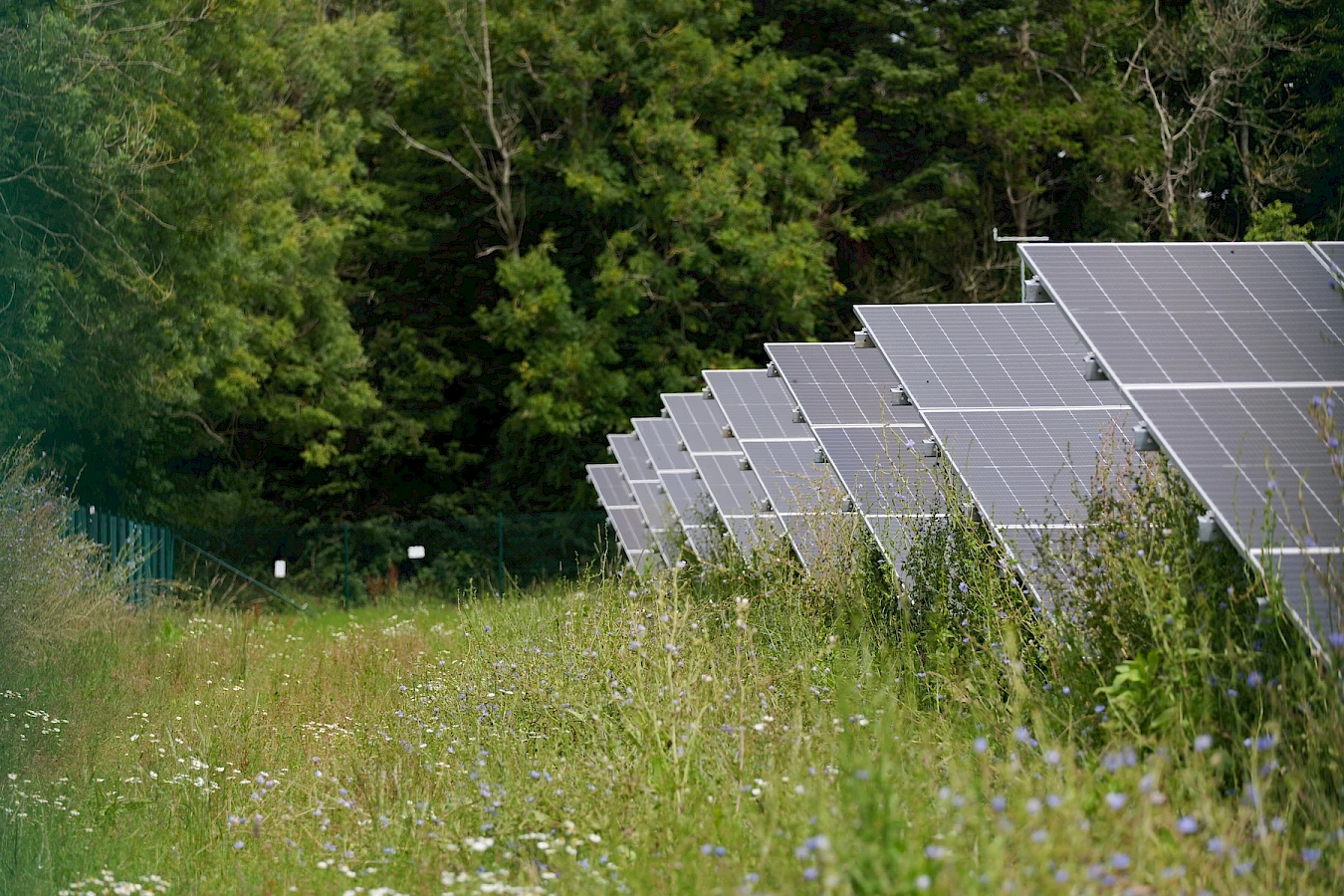
Deirdre O'Mahony, The Quickening, production still, solar farm and chicory, 2023. Photograph: Tom Flannagan. Courtesy the artist
Deirdre O'Mahony: For over thirty-five years I have tried to problematize idealized notions of ‘the rural’, and to understand and articulate ways in which we are positioned in and by narratives of the past. My primary concern is to create space for critical reflection in a post-pastoral context, an imperative as now, we face the collapse of biodiversity, climate change and the precarity of our food system. Whether landscape and representation (Erratics, Wrap), ideas of belonging and ‘community’ (X-PO), biopolitical power and food security (SPUD), biodiversity and climate change (FARM [2012], The Quickening), or the collapse of small-scale farming (The Message [2024– ]), these are global issues and by default have an internationalist outlook. So, regardless of the form, all of my projects reflect on land relations. As rural-urban polarization increases I am preoccupied by trying to create space for empathy between different publics. There is a misconception that farmers are self-serving, concerned only with subsidies, that, in part, is a consequence of decades of contradictory agricultural policies that have slowly eroded farmers’ self-worth. The casual disregard of tacit knowledge and a relationship with land and holdings – developed, in many cases, over centuries – frightens me. That knowledge might not be relevant to maximizing economic returns in a globalized marketplace, but is deeply connected to sustainable agriculture and maintaining biodiversity within small-scale food production.
SC: In 2023, I worked in Ireland as a guest curator for EVA International, investigating the history of gleaning – the practice of collecting surplus crops after a harvest and distributing them to those in need. One outcome of ‘The Gleaners Society’ was the creation of Snaky River Forest (2023), a permanent micro-forest planted on the grounds of Thomond Primary School in Limerick. The work is now part of the EVA Legacy programme, which questions the temporariness of the production system of international biennales. Could you describe your approach to this work, and how the issues of authorship and stewardship were resolved during the process?
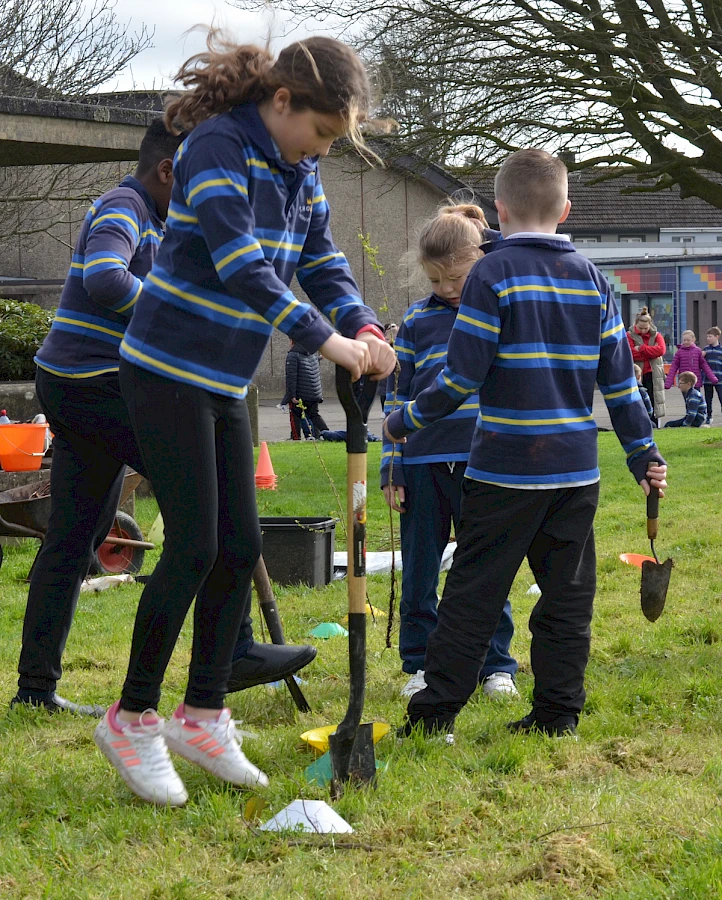
Planting Snaky River Forest, Limerick, 2023. Photograph: Matt Packer. Courtesy EVA International
DO’M: Snaky River Forest was one of those rare projects where the work makes itself. You and I had several conversations about the potential of invisible nodes of action that create a generative space for learning from one another. I proposed initiating a micro-forest project with a school in Limerick. The idea was inspired by a conversation with Ray Ó Foghlú of Hometree, a charity based in Clare, who works to establish and restore resilient habitats, focusing on native temperate rainforests. Ailbhe W. Drohan of the EVA team got in touch with Thomond National School, which has a very active after-school gardening club. After a visit to the school, and with support from the gardening club teacher Sarah Mackay, who introduced the idea, the children decided to create a snake-shaped micro-forest, headed by a circle of willow slips filled with chestnut, hawthorn, alder, willow, spindle, hazel and holly, and one climbing rose, calling it the Snaky River Forest. Hometree supplied the trees and Ray Ó Foghlú advised the gardening club on the planting and care. The children also did a workshop and made a map of the forest which was exhibited at Ormston House as part of EVA, showing the location of each of the trees. So the project was a collaboration between Thomond National School, EVA, Hometree and me. The forest now serves as a biodiversity haven and learning space in the school, a legacy of a process that so often disappears when the biennale ends. The drawing made by the children now hangs in the school, a map of the different trees planted and a reminder of ‘The Gleaners Society’ of EVA 2023.
SC: Let’s focus on The Quickening (2024), your major work of recent years. The methodology here is quite unique, involving experts from different fields – the work is open-ended and has undefined boundaries, even though it has reached a visual climax in the form of a musical film that you take on tour, screening it in community centres and barns across rural Ireland. In this context, the artwork functions as a hedge school, an informal, clandestine space for communal learning. Could you elaborate on the various phases of working on this piece, which I believe is unique, and what your expectations are for it?
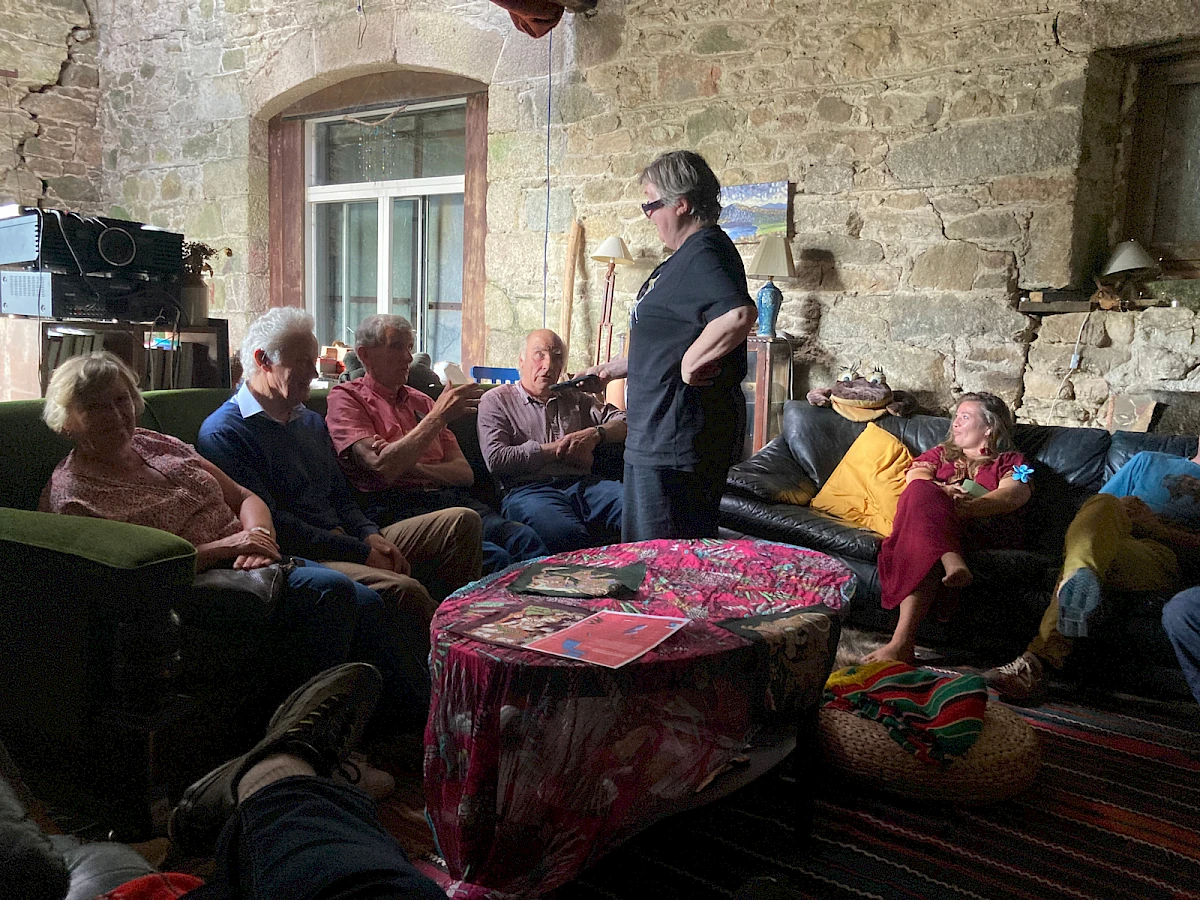
Screening of The Quickening in Wicklow, 2024. Photograph: Michael Higgins. Courtesy the artist
DO’M: I made The Quickening after finishing two other films: The Persistent Return, a consolidation of research from the SPUD project, and Speculative Optimism (2024), a poetic meditation on the ‘lost’ history of the animal fodder crop sainfoin, which drew on research in the archives at the Museum of English Rural Life. Both films were ways of thinking about farming, colonial history, Enlightenment thinking and the green revolution. I wanted to make a third film about farming, climate change and biodiversity loss and started to research Tony Fry’s writing about ‘the sustainment’, an equivalent movement to the Enlightenment in its capacity to transform systems of thought and behaviours.2 Faced with the inescapable fact of climate change and global warming, how can actions, behaviours and thinking change from the model of unsustainable, voracious consumption associated with global capital? I began the ‘Sustainment Experiments’ (2021) as a way to publicly reflect on actions for change using institutional and non-institutional spaces to unpack some of the issues around farming and food production. The first experiment was the PLOT 1 (2021) planting outside VISUAL in Carlow which used potato ridges to break the ground in advance of planting it with sainfoin. The ridges were made in the shape of hexagram 15 of the I-Ching, produced in answer to the question: What is the future of sustainable food production in Ireland given climate change? The answer:
Earth over Mountain. Modesty creates success. Balance and adjust things by cutting through pride and complication. Reduce what is overdeveloped. Don’t try to advance yourself. Beware of conceit and arrogance. Be consistent and resilient. Don’t follow policy. Do the right thing.3
PLOT 1 was a public trial of the crop. I held an open workshop on the legume, inviting Suzanna Crampton, who became a key collaborator on The Quickening (2024), and agricultural scientist Stewart Meikle, as well as Cotswold Seeds (UK), who have been researching how best to grow the crop. A residency at UCD Earth Institute and Butler Gallery, Kilkenny further informed my research into soil health. In tandem with that research, I visited farms within a 50-km radius of my home. This research led to the idea of creating feast events in Dublin and Kilkenny where the conversation between farmers and those who affect their livelihoods would be recorded, and this would form the basis of the lyrics – the libretto – for the film. As a way of thinking through how this might happen, I decided to make a twenty-four-piece dinner service for the feast during lockdown while listening to podcasts about contemporary folk music, as I wanted to work with singers on the next film.
SC: You started to gather people around the food on the table and have them talk freely, which is the most natural way of confronting diverse ideas and bonding. But there was more to it than that.
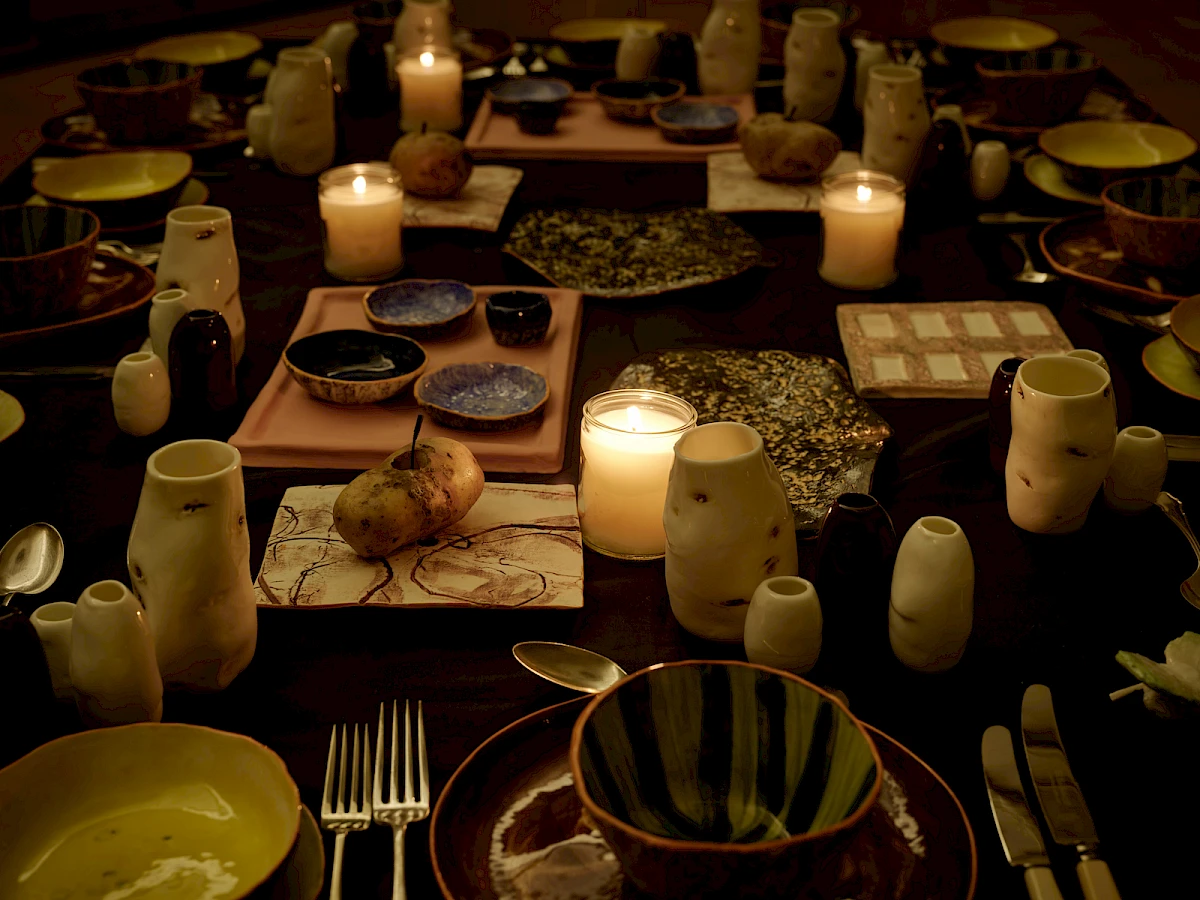
Deirdre O'Mahony, Sustainment Experiments Eat Food Policy feast, 2023. Photograph: Ros Kavanagh. Courtesy the artist
DO’M: The two feasts each had a specific theme: soil health in Kilkenny, and farming policies in Dublin. In order to encourage participants to leave preconceived ideas at the door and think differently about how we might navigate food production over the next quarter-century, I created two roles: the archetypal bean an tí (woman of the house), and a fool who did not get a seat but instead prowled the edges of the dining room, disrupting with particular sounds – whistles shaped like birds and the rattle of bells on a papier mâché mushroom. These props were part of costumes designed and made by Bog Cottage Collective.4 Knives were engraved with quotes from my research and a menu devised where each course framed a particular topic – the first great climate crisis in Neolithic times; food fetishization; the control and sale of seaweed rights, etc. The intention was to provide a kind of over-saturated sensory experience (minus alcohol!). Microphones embedded in potatoes caught the conversations and these were transcribed. By 2023 I had accumulated enough material to begin to process the conversations from the dinners into a script with writer Joanna Walsh, who worked with me on an initial draft, later edited further into a libretto for The Quickening (2024).
SC: Apart from human voices, you also collected other sounds to create a tapestry of the rural soundscape.
DO’M: I started to accumulate sounds and voices of the non-human world with sound recordist John Brennan in 2021, gathering those of insects, ants, dung beetles, miner bees, birds, bats, sheep, cows and bats on farms in Kilkenny, Waterford and Tipperary. Conversations with Suzanna Crampton allowed me to test the methodology I would later use on The Quickening. Suzanna was able to safely trap beetles, allowing us to record the extraordinary sound of their breaking down fresh dung before we returned them to the fields. The recordings allowed me to experiment with her words and the sounds of the farm for The Song of the Farmer and the Dung Beetle (2021), an important step in testing the methodology.5 Over eighteen months, cinematographer Tom Flanagan and I filmed life on farms in the south-east of Ireland from multiple perspectives, combining abstract images shot with a drone and handheld close-ups of soil life with further footage by Saskia Vermulen. I wanted a mix of perspectives to reflect the land and its inhabitants affected by the unseasonal droughts, floods and erosion brought on by accelerating climate change. The project was funded by the Arts Council and the film commissioned and exhibited at the Douglas Hyde Gallery, with additional sculptural elements: a cattle feeder which appeared in the film, a potato-ridge measuring stick given to me by Loy Association member Gerry Mullins, feeding troughs used as tables for the feasts filled with my research books, and PLOT banners painted with the I-Ching hexagram (15), all designed to situate the film within a farming context. There was also a programme of workshops and an online response by Joanna Walsh, drawing on the feast conversations. It was important that the work be seen within the farming context in which it was made. A simultaneous ‘Walls & Halls’ tour of community halls, farms and other world venues took place in tandem with the exhibition, with newspapers designed to highlight the process of making the film as well as the farmers who contributed to making the work.
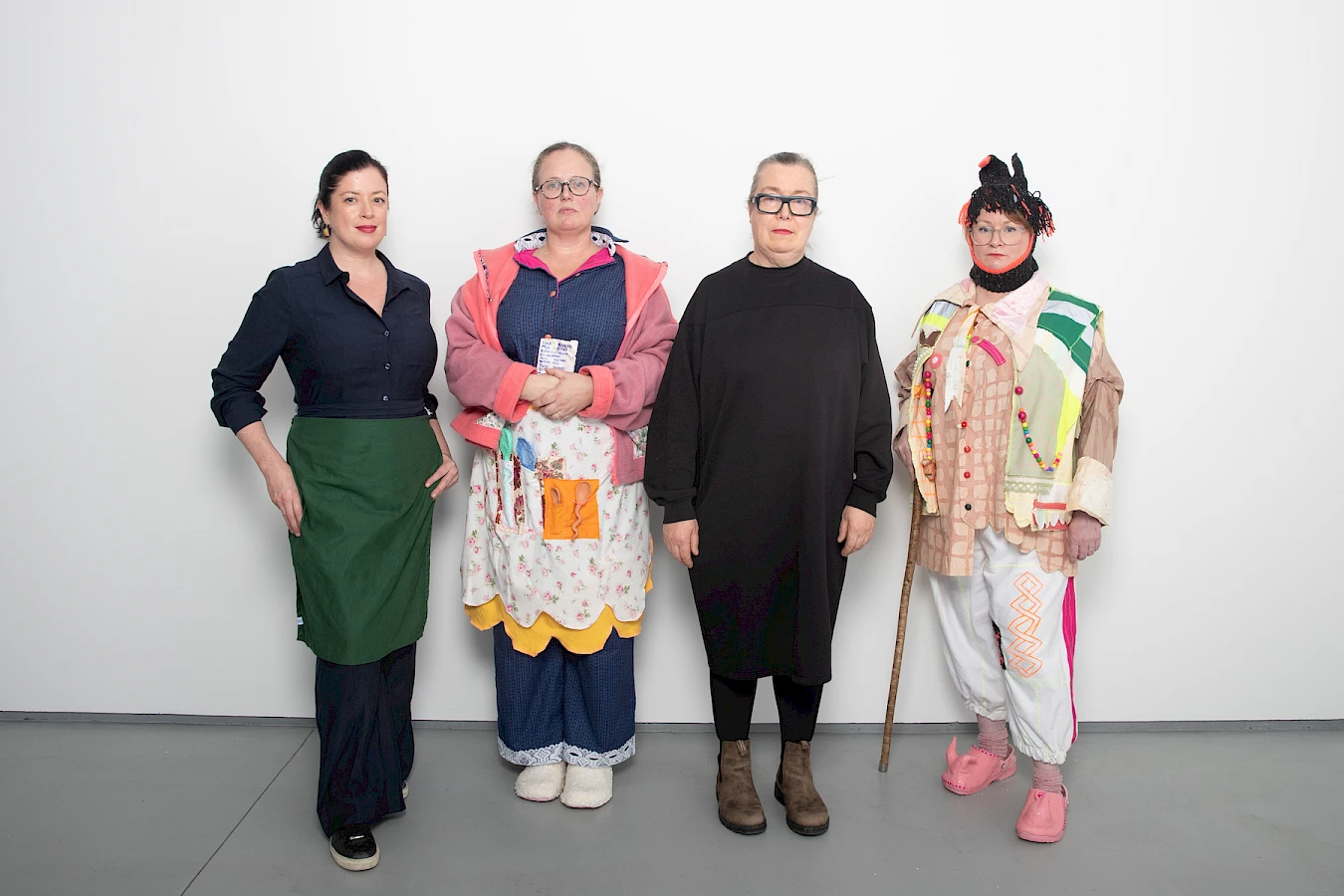
Deirdre O'Mahony, The Cook, Bean an Tí, Artist and Fool, Butler Gallery, 2022. Photograph: Roisin Doherty. Courtesy the artist
SC: Building further on the model of the hedge school, if the traditional academy has failed to address the climate catastrophe, could such a project provide the specific, tacit knowledge necessary for devising survival strategies? In your collaborative public enquiries, it seems that you are resurrecting a form of emancipatory art school pedagogies similar to those of María Teresa Hincapié in the Sierra Nevada de Santa Marta, and Bonnie Ora Sherk’s Crossroad Community in San Francisco, which dismantle hierarchies of class, expertise and discipline. Do you believe in the effectiveness of such tools?
DO’M: I think disciplinary hierarchies have created the disastrous situation we now find ourselves in with the climate crises and biodiversity collapse, and that another mode of aesthetic representation is required: a process based on dialogue and intersubjective exchange that can unfold in place over time, in extended interactions with different communities. Because what I do is ‘art’, I am not perceived as representing agricultural or scientific or environmental sectoral interests. The current round of farm and community hall screenings I am doing of The Quickening (2024) is a very different affair. The film acts as a catalyst for sharing experiences away from the public gaze, in more private, farm-domestic situations, allowing people space to speculate about what they think will work best in the future, or to highlight what they know through their particular knowledge… knowledge which is almost inevitably disregarded and at odds with the kind of policies they’re expected to follow. So to answer your question, the shift to a postartistic practice that began with the X-PO project represents a way of working that allows disregarded, overlooked, tacit knowledge to come to the fore, which is exactly what is needed to address the climate and biodiversity crises.
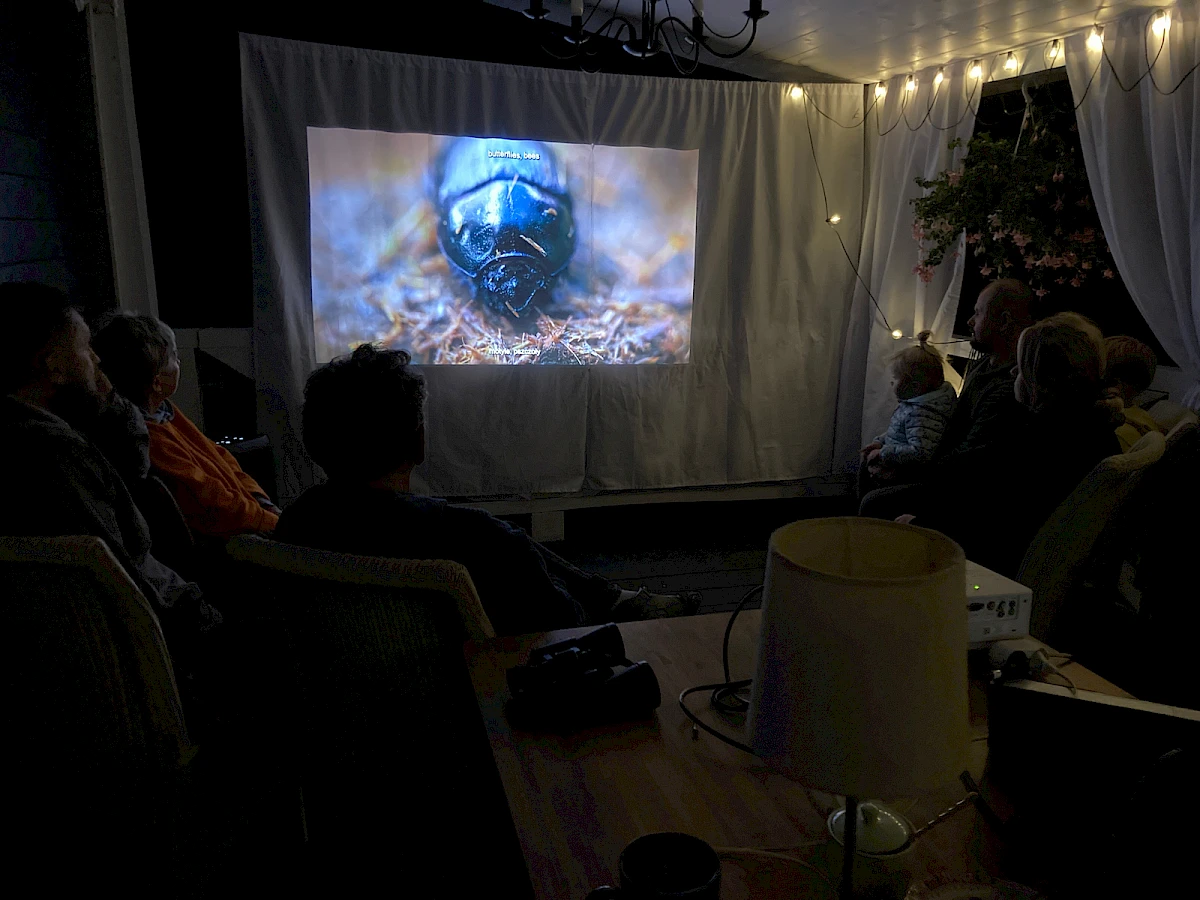
Screening of The Quickening in Polesie, Poland, 2025. Photograph: Marianna Dobkowska. Courtesy The Ujazdowski Castle Centre for Contemporary Art and the artist
SC: And what is your individual role in this system as an art worker?
DO’M: I speak to people. I listen to what they have to say. With permission, and together with performers, writers, composers, cinematographers, sound recordists and others, I draw on those conversations to have voices heard that would not otherwise be heard. My work moves across and between different disciplinary fields, a situation that can create uncomfortable, uneasy relationships; yet inevitably, the more I doubt myself, the more possibilities and ideas open up. I have to live with the anxiety and self-doubt that comes with a way of working where I don’t know what is possible. As an art worker that is all I can do – have faith in the process!
SC: The Quickening utilizes a sung libretto derived from the transcribed disagreements and shared anxieties of farmers, scientists and officials. By moving from the documentary to the operatic, you are using music as a way to bypass the dead ends of current discussions on agricultural policies, opening up something more transfigurative, fuelled by emotions. Could you tell me more about the role of music in your open-ended works, especially in relation to your collaborations with folk musicians and other sonic storytellers and experimentalists?
DO’M: When I was an art student in London from 1976 to 1979, punk happened and I could see, in real time, the power of music to dismantle prevailing cultural attitudes. I was hanging out with a bunch of Northern Irish, Irish and London Irish people who were all involved in the music scene, in bands or running record companies. I later worked in a collectors record shop, Rock On, for several years, and evenings in the pub were spent talking about music and politics and inevitably touched on Irish identity. Shane MacGowan and Spider Stacy were part of this scene and later formed The Pogues. Shane’s very public embrace of his identity as a London Irish artist was significant, and as the band became popular, public attitudes to the Irish changed, both in Ireland and the UK, something I thought could never happen.
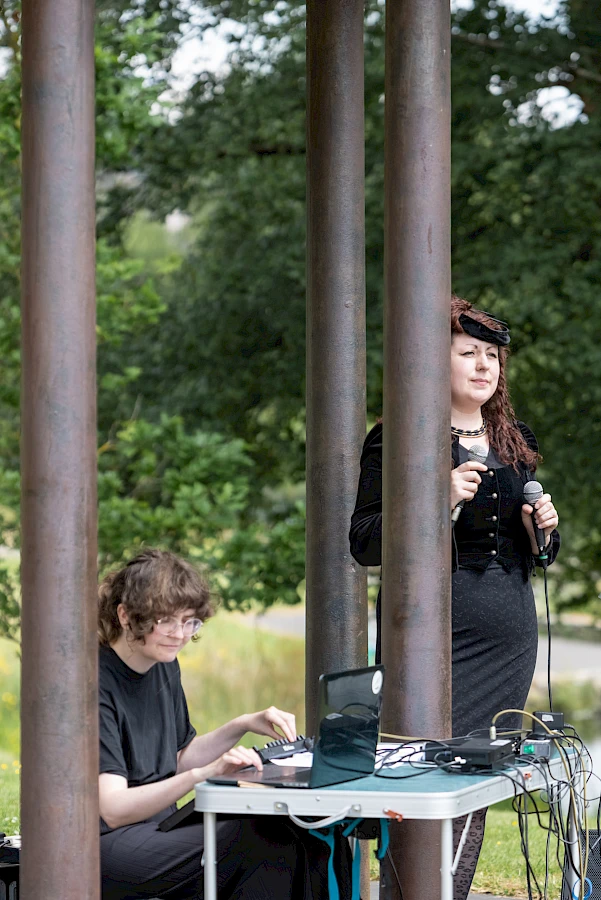
Deirdre O'Mahony, The Song of the Farmer and the Dung Beetle, performance with Siobhan Kavanagh and Michelle Doyle for Kunstverein Aughrim, 2023. Photograph: Stu Murray. Courtesy the artist
Although music has always been really important to me personally, it has taken a long time to find a space for it in my practice. I started using it in The Persistent Return, where much of the sound was improvised by Branwen and Julie Kavanagh, who were given directions and musical references, as well as the emotional tone of the work; and Alexandru Trendler’s electronic score was a counterpoint to their voices. I made Speculative Optimism at the same time, and used film soundtracks from agricultural training documentaries in the archives of the Museum of English Rural Life, who gave me permission to sample parts of the Vaughan Williams-style soundtracks in the film. There has been a resurgence of interest in folk music in Ireland over the past ten years, especially among younger musicians. Activist bands like Lankum, and singers Eoghan Ó Ceannabháin and John Francis Flynn have been writing new songs and reinvigorating old songs to address issues like housing rights. When I conceived the idea of The Quickening I wanted the recorded conversations to be heard differently, and very early in the project decided that they should be sung to music that referenced the folk tradition, alongside the sounds of soil and animal life. The new wave of folk artists all struck me by their energy and political and ethical concerns, a reminder of those early days of punk. I reached out to Eoghan Ó Ceannabháin, viola and fiddle player Ultan O’Brien and Branwen Kavanagh, and all agreed to be a part of The Quickening. At the same time, I was doing a residency at the Fire Station Studios in Dublin and one of the other residents was Michelle Doyle, an activist and sound artist. I met Siobhan Kavanagh through artist Kate O’Shea and loved her voice. She sings in a Dublin accent, which was important, highlighting the relational dynamics between the rural and the urban and vice versa. I began working with both artists on The Song of the Farmer and the Dung Beetle, commissioned by Eco Showboat, and tested the process I would later use on The Quickening at Kunstverein Aughrim’s 2023 ‘Summer Preview’. We worked on the early stages of The Quickening together and the initial structure for the music for the project. This was subsequently worked upon collaboratively with the other singers and musicians over intensive rehearsals, before being recorded at Hellfire Studios in the Wicklow mountains. Working with these sound artists, musicians and singers not only defamiliarized the words, it brought an emotional pitch and tone to the sound which helps to bypass the impulse to tune out the content of the words. An additional layer of sounds of insects, animal and soil life was added in the mix, over and above the audio samples used live by Michelle Doyle when recording, before editing the imagery to the soundtrack.
SC: Natalia Beylis is a unique artist: born in Ukraine, raised in the USA and now living in rural Ireland, she incorporates unusual domestic and natural sounds into her compositions. One of her musical pieces used bark beetle engravings on wood as a graphic score.
DO’M: I met Natalia through a project at X-PO by Tom Flanagan called Folk Radio (2020), which I had advised on. Her work has a kind of seductive magic to it that has influenced the early-stage development of The Message. I was working with an artist called Annie Hogg, who introduced me to a work Natalia wrote called ‘Lost – for Annie’. The mix of ambient sound intrigued me – there’s a kind of material tangibility to it. I can almost taste and smell the places she records. She has a capacity to bypass what we think we know about places, and brings a sensory and material presence to the works she makes. It was always in the back of my mind to use music and sound as a strategy to consider the subjective, emotional relationship with land. When I found tape recordings in the post office before opening X-PO, it was the potential of sound that struck me most – sounds that brought you into a different space and time. I made an audio work from some of the tapes and revisited those sounds for Prelude (2020), the first chapter of an audio work, POST, as a way of reflecting back on the project. Singing was also a really important part of what happened there – the Monday evening singing group was the most popular of the clubs.
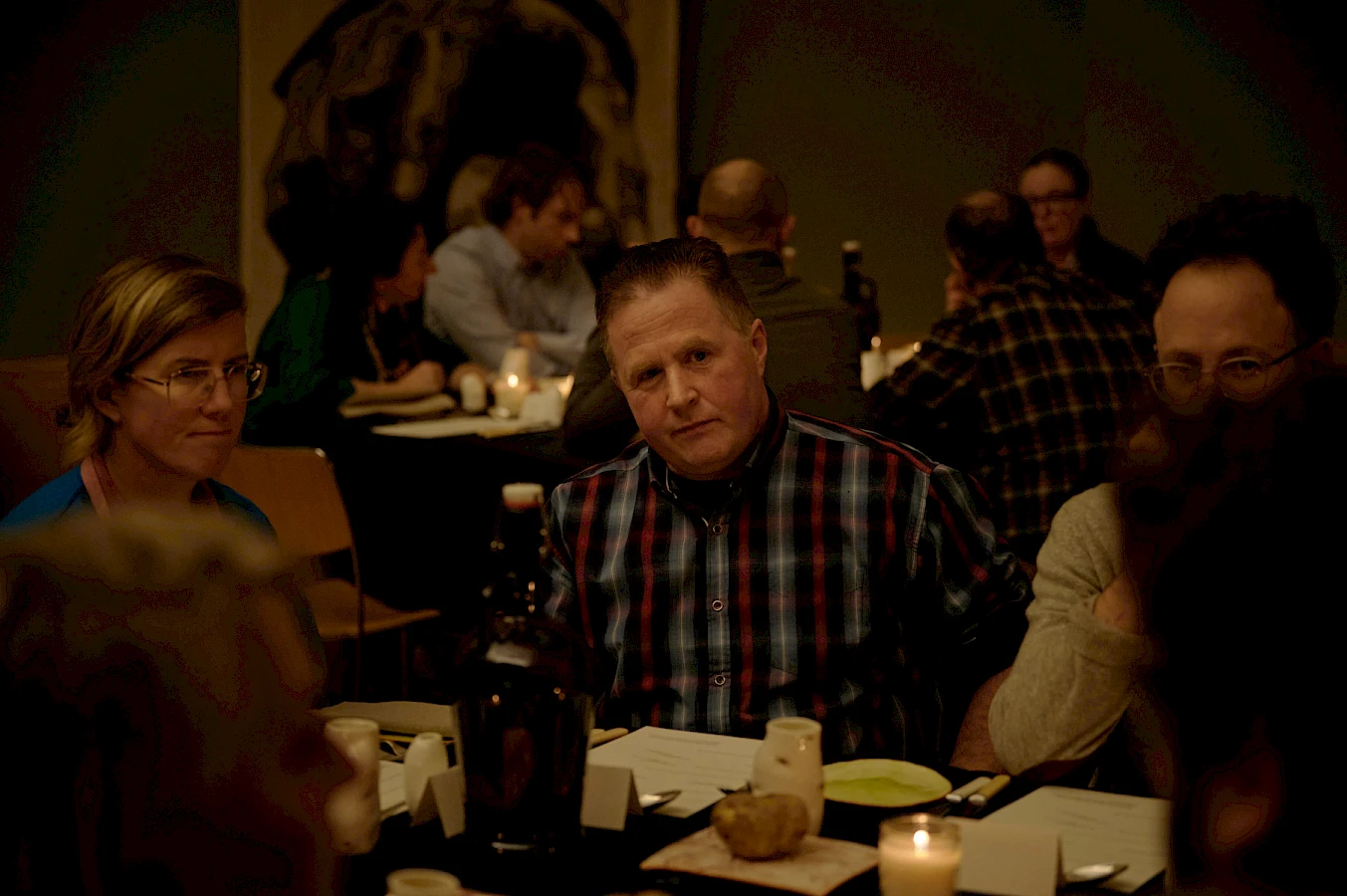
Deirdre O'Mahony, Sustainment Experiments Eat Food Policy feast, City Assembly Rooms Dublin, 2023. Photograph: Ros Kavanagh. Courtesy Kunstverein Aughrim, IMMA and the artist
SC: Traditional Irish music and soundscapes are also inherently connected to pre-Christian beliefs and rituals. These could also be regarded as decolonial and emancipatory acts today. I remember working with Kian Benson Bailes, a former member of the queer rural Bog Cottage Collective – also your collaborators. Kian introduced me to the Cailleach, a deity associated with wind, weather and landscape formation. This connection between Irish folklore and changes in nature may be intertwined with the experience of the queer body. I would like to ask you about your connection to pagan agrarian themes, not only as folklore, but also in terms of reclaiming sovereignty over the soil in the face of colonial and industrial histories.
DO’M: A good friend of mine is a member of Na Cailleacha, a group of older women artists, some of whom have a background in the feminist movement in Ireland in the 1970s. I am not a member of the group, but they have been important to my thinking through their very public embrace of the identity of the Cailleach. Feminist and queer thinking on the experience of the body – whether the aging female hag or the queer body – have been profoundly important to my work, and articulating different, other ways of being and understanding the world. I am wary of idealized notions of Old Gaelic mysticism: intellectually, I love the connection to the natural world embedded in the stories and pisrógs (superstitions) about the land in Gaelic culture, but want to push back against the idea of a kind of authentic, pre-modern, constructed idea of pre-Christian Ireland that inspired the Gaelocentric tradition of cultural naturalism. Those ideas embalm rather than actively renegotiate the past. Tom Duddy, a poet and Marxist art critic, argued that notions of native impulse, local genius, and the Celtic imagination were given priority within Irish culture. I have a certain wariness about the use of folkloric motifs when it comes to the representation of the agency of the more-than-human world. I am more interested in practices associated with the land that are deep within the muscle memory of the body, non-verbal ways of knowing and understanding the material world embodied in small gestures of respect – whether encounters with other human beings or as markers of the presence of the non-human world.
SC: Your comments on the wariness surrounding the spiritual and mystical aspects of the work resonate with the pragmatic and down-to-earth writings of Rasheed Araeen, who is renowned for his intellectual rigour in the field of eco-aesthetics. He wrote that art must move beyond its own history and become part of the history of the Earth’s survival.
DO’M: I agree with Rasheen; art must actively play a role in the survival of the earth. Philosopher Kate Soper argues that a re-sensitization towards nature might be achieved ‘less by the application of new forms of awe and reverence of nature, but rather to extend to it some of the more painful forms of concern we have for ourselves’.6 Soper’s notion of ‘painful concern’ for the non-human natural world is present in The Song of the Farmer and the Dung Beetle and The Quickening as well as older works like the paintings and photographs I made in the early 2000s, Visqueux and Surfacing (2007), that drew on images of the slimy residues of algae choking rivers and lakes, eutrophication caused by excessive nutrients from agricultural fertilizers and septic tanks. The Surfacing photograph of Lake Inchiquin was taken over this period an entry point for thinking through Soper’s ‘re-sensitization’ and my subjective connection with, and distance from, nature.
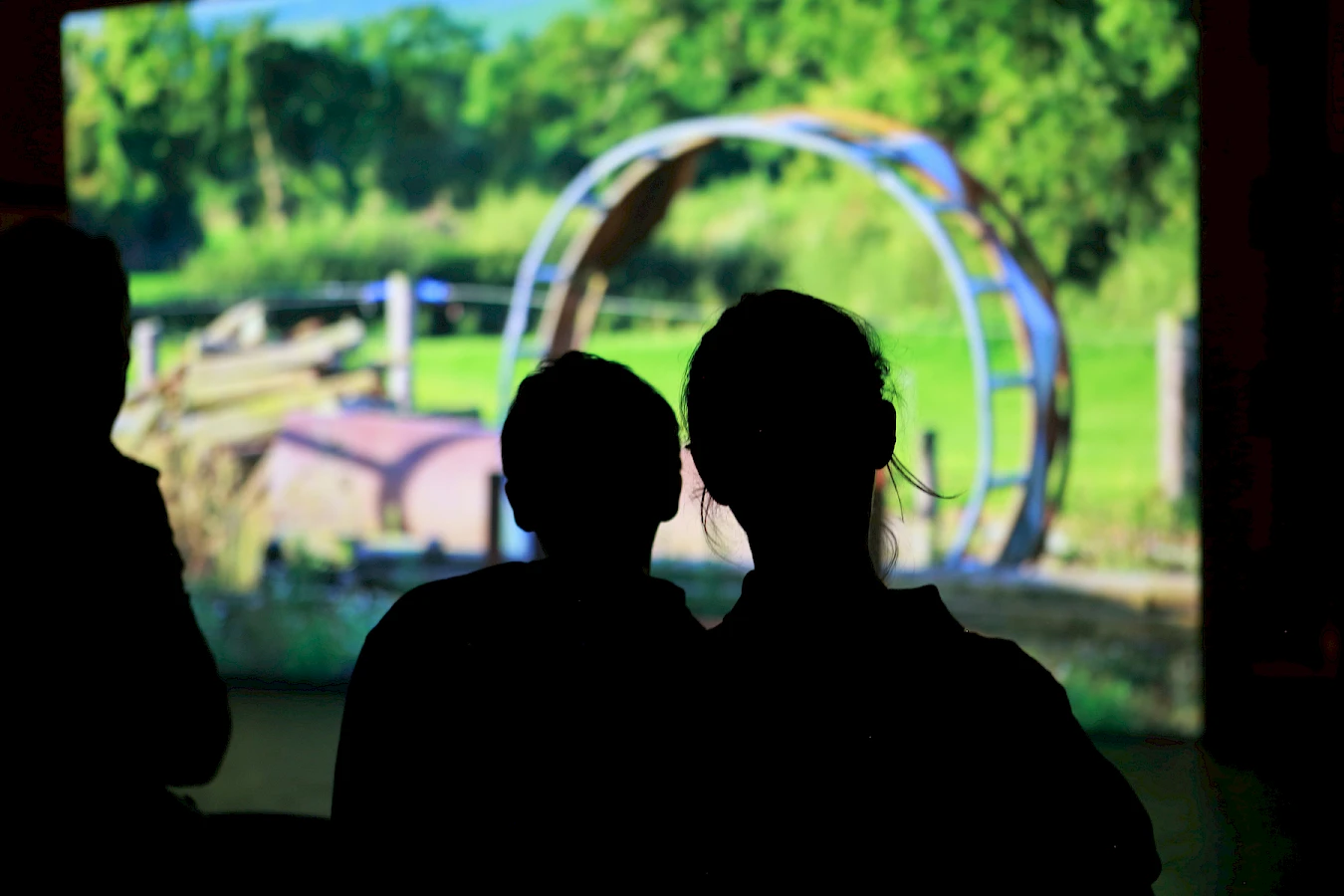
Deirdre O’Mahony, Installation view of The Quickening, The Douglas Hyde Gallery, 2024. Photograph and courtesy the artist
SC: Your current work, The Message, will, again, be based on the power of music to convey political imagery. Similarly to the methodology of The Quickening, it will be based on transcribing farmers’ conversations into songs. The plans are ambitious: the intention is to present The Message to the European Parliament and other forums. What is the actual message that you want to convey? How are you working with different farming communities this time, and who else is involved?
DO’M: When I began screening The Quickening in rural communities, I received a text message from a farmer who said:
I just wanted to say that the film is very thought provoking … . Sometimes, being a farmer can be a bit depressing, as it seems like the whole world is blaming us for all the problems that we have. The reality is that the system is broken and it’s all of us together that have driven that to happen. This is one of the first things I have seen that addresses the issue in a way that non-farming people should be able to understand it.7
The text brought home the sense of isolation and alienation being experienced by farmers, particularly those working on small farms. Some people who saw the film were wary and suspicious about what the film was trying to communicate, given the range of perspectives present in the work. Others could identify with what was said. That started screenings of the film on farms or in community halls, and it became a catalyst for conversations about the future of small-scale farming. The statistics about the decline of small farms across Europe are sobering, with a drop of almost 40 per cent from 2005 to 2020. The decline is accelerating, and the social and environmental consequences of this collapse is what I hope to communicate in The Message. Agricultural industries have a voice when it comes to policy. Apart from Via Campesina, there is no organization that can lobby for the small-scale producer. So my intention is really to use The Message to highlight the issues affecting small-scale farming across Europe and communicate what farmers think they need in order to survive into the future. If we are not to face a homogenized European landscape of industrial food production and fields denuded of soil insect and bird life, we must support small-scale farming. Manoeuvrings by the far right to co-opt farmers’ unhappiness with EU policies is gaining momentum across Europe, particularly since the EU-Mercosur agreement. Seeing Like A State (1998) by James C. Scott is a book I always return to.8 His analysis of state power, modernist ideology and the value of complex forms of local social order and mētis – place-based knowledge – highlight questions that are largely absent from public debate: Whose knowledge counts within state agricultural policies? Why is traditional small farming knowledge associated with failure? How effective are the high modernist aspirations driving European agricultural policy and whose interests are served, particularly as the outcome of these policies becomes clear with climate change and biodiversity crises? These and other questions have helped to activate conversations with farmers and find out firsthand what they think is necessary to survive in Ireland and Europe. Working with writers in each country, the conversations are being transformed into songs and will be performed either within the European Parliament or outside the building in Brussels, in hopes that this allows the words and ideas communicated to be heard by policymakers and the emotional impact bypass resistance to the message. This is urgent. I have a network of artists, curators, and institutions, relationships developed over the years, that are helping to realise the project. These connections are crucial to the development of the work. I am not a composer, or a songwriter or a linguist; I am dependent on the willingness of others to collaborate.
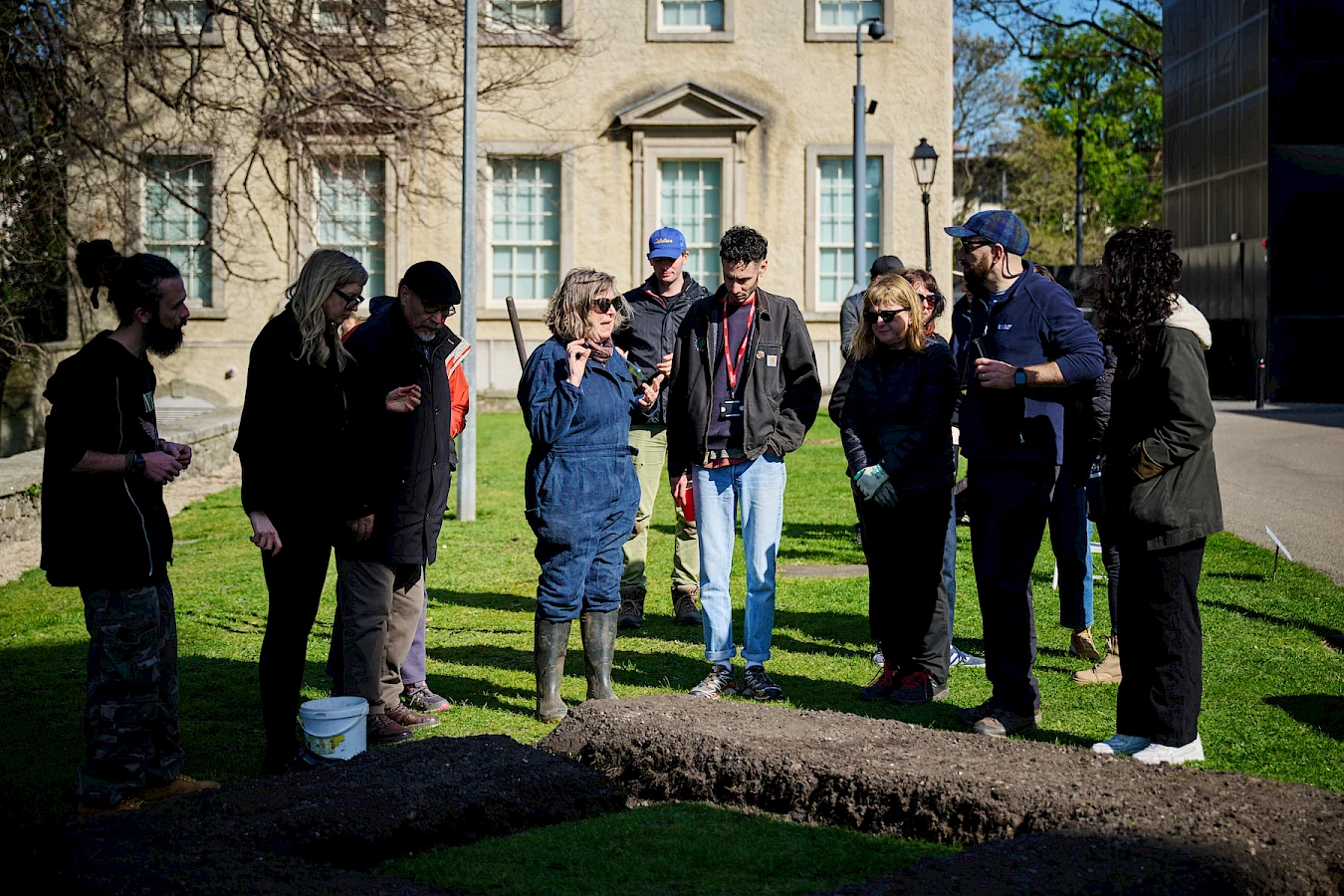
Deirdre O'Mahony and horticulture students from Inchicore Community College, The Model Plot, Dublin, 2025. Photograph: Ros Kavanagh. Courtesy: IMMA. Irish Museum of Modern Art
SC: I would like to emphasize this collective aspect of your work, which facilitates the exchange of knowledge, particularly between experts from different fields. Could you explain what a Mind Meitheal is, and where the term ‘meitheal’ originates from in Irish culture?
DO’M: ‘Meitheal’ is the Irish word for collective labour in the rural countryside, held whenever a group of people are needed to complete a task: whether bringing in harvest, or turf, or covering a polytunnel. I originally conceived the idea of a Mind Meitheal as a knowledge exchange process at X-PO, to engage and activate diverse responses to the challenges of contemporary rural life. I see these exchanges as a space where people can step outside sectoral constraints and norms to consider alternative approaches, skills and practical experiences in relation to specific questions and situations. The Message has a transdisciplinary Mind Meitheal team to support production and shadow the project engagement to ensure that the process is ethical, fair and rigorous. The research will also be used for journal articles and the production of a walking policy document for the EU Agriculture Commissioner. The first meeting took place online in early 2025 to inform and critique the methodology and future meetings will provide a critical space for the unfolding process and final outcome.
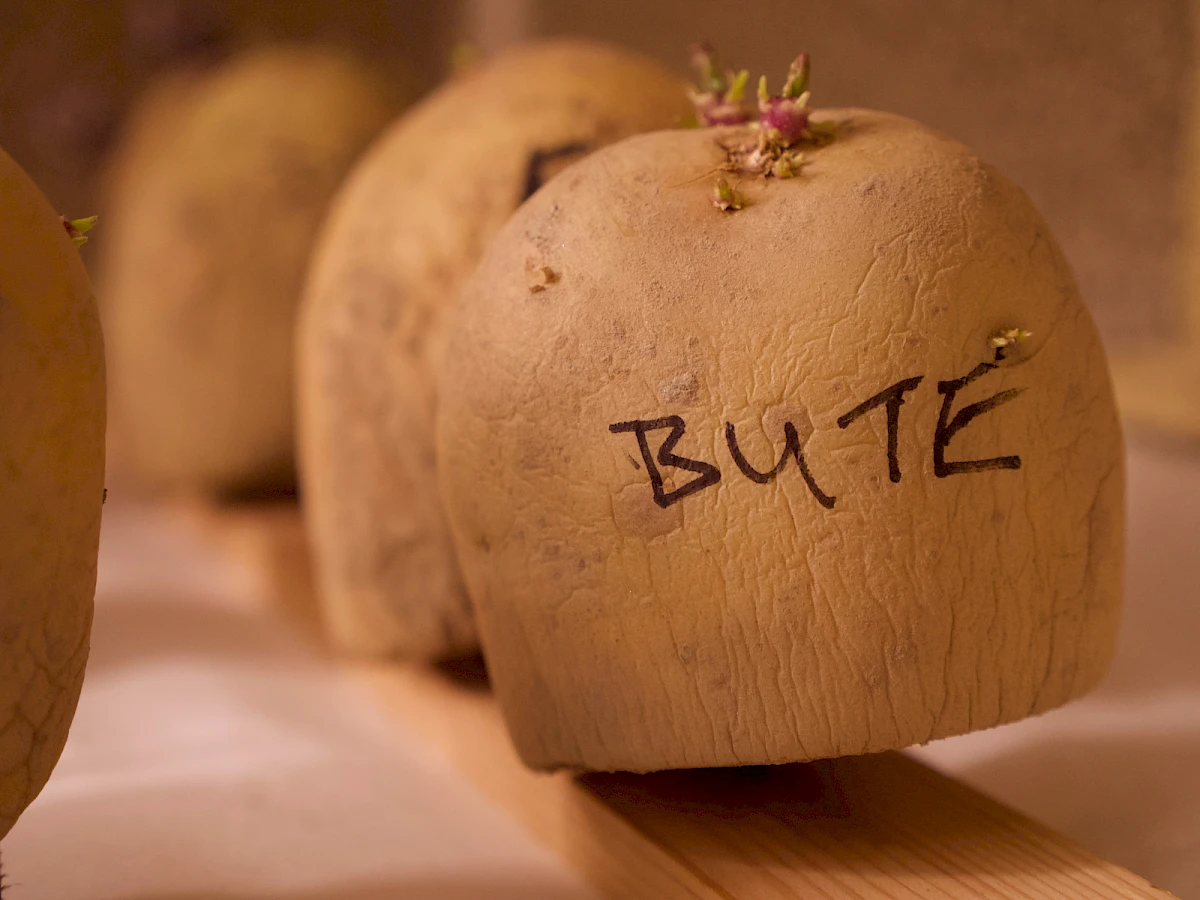
Deirdre O'Mahony, Detail of Potato Tops, Potato Centre, The Persistent Return, film still, 2018. Photograph: Tom Flannagan. Courtesy the artist
SC: Finally, I would like to ask you about the new generation of Irish artists, such as the Bog Cottage Collective and Eimear Walsh, who investigate queer ruralism and craft, and who often adopt direct activist positions. Do you sense a shift in focus from nostalgia for the Irish landscape to a more radical engagement with the land? How do you envisage the further development of the aforementioned ‘land art as useful art’?
DO’M: Making artworks about rural places was not considered relevant to contemporary art practice back in the 1990s. There was some critical discussions in pockets around the country, for example the ‘Art in Rural Places’ programme in Kerry in the mid-1990s. However, it was not until the ‘Ground Up’ (2003) public art programme began, soon followed by ‘Shifting Ground’ (2006), a partnership project between Galway-Mayo Institute of Technology (GMIT), led by me, and Clare County Council Arts Office, led by artist Fiona Woods, that artistic research and practice began to be noticed. The partnership resulted in a series of seminars for a module for GMIT students working in rural places, an exhibition (Local Local’) and a conference (‘Shifting Ground’). Lucy Lippard was invited to do a keynote but was unable to attend, but Suzanne Lacy, Translocal, Kristina Leko, Grizedale Arts, Fernando Garcia Dory, Simon Sheikh and others came and presented. I had read The Lure of the Local: Senses of Place in a Multicentered Society (1997) in 1998,9 and it was something of a revelation to come across somebody writing about contemporary, activist art made beyond urban contexts. A decade later, after I opened X-PO I sent her a zine I made about the project and received a postcard from her about post offices and how her local post office had been closed for fifty years. After that we exchanged emails, meeting in New York at the Creative Time Conference, and in Santa Fe. I started writing public ‘Letters to Lucy’ about the pressing issues of the time, and used them in exhibitions as a way of surfacing issues that could not find public space within wider media. The mid-2000s marked a moment when some artists in Ireland pushed back against the urban-centred art life and took on the challenge of living, working and engaging with issues arising in rural places. Artists like Laura Fitzgerald, Miriam O’Connor, Orla Barry, Eimear Walsh, Anna McLeod, Christine Mackey, Cian Benson Bailes, Maitiú Mac Cárthaigh and others, and recent institutional exhibitions like the RHA’s ‘A Growing Enquiry – Art & Agriculture, Reconciling Values’ have focused on artists addressing issues around farming. Artists Michele Horrigan and Sean Lynch began Askeaton Contemporary Arts. They hold ‘Welcome to the Neighbourhood’ every year in Askeaton, with artists, Irish and international, invited to engage with a small rural town in West Limerick. For EVA 2023, ‘The Gleaners Society’ brought an international dimension and perspective through the works exhibited, modelling ways for artists to own and make contemporary artworks about the experience of growing up, living and working with the complexities of rural places. Over the past twenty years there has been a shift towards more radical, messy, complex, process-based artworks that highlight the impact of current policies on landscapes and land use, including the sale of natural assets like seaweed, gas reserves, and the extraction of rare minerals by global consortiums. So to answer your question on how I envisage the further development of ‘land art as useful art’, I see artists all over Ireland using aesthetic processes that perform like a canary in a mine: calling out the grand schemes and enterprises that will undermine and destroy fragile ecosystems for short term gain. I see artists deploying whatever means necessary to amplify the voices of growers, makers, doers, activists and farmers who understand the land through practice, observation and care, and are vigilant and sensitive to the losses and ever-increasing absences in and on the earth. I just hope the canary’s song is heard.
SC: Thank you for this enriching conversation. As a final note, I would like to invite readers of L’Internationale Online to an exhibition which serves as an accompaniment to this text. Entitled ‘a (sort of) retrospective exhibition’ (2026) by Deirdre O’Mahony consisting of an interview, found objects, artworks, traces, ephemera and sounds’, it is a part of the 17(Joy) programme in Vienna and opens on 9 April 2026. Thank you.
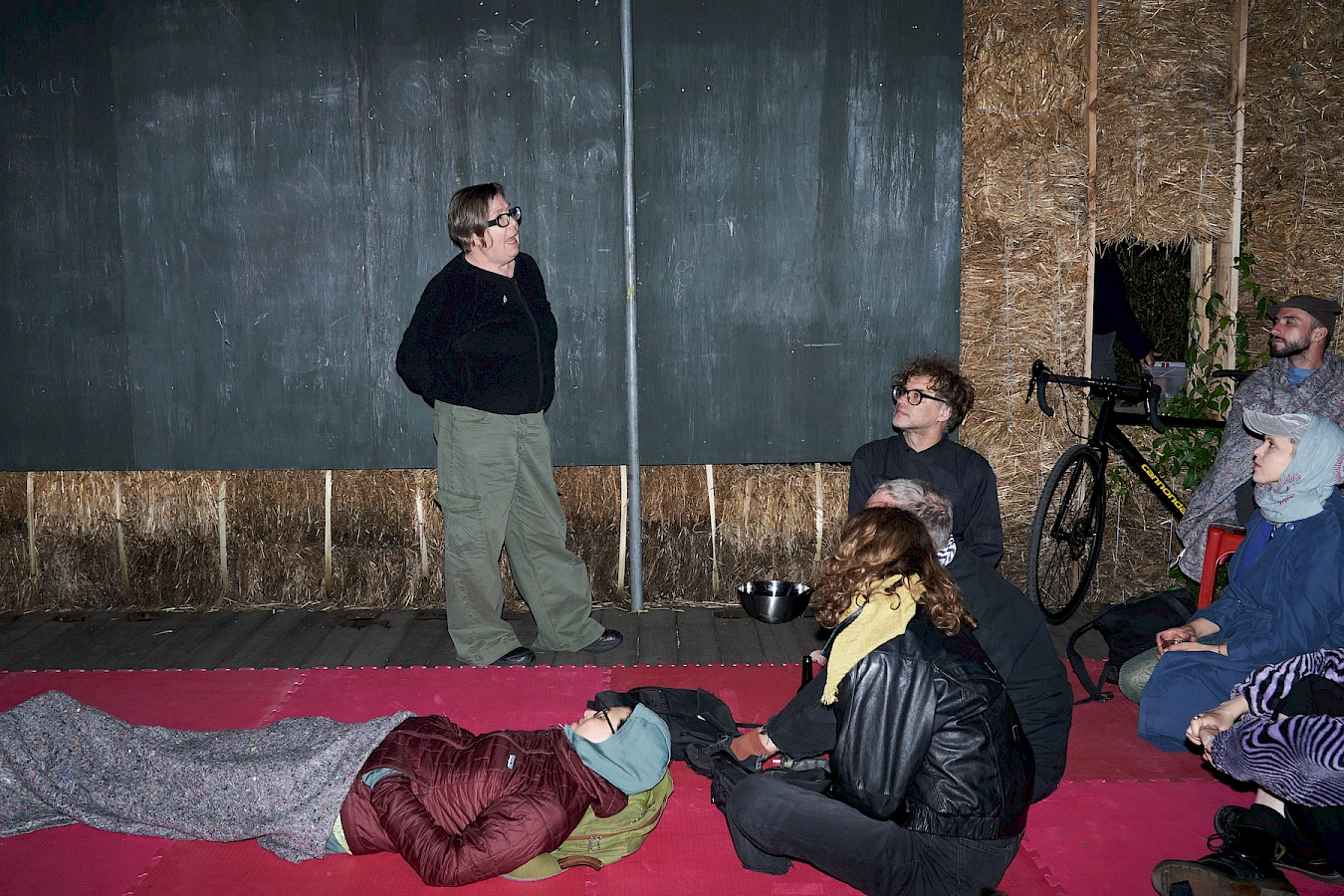
Deirdre O'Mahony and Sebastian Cichocki presenting The Quickening at the Postartistic Assembly in Berlin, Floating, 2024. Photograph: Joanna Chwiłkowska. Courtesy Konteksty
Related contributions and publications
-
Decolonial aesthesis: weaving each other
Charles Esche, Rolando Vázquez, Teresa Cos RebolloLand RelationsClimate -
Climate Forum I – Readings
Nkule MabasoEN esLand RelationsClimateHDK-Valand -
…and the Earth along. Tales about the making, remaking and unmaking of the world.
Martin PogačarLand RelationsClimatePast in the Present -
Art for Radical Ecologies Manifesto
Institute of Radical ImaginationLand RelationsClimateInstitute of Radical Imagination -
Ecologising Museums
Land Relations -
Climate: Our Right to Breathe
Land RelationsClimate
Related activities
-
HDK-Valand
Climate Forum I
The Climate Forum is a space of dialogue and exchange with respect to the concrete operational practices being implemented within the art field in response to climate change and ecological degradation. This is the first in a series of meetings hosted by HDK-Valand within L'Internationale's Museum of the Commons programme.
-
–Van Abbemuseum
The Soils Project
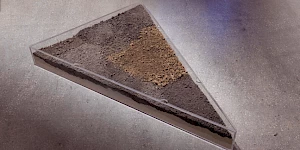
‘The Soils Project’ is part of an eponymous, long-term research initiative involving TarraWarra Museum of Art (Wurundjeri Country, Australia), the Van Abbemuseum (Eindhoven, Netherlands) and Struggles for Sovereignty, a collective based in Yogyakarta, Indonesia. It works through specific and situated practices that consider soil, as both metaphor and matter.
Seeking and facilitating opportunities to listen to diverse voices and perspectives around notions of caring for land, soil and sovereign territories, the project has been in development since 2018. An international collaboration between three organisations, and several artists, curators, writers and activists, it has manifested in various iterations over several years. The group exhibition ‘Soils’ at the Van Abbemuseum is part of Museum of the Commons. -
–tranzit.ro
Non-Western Technologies for the Good Life

The experimental course ‘Non-Western Technologies for the Good Life’ (November 2023–May 2024) celebrates as its starting point the anniversary of 50 years since the publication of Tools for Conviviality, considering that Ivan Illich’s call is as relevant as ever.
-
–Institute of Radical Imagination
Gathering into the Maelstrom
‘Gathering into the Maelstrom’ in Venice at Sale Docks is a four-day programme curated by Institute of Radical Imagination (IRI) and Sale Docks.
-
–Institute of Radical Imagination
Gathering into the Maelstrom (exhibition)
‘Gathering into the Maelstrom’ is curated by Institute of Radical Imagination and Sale Docks within the framework of Museum of the Commons.
-
HDK-Valand
Climate Forum II
The Climate Forum is a series of online meetings hosted by HDK-Valand within L’Internationale’s Museum of the Commons programme. The series builds upon earlier research resulting in the (2022) book Climate: Our Right to Breathe and reaches toward emerging change practices.