Land Art as Useful Art. Part 1: Land Works
Deirdre O’Mahony is an Irish artist whose work centres on the politics of landscape, relationships between rural and urban areas, rural sustainability and food security. In this two-part interview, she discusses the different trajectories of her work with curator, writer, and educator Sebastian Cichocki, Head of the Postartistic Practice Studio at the University of Arts in Poznań, Poland. Part 1 focuses on O’Mahony’s move from what Cichocki describes as ‘painterly contemplation to situated engagement’. This text was published on the occassion of, ‘a (sort of) retrospective exhibition by Deirdre O‘Mahony consisting of an interview, found objects, artworks’, 17(Joy), a project space located at Schleifmühlgasse 17, Vienna (10 April – 10 June 2026).
Sebastian Cichocki: In our recent dialogues and collaborations, most notably at Floating University in Berlin and EVA International in Limerick, we have toyed with the term ‘postartistic’ to describe a significant shift in contemporary cultural landscapes. The term has its roots in the writings of the Polish theorist Jerzy Ludwiński, who in the 1970s forecast a postartistic era in which art would undergo a process of dissemination, eventually becoming inseparable from other areas of life such as ecology, politics and social systems. This ‘blue phase’, as Ludwiński called it, was not to be the end of art, but rather its expansion into the very fabric of reality.1 Looking at the ‘evolution’ of your work – Ludwiński frequently referred to evolution when comparing the art system to a living organism adapting to new habitats – I see the fulfilment of this prophecy: art connecting different disciplines and areas of expertise. If we consider your artistic journey from the Erratics series – works I consider to be the entry point to your later practice, in which you meticulously traced the shadows of glacial boulders in the Burren – to your current soil-based interventions, a clear, symptomatic shift is evident: you have moved from painterly contemplation to situated engagement. Was there a specific moment when you decided to move from two-dimensional representation to working at a 1:1 scale in the field?
Deirdre O’Mahony: When I returned to live in Ireland in 1991, I was making paintings that were largely non-representative. I moved to the Burren in the West, a place I associated with a better way of life in the countryside. That romantic, utopian notion I’d held onto since becoming aware of countercultural movements in the 1960s and 1970s was upended very quickly when the Irish State decided to construct an interpretative centre for tourists at Mullaghmore Mountain in North Clare. I was shocked by the depth of feeling that erupted: this was an area largely untouched by any kind of development, and the conflict that arose between many of the farming families living in the area and others who, like me, had moved there because of the solitude and beauty, affected social relations in the area for over a decade.2
SC: How did this tension translate into your early work?
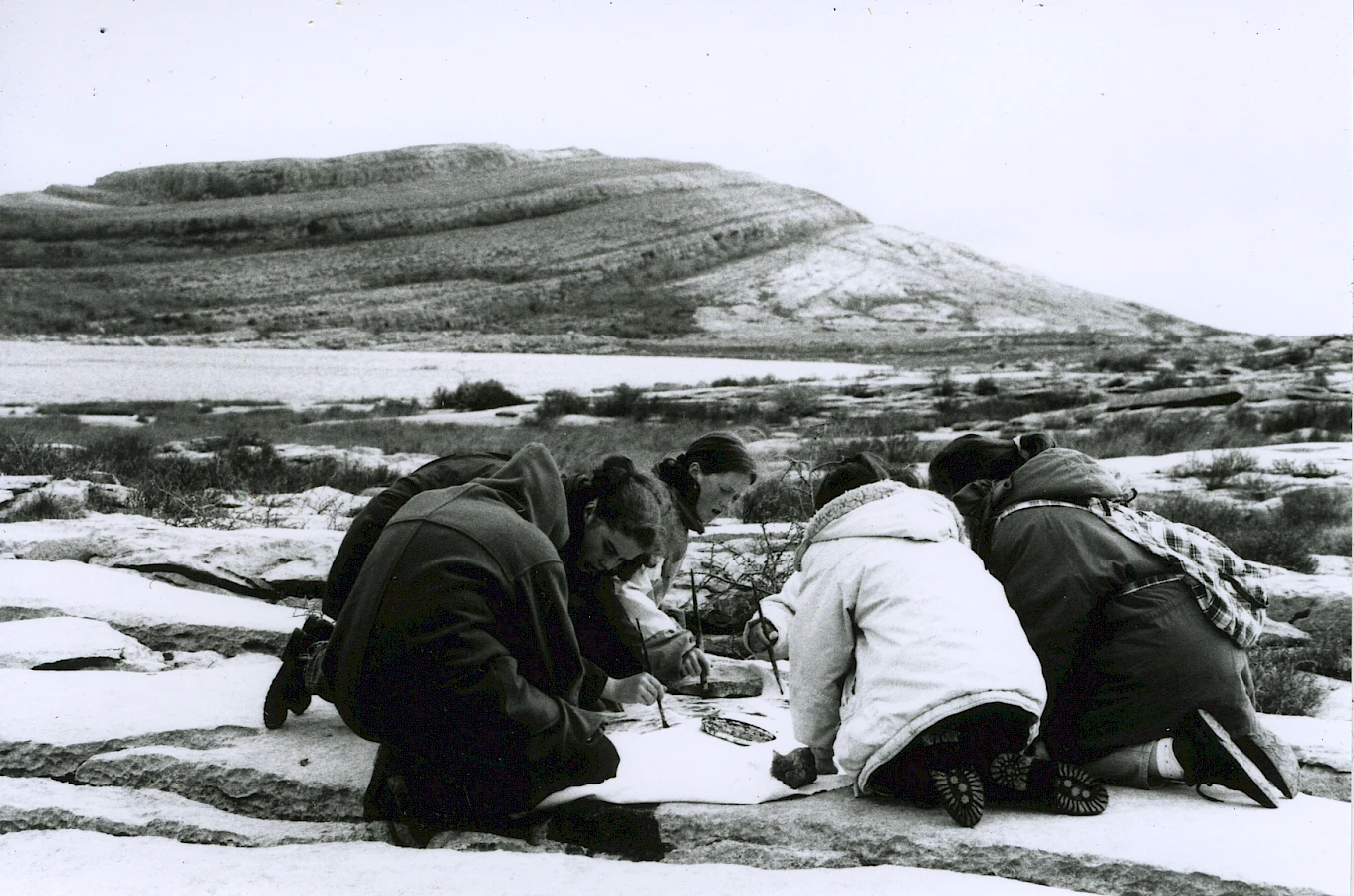
Children from Kilnaboy National School at Mullaghmore, 1994. Photograph: Deirdre O'Mahony. Courtesy the artist
DO’M: My initial response was to make a series of very large paintings, Traces of Origin (1991), that were suspended on a cliff face overlooking the car park at Aileen Caves, the biggest tourism centre in the region. The intention was to highlight the depth of time embedded in the karst limestone, the lichens and fungal growths that covered the surface as well as the fossils embedded within, and have the paintings seen within that context. But I was uncomfortable with using a tourism centre as an outdoor exhibition space; making work that described the place without acknowledging the complexities of that highly charged context was no longer enough. I did an Arts Council Artists-in-Schools residency at the primary school in Kilnaboy, four miles from the site of the proposed tourism centre, introducing the children to the use of processes like frottage to capture a trace image of the limestone pavement on the eastern side of Mullaghmore. This was an area strewn with erratic boulders, relics of another time. One of the children told me that her grandfather called it ‘the giants’ playground’, an appropriate name. I was fascinated by the deep, dark, elongated shadows cast in autumn that highlighted the awkward presence of the erratics’ presence there. Tracings of the shadow lines became the starting point for Erratics (1996), an installation of ten paintings exhibited at the Guinness Hopstore, Dublin in 1996. They were a potent metaphor for urban migration, a reality for many in Ireland up to the mid-1990s, and echoed my experience as an outsider, both in Clare and when I lived in London. It was an important series of work reflecting my subjective experience and the ever-increasing global reality of rural depopulation.
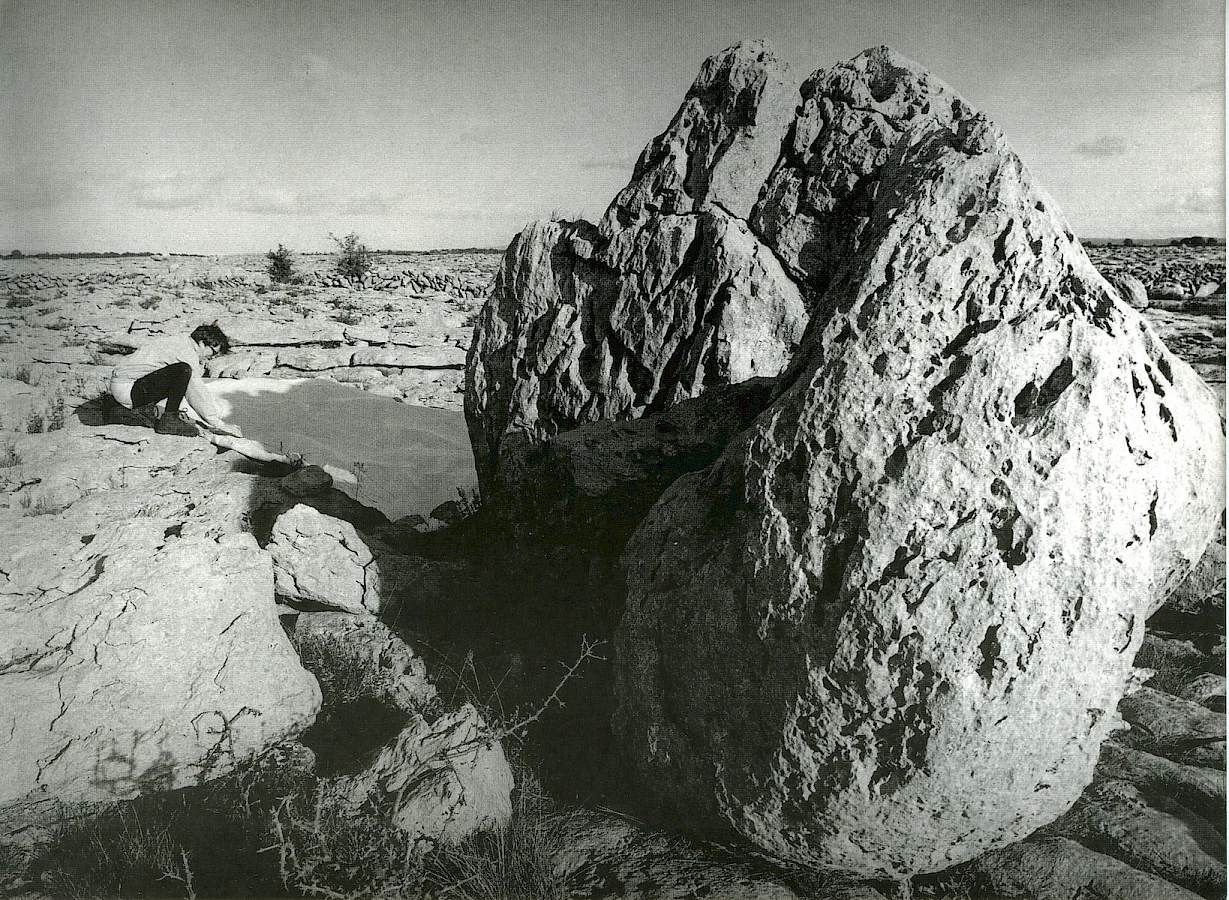
Deirdre O'Mahony marking the shadow of an Erratic, 1995. Photograph: Veronica Nicholson. Courtesy the artist
SC: These changes in Burren were not only symptomatic of the region, but also of a general shift in the tourism industry at that time. Combined with this was the accelerating decline of farming, with smaller, less efficient farms beginning to disappear or be leased out. So, what happened next?
DO’M: As the conflict continued to shape social relations in the area, I focused on the representation of landscape with the Wrap series (1998–2000), made specifically for an exhibition at Lady Gregory’s former family residence, Galway Arts Centre. She played a key role in promoting the West of Ireland, inviting artists and writers to stay at her home on the Flaggy Shore in Clare, many of whom represented the West of Ireland as the epitome of authenticity, alterity and national identity. These eight large-scale paintings were all based on imprints of the surfaces of the erratics. Each painting was made in a different way: some densely mediated and stretched on deep aluminium frames; others unstretched, fluid, and in some cases barely touched by a brush. In 2000 I was also asked by curator Gregory McCartney to make an installation of paintings based on the historic walls of Derry for the Context Gallery (now the CCA). The WALL (2001) installation was based on imprints of the walls. On completion, I realised that the process was inadequate to the context and that I had to find a different way to situate my practice. I began to experiment with medium format photography. I made works using traces of algae and a series of photographs and paintings called Visqueux (2001), based on images of algal growth in lakes and rivers caused by the run-off of fertilizers from fields. At the same time I was doing an MRes at the Crawford College in Cork, which forced a kind of critical reflexivity on my practice. I was part of a group of five artists invited to develop research for the second phase of a temporary public art programme run by Clare County Council called ‘Ground Up 2’.3 We decided to collaborate for the initial research phase and staged public interventions at agricultural shows in both Ennistymon and Corofin. We each presented five images that, for us, represented North Clare. Postcards were made so people could respond. One person wrote about how negative the images were, and how they showed none of the ‘positive pluses’ of living in the area. That really made a deep impression on me. In a place where it is rare for people to speak openly and honestly about what they think, that was an important space for relatively open dissensus. When it came to submitting a proposal, the burning issue at the time was the culling of the wild goats that were such a symbol of the Burren. My proposal for a temporary public artwork that evolved over a period of two years into The Cross Land (2008) marked a shift to my working at a 1:1 scale.
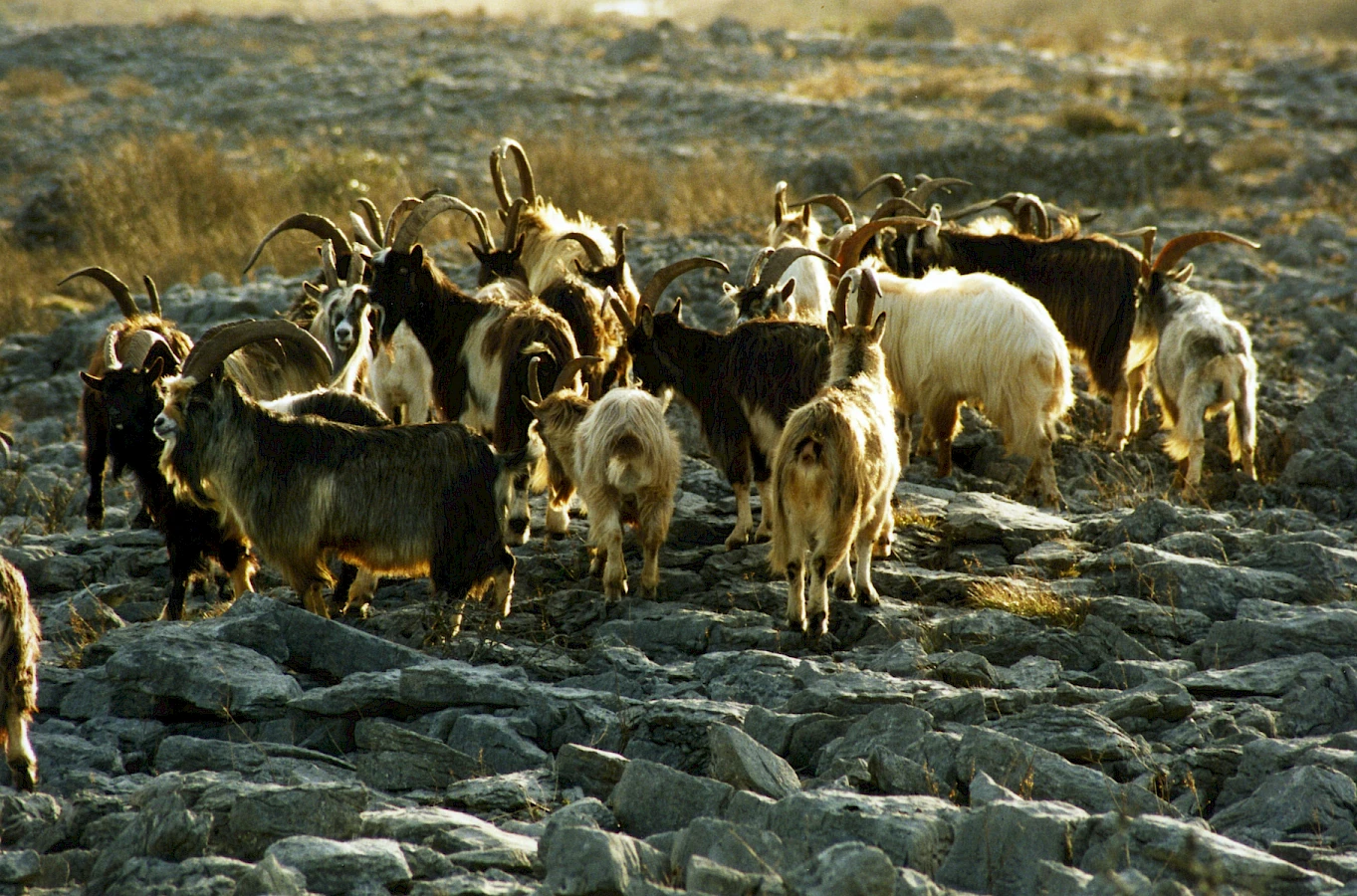
Feral goats on the Burren, 2007. Photograph: Peter Rees. Courtesy the Peter Rees archive
SC: The Cross Land consisted of two cuts in the hazel scrub of the Burren. How do you navigate the expectations of art institutions when it comes to such long-term projects that are often not easily accessible? Have things changed since then? I’m interested in how the institutional landscape in Ireland has evolved, how your practice has been perceived and supported in the past and how it is now.
DO’M: The commission focus for The Cross Land project was on making accessible public artworks for communities in North Clare and addressing the isolation of artists in the region. It marked a shift from the site-specific to the context-specific and a more open, transdisciplinary praxis. Wild goats used to roam the Burren, grazing the hazel scrub that, without human intervention, was spreading rapidly, changing the limestone karst landscape – a major attraction for both tourists and ecologists. I speculated that the absence of the goats and the spread of the hazel scrub was a case of cause and effect. However, time to research and meet with farmers, agricultural and environmental scientists changed my proposal. The project ended up taking two years, reflecting instead on a range of issues affecting changes in farming practices, such as fear of losing subsidies if heritage features like dry stone walls were knocked down by the goats, or the number of regulatory agencies – five! – that had to be navigated if tracks were made on hard-to-reach areas of land. Lucy Lippard argues that ‘Land art takes much of its power from distance – distance from people, from places, and from issues’.4 The Cross Land was an attempt to complicate that detachment, drawing on the history of land art and the work of artists like Dennis Oppenheim and Richard Long to focus attention on how works of art ‘perform’ critique via the detached gaze that is so often integral to this kind of practice; and, in turn, how the work of art can critique such detachment, in this case by highlighting the ecological and agricultural complexities of the place.
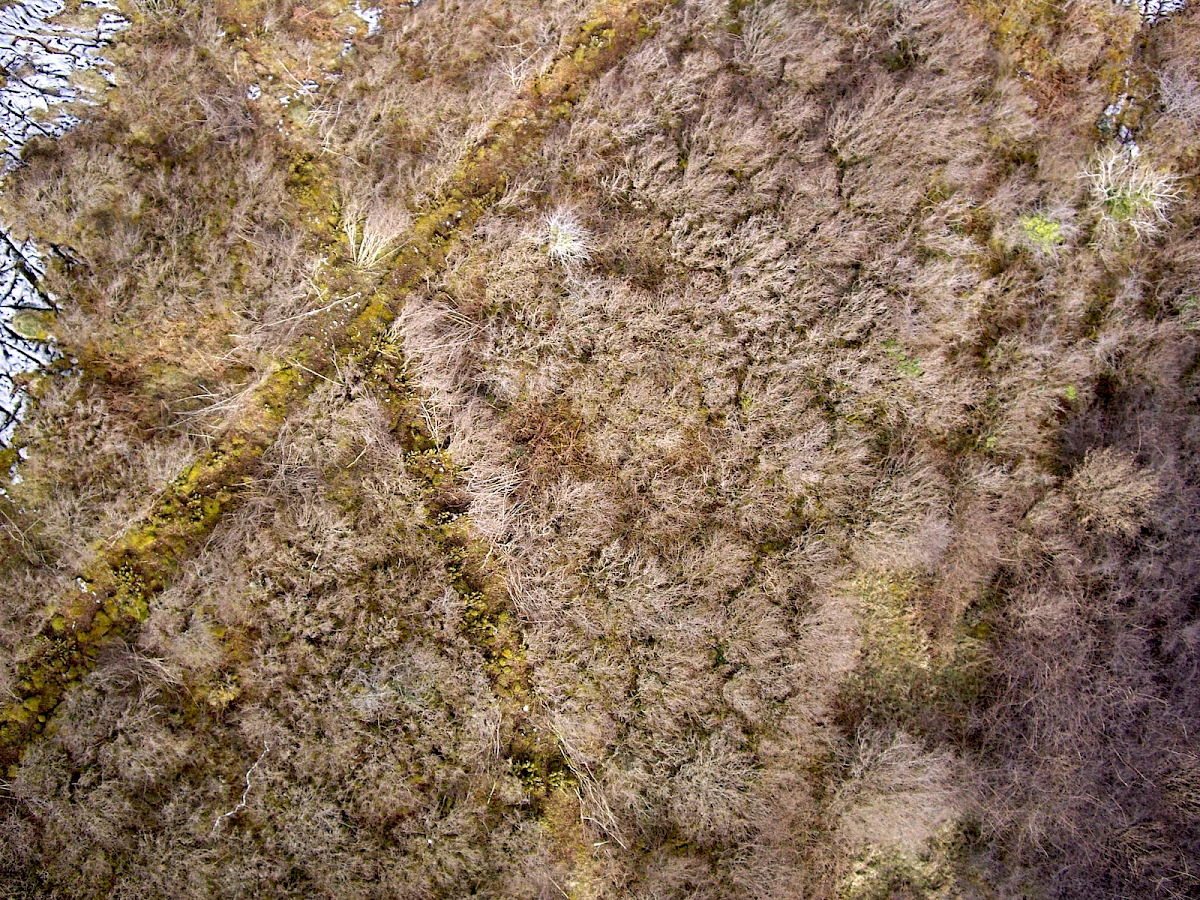
Deirdre O'Mahony, Cross Land, coppiced lines in Burren hazel scrub, 2007. Photograph: Deirdre O'Mahony. Courtesy the artist
Jenny Haughton, then public arts advisor at the Arts Council, included a photographic image of The Cross Land in ‘10,000 to 50’ (2008), an exhibition she was curating at IMMA. At the time, I could not figure out a way to communicate the complexity of the issues behind the image, though I realised it was necessary to do so. Eventually, I determined it should only and always be exhibited together with a film that had been made about the work.5 Making The Cross Land highlighted the importance of spending time to research and develop ideas, whether in the field or in conversation, as the best way to realise such complexities.6 What making The Cross Land brought home was the social and cultural changes underway in rural Ireland as small businesses like pubs and shops were closing. In 2007, I re-opened a former post office as X-PO, a place where different communities in the region could meet and begin to better understand one another – a self-initiated project that Arts Council project funding allowed me to develop further.7 The first event was an installation of the contents of the post office, a temporary archive of the books, journals, and personal cassette tape recordings of BBC World Service language programmes of the former postmaster, John Martin ‘Mattie’ Rynne. An intellectually curious, shy man, he was passionately interested in the world at large: an ‘inside-outsider’. The installation was a way to make visible hidden or overlooked stories. Different communities of interest in the area recognized it as a way to re-frame narratives from alternative perspectives. This led to the co-creation of further archival exhibitions in the space with different groups as well as the formation of the Kilnaboy Mapping Group, who began a project that named all of the inhabitants of Kilnaboy Parish townlands, back to the earliest official records of occupancy, and then overlaid this with dinsheannachas (the lore, or oral history, of place). One fragment of information had a stark poignance that led to the SPUD (2009) project – the name of a young man who died with no one left to bury him had been remembered and spoken about for over 150 years, and the bare conditions of his death passed on: ‘Sean O’Conchubhar … found dead during the Famine, his house was full of snail shells and bits of turnip.’8
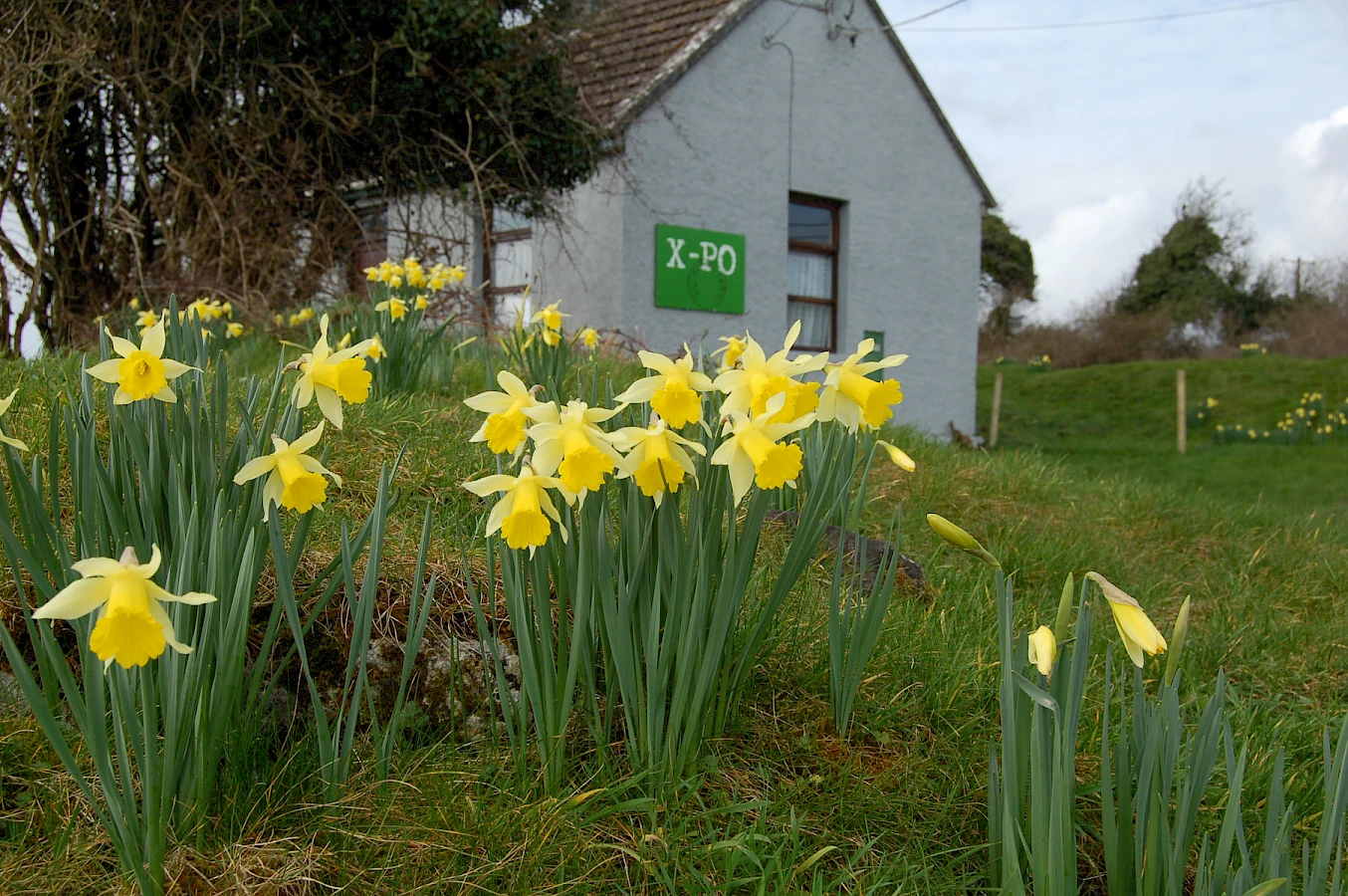
Deirdre O'Mahony, The X-PO, 2008. Photograph: Deirdre O'Mahony. Courtesy the artist
SC: The various conversations at X-PO (2007) led to the long-term SPUD project, which focused on growing potatoes in so-called lazy beds.9
DO’M: SPUD was a way of thinking through the trauma of the Great Famine in Ireland, the relationship between tacit knowledge, heritage and aspects of the present-day social and economic legacy of the Famine. Using the potato was a way to think through histories of hunger, survival, and food security: once prized as offering the possibility of freedom from recurring cycles of famine, the tuber is also a reminder of the consequences of our lethal dependency on monoculture, as well as the systematized violence, biopolitical power and famine that are still deployed today as tools for colonial expansion, for example in Gaza. It was also a useful way to think about urban food security; potato ridges are a great way to break new ground and turn grass into vegetable plots. Asked to make a temporary famine memorial at the National Irish Famine Museum, I decided to make another cross, or ‘X’, on the same scale as in The Cross Land, but from potato ridges. This was my introduction to the Loy Association of Ireland, a group from across Ireland drawn together by a shared interest in maintaining the skill of using a loy, or foot plough, to make perfectly straight potato ridges. The group regularly compete in agricultural shows and ploughing championships. In recent years they have been marginalized at these events in favour of agricultural machinery and agri-industrial trade stands. One of the issues I have experienced in making these projects is that I’m neither a farmer nor a particularly knowledgeable gardener, so each proposal becomes a test of amateur knowledge, creating space for participants’ expertise to come to the fore. I see this as practice-based learning for those involved with the project, a way to process ideas that cannot find space within singular disciplinary fields. I was invited to make a proposal as part of ‘A Fair Land’ (2016), a Grizedale Arts project at IMMA, as part of the centenary celebrations of the formation of the Irish State. Called The Village Plot (2016), my proposal drew on the history of the IMMA building and my research into Antoine-Agustin Parmentier, the eighteenth-century apothecary of Les Invalides in Paris. Les Invalides inspired the construction of the Royal Hospital Kilmainham, which now houses IMMA; Parmentier was a passionate advocate for the potato as a food that could help alleviate periodic famines when wheat and grain crops failed. Taking this architectural correspondence as a starting point, I proposed to make a potato garden with members of the Loy Association. This was inspired by the use of the Luxembourg Garden to grow potatoes, with the encouragement of Parmentier, in a period of famine after the French Revolution.
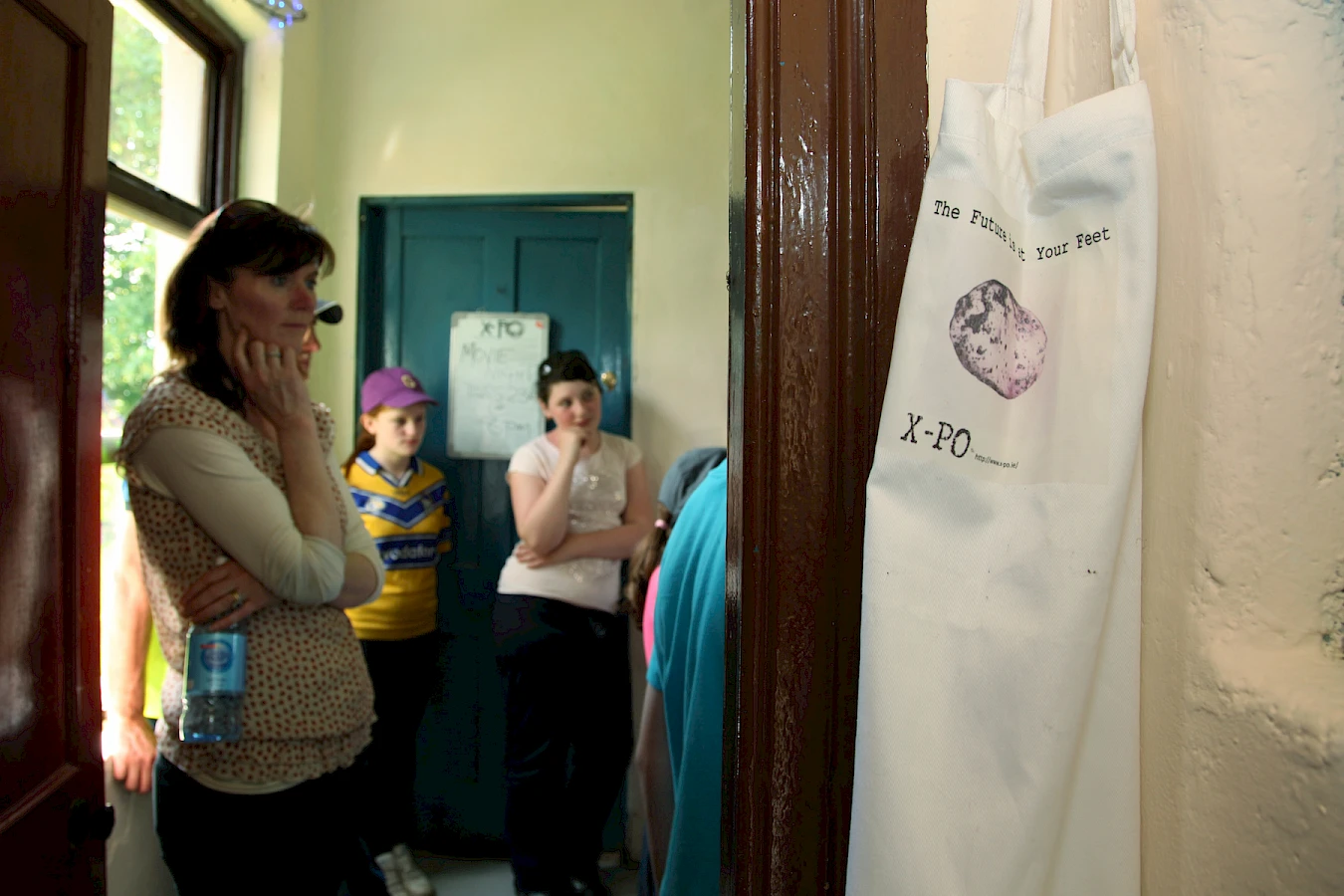
Deirdre O'Mahony, SPUD, school visit to X-PO, 2013. Photograph: Deirdre O'Mahony. Courtesy the artist
SC: What was your understanding of this project back then, and how would you frame it in the context of your previous work?
DO’M: For me, the project was a way of thinking publicly about food security in cities; land-art as useful art; high modernity; and a ‘return’ to a rural vernacular, bringing agricultural knowledge and tacit craft skills to the forefront within cultural institutions. Taking the form of a decorative flowerbed on the front lawn, the planting design was based on Margaret Stokes’s illustration for the title page of Samuel Ferguson’s The Cromlech on Howth (1861), an early example of the use of Celtic ornamentation during the Irish Arts and Crafts movement.10 Two varieties of potato producing two different types of flowers were grown in the beds: the Bloomer, an Irish Heritage variety which produces white flowers, and the blight-resistant Sarpo Blue Danube, which has purple flowers. It was anticipated that they would bloom in time for the closing ceremony of the centennial commemoration of the Irish rebellion of 1916, hosted by the President of Ireland, and that the purple and white colours would serve as a reminder of the role played by the suffragettes, something which is often overlooked in the history of the rebellion. A ambition stated by Sarah Glennie, director of IMMA at the time, was that ‘A Fair Land’ should engage the many publics who pass through the museum courtyard without stopping. From the beginning, The Village Plot was both a source of curiosity and affection for daily walkers: that potatoes were growing in the museum sent a signal that was understood by communities using the grounds. Passers-by stopped to talk when people were planting and maintaining the beds, bringing an unexpected social dimension to the work. For the Loy Association, working in a museum context gave them a different kind of space in which to publicly demonstrate their skills.
SC: Your subsequent project Model Plot (2022) was made on a farm, as part of a Department of the Environment/Creative Ireland Climate Call.
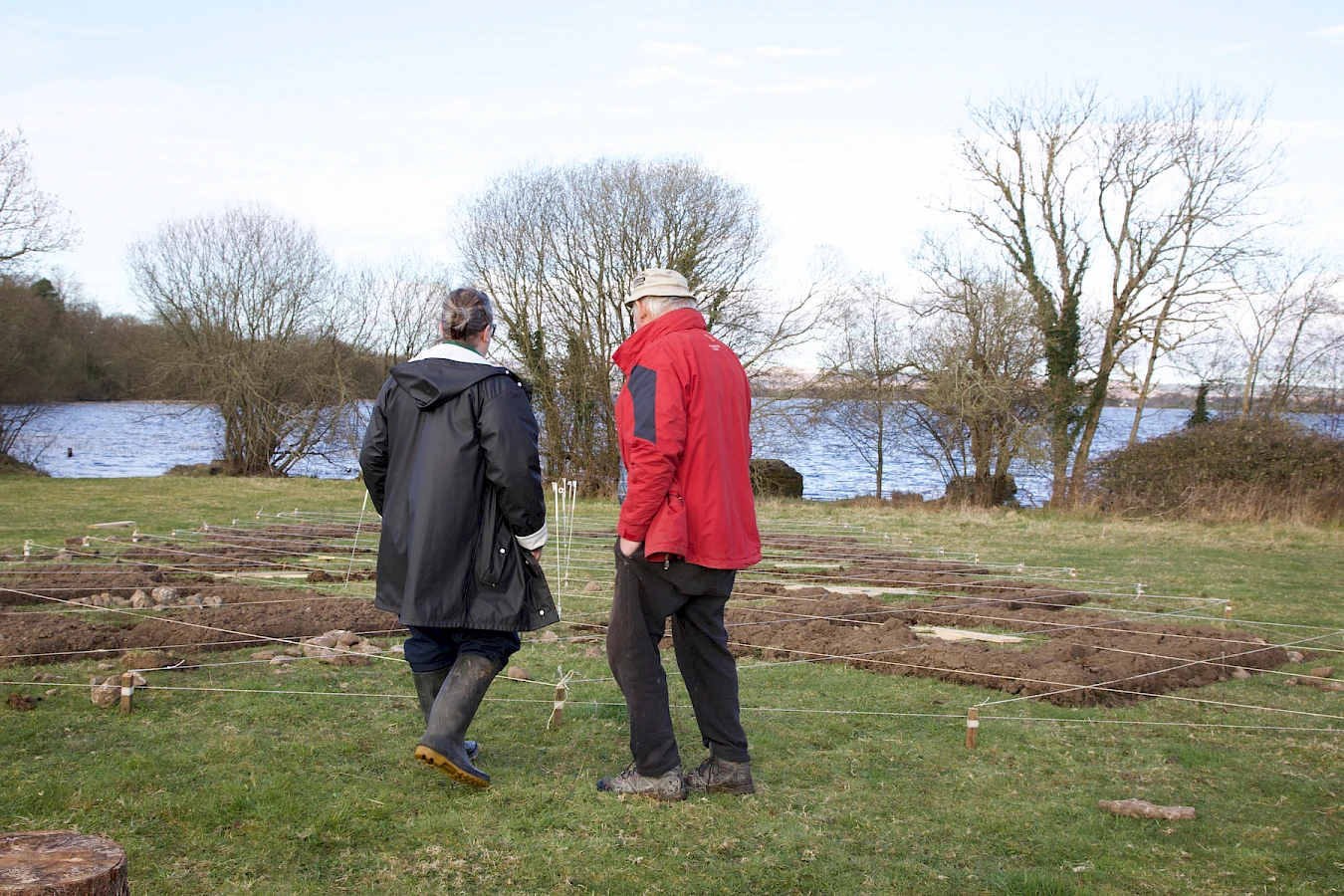
Deirdre O'Mahony and Gerry Mullins making Model Plot, Brookfield Farm, 2022. Photograph: Miriam O'Connor. Courtesy the artist
DO’M: Model Plot was a large-scale sculptural planting of herb and forage crops framed by potato ridges, commissioned for ‘Field Exchange’ (2022) on Brookfield Farm, County Tipperary. It was at once an experiment in collective knowledge, shared skills, and communal output reflecting on sustainable ways to interact with the earth.11 My proposal was for a large-scale frame of potato ridges embracing a 50 x 50m square planting, divided by a cross-shaped path. Each quadrant was to hold alternative fodder crops, one of which was called sainfoin, chosen to highlight its potential. Sainfoin grows in drought, adds nitrogen to soil and benefits soil health, animal health and pollinators. The planting was intended as an outdoor laboratory – a model plot – to demonstrate the environmental and economic benefits of this fodder at a time when fertilizer prices were rising because of the war in Ukraine. Largely unknown in Ireland, sainfoin is difficult to establish, but I thought the use value and spectacular potential of the artwork was worth outworking in public as a proposition for a more environmentally sustainable animal fodder. Drawing on The Village Plot at IMMA, the design of Model Plot also used the potato ridge, a technology born out of a need for food security in Ireland’s past, in combination with forward-looking herb and forage crops that offer future climate resilience in farming. The interior of the potato ridge enclosures was planted with sainfoin, phacelia, vetch and birds-foot trefoil. The project also comprised weekly workshops for farmers and artists. Over the course of the project the planting changed, shifting focus from the potatoes to the herb and legume crops over time. It was such a dry summer that the potato foliage died back, but, unlike rye grass, the alternative fodders thrived in the drought conditions.
SC: In 2022, The Model Plot was acquired by IMMA for the national collection. Could you tell me more about the institutional attitude towards acquiring a cultivated plot as artwork, and how it will be sustained?
DO’M: As growing, living projects, The Village Plot and The Model Plot place serious demands on their host institution! Both require the knowledge and cooperation of members of the Loy Association, as well as a certain amount of luck with the weather and in relation to diseases like potato blight. The acquisition of The Model Plot by the National Collection was not a simple process: it required ensuring that members of the Loy Association will be willing to co-create any future iterations and that the knowledge and craft skills of making perfectly straight ridges will be maintained. The potato ridge is a survival technology born out of the most basic and urgent need for food. It can induce conflicting emotions – affection and embarrassment – in Ireland. However, it can also serve as a reminder of the importance of building resilience within our food system, something that is increasingly urgent, which is why the acquisition of the artwork was a powerful statement on the part of the institution.
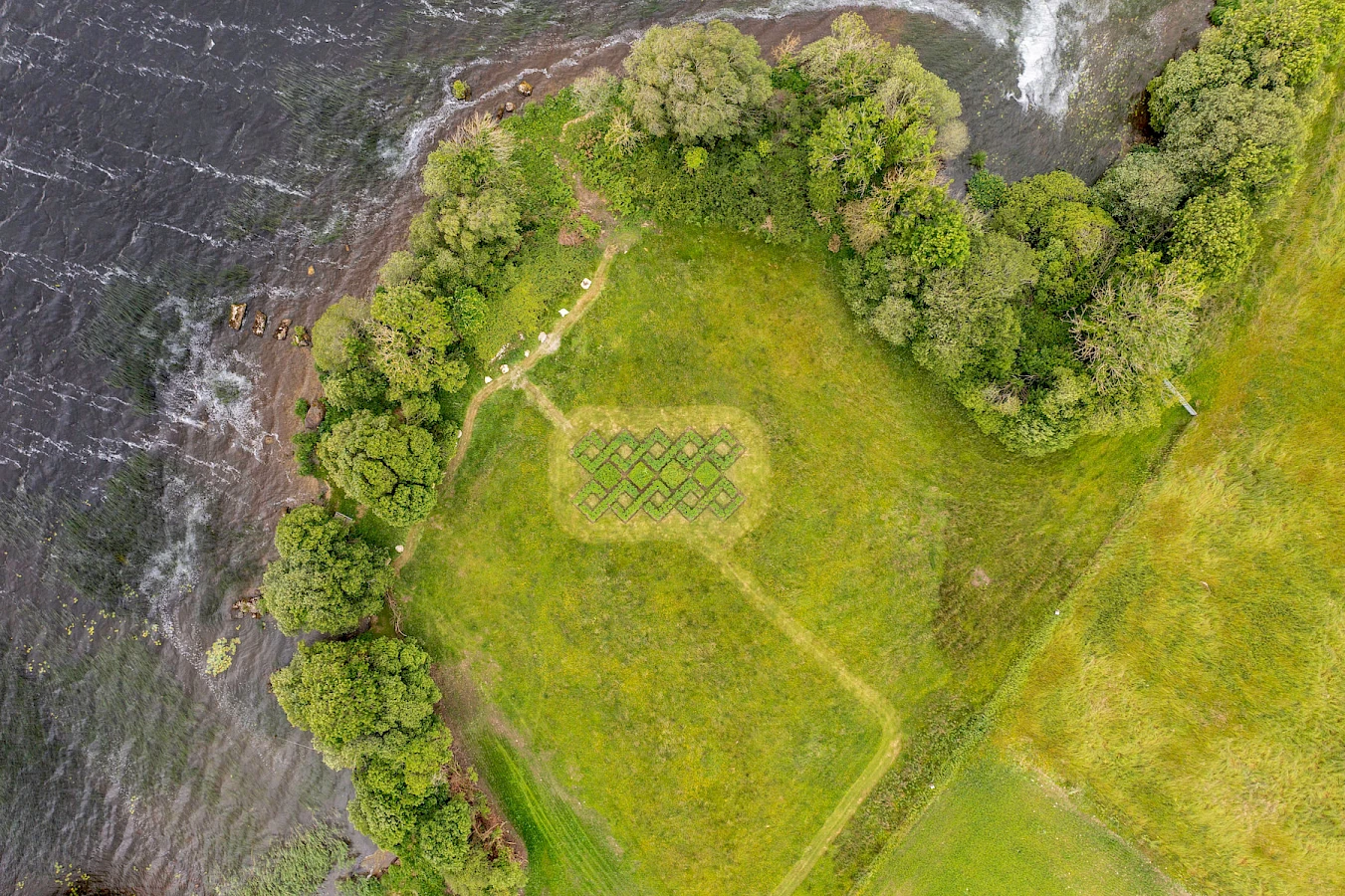
Deirdre O'Mahony and the Loy Association of Ireland, Model Plot, Brookfield Farm, on the shores of Lough Derg, 2022. Photograph: Brendan Keogh. Courtesy the artist
The design, planning and planting of The Model Plot (2025) as a part of ‘IMMA Collections: Art as Agency’ (2025) was an opportunity to document every step of the planting, growing and harvesting process. It also highlighted the institutional care and responsibility required to maintain the planting, from weeding to watching for potential attacks of potato blight. The involvement of the Engagement & Learning department, led by Sundara O’Higgins, was crucial, as was the cooperation of the Office of Public Works’s gardening staff and volunteers. It was a very different kind of process for the staff of the collections department: a living, growing artwork that seemed to have its own ideas on how to develop itself.
The 2025 planting of The Model Plot overlooked the formal gardens that once supplied vegetables to the retired soldiers of armies that facilitated the expansion of the British Empire. But the history of the gardens is ever-changing: later, the gardens were also used by Dublin Corporation to feed the citizens of the capital. This makes them a rich and evocative setting for a work that considers future food security, biodiversity and performative action in the face of climate change, leaning into alternative forms of knowledge and historically inherited technology to highlight the small actions that can be taken by everyone to grow food and sustain pollinators, soil and the environment.
For this iteration, the seed combination was agreed with the museum and gardening staff at IMMA. The ridges were planted with three types of blight-resistant organic potatoes: Levante, Alouette and Vitanoire. The spaces within the perimeter of the planting were interspersed with marigold and nasturtium companion flowers. In the centre of each overlapping ridge a Gortahork cabbage was planted. This reflected the cabbages on the extraordinary ceiling in the great hall at IMMA which I filmed for The Persistent Return (2018), screened with The Quickening (2024) as part of IMMA’s ‘Living Canvas’ programme for The Model Plot harvest event in 2025. The harvest was led by the Loy Association’s Gerry Mullins, who has been an inspiration and a leader throughout the various plantings.
SC: Could you elaborate more on the institutional contract and the obligations of the museum towards the work? Can it be loaned? What conservation issues are there? When does the work need to be ‘fixed’ or ‘edited’?
DO’M: Firstly, the Memorandum of Understanding (MOU) agreed with IMMA specifies the importance of maintaining relational connections with members of the Loy Association, as a group and as individuals, to ensure that people are willing to remake the work in the future; and for the group to ensure that the knowledge still exists. The opportunity to make The Model Plot on the grounds of a national institution like IMMA was important for the Loy group as a counterpoint to the sense of increasing marginalization felt by some members.12 Secondly, IMMA needs to have and to supply the necessary resources to maintain and conserve the work while in situ, and the same obligation is carried with the artwork should it be loaned; there is a detailed method statement that accompanies the artwork. IMMA also has to embrace the possibility of failure, as mentioned earlier. Crops can fail, and the artwork will always reflect the changing conditions, whether drought or disease.
The 2025 making, growing and harvesting process was carefully documented with a time-lapse camera. This film and the project archive acquired by IMMA can also be exhibited as an alternative form of the artwork. Tools have also been acquired to remake the work.
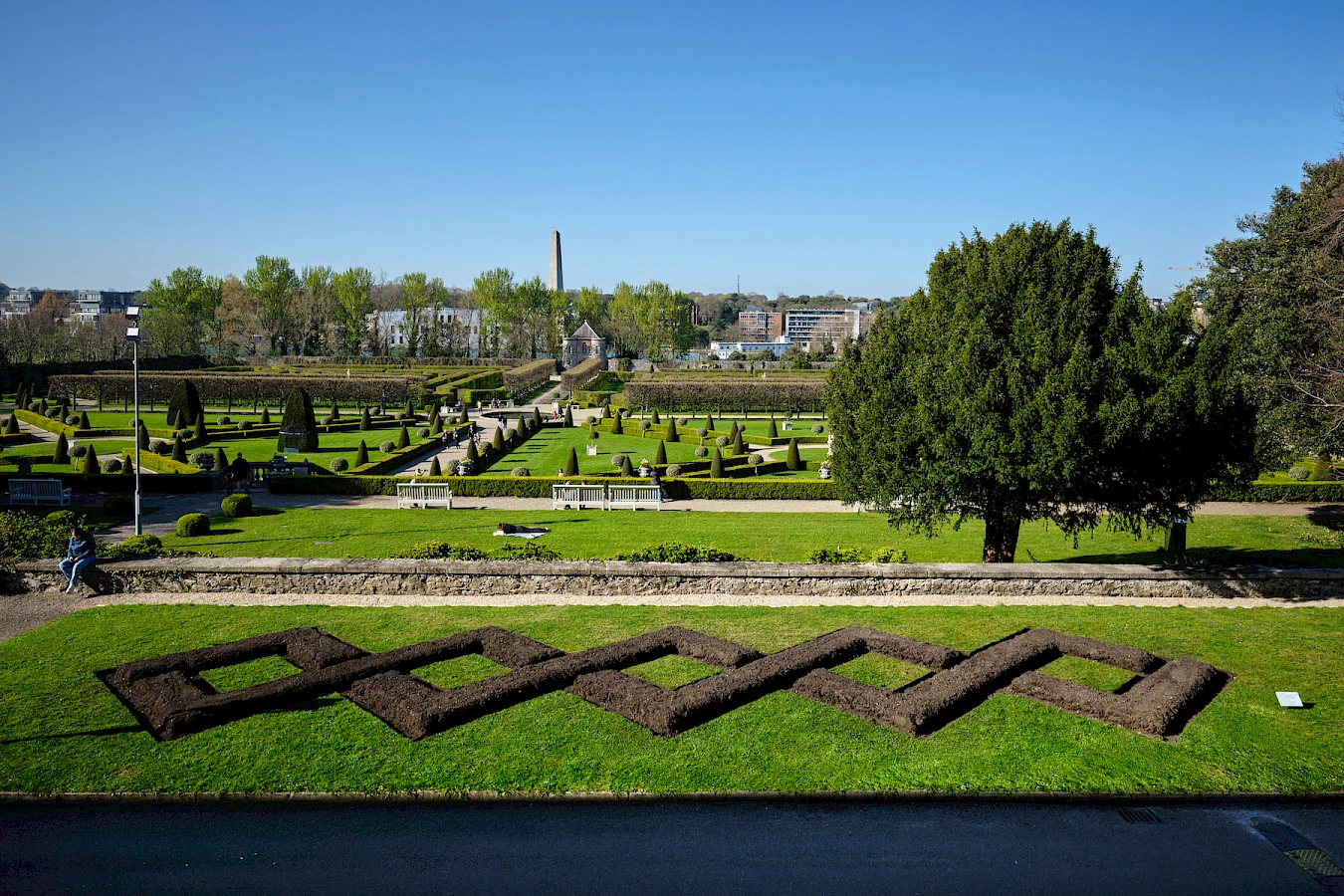
Deirdre O'Mahony, The Model Plot, 2025. Photograph: Ros Kavanagh. Courtesy: IMMA. Irish Museum of Modern Art
Related contributions and publications
-
Decolonial aesthesis: weaving each other
Charles Esche, Rolando Vázquez, Teresa Cos RebolloLand RelationsClimate -
Climate Forum I – Readings
Nkule MabasoEN esLand RelationsClimateHDK-Valand -
…and the Earth along. Tales about the making, remaking and unmaking of the world.
Martin PogačarLand RelationsClimatePast in the Present -
Art for Radical Ecologies Manifesto
Institute of Radical ImaginationLand RelationsClimateInstitute of Radical Imagination -
Ecologising Museums
Land Relations -
Climate: Our Right to Breathe
Land RelationsClimate
Related activities
-
HDK-Valand
Climate Forum I
The Climate Forum is a space of dialogue and exchange with respect to the concrete operational practices being implemented within the art field in response to climate change and ecological degradation. This is the first in a series of meetings hosted by HDK-Valand within L'Internationale's Museum of the Commons programme.
-
–Van Abbemuseum
The Soils Project
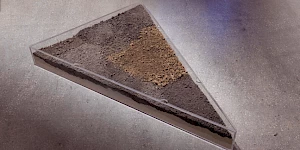
‘The Soils Project’ is part of an eponymous, long-term research initiative involving TarraWarra Museum of Art (Wurundjeri Country, Australia), the Van Abbemuseum (Eindhoven, Netherlands) and Struggles for Sovereignty, a collective based in Yogyakarta, Indonesia. It works through specific and situated practices that consider soil, as both metaphor and matter.
Seeking and facilitating opportunities to listen to diverse voices and perspectives around notions of caring for land, soil and sovereign territories, the project has been in development since 2018. An international collaboration between three organisations, and several artists, curators, writers and activists, it has manifested in various iterations over several years. The group exhibition ‘Soils’ at the Van Abbemuseum is part of Museum of the Commons. -
–tranzit.ro
Non-Western Technologies for the Good Life
The experimental course ‘Non-Western Technologies for the Good Life’ (November 2023–May 2024) celebrates as its starting point the anniversary of 50 years since the publication of Tools for Conviviality, considering that Ivan Illich’s call is as relevant as ever.
-
–Institute of Radical Imagination
Gathering into the Maelstrom
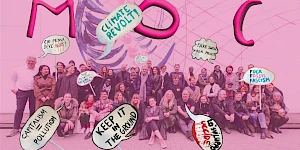
‘Gathering into the Maelstrom’ in Venice at Sale Docks is a four-day programme curated by Institute of Radical Imagination (IRI) and Sale Docks.
-
–Institute of Radical Imagination
Gathering into the Maelstrom (exhibition)
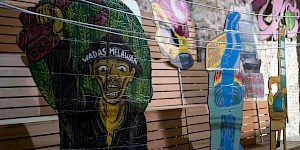
‘Gathering into the Maelstrom’ is curated by Institute of Radical Imagination and Sale Docks within the framework of Museum of the Commons.
-
HDK-Valand
Climate Forum II
The Climate Forum is a series of online meetings hosted by HDK-Valand within L’Internationale’s Museum of the Commons programme. The series builds upon earlier research resulting in the (2022) book Climate: Our Right to Breathe and reaches toward emerging change practices.