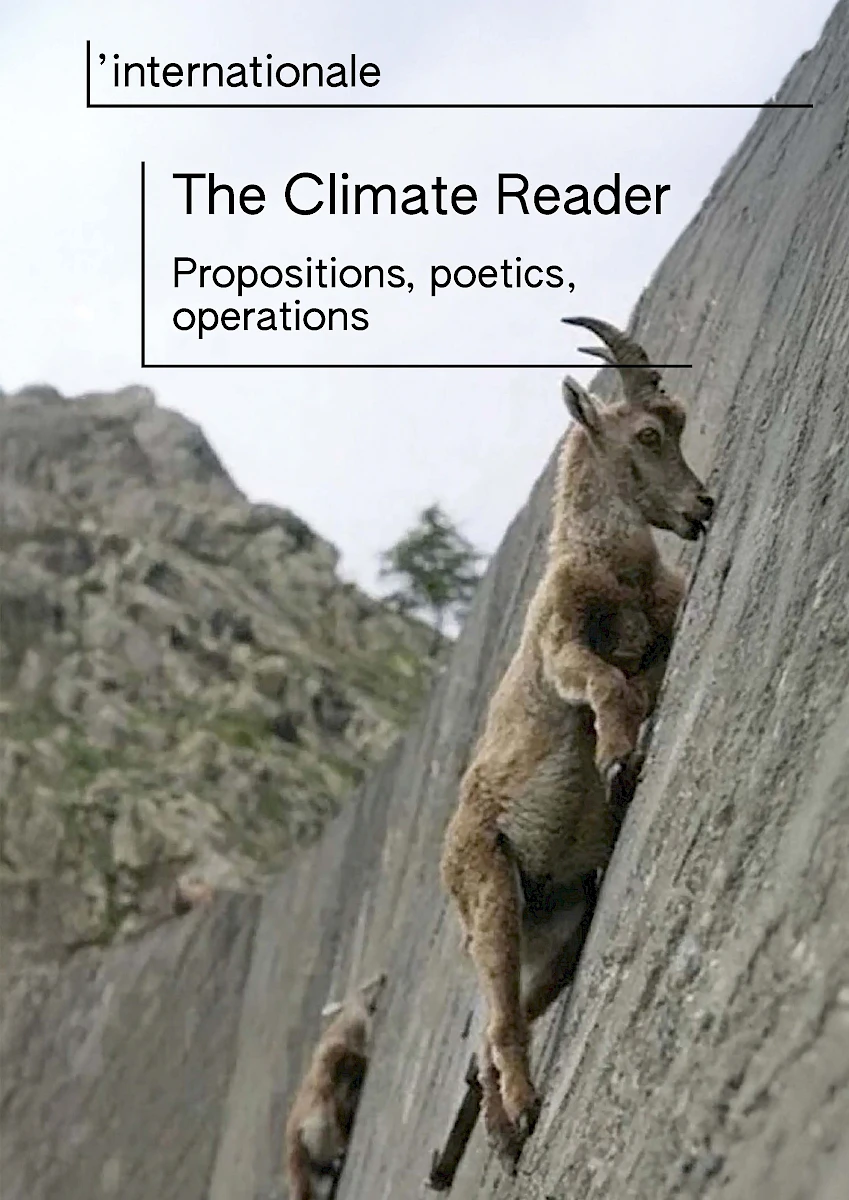
The Climate Reader: Propositions, poetics, operations
Digital edition 2026
EDITORS
Nick Aikens, Nkule Mabaso
CO-EDITOR OF CLIMATE FORUM IV CONTRIBUTIONS
Merve Bedir
COPY EDITOR
Rebecca Bligh
GRAPHIC DESIGN
Anja Groten
COVER PHOTO
Zayaan Khan
GENERAL COORDINATOR
HDK-Valand Academy of Art and Design, Gothenburg University
PROJECT LEADER
L’Internationale
Published by L’Internationale Online
Contents
-
1.Table of contents
-
2.Introduction
-
21.Contributor Biographies
-
22.Climate Forum details
-
23.Colophon
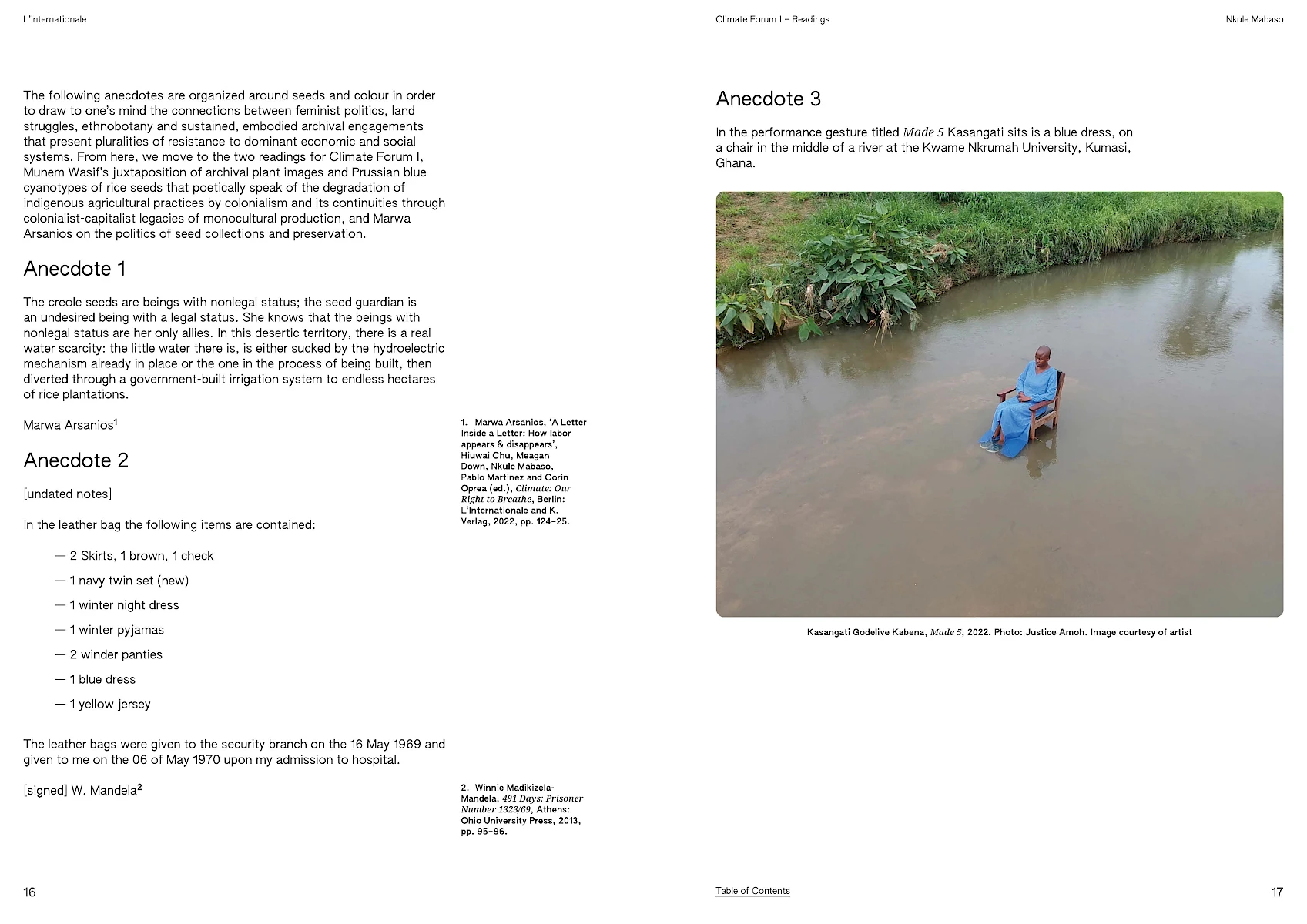
The Climate Reader: Propositions, poetics, operations assembles contributions published by L’Internationale Online in the context of the Climate Forum (I–IV), a series of seminars hosted by HDK-Valand (2023-2025) as part of the four-year project ‘Museum of the Commons’. Bringing together over twenty artists, curators, academics and activists, the series and resulting publication were conceived as an iterative space of dialogue and exchange across discursive, artistic, political and operational registers in response to climate breakdown and ecological degradation.
Building on the work in Climate: Our Right to Breathe (L’Internationale and K. Verlag, 2022), The Climate Reader extends one of that book’s central propositions: that ‘climate’ is to be understood as an ecosocial condition that intersects the ecological, the social, the political and the cultural. The reader approaches the ecosocial condition of climate not as a ‘theme’ to be described, explicated or represented, but rather a reality that forms and is attended to by the constellation of artists and thinkers taking part.
Climate discourse has been shaped largely by perspectives rooted in the Global North, resulting in partial narratives that have overlooked the uneven distribution of environmental harm, responsibility and knowledge. The Climate Forum series and resulting reader foreground geographically situated knowledge, particularly of communities directly affected by ecological degradation, in an attempt to defragment debates and make underlying power relations visible. In this way, they operate as a network of mediating platforms that bridge otherwise disconnected geographies of climate knowledge.
The structure of the reader follows the sequencing of Climate Forum sessions with a returning address to questions of land, colonial toxicity, institutional agency, death and indigenity. Each section opens with readings selected by the forum convenors, followed by essays, edited transcripts of conversations, and commissioned works. The Climate Reader has a consistent focus on practice, or what we name as the interrelation between ‘propositions, poetics and operations’.