Archivos negros: Episodio I. Internacionalismo radical y panafricanismo en el marco de la guerra civil española
En el primero de una serie de tres partes, la curadora, escritora, investigadora y editora fundadora de Radio África, Tania Safura Adam, profundiza en la historia del panafricanismo en España. El primer episodio examina cómo las alianzas panafricanistas tras la invasión colonial de Etiopía por parte de Mussolini movilizaron las luchas antifascistas de la población negra durante la guerra civil española.
En agosto de 1920, la Asociación Universal de Desarrollo Negro y la Liga de Comunidades Africanas (UNIA), fundada por el periodista y empresario Marcus Mosiah Garvey en Kingston (Jamaica) en 1914, celebra en Nueva York su Primera Convención Internacional. Tras los debates presididos por el mismo Garvey, con la participación de miles de delegados de diferentes países, se adopta la Declaración de los Derechos de los Pueblos Negros del Mundo, que defendía los derechos humanos relativos a la libertad e igualdad de trato ante la ley. En esta declaración se concluye que Etiopía es la «tierra de nuestros padres» y se le atribuye un destino profético por elección divina. De esta manera, el himno universal etíope (compuesto en 1918) se convertirá, con algunas modificaciones, en himno de la raza negra.1
Etiopía, tierra de nuestros padres
que los dioses gustaban habitar,
así como se forman en la noche
las nubes de tormenta,
así corren hacia ti nuestros ejércitos.
Venzamos en la lucha,
cuando brillen las espadas desenvainadas
nuestra victoria será gloriosa
conducida por los rojos, los negros y los verdes.
Adelante, adelante hacia la victoria,
hacia la libertad de África.
Adelante al encuentro del enemigo
con el poder
del rojo, del negro y del verde.
¿Continuarán los extranjeros arruinándonos?
¿Seguirán los déspotas con su codicia?
Abstenerse.
¿Naciones en burla nos injuriarán?
¡Entonces nuestras afiladas espadas intercederán […]!
En este canto, Etiopía y África se mencionan como entidad nacional y sus hijos se comparan con el pueblo judío, dispersos más allá de los mares. El himno refleja la nación etíope tal y como se estableció bajo el lema de la UNIA: One God, One Aim, One Destiny («Un Dios, un objetivo, un destino»). En ese momento Garvey profetiza: «Miren a África, donde se coronará un rey negro, porque el día de la liberación se acerca». Diez años más tarde, en 1930, la profecía se cumple y el Ras Tafari Makonnen, conocido como Haile Selassie I, es coronado. Será el último emperador de Etiopía, con los títulos de León Conquistador de la tribu de Judá, rey de reyes y señor de señores.2
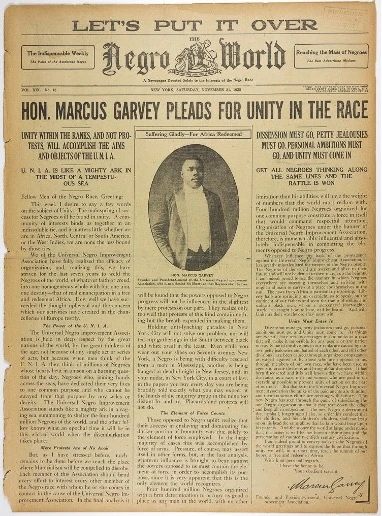
Periódico Negro World, 1925.
Sin embargo, el rey de reyes apenas pudo disfrutar de su trono, porque en 1935 mil soldados del ejército italiano —liderados por el dictador Benito Mussolini, líder del Partido Nacional Fascista— invaden Etiopía sin declarar previamente la guerra. Unos meses antes, al otro lado del Atlántico, en un Nueva York atravesado por los efectos de la Gran Depresión, tres mil personas asisten a la primera reunión del Comité Provisional para la Defensa de Etiopía, celebrada en la Iglesia Bautista Abisinia de Harlem. En ese encuentro se anuncia que cientos de voluntarios procedentes de distintas afiliaciones políticas —nacionalistas negros reclutados por el Partido Comunista tras la detención de Marcus Garvey en 1923 por un supuesto fraude, socialistas y panafricanistas— estaban dispuestos a alistarse al ejército etíope para defender la nación negra, cada vez más asediada por Mussolini.
En la edición española del libro De Misisipi a Madrid: Memorias de un afroamericano en la Brigada Lincoln, del brigadista y luchador por los derechos civiles James Yates,3 la periodista Mireia Sentís señala que muchos afroamericanos deseaban alistarse para defender Etiopía desde que la Liga de Naciones decidiera no intervenir.4 La misma Iglesia Bautista Abisinia sirvió para recaudar fondos y de suministros para Etiopía y, más tarde a España. Las colectas y campañas de apoyo también incluyeron conciertos benéficos de músicos como Fats Waller, Count Basie, Cab Calloway, Eubie Blake o Paul Roberson. Sin embargo, la ayuda nunca llegó, pues, Selassie había alertado: «Hoy somos nosotros, mañana seréis vosotros», disuade la participación de los afroamericanos por temor a posibles represarías estadounidenses.
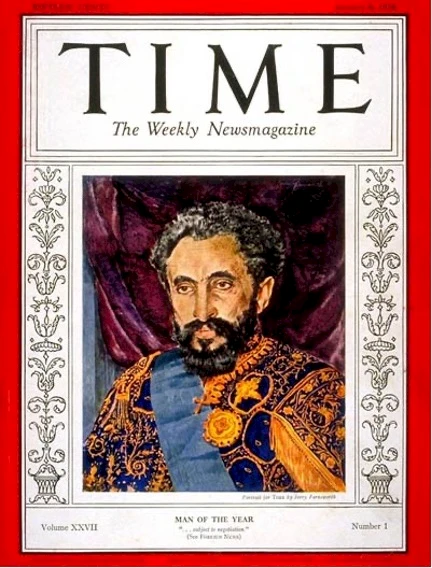
Haile Selassie en la portada de la revista Time (6 de enero de 1936).
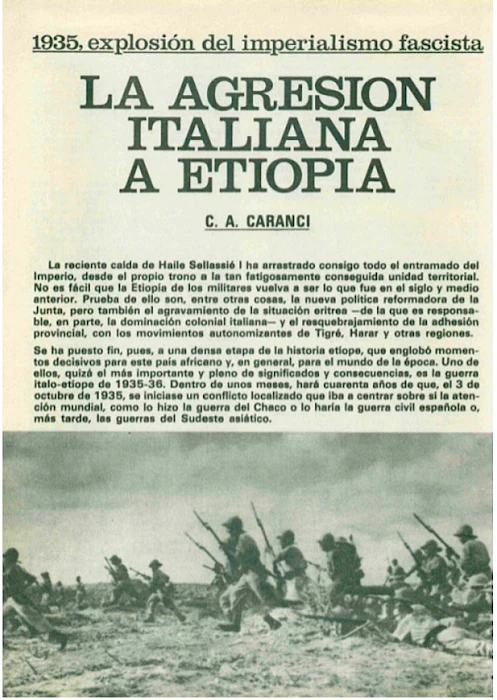
C. A. Caranci. «1935, explosión del imperialismo fascista: La agresión italiana a Etiopía».
Los antifascistas de Harlem veían los ataques de Mussolini como un ultraje a los negros de todo el mundo. Incluso los oradores de las esquinas de Harlem advertían a los transeúntes sobre la necesidad de una unidad negra global para oponerse al militarismo fascista. Los panafricanistas argumentaban que la seguridad y el bienestar de los afroamericanos estaban ligados al destino de África, y los antiimperialistas insistían en que había que defender al único país que había mantenido su independencia en un continente dominado por el auge colonizador. El escritor y poeta afroamericano Langston Hughes, figura clave del renacimiento de Harlem y activo recaudador de fondos para Etiopía, escribe en 1935 el poema «Call of Ethiopia».
Ethiopia
Lift your night-dark face,
Abyssinian
Son of Sheba's race!
Your palm trees tall
And your mountains high
Are shade and shelter
To men who die
For freedom's sake —
But in the wake of your sacrifice
May all Africa arise
With blazing eyes and night-dark face
In answer to the call of Sheba's race:Ethiopias free!
Be like me,
All of Africa,
Arise and be free!
All you black peoples,
Be free! Be free!
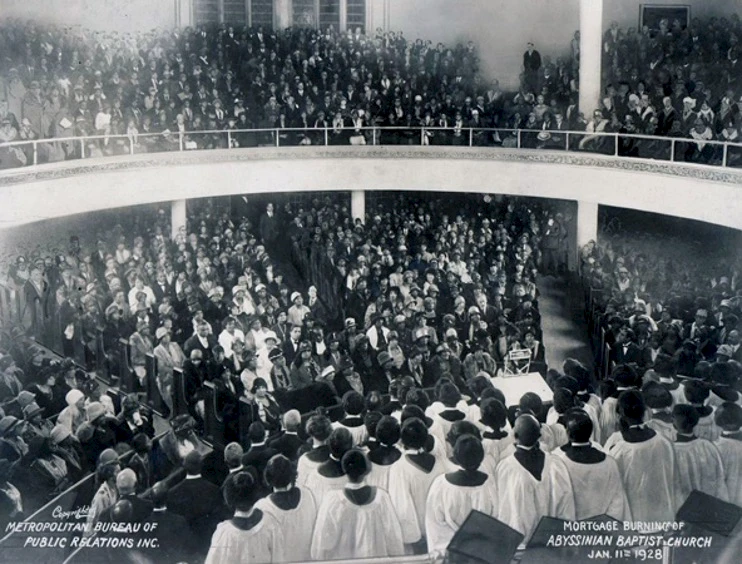
Iglesia Bautista Abisinia de Harlem, enero de 1928.
La negativa de Occidente a apoyar a Etiopía intensifica la solidaridad panafricanista y refuerza el creciente sentimiento de internacionalismo radical ante el levantamiento fascista de 1936 contra la Segunda República española. Los negros americanos equiparan la nueva situación con la de Etiopía y se suman a la causa republicana tras los frustrados esfuerzos de ayuda a la antigua Abisinia.
Salaria Kea, que fue una de las enfermeras que acompañaron al contingente estadounidense de las Brigadas Internacionales durante la guerra civil española, en Una enfermera negra en la España republicana —publicado por el Negro Committee to Aid Spain—, pone de relieve la relación entre Etiopía y España.5 Kea destaca que intervenir en el conflicto español es una forma de apoyar la causa negra. Afirma: «Con la invasión de Etiopía, Italia asesta un golpe terrible a los negros de todo el mundo». En este cuadernillo defiende que España representa el campo de batalla en el que el fascismo italiano debe ser derrotado. Según los miembros del Comité, la única esperanza para recuperar Etiopía residía en vencer a Italia. Es decir, a través de España había que derrotar a la Italia de Mussolini y la Alemania de Hitler por sus abiertos pronunciamientos en contra de todos los no arios.
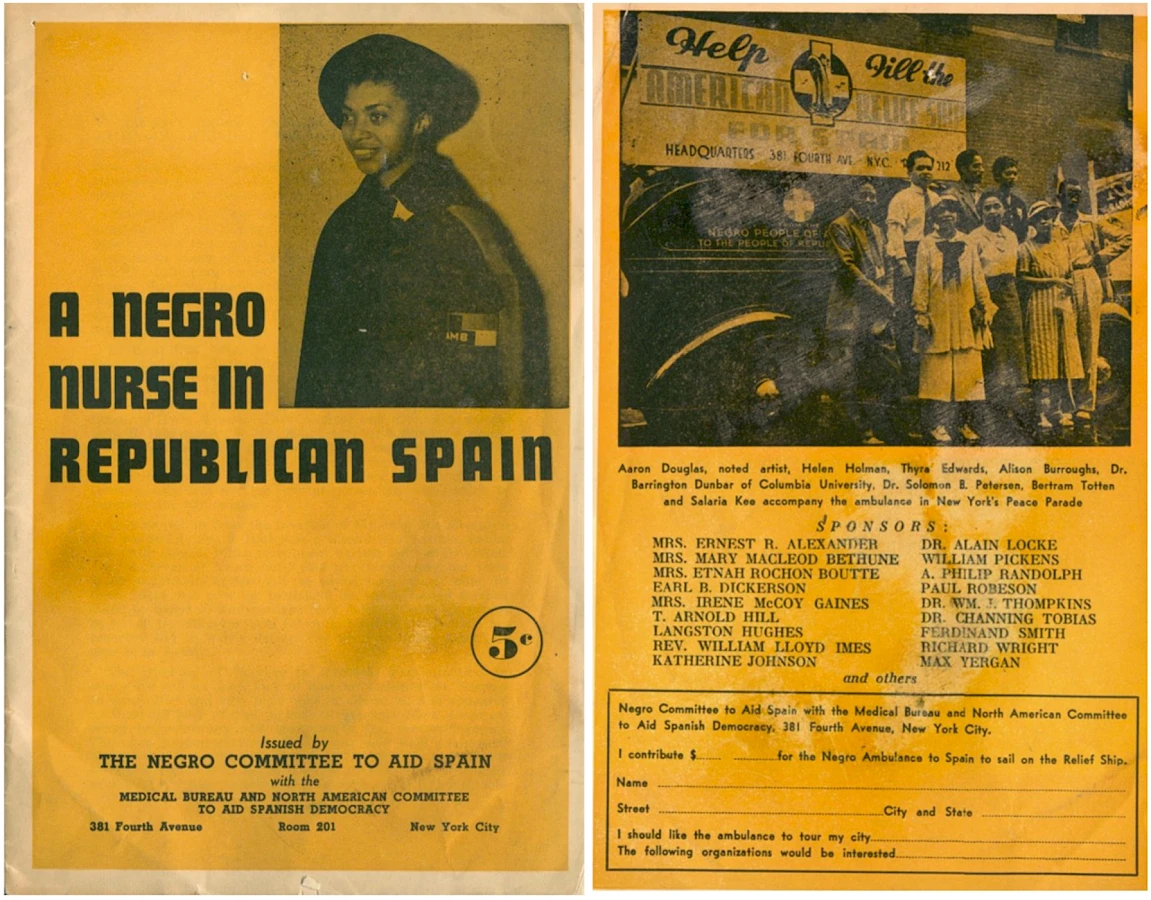
Salaria Kea escribe Una enfermera negra en la España republicana (folleto), que es publicado por Negro Committee to Aid Spain.
El avance del fascismo en Europa preocupaba a los afroamericanos en tal medida que, a pesar de que Estados Unidos había amenazado con revocar la ciudadanía a cualquiera que se alistara en un ejército extranjero, se unieron a las Brigadas Internacionales, a través de la Internacional Comunista (la Komintern). Estas eran una coalición en defensa de la República de España que agrupaba tropas voluntarias multiétnicas y multinacionales, procedentes de 53 países. Muchos de estos negros americanos formaban parte del Partido Comunista. Se crea entonces la Brigada Abraham Lincoln (ALB, por sus siglas en inglés), que fue la primera fuerza de combate no segregada y contó con 3.000 estadounidenses y al menos noventa afroamericanos que entraron ilegalmente en España y combatieron contra los franquistas junto a otros voluntarios de Yibuti, Sudáfrica, Cuba, Senegal, Haití, Camerún, etc.
Karen W. Martin en su texto «Not Valid for Spain: Pan-Africanism, Sanctuary, and the Spanish Civil War», publicado en el libro Black USA and Spain: Shared Memories in the 20th Century, también apunta
«al impulso de lucha contra el fascismo en el extranjero como medio de combatir el racismo —descrito por muchos brigadistas como fascismo doméstico— en Estados Unidos; y a la conciencia del destino compartido entre judíos y negros, como dos poblaciones objetivo de genocidio por la mítica raza blanca alemana de Hitler»6.
El período de posguerra y el malestar económico y social de los años veinte en Estados Unidos impulsan esta construcción de comunidad panafricana. Figuras destacadas del renacimiento de Harlem, como el reverendo Adam Clayton Powell, Claude McKay o W. E. B. Du Bois, trabajaron para construir un sentido de identidad comunitaria en una situación en la que se enfrentaban de nuevo a las fuerzas de la supremacía blanca y a un Ku Klux Klan revitalizado, como bien refleja la película de D. W. Griffith The Birth of a Nation. Los negros estadounidenses ya habían experimentado el fascismo en casa, desde la esclavitud hasta las políticas y las leyes de Jim Crow, e intuían que, si el fascismo europeo se extendía por el Atlántico, ellos serían los más afectados.
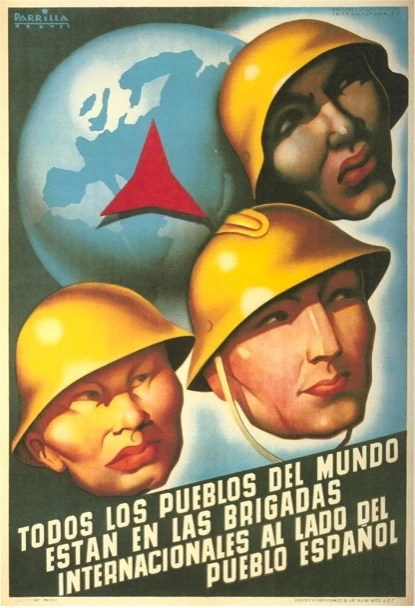
Parrilla, ‘Todos los pueblos del mundo estan en las Brigadas Internacionales al lado del pueblo espanol’ (All the peoples of the world are in the International Brigades on the side of the Spanish people), Brigadas Internacionales, Sindicato de Profesionales de las Bellas Artes, n.d., Pavilion of the Republic Collection
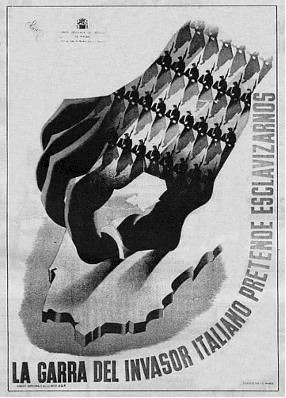
Amado Mauprivez Oliver, ‘La garra del invasor italiano pretended esclavizarnos’ (The claw of the Italian invader intends to enslave us), 1936
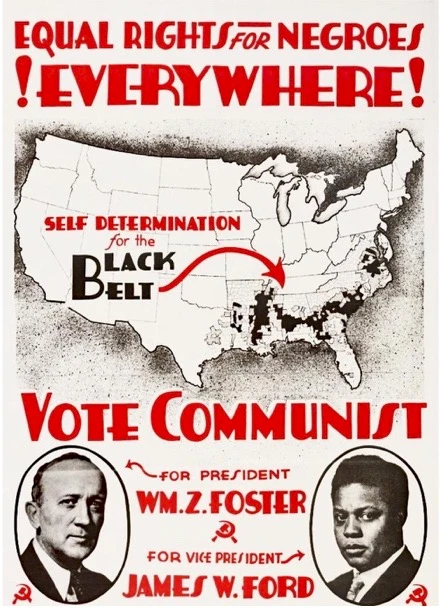
US Communist Party presidential campaign poster calling for ‘Equal rights for negroes everywhere!’, 1932
El compromiso panafricano en la lucha contra el avance del fascismo italiano en Etiopía y el convencimiento de que la extensión del fascismo americano intensificaría la violencia y la discriminación racial también quedan patentes en el libro Archives of Flesh: African America, Spain, and Post-Humanist Critique, de Robert F. Reid-Pharr (publicado en 2016), que señala el compromiso intelectual entre la América negra y la España republicana.7 Además, acusa a las instituciones clave del humanismo occidental —como colegios y universidades— de desarrollar una íntima relación con la esclavitud, la colonización y la supremacía blanca.
En esta misma línea, a finales del siglo pasado, en 1990, el historiador y teórico Robin D. G. Kelley, en la introducción del libro African-Americans and the Spanish Civil War: This Ain't Ethiopia, But It'll Do, impulsado por ALBA (Abraham Lincoln Brigade Archives)8, refuerza la idea de construcción del «internacionalismo radical» anclado en el panafricanismo. En una entrevista publicada en la misma web de ALBA señala:
«Antes de que las tropas de Franco invadieran España, miembros del Partido Comunista, como Angelo Herndon y sus camaradas, ya estaban llamando a los trabajadores a luchar contra el fascismo doméstico. Herndon sentenció en un discurso: «Hoy, cuando el mundo corre el peligro de verse empujado a otro baño de sangre, cuando los negros son abatidos y linchados al por mayor, cuando se cometen todo tipo de atropellos contra las masas populares, hoy es el momento de actuar». Los radicales negros respondieron al llamamiento a la acción de Herndon movilizándose en defensa de Etiopía, resistiendo la ley del linchamiento en el sur de Estados Unidos, organizando un movimiento anticolonial mundial y defendiendo la España republicana de los fascistas.9
El escritor Langston Hughes, fue corresponsal de guerra en España del Afro American de Baltimore y el Call Post de Cleveland. En plena guerra civil española, participó en el II Congreso Internacional de Escritores para la Defensa de la Cultura, que tuvo lugar entre el 4 y el 17 de julio de 1937 en tres ciudades de la España republicana (Valencia, Madrid y Barcelona) y en París, con el apoyo de la Alianza de Intelectuales Antifascistas.10 Durante el congreso, Hughes pronunció un discurso que ayuda a sentar el precedente que vincula la lucha contra los franquistas españoles con la batalla contra Mussolini y, al igual que Salaria Kea, apunta a España como campo de batalla indirecto en el conflicto etíope. Hughes afirma: «La lucha en España no era simplemente otra “guerra de blancos”, sino una extensión del conflicto ítalo-etíope».
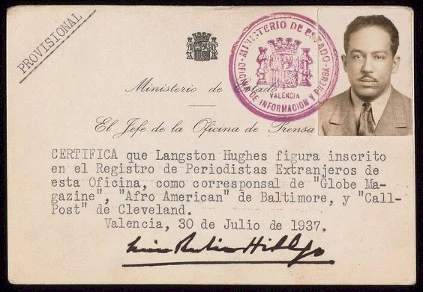
Acreditación de Langston Hughes como corresponsal en España para el Globe Magazine, el Afro American y el Call Post, julio de 1937.
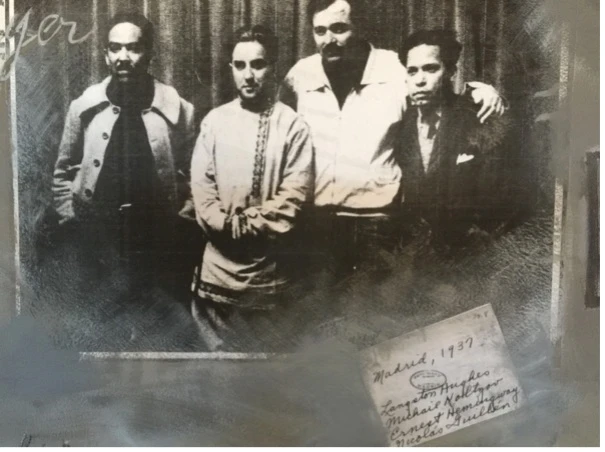
Langston Hughes, el periodista soviético Mikhail Koltsov, Ernest Hemingway, y el poeta y periodista cubano Nicolás Guillén en Madrid en 1937.
Durante su estancia en España, Hughes con su prosa da voz a las víctimas, por las que siente una absoluta empatía, y su poesía se alza contra quienes han llevado la guerra a España. En su poema «Carta de amor desde España», de 1937, señala la conexión entre el fascismo europeo y las leyes de Jim Crow —el fascismo doméstico.
[…] Ahora mismo voy a salir
a tomar la ciudad fascista.
Los fascistas son como los Jim Crow, ¿sabes?,
y aquí los matamos a tiros. […]
El cantante y actor Paul Robeson, que también había recaudado fondos para Etiopía junto a Kea y muchos otros, se convirtió en la voz de la resistencia antifascista. A finales de 1937, después de participar en las manifestaciones para «salvar a España», anunció a Eslanda, su mujer, que quería ir a España. Cuando ella argumentó que era muy peligroso y lo instó a quedarse, él respondió: «Esta es nuestra lucha, mi lucha».11
Así, en enero de 1938 Paul y Eslanda Robeson llegaron a Barcelona, desde donde se trasladaron a las trincheras, hospitales, campos y diferentes ciudades para ofrecer conciertos y subir la moral a hombres, mujeres y niños heridos.12 Dondequiera que aparecía, los soldados voluntarios de las 53 naciones lo reconocían y saludaban con el puño en alto —el saludo antifascista— y un poderoso «¡Salud!». Robeson afirmó:
«Nunca he visto tanto valor en un pueblo. Fui a España en 1938 y fue un punto de inflexión importante en mi vida. Allí vi que los trabajadores y las trabajadoras de España se entregaban heroicamente a la causa de la democracia en ese sangriento conflicto, mientras la clase alta —la nobleza terrateniente, los banqueros e industriales— habían desatado a la bestia fascista contra su propio pueblo. De las filas de los trabajadores de otras tierras habían venido voluntarios para ayudar en la épica defensa de Madrid, y en España canté con todo el corazón y el alma por estos valientes luchadores de la Brigada Internacional».13
La canción «The Four Insurgent Generals», de Paul Robeson, está recogida en Songs of Free Men.
Salaria Kea argumentó y escribió a favor de causas revolucionarias después de la guerra, reforzando así el sentimiento de solidaridad que, al igual que muchos otros brigadistas, había desarrollado con su presencia en España. Dijo: «Las divisiones de raza, credo, religión y nacionalidad perdieron importancia cuando se unieron en un esfuerzo común por hacer de España la tumba del fascismo». Sin embargo, Reid-Pharr muestra cierto escepticismo acerca de la naturaleza unificada de la narrativa racial de los testimonios orales y señala que «eran emblemas eficaces de la maquinaria propagandística izquierdista» y encajaban a la perfección en los propósitos de la política racial de los años treinta y en la construcción del «nuevo negro», ese negro cosmopolita que rechaza las políticas de Jim Crow, tal como señala el miembro del Comité Alain Locke en su antología de ficción, poesía y ensayo de 1925 The New Negro.14 En cualquier caso, es un espejismo loable frente a una realidad en la que se linchaba a los negros de América, se les discriminaba en la educación y en los trabajos, y se les negaba instalaciones hospitalarias en la mayoría de las ciudades.
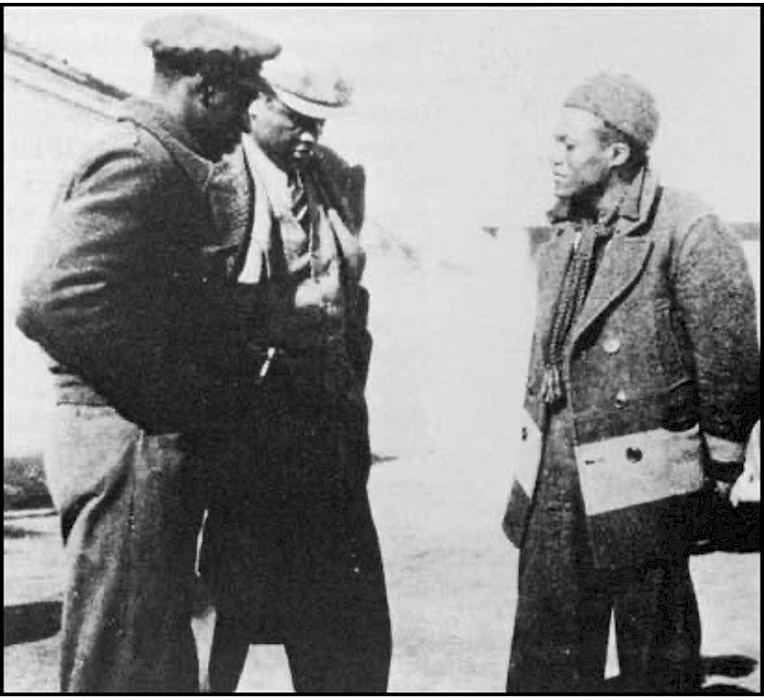
Paul Robeson con Oliver Law en España en 1937.
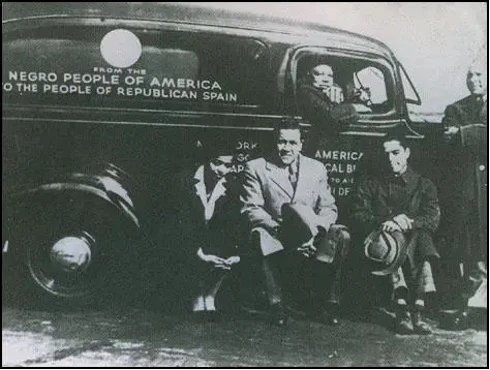
Imagen captada en Harlem (Nueva York) de la campaña para llenar un barco con ayuda humanitaria para España. Salaria Kea (izquierda) aparece sentada en el estribo de una ambulancia que era una donación «del pueblo negro de América al pueblo de la República española» (ALBA/VALB).
Pero la realidad española también era dura y, aunque hubiera ese sentimiento de libertad fuera de las cadenas de Jim Crow, el mismo Hughes lo expresaba en sus poemas españoles narrados por Johnny, un personaje ficticio del Batallón Lincoln. Johnny, además de adoptar un enfoque panafricano, contaba la crudeza de la guerra. Por ejemplo, en el poema «Carta de España» aborda la conmoción de los soldados negros cuando capturan a un «moro herido» que está luchando en el bando de los franquistas.
Dear brother at home:
We captured a wounded Moor today.
He was just as dark as me.
I said, Boy, what you been doin' here
Fightin' against the free?
He answered something in a language
I couldn't understand.
But somebody told me he was sayin'
They nabbed him in his land
And made him join the fascist army
And come across to Spain.
And he said he had a feelin'
He'd never get back home again.
He said he had a feelin'
This whole thing wasn't right.
He said he didn't know
The folks he had to fight.
And as he lay there dying
In a village we had taken,
I looked across to Africa
And seed foundations shakin'.
Cause if a free Spain wins this war,
The colonies, too, are free —
Then something wonderful'll happen
To them Moors as dark as me.
I said, I guess that's why old England
And I reckon Italy, too,
Is afraid to let a workers' Spain
Be too good to me and you —
Cause they got slaves in Africa —
And they don't want 'em to be free.
Listen, Moorish prisoner, hell!
Here, shake hands with me!
I knelt down there beside him,
And I took his hand —
But the wounded Moor was dyin'
And he didn't understand.
Salud,Johnny15
El soldado moribundo consigue explicar que le sacaron de su casa, supuestamente Marruecos, y le obligaron a unirse a una guerra que no entendía contra un enemigo desconocido. El poema, además de combinar los tres pilares de la implicación de los brigadistas negros en España —el panafricanismo, la lucha global contra el fascismo y la opresión racista de los negros tanto dentro como fuera del país—, pone de relieve la proximidad cultural y geográfica entre España y África y esta, en lugar de ser retratada como un lejano «continente oscuro», se conecta con España a través de siglos de historia árabe en la península. La voz poética de Johnny vincula explícitamente el fascismo con el colonialismo en África, y se da cuenta de que otras naciones europeas se oponen a la República porque dar poder a los trabajadores en España amenaza la continuidad de la esclavitud y la explotación de los africanos en las colonias europeas. Esta es la razón por la que Hughes percibía la victoria de la República como la liberación de las colonias africanas.
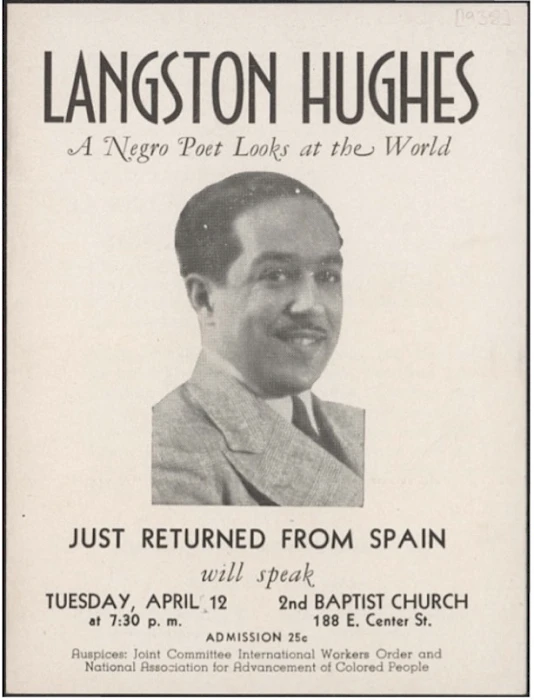
«A Negro Poet Looks at the World», participación en la 2nd Iglesia Bautista, Akron, Ohio, 12 de abril de 1938, Langston Hughes Ephemera Collection, Special Collections, University of Delaware Library.
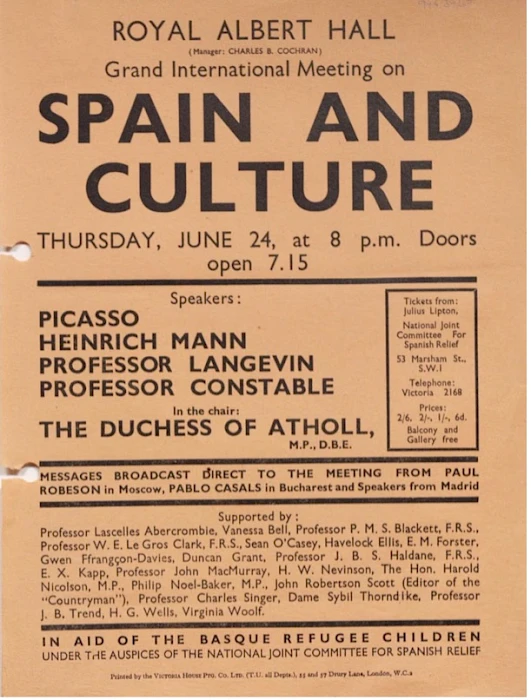
Cartel «Spain and Culture», encuentro en el Royal Albert Hall.
Desgraciadamente, los republicanos son derrotados por el dictador profascista general Francisco Franco, que anuncia el fin de la guerra el 1 de abril de 1939.
Al acabar la guerra, los supervivientes americanos nombran a Paul Robeson miembro honorario de los Veteranos de la Brigada Abraham Lincoln, y una década más tarde, con la intención de que su paso por España no cayera en el olvido, inician un proceso de recopilación de las memorias.16 En este sentido, dirigen una carta al sociólogo, historiador y panafricanista W. E. B. Du Bois en la que exponen su intención de crear un archivo que relate la experiencia y le piden tiempo para exponerle sus intenciones.
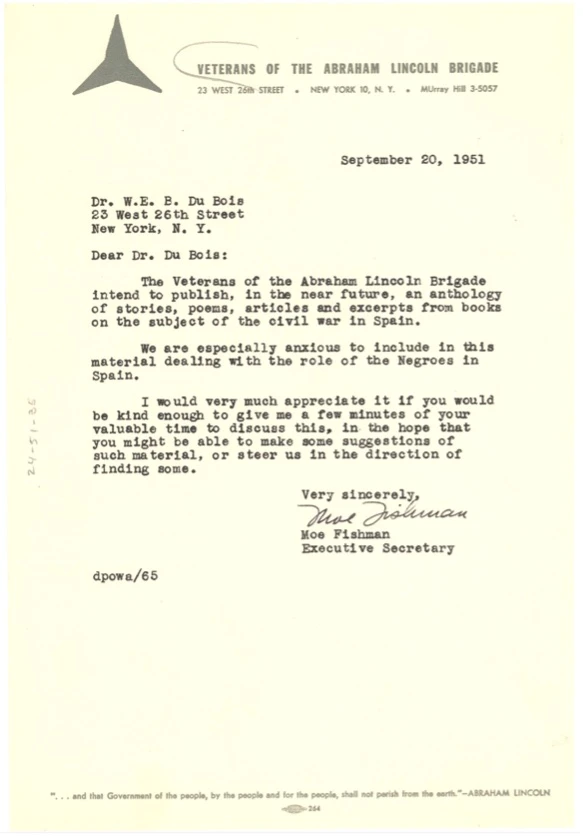
Carta de Veteranos de la Brigada Abraham Lincoln a W. E. B. Du Bois, septiembre de 1951.
Además de James Yates, Salaria Kea, Langston Hughes o el propio Paul Robeson, otros brigadistas hicieron públicas sus vivencias, como Harry Haywood —el soldado que escribió Bolchevique negro, su autobiografía17—, o dieron a conocer figuras como la de Oliver Law, el primer hombre negro que estuvo al frente de un batallón en la historia de las Fuerzas Armadas de Estados Unidos, abatido en la batalla de Brunete.18 No obstante, a pesar de toda la literatura, sus recuerdos se han ido diluyendo, porque no quedaron grabados en ningún lugar más allá de los rememoraciones y las decenas de archivos, libros, fotografías o folletos que ALBA ha ido recopilando y publicando. Incluso, cuando en los cincuenta el escritor y poeta Richard Wright, que formaba parte del Negro Committee to Aid Spain, viaja a España por recomendación de Gertrude Stein, ya nada quedaba en el recuerdo, solo un país devastado por la guerra. Stein, que visita España en varias ocasiones entre 1911 y 1915, le dice:
«Allí verás el pasado. Verás de qué está hecho el mundo occidental. España es primitiva, pero encantadora. ¡Y la gente! No hay gente como la española en ninguna parte. En España he pasado días que nunca olvidaré».
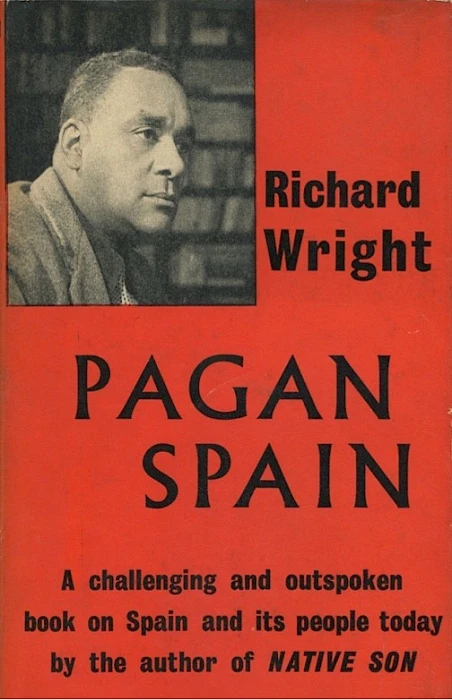
Portadas de Pagan Spain, de Richard Wright.
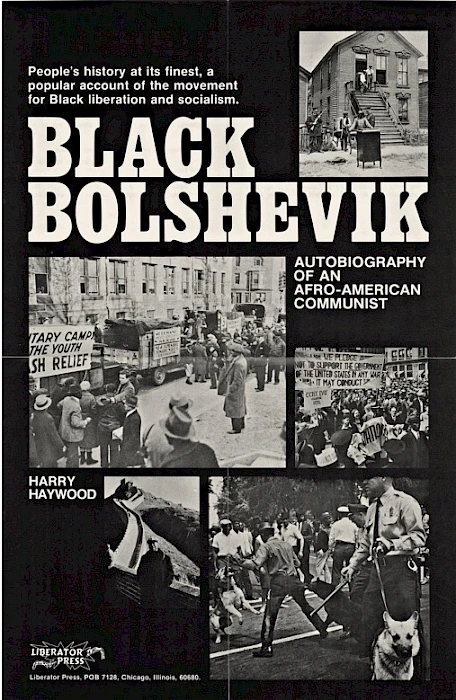
Black Bolshevik. Autobiography of an Afro-American Communist, de Harry Haywood.
Wright, que ya tenía cierto conocimiento de la realidad española por haber formado parte del Negro Committee to Aid Spain, le hizo caso. El libro España pagana es fruto de ese viaje y en él retrata un país particular lleno de estereotipos y deprimido económicamente. Un texto controvertido que el New York Times tildó de «provocativo y perturbador». Empieza así:
«En el tórrido agosto de 1954, estaba yo bajo el cielo azul del Midi, a pocas horas de la frontera española. A mi derecha se extendía la campiña llana y verde del sur de Francia; a mi izquierda, una franja de arena tras la cual el Mediterráneo se agitaba y relucía. Estaba solo. No tenía ningún compromiso. Sentado en mi coche, con el volante entre las manos, quería ir a España, pero algo me detenía. Un estado anímico era lo único que se interponía entre mí y un país para mí tan atractivo como repelente. Dios sabe que los gobiernos y los modos de vida totalitarios no eran ningún misterio para mí. Había nacido en Misisipi en un régimen absolutista racista; había vivido y trabajado durante doce años bajo la dictadura política del Partido Comunista de los Estados Unidos; y había pasado un año de mi vida en el terror policial de Perón en Buenos Aires. Entonces, ¿por qué evitaba la realidad de la vida con Franco? ¿Qué temía?».19
Related activities
-
–Van Abbemuseum
The Soils Project
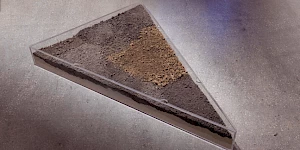
‘The Soils Project’ is part of an eponymous, long-term research initiative involving TarraWarra Museum of Art (Wurundjeri Country, Australia), the Van Abbemuseum (Eindhoven, Netherlands) and Struggles for Sovereignty, a collective based in Yogyakarta, Indonesia. It works through specific and situated practices that consider soil, as both metaphor and matter.
Seeking and facilitating opportunities to listen to diverse voices and perspectives around notions of caring for land, soil and sovereign territories, the project has been in development since 2018. An international collaboration between three organisations, and several artists, curators, writers and activists, it has manifested in various iterations over several years. The group exhibition ‘Soils’ at the Van Abbemuseum is part of Museum of the Commons. -
–VCRC
Kyiv Biennial 2023
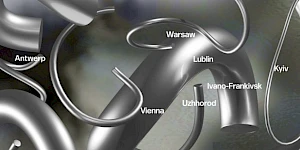
L’Internationale Confederation is a proud partner of this year’s edition of Kyiv Biennial.
-
–MACBA
Where are the Oases?
PEI OBERT seminar
with Kader Attia, Elvira Dyangani Ose, Max Jorge Hinderer Cruz, Emily Jacir, Achille Mbembe, Sarah Nuttall and Françoise VergèsAn oasis is the potential for life in an adverse environment.
-
MACBA
Anti-imperialism in the 20th century and anti-imperialism today: similarities and differences
PEI OBERT seminar
Lecture by Ramón GrosfoguelIn 1956, countries that were fighting colonialism by freeing themselves from both capitalism and communism dreamed of a third path, one that did not align with or bend to the politics dictated by Washington or Moscow. They held their first conference in Bandung, Indonesia.
-
–Van Abbemuseum
Maria Lugones Decolonial Summer School
Recalling Earth: Decoloniality and Demodernity
Course Directors: Prof. Walter Mignolo & Dr. Rolando VázquezRecalling Earth and learning worlds and worlds-making will be the topic of chapter 14th of the María Lugones Summer School that will take place at the Van Abbemuseum in Eindhoven.
-
–MSN Warsaw
Archive of the Conceptual Art of Odesa in the 1980s
The research project turns to the beginning of 1980s, when conceptual art circle emerged in Odesa, Ukraine. Artists worked independently and in collaborations creating the first examples of performances, paradoxical objects and drawings.
-
–Moderna galerijaZRC SAZU
Summer School: Our Many Easts
Our Many Easts summer school is organised by Moderna galerija in Ljubljana in partnership with ZRC SAZU (the Research Centre of the Slovenian Academy of Sciences and Arts) as part of the L’Internationale project Museum of the Commons.
-
–Moderna galerijaZRC SAZU
Open Call – Summer School: Our Many Easts
Our Many Easts summer school takes place in Ljubljana 24–30 August and the application deadline is 15 March. Courses will be held in English and cover topics such as the legacy of the Eastern European avant-gardes, archives as tools of emancipation, the new “non-aligned” networks, art in times of conflict and war, ecology and the environment.
-
–MACBA
Canción para muchos movimientos. Escenarios de creación colectiva
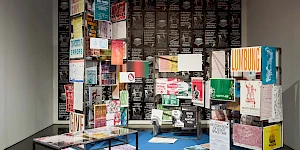
Un experimento efímero en que la planta baja del museo se convierte en escenario de encuentros, conversaciones y escuchas compartidas.
-
Museo Reina Sofia
Palestine Is Everywhere
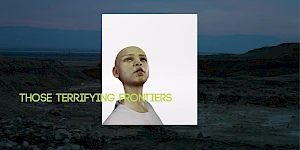
‘Palestine Is Everywhere’ is an encounter and screening at Museo Reina Sofía organised together with Cinema as Assembly as part of Museum of the Commons. The conference starts at 18:30 pm (CET) and will also be streamed on the online platform linked below.
-
HDK-Valand
Book Launch: Collective Study in Times of Emergency, Gothenburg
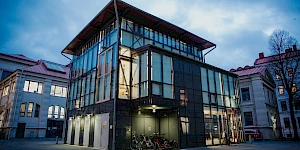
with Nick Aikens (L'Internationale Online / HDK-Valand) and Mills Dray (HDK-Valand), 17h00, Glashuset
-
Moderna galerija
Book Launch: Collective Study in Times of Emergency, Ljubljana
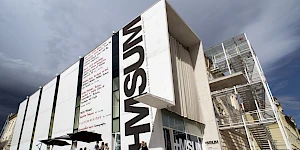
with Nick Aikens (L'Internationale Online / HDK-Valand), Bojana Piškur (MG+MSUM) and Martin Pogačar (ZRC SAZU)
-
WIELS
Book Launch: Collective Study in Times of Emergency, Brussels
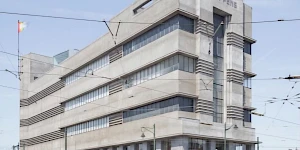
with Nick Aikens (L'Internationale Online / HDK-Valand), Subversive Film and Alex Reynolds, 19h00, Wiels Auditorium
-
–
Kyiv Biennial 2025

L’Internationale Confederation is proud to co-organise this years’ edition of the Kyiv Biennial.
-
–MACBA
Project a Black Planet: The Art and Culture of Panafrica
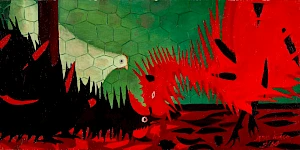
Curated by MACBA director Elvira Dyangani Ose, along with Antawan Byrd, Adom Getachew and Matthew S. Witkovsky, Project a Black Planet: The Art and Culture of Panafrica is the first major international exhibition to examine the cultural manifestations of Pan-Africanism from the 1920s to the present.
-
–M HKA
The Geopolitics of Infrastructure
The exhibition The Geopolitics of Infrastructure presents the work of a generation of artists bringing contemporary perspectives on the particular topicality of infrastructure in a transnational, geopolitical context.
-
–MACBAMuseo Reina Sofia
School of Common Knowledge 2025
The second iteration of the School of Common Knowledge will bring together international participants, faculty from the confederation and situated organizations in Barcelona and Madrid.
-
NCAD
Book Launch: Collective Study in Times of Emergency, Dublin
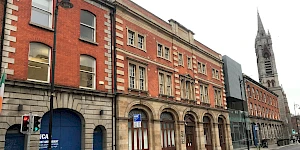
with Nick Aikens (L'Internationale Online / HDK-Valand) and members of the L'Internationale Online editorial board: Maria Berríos, Sheena Barrett, Sara Buraya Boned, Charles Esche, Sofia Dati, Sabel Gavaldon, Jasna Jaksic, Cathryn Klasto, Magda Lipska, Declan Long, Francisco Mateo Martínez Cabeza de Vaca, Bojana Piškur, Tove Posselt, Anne-Claire Schmitz, Ezgi Yurteri, Martin Pogacar, and Ovidiu Tichindeleanu, 18h00, Harry Clark Lecture Theatre, NCAD
-
–
Collective Study in Times of Emergency, Amsterdam
Within the context of ‘Every Act of Struggle’, the research project and exhibition at de appel in Amsterdam, L’Internationale Online has been invited to propose a programme of collective study.
-
Museo Reina Sofia
Poetry readings: Culture for Peace – Art and Poetry in Solidarity with Palestine
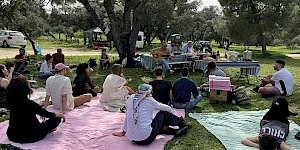
Casa de Campo, Madrid
-
WIELS
Collective Study in Times of Emergency, Brussels. Rana Issa and Shayma Nader
Join us at WIELS for an evening of fiction and poetry as part of L'Internationale Online's 'Collective Study in Times of Emergency' publishing series and public programmes. The series was launched in November 2023 in the wake of the onset of the genocide in Palestine and as a means to process its implications for the cultural sphere beyond the singular statement or utterance.
-
–Museo Reina Sofia
Study Group: Aesthetics of Peace and Desertion Tactics
In a present marked by rearmament, war, genocide, and the collapse of the social contract, this study group aims to equip itself with tools to, on one hand, map genealogies and aesthetics of peace – within and beyond the Spanish context – and, on the other, analyze strategies of pacification that have served to neutralize the critical power of peace struggles.
-
–MSN Warsaw
Near East, Far West. Kyiv Biennial 2025

The main exhibition of the 6th Kyiv Biennial 2025, titled Near East, Far West, is organized by a consortium of curators from L’Internationale. It features seven new artists’ commissions, alongside works from the collections of member institutions of L’Internationale and a number of other loans.
-
MACBA
PEI Obert: The Brighter Nations in Solidarity: Even in the Midst of a Genocide, a New World Is Being Born
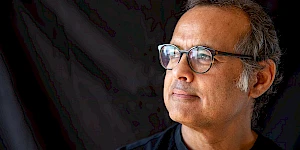
PEI Obert presents a lecture by Vijay Prashad. The Colonial West is in decay, losing its economic grip on the world and its control over our minds. The birth of a new world is neither clear nor easy. This talk envisions that horizon, forged through the solidarity of past and present anticolonial struggles, and heralds its inevitable arrival.
-
–M HKA
Homelands and Hinterlands. Kyiv Biennial 2025
Following the trans-national format of the 2023 edition, the Kyiv Biennial 2025 will again take place in multiple locations across Europe. Museum of Contemporary Art Antwerp (M HKA) presents a stand-alone exhibition that acts also as an extension of the main biennial exhibition held at the newly-opened Museum of Modern Art in Warsaw (MSN).
In reckoning with the injustices and atrocities committed by the imperialisms of today, Kyiv Biennial 2025 reflects with historical consciousness on failed solidarities and internationalisms. It does this across an axis that the curators describe as Middle-East-Europe, a term encompassing Central Eastern Europe, the former-Soviet East and the Middle East.
-
HDK-Valand
MA Forum in collaboration with LIO: Nour Shantout
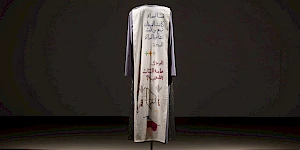
In this artist talk, Nour Shantout will present Searching for the New Dress, an ongoing artistic research project that looks at Palestinian embroidery in Shatila, a Palestinian refugee camp in Lebanon. Welcome!
-
MACBA
PEI Obert: Bodies of Evidence. A lecture by Ido Nahari and Adam Broomberg
In the second day of Open PEI, writer and researcher Ido Nahari and artist, activist and educator Adam Broomberg bring us Bodies of Evidence, a lecture that analyses the circulation and functioning of violent images of past and present genocides. The debate revolves around the new fundamentalist grammar created for this documentation.
-
–
Everything for Everybody. Kyiv Biennial 2025

As one of five exhibitions comprising the 6th Kyiv Biennial 2025, ‘Everything for Everybody’ takes place in the Ukraine, at the Dnipro Center for Contemporary Culture.
-
–
In a Grandiose Sundance, in a Cosmic Clatter of Torture. Kyiv Biennial 2025

As one of five exhibitions comprising the 6th Kyiv Biennial 2025, ‘In a Grandiose Sundance, in a Cosmic Clatter of Torture’ takes place at the Dovzhenko Centre in Kyiv.
-
MACBA
School of Common Knowledge: Fred Moten
Fred Moten gives the lecture Some Prœposicions (On, To, For, Against, Towards, Around, Above, Below, Before, Beyond): the Work of Art. As part of the Project a Black Planet exhibition, MACBA presents this lecture on artworks and art institutions in relation to the challenge of blackness in the present day.
-
–MACBA
Visions of Panafrica. Film programme
Visions of Panafrica is a film series that builds on the themes explored in the exhibition Project a Black Planet: The Art and Culture of Panafrica, bringing them to life through the medium of film. A cinema without a geographical centre that reaffirms the cultural and political relevance of Pan-Africanism.
-
MACBA
Farah Saleh. Balfour Reparations (2025–2045)

As part of the Project a Black Planet exhibition, MACBA is co-organising Balfour Reparations (2025–2045), a piece by Palestinian choreographer Farah Saleh included in Hacer Historia(s) VI (Making History(ies) VI), in collaboration with La Poderosa. This performance draws on archives, memories and future imaginaries in order to rethink the British colonial legacy in Palestine, raising questions about reparation, justice and historical responsibility.
-
MACBA
Project a Black Planet: The Art and Culture of Panafrica OPENING EVENT
A conversation between Antawan I. Byrd, Adom Getachew, Matthew S. Witkovsky and Elvira Dyangani Ose. To mark the opening of Project a Black Planet: The Art and Culture of Panafrica, the curatorial team will delve into the exhibition’s main themes with the aim of exploring some of its most relevant aspects and sharing their research processes with the public.
-
MACBA
Palestine Cinema Days 2025: Al-makhdu’un (1972)
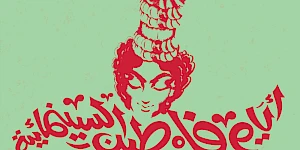
Since 2023, MACBA has been part of an international initiative in solidarity with the Palestine Cinema Days film festival, which cannot be held in Ramallah due to the ongoing genocide in Palestinian territory. During the first days of November, organizations from around the world have agreed to coordinate free screenings of a selection of films from the festival. MACBA will be screening the film Al-makhdu’un (The Dupes) from 1972.
-
Museo Reina Sofia
Cinema Commons #1: On the Art of Occupying Spaces and Curating Film Programmes
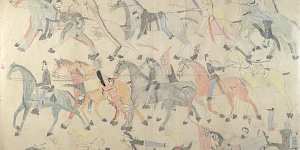
On the Art of Occupying Spaces and Curating Film Programmes is a Museo Reina Sofía film programme overseen by Miriam Martín and Ana Useros, and the first within the project The Cinema and Sound Commons. The activity includes a lecture and two films screened twice in two different sessions: John Ford’s Fort Apache (1948) and John Gianvito’s The Mad Songs of Fernanda Hussein (2001).
-
–
Vertical Horizon. Kyiv Biennial 2025
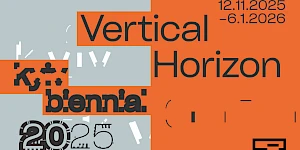
As one of five exhibitions comprising the 6th Kyiv Biennial 2025, ‘Vertical Horizon’ takes place at the Lentos Kunstmuseum in Linz, at the initiative of tranzit.at.
-
–
International Day of Solidarity with the Palestinian People: Activities
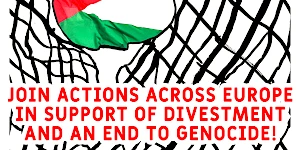
To mark International Day of Solidarity with the Palestinian People and in conjunction with our collective text, we, the cultural workers of L'Internationale have compiled a list of programmes, actions and marches taking place accross Europe. Below you will find programmes organized by partner institutions as well as activities initaited by unions and grass roots organisations which we will be joining.
This is a live document and will be updated regularly.
-
–SALT
Screening: A Bunch of Questions with No Answers
This screening is part of a series of programs and actions taking place across L’Internationale partners to mark International Day of Solidarity with the Palestinian People.
A Bunch of Questions with No Answers (2025)
Alex Reynolds, Robert Ochshorn
23 hours 10 minutes
English; Turkish subtitles -
HDK-Valand
MA Forum in collaboration with LIO: Adam Broomberg
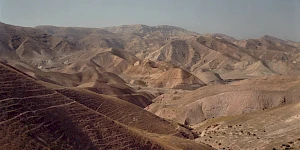
In this MA Forum we welcome artist Adam Broomberg. In his lecture he will focus on two photographic projects made in Israel/Palestine twenty years apart. Both projects use the medium of photography to communicate the weaponization of nature.
-
MACBA
PEI Obert: Until Liberation: A Collective Reading and Listening Session by Learning Palestine
PEI Obert presents a collective session with Learning Palestine. At this historical juncture – amid the ongoing genocide in Gaza and the censorship and repression of all things Palestinian – Learning Palestine invites us to gather not only in refusal but also in affirmation.
Related contributions and publications
-
…and the Earth along. Tales about the making, remaking and unmaking of the world.
Martin PogačarLand RelationsClimatePast in the Present -
The Kitchen, an Introduction to Subversive Film with Nick Aikens, Reem Shilleh and Mohanad Yaqubi
Nick Aikens, Subversive FilmSonic and Cinema CommonslumbungPast in the PresentVan Abbemuseum -
The Repressive Tendency within the European Public Sphere
Ovidiu ŢichindeleanuInternationalismsPast in the Present -
Rewinding Internationalism
InternationalismsVan Abbemuseum -
Troubles with the East(s)
Bojana PiškurInternationalismsPast in the Present -
Right now, today, we must say that Palestine is the centre of the world
Françoise VergèsInternationalismsPast in the Present -
Body Counts, Balancing Acts and the Performativity of Statements
Mick WilsonInternationalismsPast in the Present -
Until Liberation I
Learning Palestine GroupInternationalismsPast in the Present -
Until Liberation II
Learning Palestine GroupInternationalismsPast in the Present -
The Veil of Peace
Ovidiu ŢichindeleanuPast in the Presenttranzit.ro -
Editorial: Towards Collective Study in Times of Emergency
L’Internationale Online Editorial BoardEN es sl tr arInternationalismsStatements and editorialsPast in the Present -
Opening Performance: Song for Many Movements, live on Radio Alhara
Jokkoo with/con Miramizu, Rasheed Jalloul & Sabine SalaméEN esInternationalismsSonic and Cinema CommonsPast in the PresentMACBA -
Siempre hemos estado aquí. Les poetas palestines contestan
Rana IssaEN es tr arInternationalismsPast in the Present -
Indra's Web
Vandana SinghLand RelationsPast in the PresentClimate -
Diary of a Crossing
Baqiya and Yu’adInternationalismsPast in the Present -
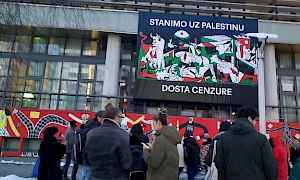
The Silence Has Been Unfolding For Too Long
The Free Palestine Initiative CroatiaInternationalismsPast in the PresentSituated OrganizationsInstitute of Radical ImaginationMSU Zagreb -
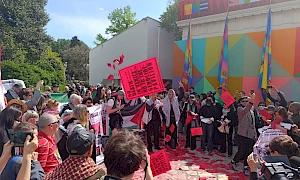
En dag kommer friheten att finnas
Françoise Vergès, Maddalena FragnitoEN svInternationalismsLand RelationsClimateInstitute of Radical Imagination -
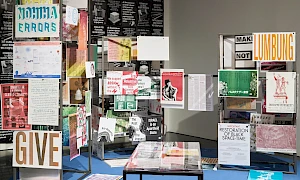
Everything will stay the same if we don’t speak up
L’Internationale ConfederationEN caInternationalismsStatements and editorials -
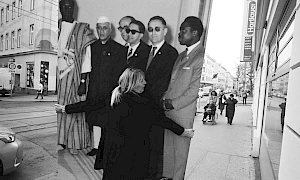
War, Peace and Image Politics: Part 1, Who Has a Right to These Images?
Jelena VesićInternationalismsPast in the PresentZRC SAZU -
Live set: Una carta de amor a la intifada global
PrecolumbianEN esInternationalismsSonic and Cinema CommonsPast in the PresentMACBA -
Cultivating Abundance
Åsa SonjasdotterLand RelationsClimatePast in the Present -
Rethinking Comradeship from a Feminist Position
Leonida KovačSchoolsInternationalismsSituated OrganizationsMSU ZagrebModerna galerijaZRC SAZU -
Reading list - Summer School: Our Many Easts
Summer School - Our Many EastsSchoolsPast in the PresentModerna galerija -
The Genocide War on Gaza: Palestinian Culture and the Existential Struggle
Rana AnaniInternationalismsPast in the Present -
Klei eten is geen eetstoornis
Zayaan KhanEN nl frLand RelationsClimatePast in the Present -
Dispatch: ‘I don't believe in revolution, but sometimes I get in the spirit.’
Megan HoetgerSchoolsPast in the Present -
Dispatch: Notes on (de)growth from the fragments of Yugoslavia's former alliances
Ava ZevopSchoolsPast in the Present -
Glöm ”aldrig mer”, det är alltid redan krig
Martin PogačarEN svLand RelationsPast in the Present -
Broadcast: Towards Collective Study in Times of Emergency (for 24 hrs/Palestine)
L’Internationale Online Editorial Board, Rana Issa, L’Internationale Confederation, Vijay PrashadInternationalismsSonic and Cinema Commons -
Beyond Distorted Realities: Palestine, Magical Realism and Climate Fiction
Sanabel Abdel RahmanEN trInternationalismsPast in the PresentClimate -
Collective Study in Times of Emergency. A Roundtable
Nick Aikens, Sara Buraya Boned, Charles Esche, Martin Pogačar, Ovidiu Ţichindeleanu, Ezgi YurteriInternationalismsPast in the PresentSituated Organizations -
Present Present Present. On grounding the Mediateca and Sonotera spaces in Malafo, Guinea-Bissau
Filipa CésarSonic and Cinema CommonsPast in the Present -
Collective Study in Times of Emergency
InternationalismsPast in the Present -
S come Silenzio
Maddalena FragnitoEN itInternationalismsSituated Organizations -
ميلاد الحلم واستمراره
Sanaa SalamehEN hr arInternationalismsPast in the Present -
عن المكتبة والمقتلة: شهادة روائي على تدمير المكتبات في قطاع غزة
Yousri al-GhoulEN arInternationalismsPast in the Present -
Archivos negros: Episodio I. Internacionalismo radical y panafricanismo en el marco de la guerra civil española
Tania Safura AdamEN esInternationalismsPast in the Present -
Re-installing (Academic) Institutions: The Kabakovs’ Indirectness and Adjacency
Christa-Maria Lerm HayesInternationalismsPast in the Present -
Palma daktylowa przeciw redeportacji przypowieści, czyli europejski pomnik Palestyny
Robert Yerachmiel SnidermanEN plInternationalismsPast in the PresentMSN Warsaw -
Masovni studentski protesti u Srbiji: Mogućnost drugačijih društvenih odnosa
Marijana Cvetković, Vida KneževićEN rsInternationalismsPast in the Present -
No Doubt It Is a Culture War
Oleksiy Radinsky, Joanna ZielińskaInternationalismsPast in the Present -
Cinq pierres. Une suite de contes
Shayma NaderEN nl frInternationalisms -
Dispatch: As Matter Speaks
Yeongseo JeeInternationalismsPast in the Present -
Speaking in Times of Genocide: Censorship, ‘social cohesion’ and the case of Khaled Sabsabi
Alissar SeylaInternationalisms -
Reading List: Summer School, Landscape (post) Conflict
Summer School - Landscape (post) ConflictSchoolsLand RelationsPast in the PresentIMMANCAD -
Today, again, we must say that Palestine is the centre of the world
Françoise VergèsInternationalisms -
Isabella Hammad’ın icatları
Hazal ÖzvarışEN trInternationalisms -

To imagine a century on from the Nakba
Behçet ÇelikEN trInternationalisms -
Internationalisms: Editorial
L'Internationale Online Editorial BoardInternationalisms -
Dispatch: Institutional Critique in the Blurst of Times – On Refusal, Aesthetic Flattening, and the Politics of Looking Away
İrem GünaydınInternationalisms -

Until Liberation III
Learning Palestine GroupInternationalismsPast in the Present -
Archivos negros: Episodio II. Jazz sin un cuerpo político negro
Tania Safura AdamEN esInternationalismsPast in the Present -
Cultural Workers of L’Internationale mark International Day of Solidarity with the Palestinian People
Cultural Workers of L’InternationaleEN es pl roInternationalismsSituated OrganizationsPast in the PresentStatements and editorials -
Poetry Against Language Dioxide
Rana IssaInternationalisms -
The Object of Value
SlinkoInternationalismsLand Relations